
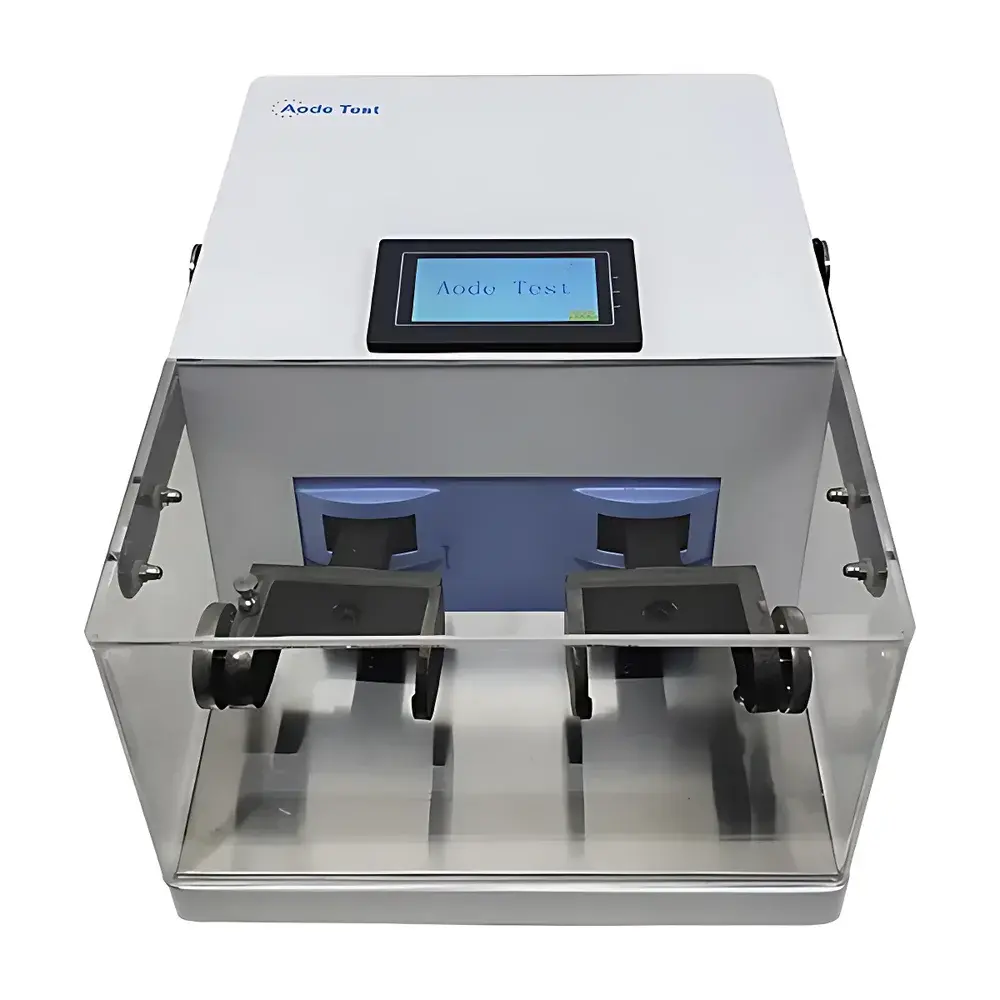
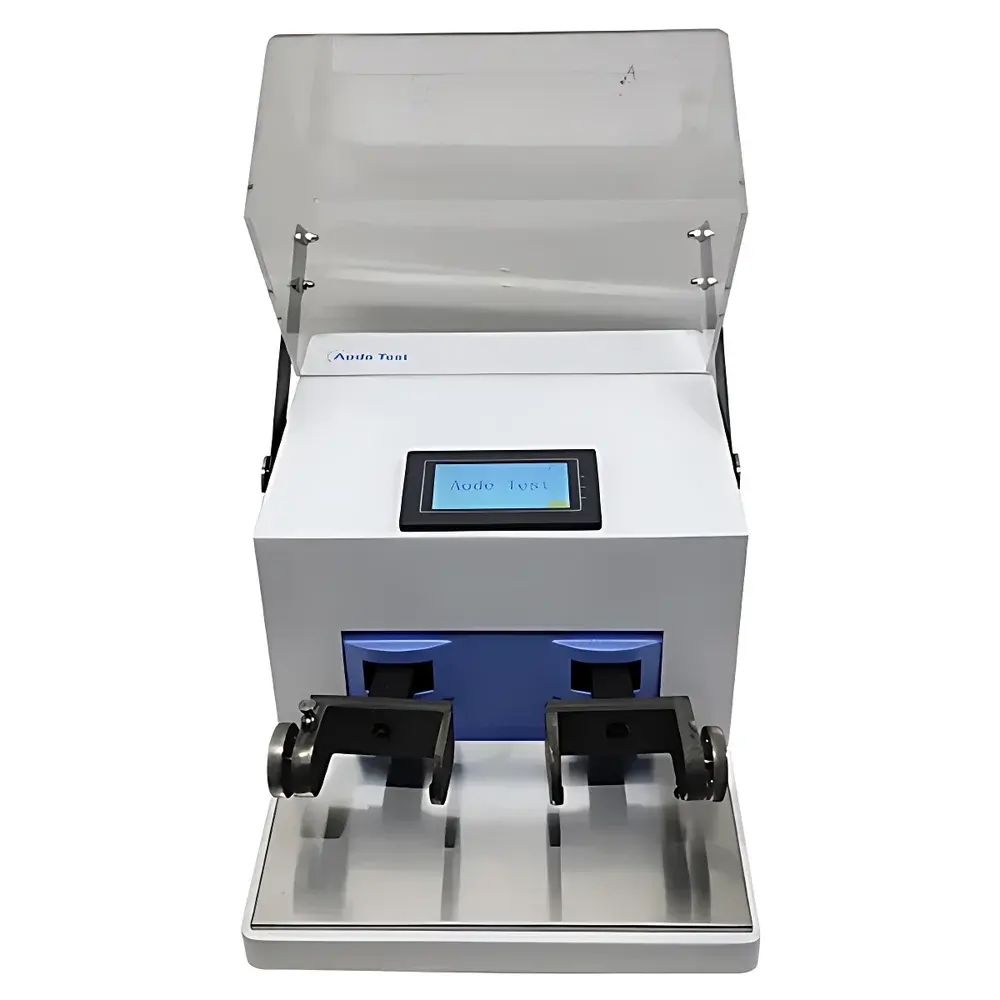
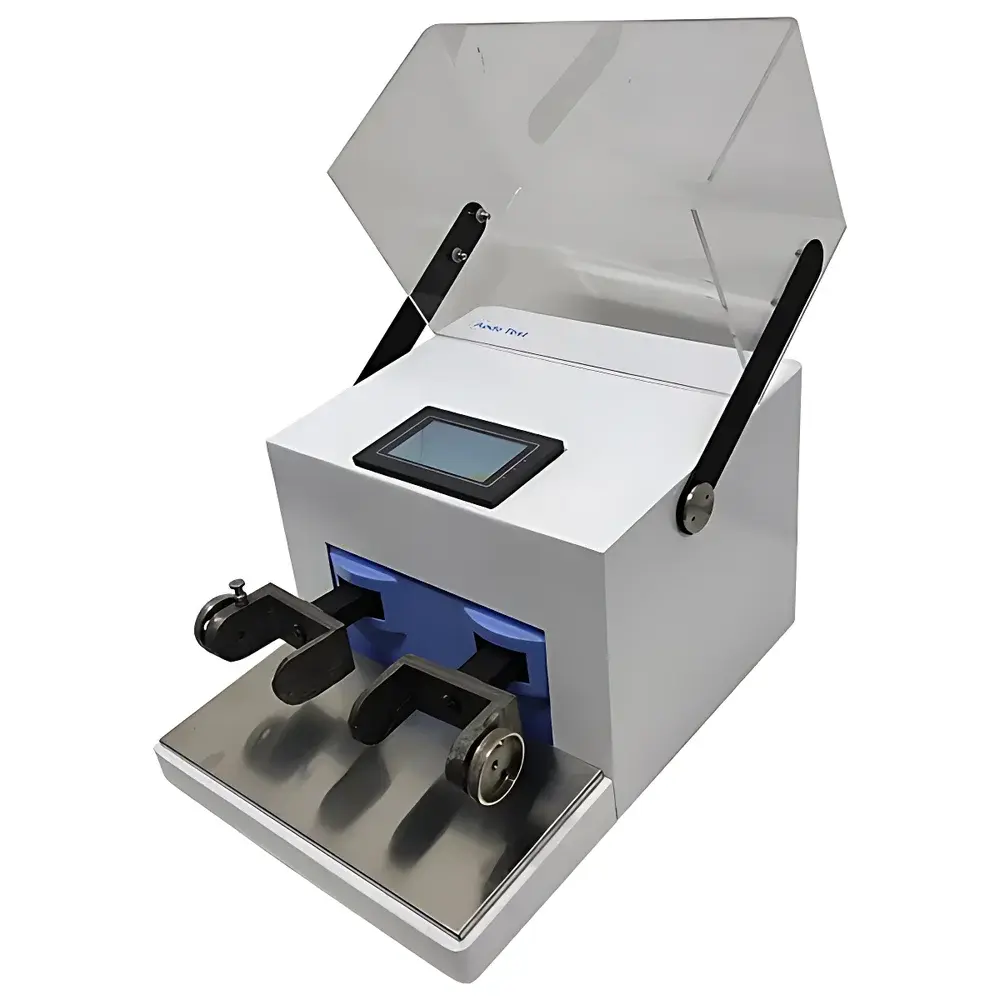
Aode AD-107 Advanced Vibratory Ball Mill
| Brand | Aode |
|---|---|
| Origin | Liaoning, China |
| Manufacturer Type | Direct Manufacturer |
| Country of Origin | China |
| Model | AD-107 (220228) |
| Instrument Type | Vibratory Ball Mill |
| Sample Compatibility | Cryogenic Samples |
| Maximum Feed Size | 8 mm |
| Final Particle Size | ≤5 µm |
| Throughput Capacity | 40 g per batch |
| Dimensions (W×D×H) | 440 × 230 × 340 mm |
| Weight | 20 kg |
| Power Supply | 220 V, 50 Hz, 160 W |
| Grinding Vessels | Two standard jars (25 mL and 50 mL) |
| High-Throughput Adapter | Supports up to 48 tubes (2 mL or 5 mL) |
| Operating Frequency | Adjustable up to ~3600 cycles/min |
| Safety | Transparent chamber with interlocked stop mechanism |
| Compliance | Designed for GLP-compliant lab environments |
Overview
The Aode AD-107 Advanced Vibratory Ball Mill is a high-frequency, horizontal-axis vibratory grinding system engineered for rapid, reproducible size reduction and homogenization of diverse laboratory samples. Unlike planetary or rotary ball mills, the AD-107 employs resonant elliptical motion—driven by dual synchronized eccentric shafts—to generate intense inertial impacts between grinding media and sample material. This principle enables efficient mechanical energy transfer at frequencies up to 3600 cycles per minute, facilitating sub-5 µm particle size distribution in seconds without thermal degradation. The instrument is particularly suited for applications requiring minimal sample handling, cryogenic integrity preservation (e.g., RNA/DNA extraction), and strict batch-to-batch consistency—making it a core tool in analytical chemistry, pharmaceutical development, botanical research, and molecular biology labs.
Key Features
- Dual independent grinding stations: Accommodates two standard grinding jars (25 mL and 50 mL) simultaneously or one high-throughput adapter for parallel processing of up to 48 tubes (2 mL or 5 mL).
- Cryogenic compatibility: Integrated design supports liquid nitrogen-cooled operation, enabling brittle fracture of thermolabile or elastic materials—including fresh tissue, seeds, and fibrous plant matter—without nucleic acid degradation.
- Precision programmable control: Adjustable frequency, time, and motion profile (progressive start/stop, intermittent duty cycle, timed on/off) ensure method reproducibility across operators and shifts.
- Interlocked safety chamber: Fully transparent polycarbonate enclosure halts all motion instantly upon door opening, meeting IEC 61000-6-2 EMC and EN 61010-1 electrical safety requirements for Class II laboratory equipment.
- Modular jar system: Stainless steel, tungsten carbide, and agate jar options available (not included); optimized geometry enhances collision efficiency and minimizes cross-contamination risk.
- Low-maintenance architecture: Brushless motor drive, sealed bearing housings, and vibration-dampened chassis ensure >10,000 hours of stable operation under routine QC/QA workloads.
Sample Compatibility & Compliance
The AD-107 processes heterogeneous matrices including but not limited to: biological tissues (muscle, liver, leaf, root), seeds, polymers, ceramics, ores, pharmaceutical tablets, and composite powders. Its ability to handle feed sizes up to 8 mm and deliver consistent ≤5 µm output meets ASTM E290–22 specifications for particle size reduction validation. The system supports Good Laboratory Practice (GLP) workflows through repeatable parameter logging and optional audit-trail-enabled firmware upgrades. While not FDA 21 CFR Part 11–certified out-of-box, its deterministic control architecture allows integration into validated LIMS environments when paired with compliant data acquisition software.
Software & Data Management
The AD-107 operates via an embedded microcontroller interface with tactile keypad and LED display—no external PC required for basic operation. All user-defined protocols (frequency, duration, ramp profiles) are stored in non-volatile memory with timestamped execution logs. Optional RS-232 or USB-C connectivity enables export of operational metadata (start/stop time, cycle count, error flags) for traceability in ISO/IEC 17025-accredited laboratories. Raw grinding data can be imported into third-party statistical packages (e.g., JMP, Minitab) for SPC charting and capability analysis (Cp/Cpk).
Applications
- Molecular biology: Rapid lysis and homogenization of mammalian, avian, and plant tissues prior to nucleic acid isolation—validated for TRIzol®-compatible workflows.
- Pharmaceutical QA/QC: Uniform milling of active pharmaceutical ingredients (APIs) and excipients for dissolution testing and content uniformity assays per USP <701>.
- Materials science: Preparation of nanoscale precursors for XRD, SEM-EDS, and BET surface area analysis.
- Environmental testing: Homogenization of soil, sediment, and sludge samples for heavy metal extraction (EPA Method 3050B).
- Food safety: Grinding of composite food matrices for mycotoxin or pesticide residue analysis per AOAC 2007.01.
FAQ
What is the maximum recommended batch weight per grinding jar?
The optimal load is 10–40 g per jar, depending on density and friability. Overloading reduces impact efficiency and increases jar wear.
Can the AD-107 achieve true nano-scale particles (<100 nm)?
No—it is designed for micron-level comminution (≤5 µm). Sub-100 nm dispersion requires supplemental techniques such as ultrasonication or wet milling.
Is the high-throughput adapter compatible with standard 2 mL and 5 mL cryotubes?
Yes—adapter inserts are precision-machined to accept commercially available conical-bottom microcentrifuge tubes without modification.
Does the instrument support automatic cooling integration?
It does not include built-in Peltier or dry-ice manifolds, but the chamber design accommodates external cryo-manifold routing for continuous low-temperature operation.
What maintenance intervals are recommended for routine use?
Inspect jar clamps and drive belts every 500 operating hours; lubricate eccentric shaft bearings annually using ISO VG 68 synthetic grease.



