
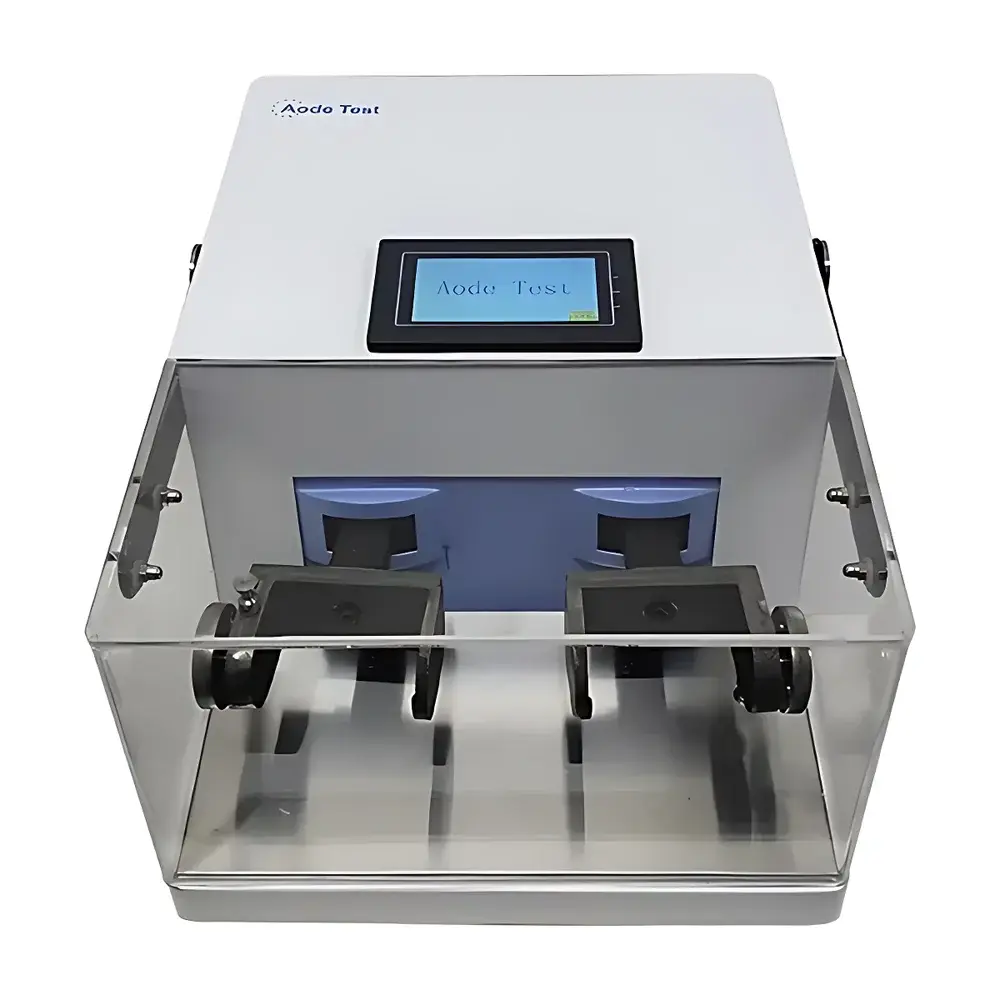
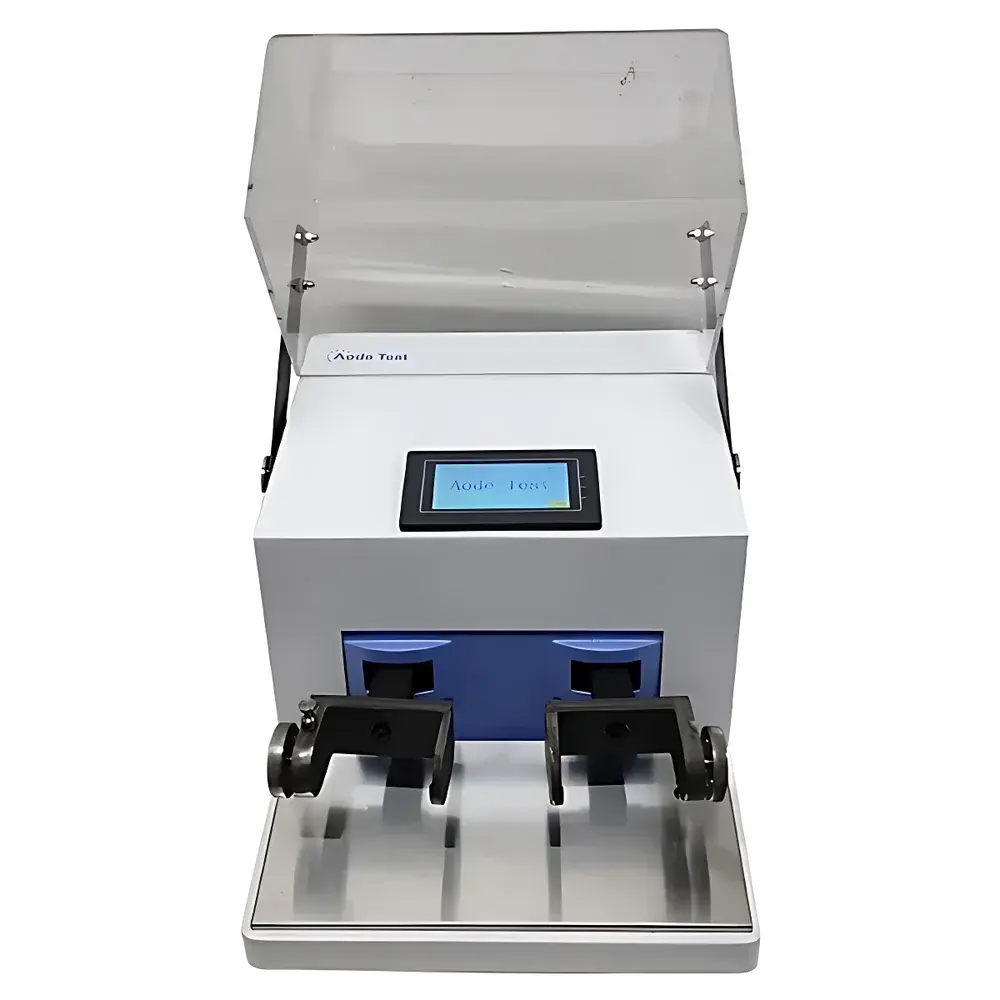
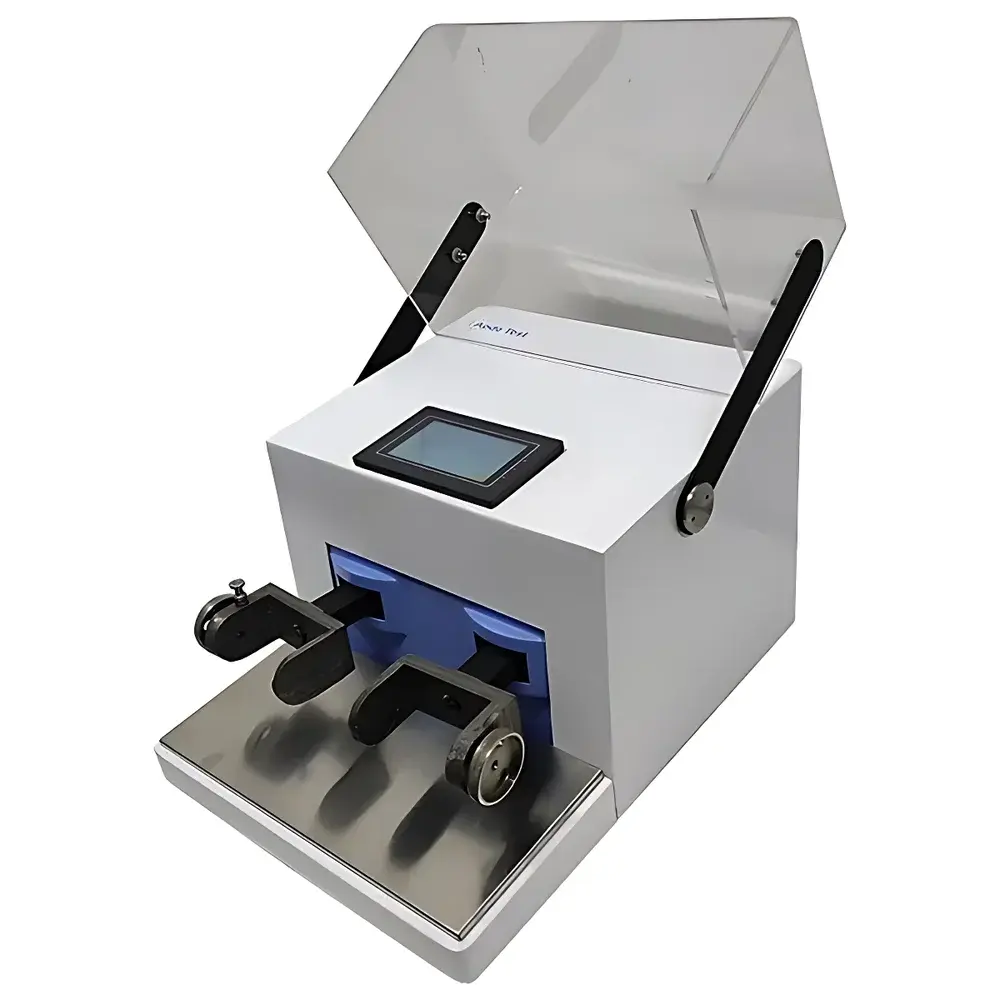
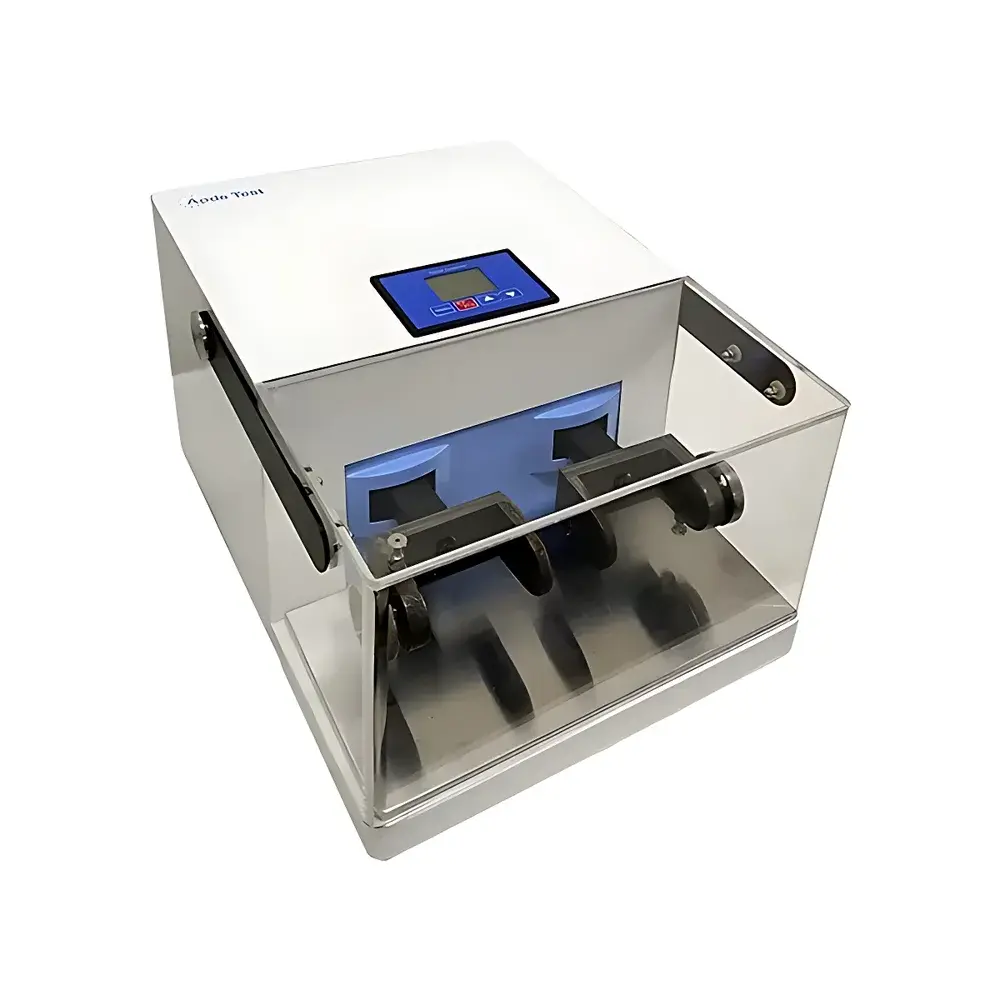
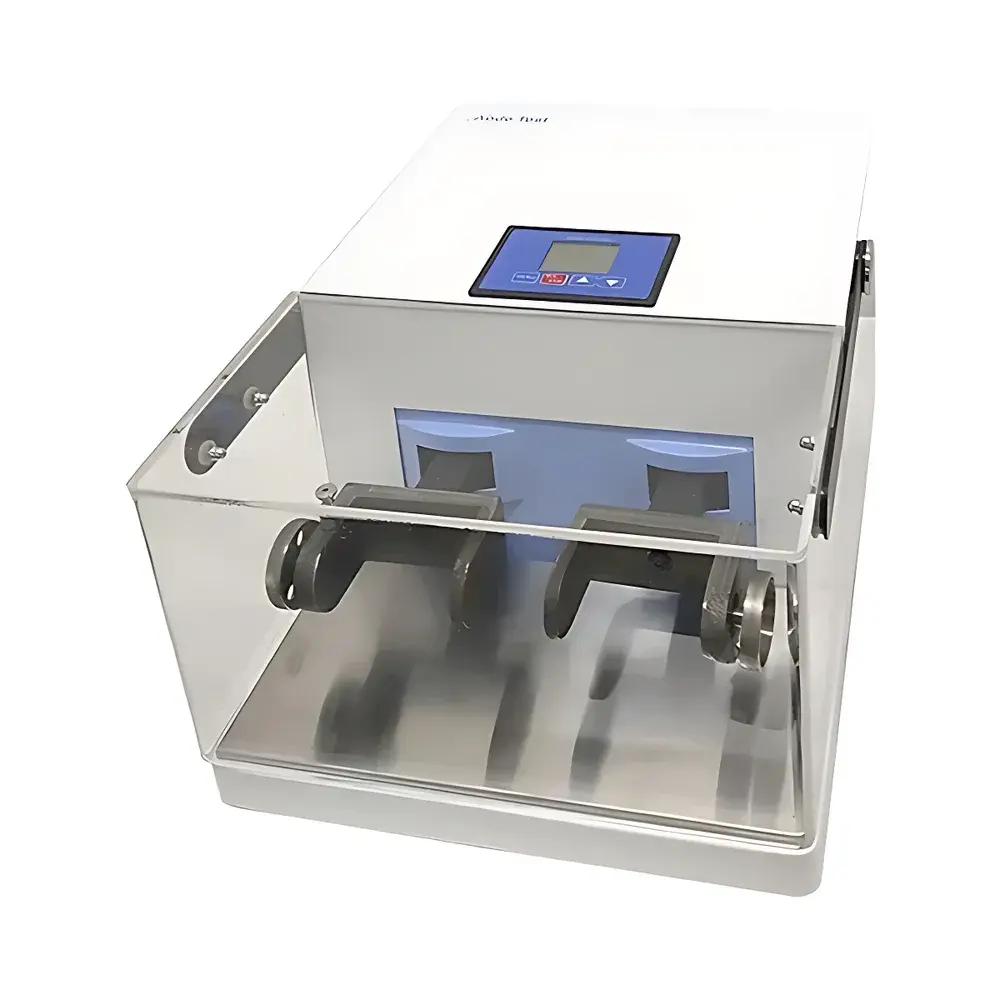
Aode AD-107 Vibratory Ball Mill
| Brand | Aode |
|---|---|
| Origin | Liaoning, China |
| Manufacturer Type | Direct Manufacturer |
| Country of Origin | China |
| Model | AD-107 |
| Instrument Type | Vibratory Ball Mill |
| Sample Applicability | Hard & Brittle Materials |
| Max. Feed Size | 10 mm |
| Final Particle Size | ≤5 µm |
| Batch Capacity | 100 mL |
| Operating Frequency | ~3600 rpm |
| Dimensions (W×D×H) | 440 × 230 × 340 mm |
| Power Supply | 220 V, 50 Hz, 160 W |
| Weight | 20 kg |
| Grinding Vessels | 25 mL & 50 mL stainless steel jars |
| Adapter Configuration | Dual-arm horizontal rack (2 jars) or 48-tube high-throughput adapter |
| Safety | Transparent polycarbonate chamber with interlocked stop mechanism |
| Optional Operation Modes | Progressive start/stop, timed run, intermittent cycling, cryogenic grinding-compatible |
Overview
The Aode AD-107 Vibratory Ball Mill is an engineered laboratory-scale comminution system designed for rapid, reproducible mechanical disintegration of solid samples via high-frequency inertial impact. Unlike planetary or centrifugal mills, the AD-107 operates on a horizontal dual-arm vibratory principle: two counterbalanced grinding racks oscillate synchronously at approximately 3600 cycles per minute, inducing intense collision energy between grinding media (e.g., stainless steel, tungsten carbide, or zirconia balls) and sample material within elliptical jars. This kinetic energy transfer enables efficient particle size reduction through repeated impact, shear, and compression—particularly effective for hard, brittle, fibrous, or heterogeneous matrices including minerals, ceramics, pharmaceutical excipients, and biological tissues. Its compact footprint and modular jar/adapter architecture make it suitable for QC labs, materials science research, and molecular biology workflows requiring consistent sub-5 µm particle generation without thermal degradation.
Key Features
- Dual independent grinding arms with precision-machined elliptical stainless-steel jars (25 mL and 50 mL standard volumes), optimized for uniform energy distribution and minimal cross-contamination.
- High-throughput capability via optional 48-position cryo-compatible adapter—enabling parallel processing of tissue samples (e.g., plant leaves, animal liver, seed embryos) under liquid nitrogen conditions for RNA/DNA preservation.
- Programmable digital controller supporting multiple operational profiles: progressive acceleration/deceleration, user-defined time intervals (1 s–99 min), intermittent duty cycles, and programmable pause sequences to manage heat-sensitive samples.
- Integrated safety enclosure constructed from impact-resistant polycarbonate with automatic power cutoff upon door opening—compliant with IEC 61000-6-2 electromagnetic compatibility and EN 61010-1 electrical safety standards for laboratory equipment.
- Cryogenic readiness: compatible with dry ice or liquid nitrogen cooling systems; grinding chamber design permits low-temperature operation down to –196 °C without condensation ingress or mechanical stress on drive components.
- Low-noise, brushless DC motor drive with thermal overload protection and real-time frequency stabilization—ensuring long-term repeatability across thousands of grinding cycles.
Sample Compatibility & Compliance
The AD-107 accommodates diverse sample classes: inorganic oxides (e.g., SiO₂, Al₂O₃), metallic alloys, polymers, pharmaceutical tablets, soil aggregates, and biological specimens—including fibrous plant matter, frozen muscle tissue, and bone fragments. Its ability to achieve ≤5 µm median particle size (D₅₀) without solvent assistance supports ASTM E2909-21 (Standard Guide for Particle Size Analysis by Dry Sieving) and ISO 13320:2020 (Laser diffraction methods) pre-processing requirements. For regulated environments, the instrument’s fixed parameter logging (time, frequency, cycle count) aligns with GLP documentation practices; while not inherently 21 CFR Part 11-compliant, its deterministic control logic facilitates integration into validated workflows when paired with external audit-trail-capable LIMS or ELN platforms.
Software & Data Management
The AD-107 utilizes embedded firmware—not PC-dependent software—to store up to 20 user-defined protocols with timestamped execution logs (date/time, duration, frequency setting, mode selection). All parameters are retained after power loss. While no proprietary desktop application is provided, exported log files (via USB port) conform to CSV format for traceability in QA/QC documentation. The absence of cloud connectivity or remote access ensures data sovereignty—a critical consideration for academic institutions and contract research organizations handling proprietary or biohazardous materials.
Applications
- Routine homogenization of geological core samples prior to XRF or ICP-MS analysis.
- Preparation of ultrafine ceramic precursors for sintering studies.
- Cell lysis and nucleic acid extraction from mammalian tissues using cryo-adapted 48-tube protocols.
- Particle size reduction of API blends for dissolution testing per USP <711>.
- Accelerated aging simulation of battery electrode materials via controlled mechanical attrition.
- Homogenization of composite polymer fillers (e.g., carbon nanotubes, graphene oxide) for rheological characterization.
FAQ
What is the maximum recommended feed size for optimal performance?
Samples should be pre-crushed to ≤10 mm prior to loading—larger particles risk uneven energy distribution and extended grinding times.
Can the AD-107 process wet samples or slurries?
No—it is strictly a dry or cryo-dry grinding system; liquid introduction may damage the drive mechanism and compromise jar sealing integrity.
Is calibration required before first use?
The unit ships factory-calibrated for frequency accuracy; no end-user calibration is needed—only periodic verification of jar clamping torque and motor vibration amplitude per maintenance schedule.
How does the elliptical jar geometry improve grinding efficiency?
Elliptical cross-sections generate asymmetric impact trajectories during oscillation, increasing ball–sample collision frequency by ~22% compared to cylindrical jars under identical amplitude and frequency conditions.
What maintenance intervals are recommended for sustained operation?
Lubrication of linear bearings every 500 operating hours; inspection of rubber dampers and jar O-rings every 1,000 hours; full drive train assessment recommended annually or after 2,000 cycles.



