
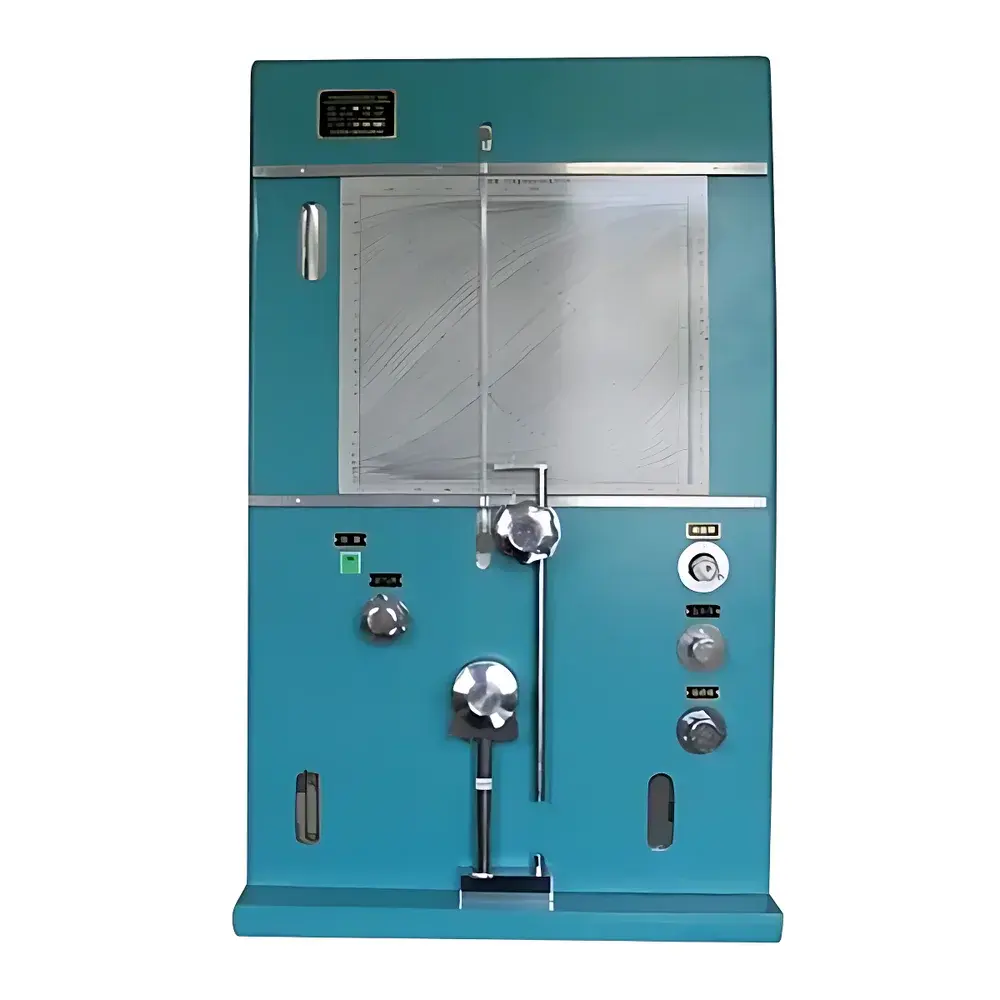
Aode AD-305 Air Permeability Average Particle Size Analyzer
| Brand | Aode |
|---|---|
| Origin | Liaoning, China |
| Manufacturer Type | Direct Manufacturer |
| Product Type | Intelligent Model |
| Display Interface | PC-connected (Windows-based software) |
| Measurement Principle | Constant-pressure air permeability (ISO 10070:1991 / GB/T 11107–1989 compliant) |
| Particle Size Range | 0.20–50 µm |
| Repeatability | ≥97% (RSD ≤3%) |
| Porosity Settings | 0.25–0.40, 0.40–0.80, 0.80–0.95 |
| Inlet Gas Pressure | 3 kPa (regulated) |
| Power Supply | AC 220 V ±10%, 50–60 Hz |
| Power Consumption | 2 W |
| Operating Temperature | 25 ±10 °C |
| Max. Relative Humidity | ≤80% RH |
| Dimensions | 755 × 400 × 260 mm |
| Weight | 12 kg |
Overview
The Aode AD-305 Air Permeability Average Particle Size Analyzer is a fourth-generation, standardized instrument engineered for rapid, reproducible determination of average particle size and specific surface area of fine powders via the constant-pressure air permeability method. It operates on the fundamental principle that the volumetric flow rate of air through a compacted powder bed—under controlled pressure differential—is inversely related to the powder’s specific surface area and directly influenced by its particle size distribution, shape factor, and bed porosity. This physical relationship is formalized in the Carman–Kozeny equation and empirically calibrated per international standards ISO 10070:1991 and national standard GB/T 11107–1989. Unlike laser diffraction or dynamic light scattering systems, the AD-305 delivers robust, cost-effective analysis for quality control laboratories where routine batch verification of metal powders (e.g., Fe, Cu, Ni, Al alloys), ceramic precursors (Al₂O₃, ZrO₂), pharmaceutical excipients (lactose, microcrystalline cellulose), catalyst supports, and battery electrode materials is required. Its design emphasizes operational simplicity, minimal maintenance, and compliance-ready documentation.
Key Features
- Direct reading of average particle size (dav) via integrated calculation panel—no manual computation required
- Three selectable porosity ranges (0.25–0.40, 0.40–0.80, 0.80–0.95) to accommodate diverse powder compaction behaviors
- Precision-manufactured U-tube manometer and vertical pressure gauge for stable differential pressure monitoring
- Dedicated powder compaction device with calibrated force application and sample tube clamping mechanism
- Built-in precision vernier caliper for accurate measurement of compressed bed height and water column displacement
- Low-power (2 W), quiet air pump with integrated desiccant dryer to ensure consistent, moisture-free airflow
- PC-connected interface enabling data logging, report generation, and audit trail support for GLP/GMP environments
Sample Compatibility & Compliance
The AD-305 is validated for use with free-flowing, non-fibrous, non-agglomerating powders exhibiting moderate compressibility—including sintered metal powders, oxide ceramics, graphite, activated carbon, food-grade starches, and inert pharmaceutical fillers. It is not suitable for cohesive nanomaterials (<0.1 µm), highly electrostatic or hygroscopic samples, or fibrous matrices. The instrument conforms to the metrological and procedural requirements of ISO 10070:1991 “Fine ceramics — Determination of specific surface area of powders by air permeability” and GB/T 11107–1989 “Metallic powders — Determination of specific surface area by air permeability method”. All calibration procedures, operator training records, and raw measurement logs can be archived in accordance with FDA 21 CFR Part 11 when used with validated PC software.
Software & Data Management
The AD-305 interfaces with Windows-based acquisition software (v3.2+) supporting real-time pressure decay curve visualization, automatic dav calculation per selected porosity bracket, and export to CSV or PDF formats. Each measurement record includes timestamp, operator ID, ambient temperature/humidity metadata, porosity setting, bed height, water column differential, and calculated surface area (m²/g). Audit trails are enabled by default, recording all parameter modifications and result exports. Data integrity safeguards include password-protected user roles (Operator, Supervisor, Administrator) and optional electronic signature workflows aligned with ALCOA+ principles.
Applications
- QC release testing of atomized metal powders for additive manufacturing feedstock qualification
- Batch-to-batch consistency verification in tungsten carbide production for cutting tools
- Specific surface area validation of silica gel desiccants per USP <846>
- In-process monitoring of spray-dried lactose in dry powder inhaler formulation development
- Porosity-dependent particle sizing of nickel anode powders for alkaline battery manufacturing
- Raw material acceptance testing of fused alumina abrasives in refractory applications
FAQ
What standards does the AD-305 comply with?
ISO 10070:1991 and GB/T 11107–1989 for air permeability-based specific surface area and average particle size determination.
Can the AD-305 measure nanoparticles below 0.2 µm?
No—the lower detection limit is 0.2 µm; sub-200 nm particles require BET gas adsorption or TEM-based methods.
Is external calibration gas required?
No—calibration is performed using certified reference powders (e.g., NIST SRM 1977) and verified annually per internal SOP.
How is repeatability validated?
Repeatability is confirmed via triplicate measurements on homogenized reference samples; RSD must remain ≤3% across three runs.
Does the system support 21 CFR Part 11 compliance?
Yes—when operated with validated software, full electronic signatures, audit trails, and role-based access controls are implemented.



