
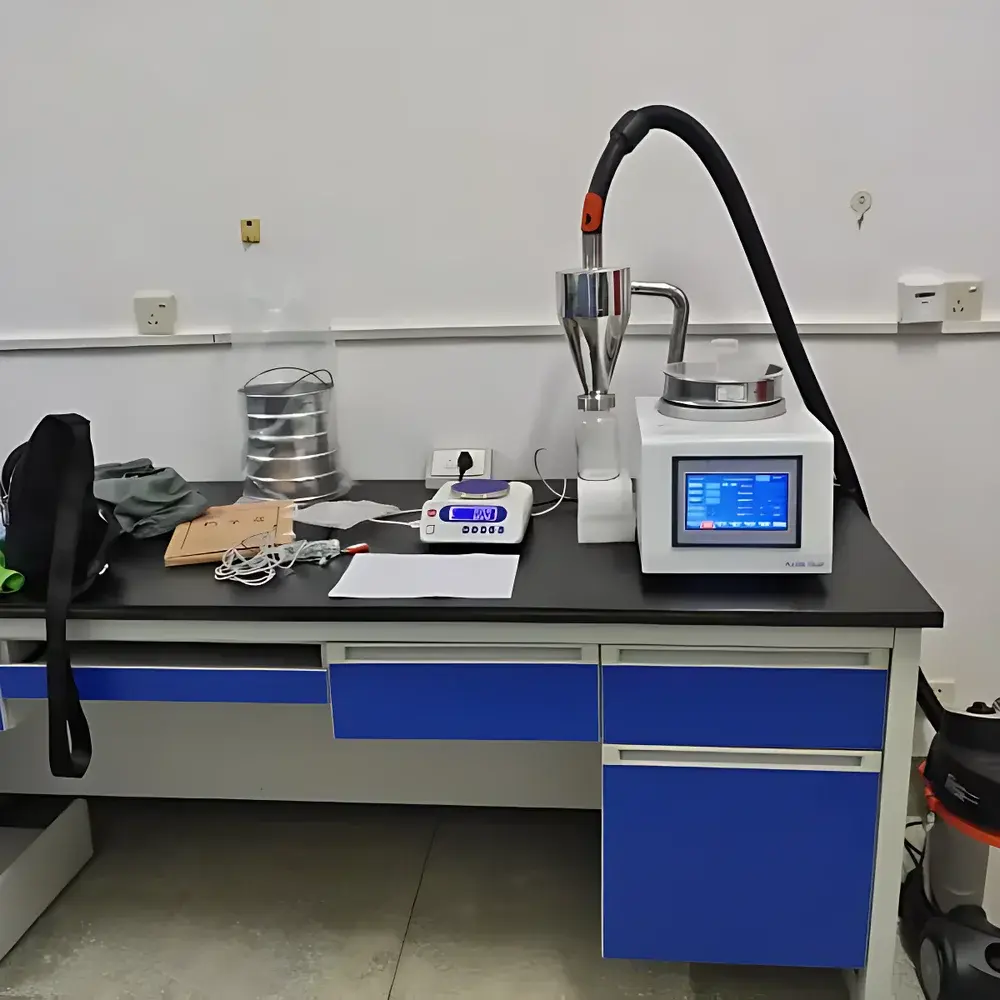
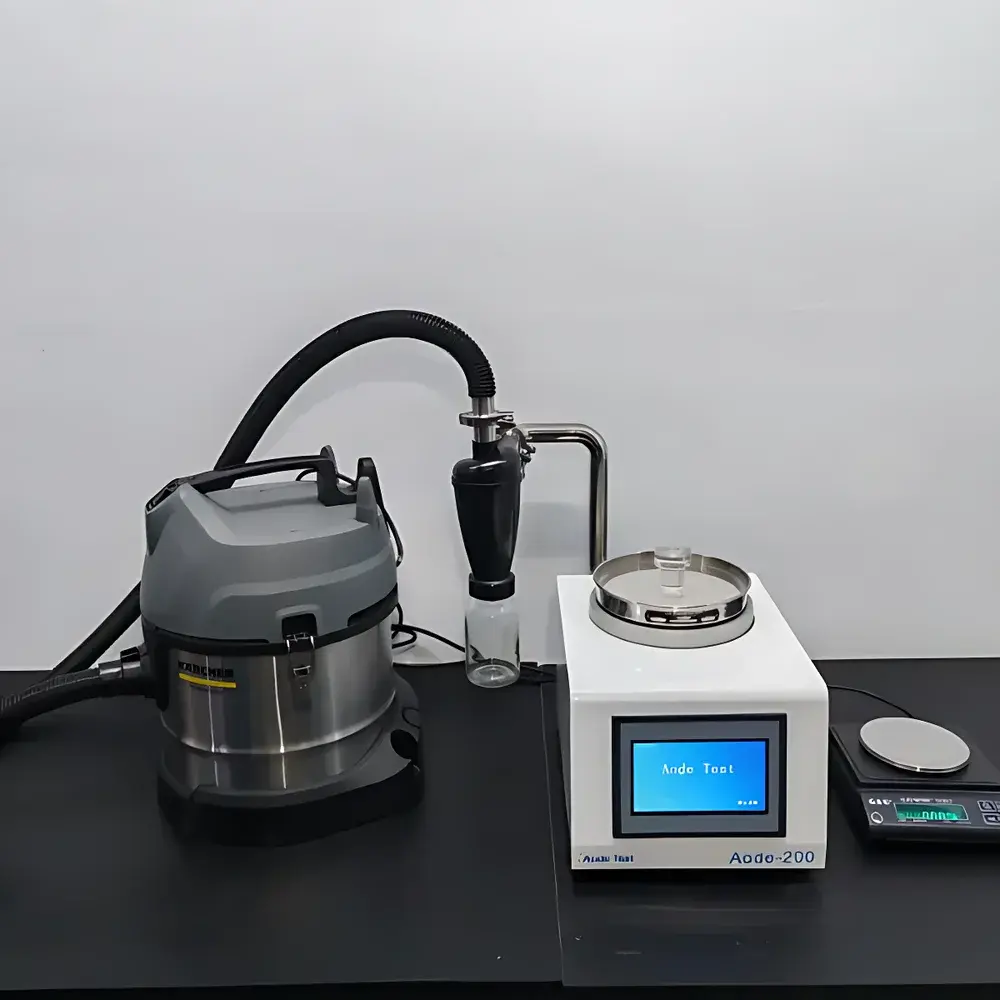
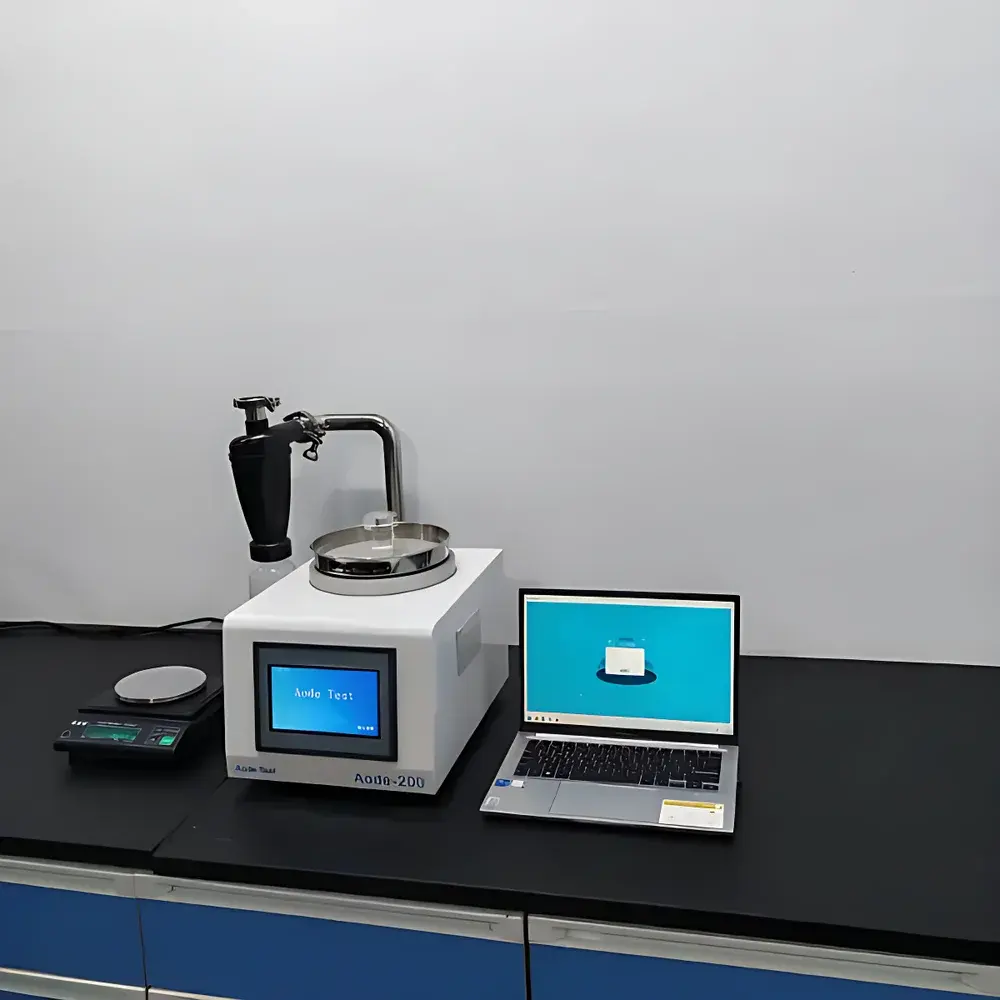
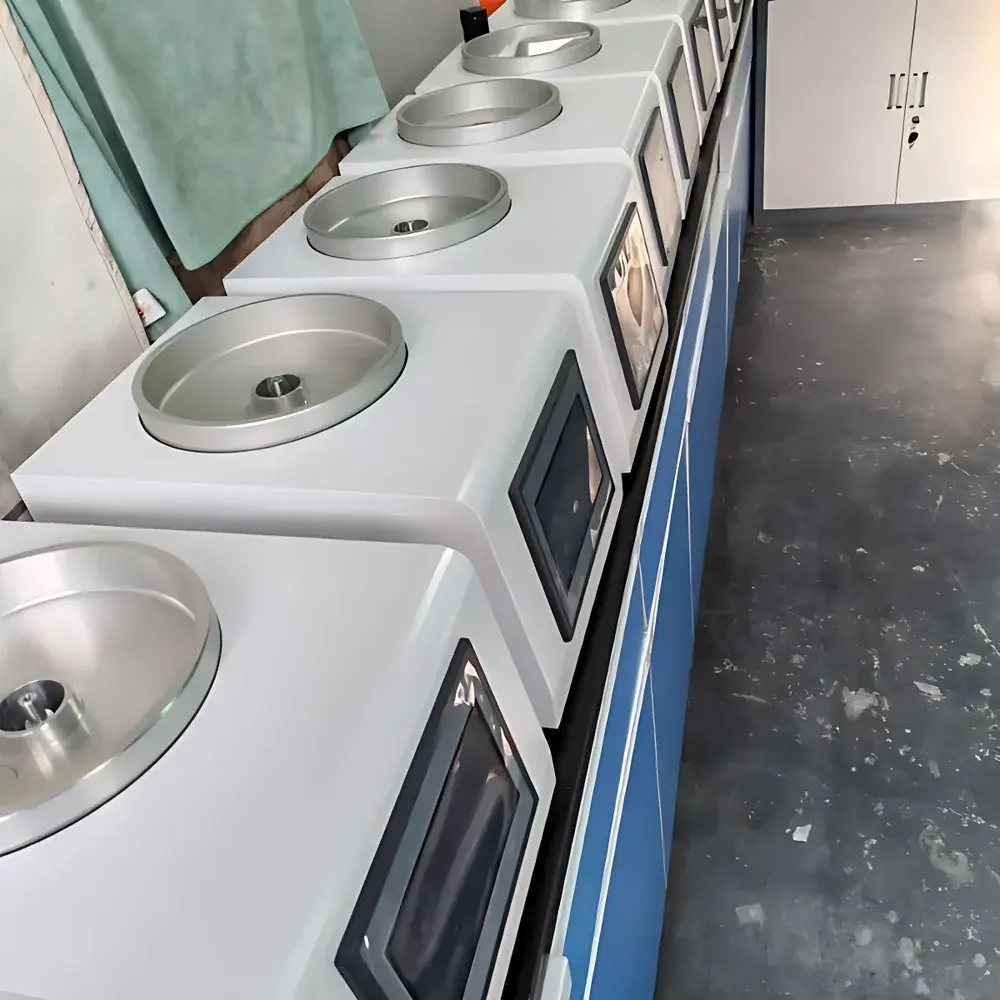
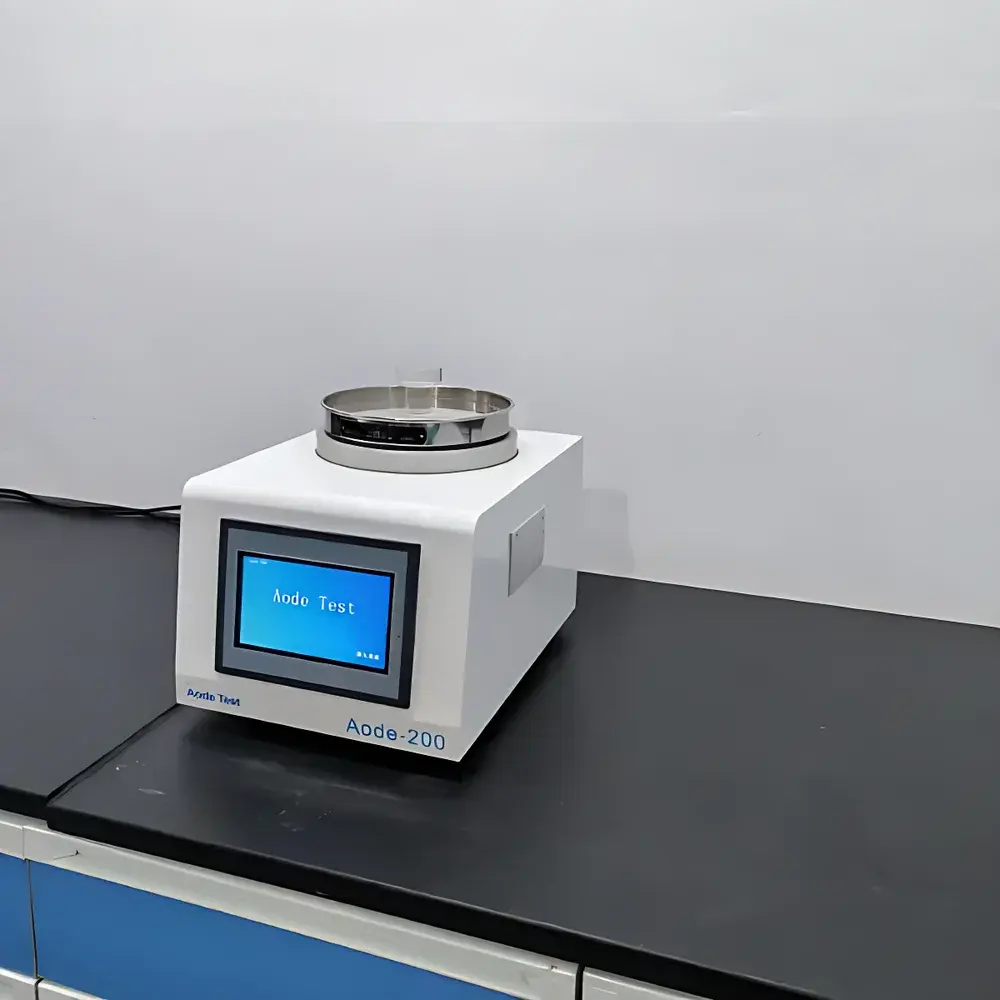
Aode Aode-200-1 Air Jet Sieve Analyzer
| Brand | Aode |
|---|---|
| Origin | Liaoning, China |
| Manufacturer Type | Manufacturer |
| Model | Aode-200-1 |
| Measurement Range | 5 µm – 5 mm |
| Maximum Sample Load | 100 g |
| Sieve Stages | 1 (up to 2 with optional accessories) |
| Operating Negative Pressure | 0 to −10 kPa |
| Airflow Rate | 30–120 m³/h |
| Rotational Speed | 5–30 rpm |
| Screen Diameter Compatibility | 75 mm, 150 mm, 200 mm, 203 mm |
| Repeatability | <1% |
| Accuracy | <1% |
| Sieve Residue Collection Efficiency | 99.9% |
| Display | 7-inch color TFT touchscreen |
| Data Storage Capacity | >50,000 tests |
| Power Supply | 220 VAC, 50 Hz |
| Weight | 20 kg |
| Dimensions (W×D×H) | 300 × 400 × 225 mm |
Overview
The Aode Aode-200-1 Air Jet Sieve Analyzer is an engineered solution for dry powder particle size distribution analysis based on the principle of air jet sieving—a dynamic, negative-pressure-driven method standardized in pharmacopeial and industrial testing protocols. Unlike conventional mechanical sieving, this instrument utilizes controlled laminar airflow generated by a high-efficiency vacuum source to fluidize and disperse agglomerated particles across a stationary standard sieve. The core mechanism relies on rotational nozzle-induced turbulence beneath the sieve mesh, where pressurized air jets entrain fine particles, overcome electrostatic adhesion and interparticle cohesion, and selectively transport sub-mesh particles into a sealed collection chamber. This process ensures high-fidelity separation for materials with challenging physical properties—including low bulk density, high surface charge, or strong van der Waals attraction—while eliminating blinding, bridging, and static-related inaccuracies common in traditional sieve analysis.
Key Features
- Negative-pressure-driven air jet system with integrated variable-speed rotary nozzle (5–30 rpm), optimized for uniform particle dispersion and minimal wall deposition
- Real-time pressure monitoring via built-in pressure transducer; stable operating range from 0 to −10 kPa with ±1% accuracy and 0.01 s response time
- 7-inch full-color capacitive touchscreen interface supporting intuitive parameter configuration: sieving duration (1 s–99 min), target mesh size, sample ID, batch number, department code, and sieve geometry
- Automated post-sieving calculation engine delivering immediate % retained and % passed results per test, traceable to ISO 2591-1, ASTM E11, USP <786>, and Chinese Pharmacopoeia 2020 Edition Chapter 0982
- Open Mesh™ technology enabling effective separation of particles near mesh aperture thresholds, improving resolution for narrow-distribution samples
- Self-cleaning sieve function activated automatically at end-of-cycle, reducing manual maintenance and cross-contamination risk
- Dual-tier user access control: administrator and operator roles with configurable login credentials (up to 12 unique accounts); full audit trail for all 50,000+ stored tests per device
- RS232 interface for seamless integration with external analytical balances (0.01–600 g range) and LIMS environments
Sample Compatibility & Compliance
The Aode-200-1 is validated for dry, free-flowing, and moderately cohesive powders across pharmaceutical, chemical, ceramic, food, and metallurgical sectors. It complies fully with regulatory requirements for particle size testing under Chinese Pharmacopoeia 2020 (Section 0982), USP <786> “Particle Size Distribution”, EP 2.9.31 “Air Jet Sieving”, and ASTM E11-22 “Standard Specification for Woven Wire Test Sieve Cloth and Test Sieves”. Its design accommodates standard sieve diameters of 75 mm, 150 mm, 200 mm, and 203 mm per ISO 3310-1, and supports mesh sizes ranging from 5 µm to 5 mm. The system meets GLP/GMP documentation standards through timestamped, password-protected data logging, electronic signatures, and FDA 21 CFR Part 11–compatible audit trails when connected to compliant software platforms.
Software & Data Management
All operational parameters, raw pressure/time profiles, and final mass-based distribution results are stored internally with metadata including operator ID, date/time stamp, sieve specification, and environmental conditions (temperature/humidity). Data export is supported via USB or RS232 to CSV or PDF formats. The embedded firmware implements role-based permissions, mandatory electronic sign-off for result validation, and immutable record retention—ensuring full traceability for internal QA review or external regulatory inspection. Historical queries allow filtering by sample ID, date range, or sieve mesh, with direct print capability for current or archived reports.
Applications
This analyzer serves critical quality control and R&D functions in laboratories requiring reproducible, pharmacopeia-compliant particle sizing of active pharmaceutical ingredients (APIs), excipients (e.g., microcrystalline cellulose), catalysts, pigments, toners, battery cathode materials, and ceramic precursors. It is especially suited for evaluating dissolution-relevant fractions (<75 µm) mandated in monographs for oral solid dosage forms. In industrial QC labs, it supports raw material release testing, process optimization studies (e.g., milling endpoint determination), and stability-indicating assays where particle aggregation trends must be quantified over time.
FAQ
What particle size range can the Aode-200-1 resolve?
It reliably separates particles between 5 µm and 5 mm using certified standard sieves meeting ISO 3310-1 tolerances.
Does the instrument comply with international pharmacopeial standards?
Yes—it satisfies Chinese Pharmacopoeia 2020, USP <786>, EP 2.9.31, and ASTM E11 requirements for air jet sieving methodology and reporting.
How is data integrity ensured during routine operation?
Through dual-role authentication, encrypted audit logs, electronic signatures, and 50,000-test local storage with tamper-resistant timestamps.
Can the system interface with laboratory balance systems?
Yes—via RS232 serial communication, enabling automated mass input from balances with 0.01 g readability.
Is calibration verification supported?
The unit includes built-in pressure sensor diagnostics and supports periodic verification using NIST-traceable reference sieves and certified test powders per ISO/IEC 17025 guidelines.



