
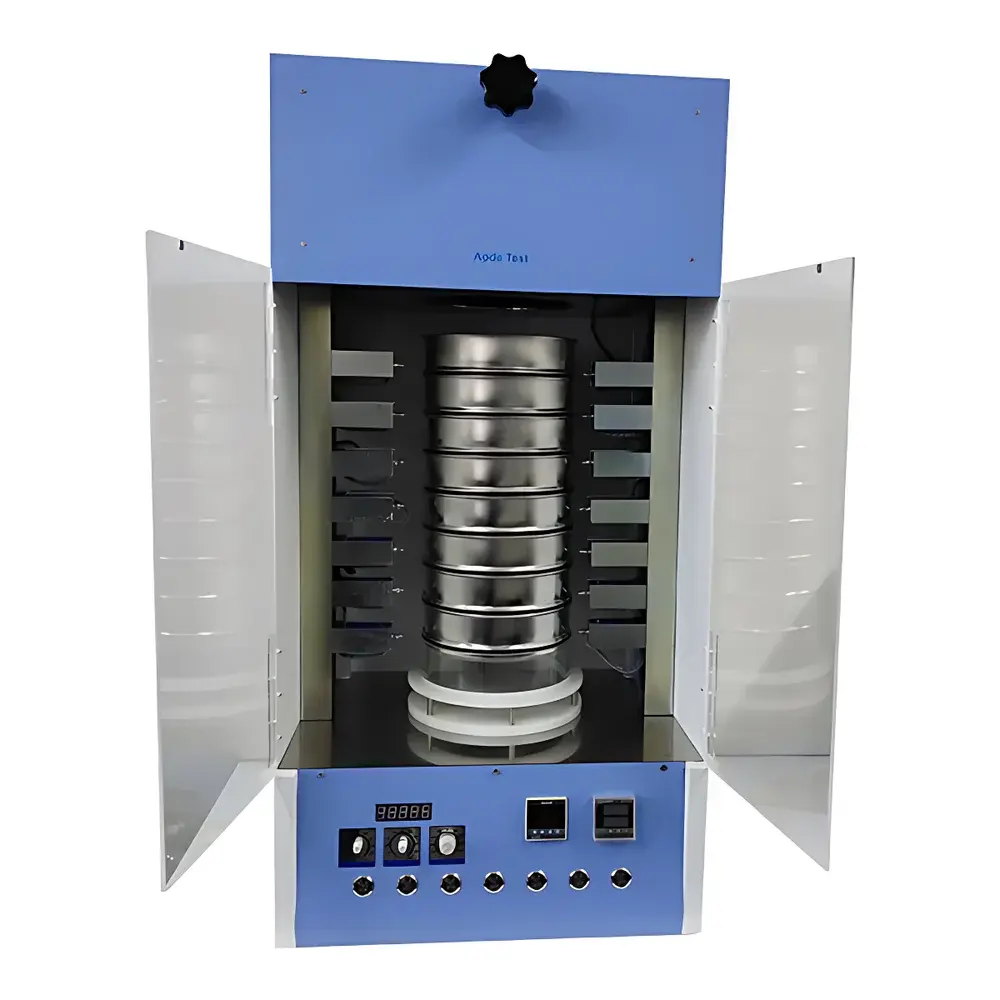
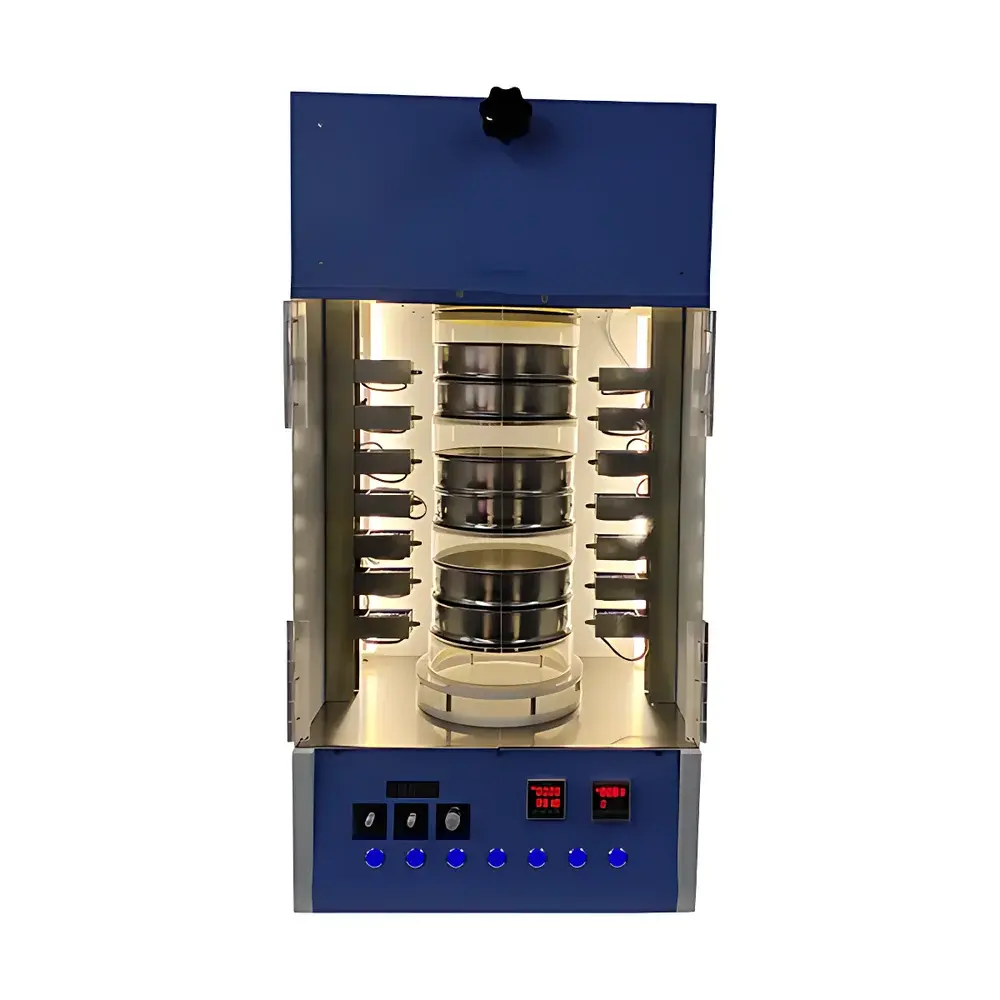
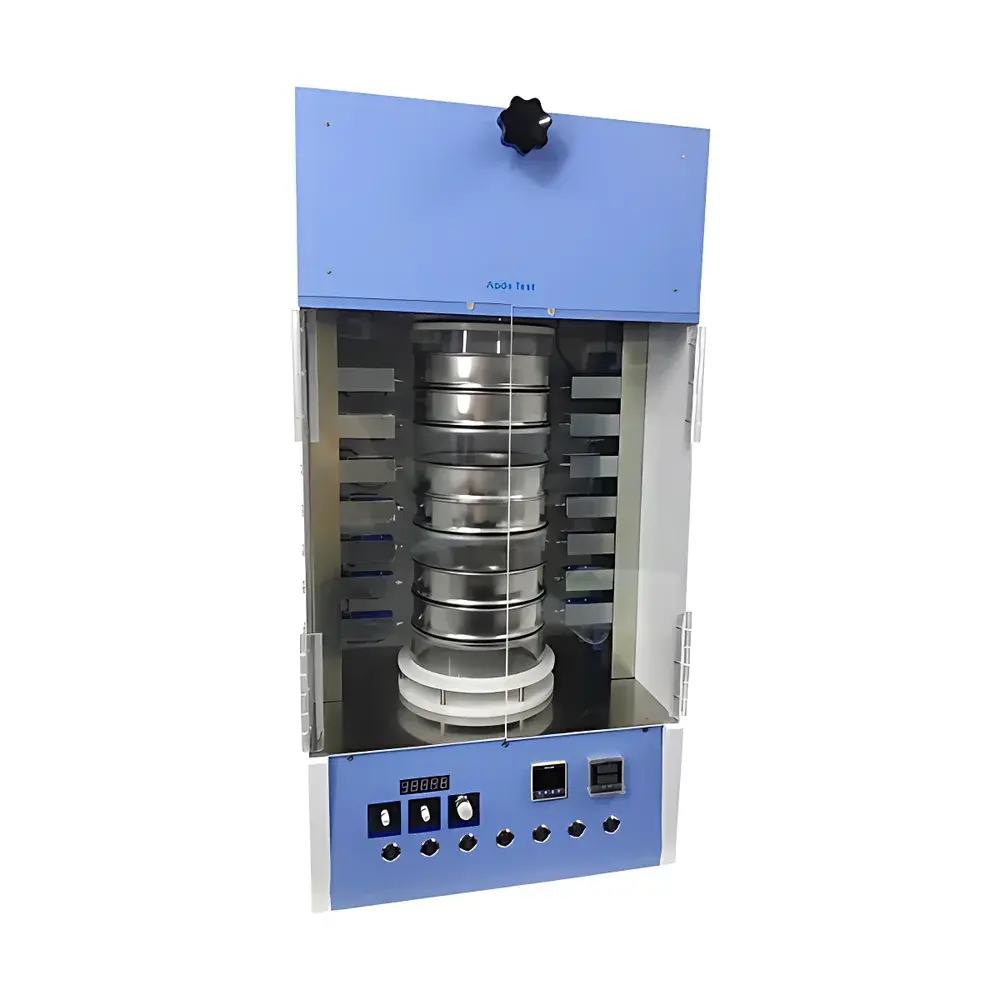
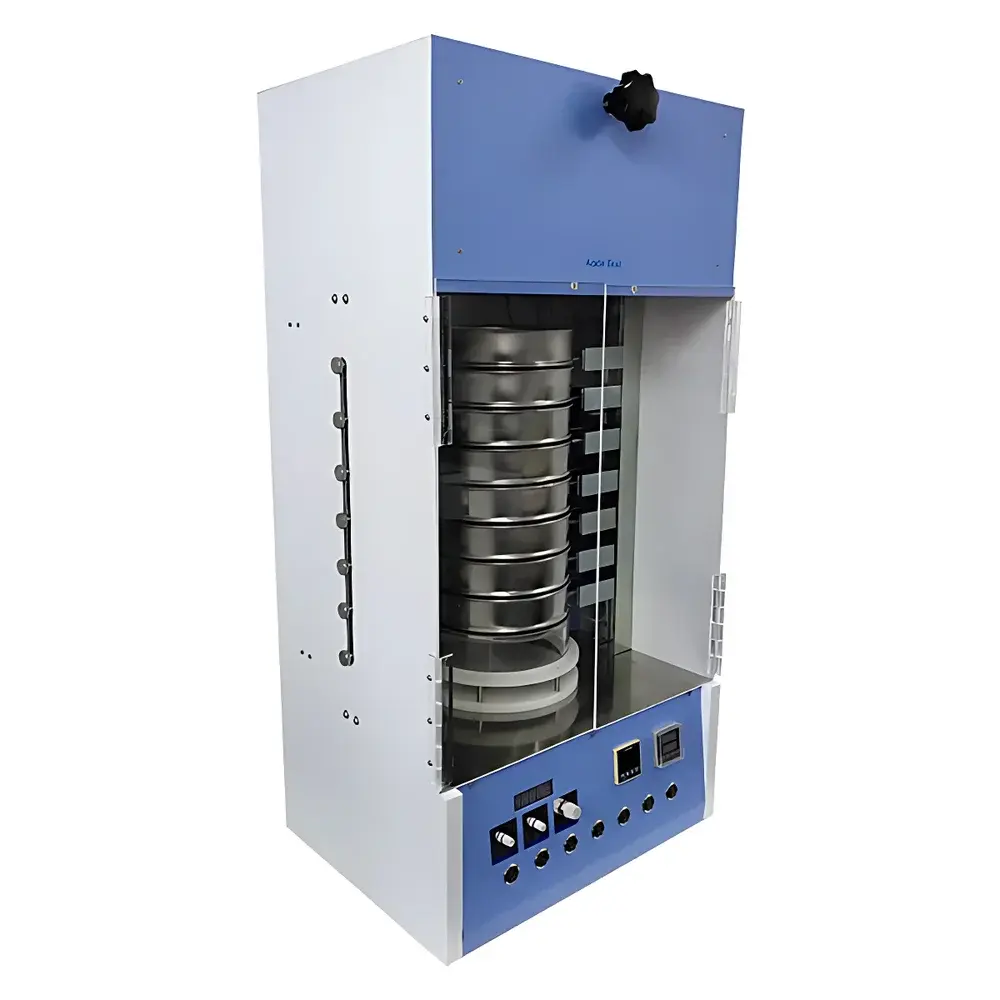
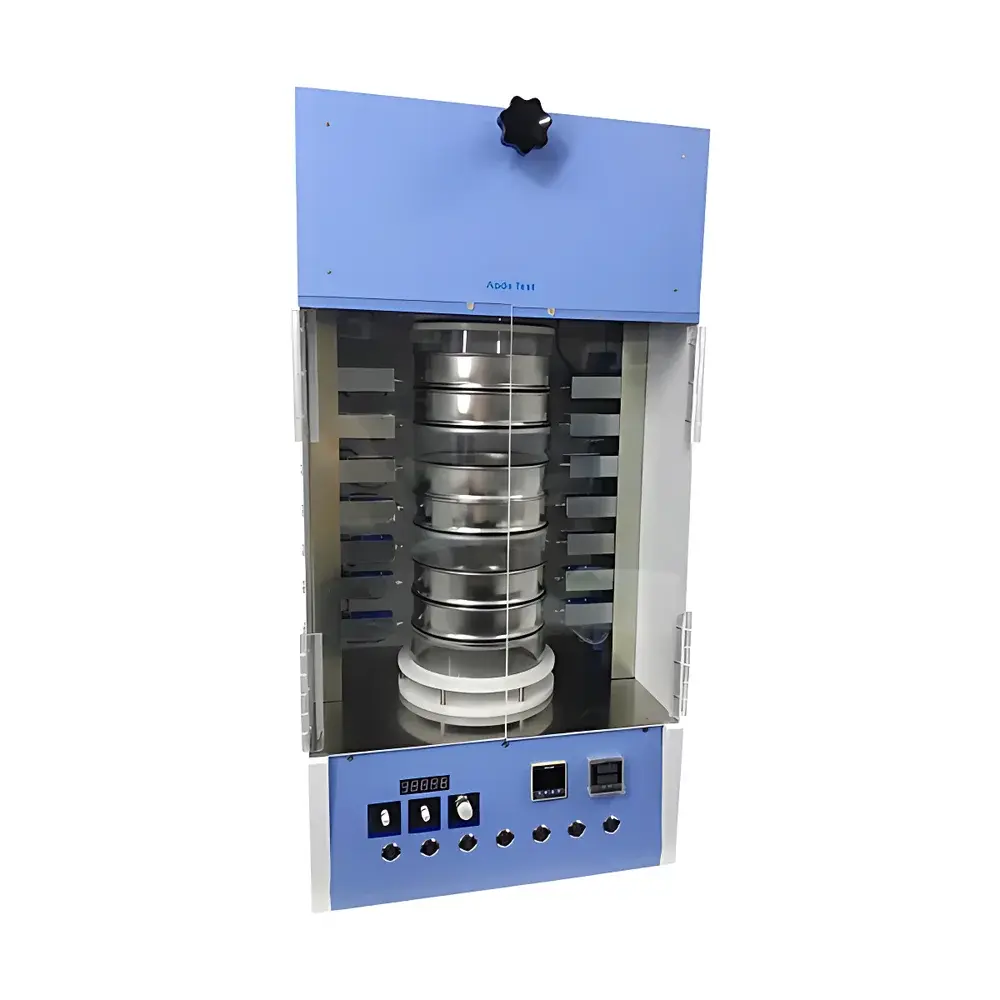
Aode Aode-200S Advanced Air-Driven Acoustic Sieve Analyzer
| Brand | Aode |
|---|---|
| Origin | Liaoning, China |
| Manufacturer Type | Direct Manufacturer |
| Model | Aode-200S (121224) |
| Price Range | USD 14,000 – 28,000 |
| Dimensions | 50 × 38 × 99 cm |
| Weight | 28 kg |
| Power Supply | 220 V AC, 60 W |
| Operating Temperature | 0–40 °C |
| Relative Humidity | <85% RH |
| Sieving Capacity | 10–100 g per run |
| Standard Sieve Diameter | 200 mm |
| Maximum Stackable Sieves | 8 layers |
| Sieving Time Range | 1.00–99.99 min |
| Frequency Range | 2–300 Hz |
| Vertical & Lateral Impact Mode | Adjustable |
| Minimum Separation Cut-Off | 5 µm |
| Maximum Particle Size Handled | 800 µm |
| Air-Driven Vibration Rate | Up to 3600 cycles/min |
Overview
The Aode Aode-200S Advanced Air-Driven Acoustic Sieve Analyzer is an engineered solution for high-fidelity dry sieving of fine and ultrafine powders—particularly those exhibiting low bulk density, high cohesiveness, electrostatic charge, or strong interparticle adhesion. Unlike conventional mechanical vibratory or rotary sievers, the Aode-200S employs controlled acoustic air pulsation as its primary separation mechanism. It generates a precisely regulated columnar airflow that oscillates vertically at frequencies between 2 Hz and 300 Hz (up to 3600 cycles per minute), inducing synchronized lift-and-release motion across the entire sieve surface. This air-coupled vibration agitates particles without direct mechanical contact, minimizing sample degradation, sieve wear, and blinding—critical advantages when handling pharmaceutical actives, nanoscale catalysts, battery electrode materials, or hygroscopic excipients. The system operates under ambient pressure and requires no vacuum infrastructure, making it suitable for ISO Class 5–8 cleanroom integration and routine QC labs complying with USP , ASTM E11, and ISO 3310-1 standards.
Key Features
- Air-driven acoustic vibration system eliminates mechanical impact on fragile particles and sieve meshes—preserving sample integrity and extending sieve lifetime.
- Simultaneous multi-level sieving capability: supports up to eight 200-mm-diameter standard test sieves (per ISO 3310-1 or ASTM E11) in a sealed stack configuration.
- Independent vertical and lateral intermittent impact modules mitigate powder agglomeration and improve passage efficiency for cohesive sub-20 µm fractions.
- Programmable parameters: user-defined sieving duration (1.00–99.99 min), frequency sweep profile (2–300 Hz), and impact intensity—enabling method transfer and SOP reproducibility.
- Integrated transparent acoustic enclosure with sound-dampening polycarbonate viewport ensures operator safety and real-time visual monitoring without process interruption.
- Low-power architecture (60 W) and compact footprint (50 × 38 × 99 cm) support benchtop deployment in space-constrained laboratories.
Sample Compatibility & Compliance
The Aode-200S is validated for use with free-flowing and marginally cohesive powders ranging from 5 µm to 800 µm in nominal particle size. It demonstrates robust performance with APIs, lactose carriers, metal injection molding (MIM) feedstocks, ceramic precursors, food-grade starches, and conductive carbon blacks. All hardware components—including sieve frames, collection pans, and air distribution plates—are constructed from stainless steel (AISI 304) and anodized aluminum to ensure corrosion resistance and compatibility with GMP cleaning protocols. The instrument complies with CE electromagnetic compatibility (EMC) directives and meets IEC 61000-6-3 emission limits. Data acquisition and reporting functions align with ALCOA+ principles; audit trails, electronic signatures, and data export formats (CSV, PDF, XLSX) support compliance with FDA 21 CFR Part 11 and EU Annex 11 requirements when paired with validated software configurations.
Software & Data Management
The included Windows-based Aode SieveAnalysis Suite v3.2 provides full control over instrument operation and automated post-processing of mass distribution data. Upon completion of each sieving cycle, the software imports tare-corrected mass values from integrated analytical balances (via RS-232 or USB-HID), calculates retained mass percentages per sieve layer, and plots cumulative undersize distribution curves using logarithmic x-axes (µm) and linear y-axes (%). Statistical outputs include D10, D50, D90, span, and relative width indices. All raw datasets, method files, and report templates are stored in encrypted local databases with timestamped revision history. Export options include GLP-compliant PDF reports with embedded instrument ID, operator ID, calibration status, and environmental log metadata. Batch processing mode enables retrospective analysis across hundreds of historical runs with cross-method comparison tools.
Applications
- Pharmaceutical solid dosage development: granule sizing, blend uniformity assessment, and excipient classification per USP .
- Electronics manufacturing: screening of solder paste alloys, conductive silver inks, and piezoelectric ceramic powders.
- Powder metallurgy: verification of particle size distribution in MIM and additive manufacturing feedstocks prior to sintering.
- Food & nutraceuticals: validation of spray-dried protein isolates, vitamin premixes, and functional fiber blends.
- Advanced materials R&D: characterization of battery cathode/anode powders (e.g., NMC, LFP, SiOx) and catalyst supports.
- Quality control in ceramics, pigments, and abrasives where sieve analysis remains the reference method per ISO 9276-2.
FAQ
What is the fundamental difference between acoustic sieving and ultrasonic sieving?
Acoustic sieving relies on controlled air pulsation to induce vertical particle agitation, whereas ultrasonic sieving uses high-frequency mechanical resonance (typically >20 kHz) transmitted directly through the sieve mesh. The Aode-200S does not employ piezoelectric transducers or resonant mesh excitation.
Can the Aode-200S replace wet sieving for sub-10 µm materials?
It achieves comparable resolution to wet sieving for many cohesive fine powders (e.g., fumed silica, nano-TiO₂) without solvent use—but validation against reference methods (e.g., laser diffraction or sedimentation) is required per ISO 13320 for regulatory submissions.
Is calibration traceable to national standards?
Yes. Certified reference sieves (traceable to NIST or PTB) and calibrated analytical balances must be used during IQ/OQ qualification. Aode provides documented calibration procedures compliant with ISO/IEC 17025 guidelines.
Does the system support 21 CFR Part 11 compliance out-of-the-box?
The base software includes role-based access control and basic audit logging. Full Part 11 compliance requires installation on a validated Windows OS environment, network authentication integration, and documented change control—services available through Aode’s GxP Support Package.
What maintenance intervals are recommended?
Air filter replacement every 6 months; visual inspection of gasket integrity and impact rod alignment before each shift; annual verification of frequency output accuracy using a calibrated digital tachometer.



