
Aotuo T-Series Soil Water Potential Tensiometers
| Origin | Germany |
|---|---|
| Type | Imported Instrument |
| Model | T-Series |
| Category | Soil Water Potential & Moisture Analyzer |
| Measurement Range | -200 to +100 kPa (T5/T4/T8/TS1), +5 to +200 kPa (SISC4/SISC8) |
| Accuracy | ±0.5 kPa (tensiometers), ±0.2 kPa (SIS sensors, 5–70 kPa), ±0.1 °C (SIS temperature) |
| Resolution | 1 hPa (Infield 7C display), ±0.2 K (temperature) |
| Operating Temperature | -30 °C to +70 °C |
| IP Rating | IP67 (all tensiometers and Infield 7C) |
| Output Interfaces | RS485, tensioLINK, SDI-12, analog (0–1/2/5 V), M12 connectors (4-pin or 8-pin) |
| Power Supply | 6–20 VDC |
| Data Storage | 250 readings (Infield 7C) |
| Drift | <0.5% per year |
Overview
The Aotuo T-Series Soil Water Potential Tensiometers are precision-engineered field instruments designed for continuous, high-fidelity measurement of soil matric potential — a fundamental parameter governing water availability to plants and solute transport in unsaturated soils. Based on the classical tensiometric principle, the system replicates the physical mechanism by which plant roots extract water: a porous ceramic cup (typically with an air-entry value of 15 bar) establishes hydraulic equilibrium with the surrounding soil matrix. As soil dries and matric potential decreases (i.e., becomes more negative), water is drawn from the sealed water column inside the tensiometer tube, generating a measurable negative pressure (vacuum) proportional to soil water potential. This physically grounded, thermodynamically consistent method provides direct, in-situ quantification without calibration drift due to soil texture or salinity — distinguishing it from indirect methods such as dielectric or thermal conductivity sensors. The T-Series integrates seamlessly into long-term environmental monitoring networks, irrigation scheduling systems, and controlled lysimeter studies where regulatory compliance (e.g., ISO 11274, ASTM D4944) and traceable data integrity are required.
Key Features
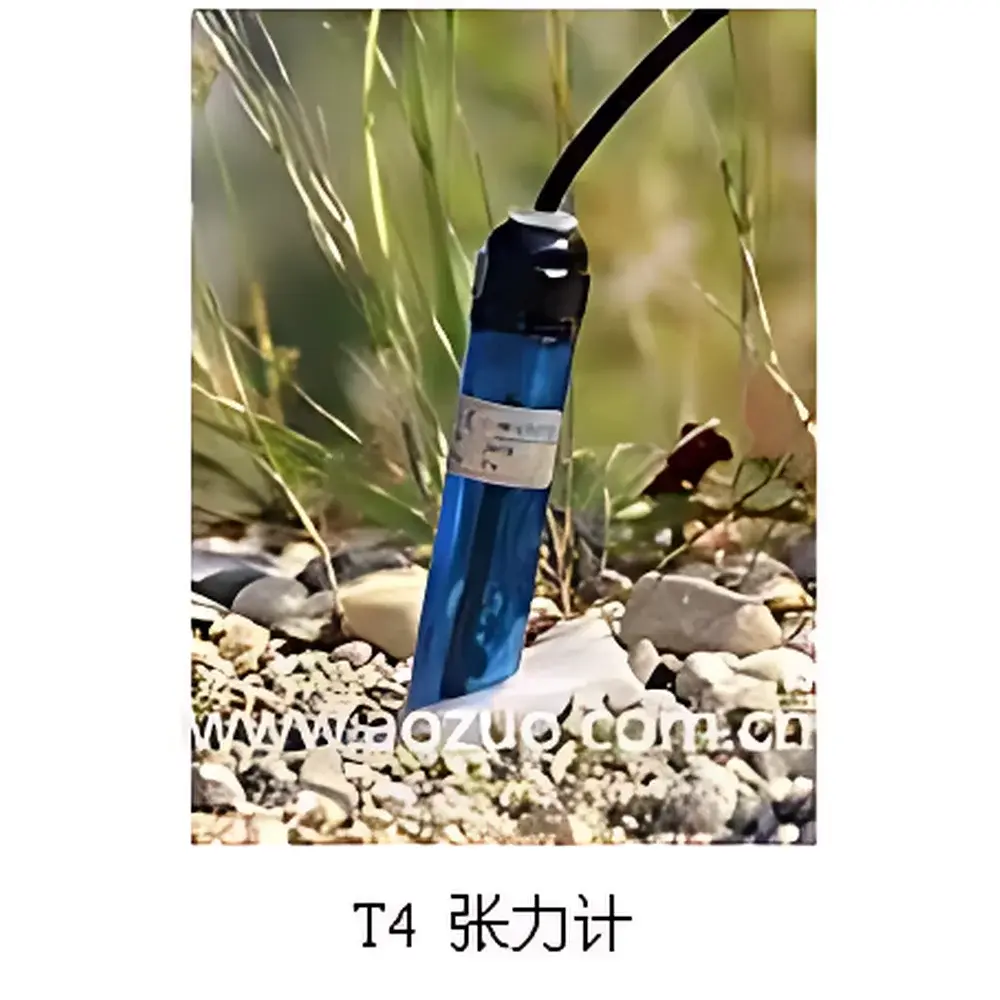
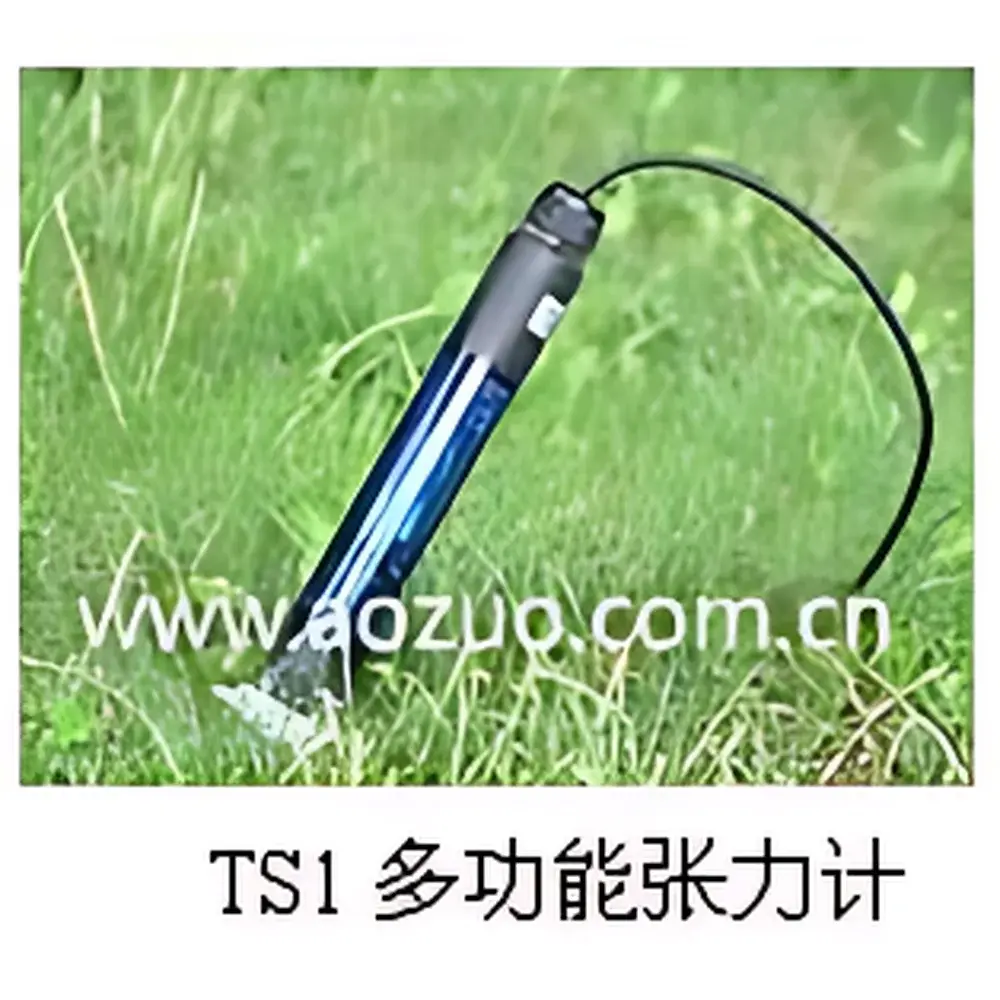
- Modular architecture supporting five distinct sensor configurations: T4 (standard tensiometer), T5 (micro-tensiometer), T8 (dual-parameter: water potential + temperature), TS1 (self-maintaining tensiometer with automated refilling and frost protection), and SISC4/SISC8 (matrix potential sensors for higher-range positive potentials)
- Infield 7C handheld reader with dual-unit display (hPa/kPa), real-time temperature compensation, automatic sensor identification, and installation parameter logging (depth, tilt angle, cable length)
- TS1’s proprietary active maintenance system: integrated micro-pump autonomously refills the ceramic cup and evacuates air bubbles when soil rewets; initiates full drainage prior to freezing temperatures to prevent ceramic fracture
- IP67-rated construction across all probes and the Infield 7C unit, validated for continuous burial in saturated, saline, or clay-rich soils
- Low-power design: typical current draw of 1–2.5 mA enables multi-season deployment on solar-recharged battery systems or low-voltage DC grids
- Factory-traceable accuracy of ±0.5 kPa over the full operational range (-200 to +100 kPa), verified per ISO/IEC 17025-accredited procedures
Sample Compatibility & Compliance
The T-Series is validated for use in mineral soils (sand to clay loam), organic substrates (peat, compost), and engineered growing media (e.g., hydroponic aggregates). Its ceramic cups comply with DIN 11851 specifications for pore-size distribution and air-entry value consistency. All tensiometers meet IEC 60529 (IP67) for dust/water ingress protection and operate within the environmental limits defined in EN 61326-1 for electromagnetic compatibility in field instrumentation. Data acquisition workflows support GLP and GMP-aligned practices: Infield 7C timestamps each reading with internal RTC (±2 s/month), and digital outputs (RS485/tensioLINK) include embedded metadata (sensor ID, firmware version, diagnostic flags) required for FDA 21 CFR Part 11-compliant audit trails when integrated with certified data loggers.
Software & Data Management
While the Infield 7C operates as a standalone field terminal, its tensioLINK protocol enables bidirectional communication with third-party SCADA platforms (e.g., Campbell Scientific LoggerNet, HOBOware Pro, or custom Python-based ingestion pipelines). Raw measurements are output in ASCII format with SI units and error codes (e.g., “ERR: AIR” for bubble detection, “FROST: DRAINING” for TS1 frost-response status). SISC8 sensors provide Modbus RTU over RS485, facilitating integration into industrial IoT architectures. Calibration certificates and sensor-specific correction curves (e.g., temperature-induced zero-shift coefficients) are stored in non-volatile memory and retrievable via command query. No proprietary cloud service or vendor lock-in is required; all data formats adhere to OGC SensorML and CF Metadata conventions for interoperability with FAO WaPOR or USDA SCAN databases.
Applications
- Agronomic research: Quantifying root-zone water stress thresholds for drought-tolerant crop varieties under variable irrigation regimes
- Hydrological modeling: Parameterizing Richards’ equation boundary conditions in vadose zone simulations (e.g., HYDRUS-1D, STOMP)
- Ecological restoration: Monitoring capillary barrier performance in landfill cover systems and phytoremediation plots
- Smart irrigation control: Triggering drip emitter activation based on real-time matric potential crossing user-defined hysteresis thresholds (via SISC4 alarm outputs)
- Climatic impact studies: Long-term trend analysis of soil desiccation depth in response to changing precipitation patterns (validated against NOAA NRCS SNOTEL benchmarks)
FAQ
How does the TS1 eliminate manual maintenance?
The TS1 integrates a miniature diaphragm pump and pressure-controlled valve network. Upon detecting rewetting (via sustained positive pressure gradient), it draws soil solution into the ceramic cup while purging entrapped air through a dedicated vent path. Prior to ambient temperature falling below 2 °C (as sensed by its integrated PT1000 probe), it fully evacuates water from the ceramic head to prevent freeze-thaw damage.
Can T-Series tensiometers be used in saline soils?
Yes — unlike electrical resistance sensors, tensiometric measurement is unaffected by pore-water conductivity. However, in soils with EC > 4 dS/m, ceramic cup clogging may occur over time; periodic cleaning with dilute HCl (0.1 M) followed by thorough rinsing is recommended per ISO 10381-5.
What is the maximum cable length for analog signal transmission?
For 0–1 V analog output, maximum unshielded distance is 10 m; for shielded twisted-pair cabling with proper grounding, up to 50 m is achievable without significant noise coupling. Digital interfaces (RS485/tensioLINK) support distances up to 1,200 m.
Is factory recalibration required annually?
No. The ceramic cup and vacuum transducer exhibit <0.5% full-scale drift per year under field conditions. Users may verify zero-point stability using saturated humidity calibration (99.9% RH at 20 °C) or compare against a reference tensiometer in situ. Full recalibration is recommended only after physical damage or ceramic replacement.







