
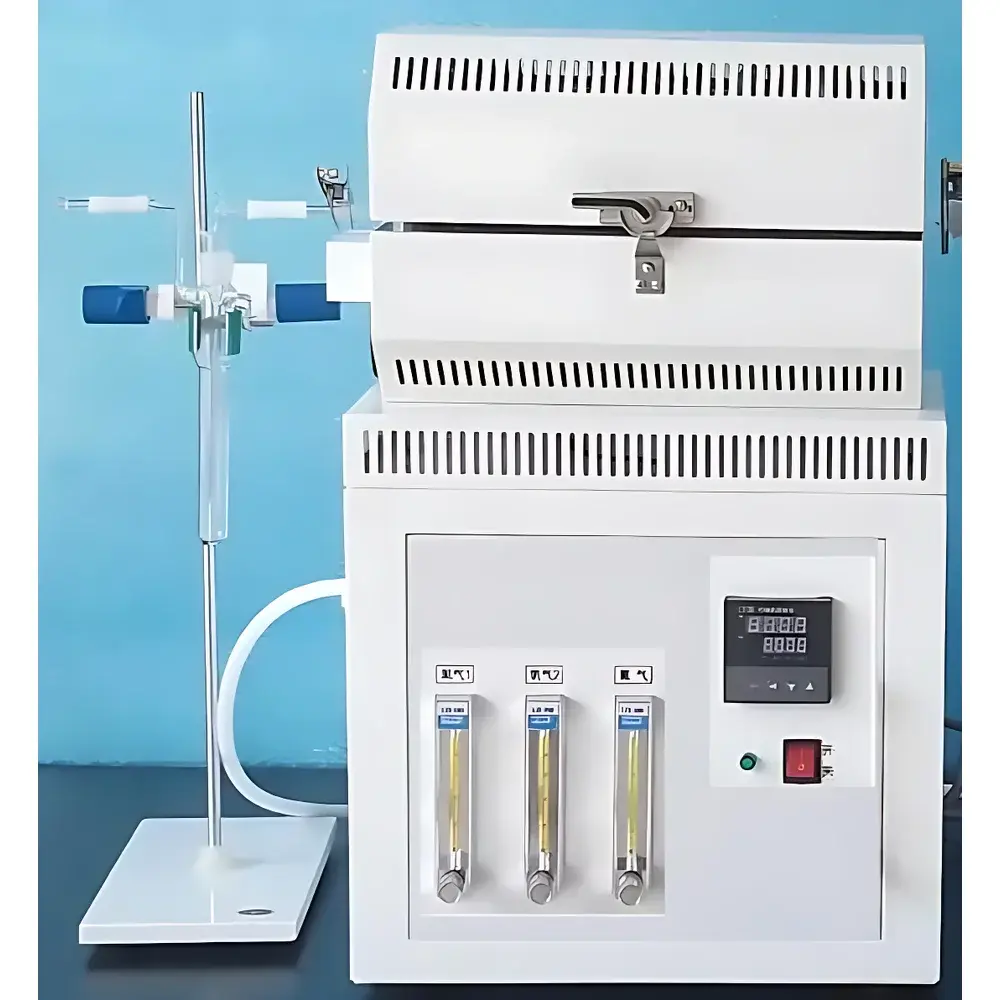
AOX-S Organic Halogen Combustion Analyzer by Chemo
| Brand | Chemo |
|---|---|
| Origin | Hubei, China |
| Model | AOX-S |
| Measurement Principle | Combustion-Coulometric Titration |
| Max Combustion Temperature | 1300 °C |
| Sample Introduction Method | Column Adsorption with N₂ Pressurization |
| Sample Mass Range | 5–1000 mg |
| Detection Range | 0.8–1000 µg/L (as Cl⁻ equivalent) |
| Typical Analysis Time (combustion + titration) | 3–10 min |
| Carrier Gas | O₂ ≥99.6% (optional high-purity O₂ ≥99.999%) |
| Sample Boat | Modified ceramic boat enabling direct sample loading |
| Optional Feature | Automated Sample Introduction Module |
Overview
The AOX-S Organic Halogen Combustion Analyzer is a dedicated benchtop instrument engineered for the quantitative determination of adsorbable organic halogens (AOX) in aqueous and solid environmental matrices—including wastewater, sludge, soil, and industrial effluents. It operates on the internationally standardized combustion-coulometric titration principle (DIN EN ISO 9562, EPA Method 1650, and ISO 9562), wherein samples are thermally decomposed under controlled oxidative conditions at up to 1300 °C, converting all covalently bound chlorine, bromine, and iodine into halide ions (X⁻). These ions are subsequently absorbed in an alkaline hydrogen peroxide solution and quantified via coulometric titration using silver nitrate—ensuring trace-level sensitivity and high reproducibility without manual reagent standardization.
Key Features
- High-temperature quartz furnace capable of stable operation up to 1300 °C, ensuring complete mineralization of refractory organohalogen compounds including polyhalogenated aromatics and aliphatics.
- Optimized column adsorption module with nitrogen pressurization (N₂-driven elution), enabling efficient capture and concentration of AOX from large-volume water samples (up to 1 L) onto activated carbon cartridges prior to combustion.
- Patented modified ceramic sample boat design allows direct introduction of solid or pre-adsorbed samples without transfer losses—minimizing contamination risk and improving analytical precision.
- Integrated coulometric titration cell with real-time current measurement and automatic endpoint detection, eliminating reliance on visual indicators or external calibration standards.
- Gas control system compatible with standard technical oxygen (≥99.6% purity) and optionally configurable for ultra-high-purity oxygen (≥99.999%), reducing blank contributions and enhancing detection reliability at sub-µg/L levels.
- Modular architecture supporting optional automated sample introduction—ideal for laboratories processing >20 samples/day while maintaining full traceability and operator safety.
Sample Compatibility & Compliance
The AOX-S accommodates liquid samples (e.g., filtered wastewater, leachates), suspended solids (sludge, sediments), and dried solid matrices (soil, paper pulp, textile extracts) following standardized pretreatment protocols. All operational parameters align with DIN EN ISO 9562:2021 and ASTM D5907-20, and the system supports full audit trails required under GLP-compliant environmental testing frameworks. Data integrity is reinforced through timestamped event logging, user-access controls, and hardware-level signal validation—facilitating readiness for regulatory submissions to national environmental agencies and third-party accreditation bodies (e.g., CNAS, UKAS).
Software & Data Management
The embedded firmware provides intuitive touchscreen navigation for method setup, combustion sequence initiation, titration curve visualization, and result export. Raw coulometric current profiles and integrated charge values are stored in proprietary binary format with embedded metadata (operator ID, sample ID, date/time, gas flow rates, temperature ramp profile). Export options include CSV and PDF reports compliant with ISO/IEC 17025 documentation requirements. While the base configuration does not include FDA 21 CFR Part 11–compliant electronic signature functionality, the architecture supports future firmware upgrades to meet GxP data governance standards upon customer request and validation.
Applications
- Regulatory monitoring of AOX discharge limits in municipal and industrial wastewater treatment plants (WWTPs).
- Compliance verification for pulp and paper mills subject to ECF/TCF bleaching process regulations.
- Environmental impact assessment of chlorinated pesticide residues in agricultural runoff and groundwater.
- Quality control of pharmaceutical intermediates where residual halogenated solvents must be verified below ICH Q3C thresholds.
- Research applications in advanced oxidation process (AOP) efficiency studies, tracking halogen release kinetics during UV/H₂O₂ or ozone treatment.
FAQ
What sample types can be analyzed without derivatization or chemical pretreatment?
Liquid samples (filtered to 0.45 µm) and solid samples pre-adsorbed onto activated carbon may be introduced directly; no acid digestion or solvent extraction is required.
Is the system compatible with regulatory reporting for EU Water Framework Directive (WFD) compliance?
Yes—the methodology conforms to ISO 9562, which is referenced in WFD Technical Guidance Note 27 for priority substance monitoring.
How is system blank minimized during low-concentration analysis?
Through use of high-purity oxygen, quartz combustion tube passivation, and routine blank correction using procedural blanks processed identically to samples.
Can the AOX-S quantify individual halogens (Cl, Br, I) separately?
No—it reports total halogen content as chloride-equivalent (µg Cl⁻/L or µg Cl⁻/g); speciation requires complementary techniques such as IC-MS or HR-GC/MS.
What maintenance intervals are recommended for routine operation?
Quartz tube inspection every 200 runs; coulometric cell electrolyte replacement every 6 months or after 500 analyses; annual calibration verification using certified AOX reference materials (e.g., chloroform-spiked water standards).







