
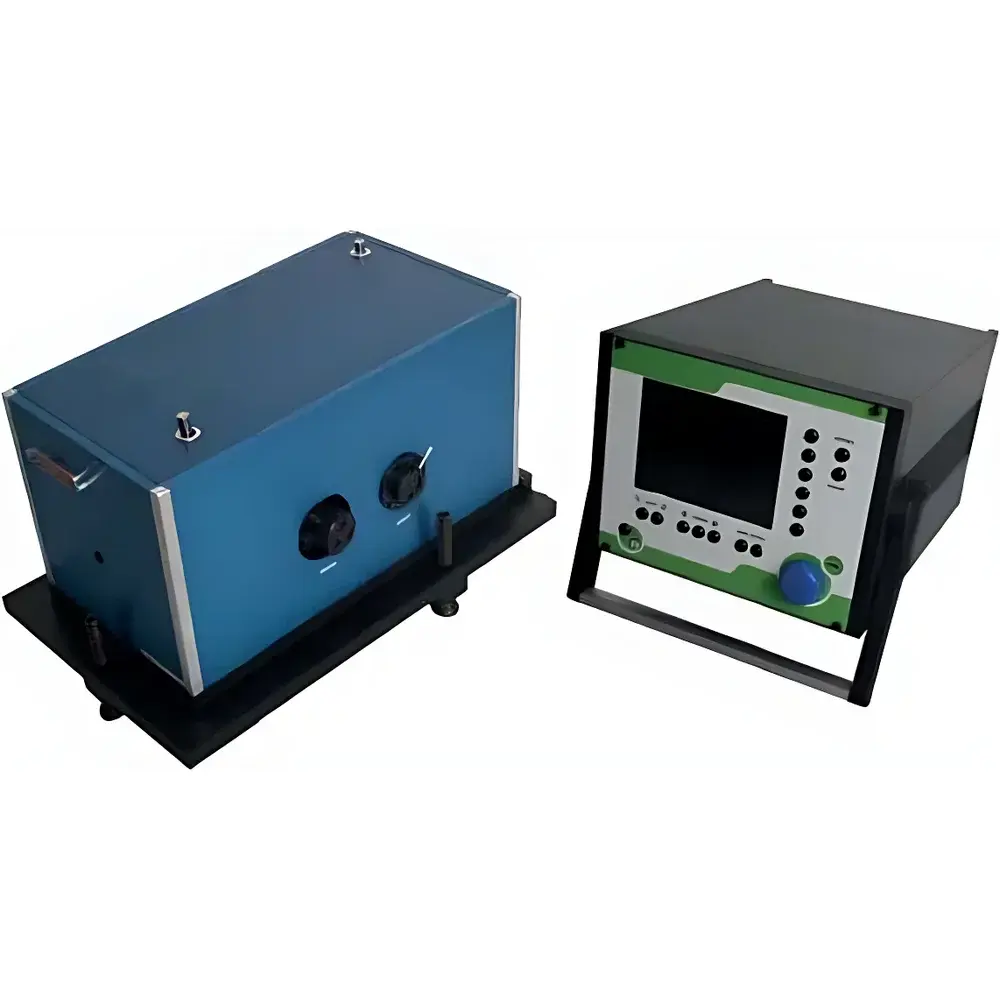

APE Carpe Series Autocorrelator
| Brand | APE |
|---|---|
| Origin | Germany |
| Manufacturer Type | Authorized Distributor |
| Origin Category | Imported |
| Model | Carpe |
| Key Components | Solid-State Laser Systems & Accessories |
| Scan Range | 150 fs – 15 ps |
| Minimum Measurable Pulse Width | 50 fs |
| Maximum Measurable Pulse Width | 3.5 ps |
| Scan Repetition Rate | 10 Hz |
| Wavelength Range | 700 – 1100 nm |
| Input Power Range | 0–30 mW (standard), 0–300 mW (with optional attenuator) |
| Input Polarization | Horizontal Linear |
| Minimum Repetition Rate | 500 kHz |
| Power Supply | 95–240 V AC, 50–60 Hz |
| Display | Color LCD, 320 × 240 pixels |
| Output Interface | RS-232 |
Overview
The APE Carpe Series Autocorrelator is a compact, high-stability second-harmonic generation (SHG)-based intensity autocorrelator engineered for real-time, in-situ femtosecond pulse characterization in ultrafast laser microscopy environments. Unlike conventional free-space autocorrelators requiring external beam re-routing, the Carpe integrates directly into the optical path of multiphoton or harmonic-generation microscopes—enabling direct measurement at the sample plane without compromising spatial alignment or temporal fidelity. Its operation relies on collinear SHG interferometry: two time-delayed replicas of the input pulse are overlapped in a nonlinear crystal (typically BBO or BiBO), and the intensity of the generated second-harmonic signal is recorded as a function of optical delay. This yields a symmetric autocorrelation trace whose full width at half maximum (FWHM) correlates quantitatively with the pulse duration under standard assumptions (e.g., sech² or Gaussian temporal profile). Designed specifically for Ti:sapphire and Yb-based oscillators and amplifiers used in multiphoton excitation fluorescence (MPEF), second-harmonic generation (SHG), and coherent anti-Stokes Raman scattering (CARS) microscopy, the Carpe delivers sub-50-fs temporal resolution with intrinsic immunity to group-delay dispersion (GDD) artifacts when operated in the specified wavelength band.
Key Features
- Integrated microscope-compatible form factor: mounts directly before or after the objective lens without beam deviation or mechanical recalibration.
- In-situ pulse width measurement at the sample position—critical for verifying actual delivered pulse duration after dispersion compensation and focusing optics.
- High-precision piezoelectric delay stage with closed-loop feedback, enabling stable 1-fs step resolution and reproducible scan repeatability over extended acquisition periods.
- Real-time acquisition at 10 Hz scan rate, synchronized to laser repetition rate via TTL trigger input (optional).
- Dual-input power handling: standard range 0–30 mW; extended range up to 300 mW with calibrated neutral-density attenuation and thermal-load-optimized crystal mounting.
- Onboard color LCD display (320 × 240) with intuitive menu navigation for immediate trace visualization, FWHM calculation, and baseline correction.
- RS-232 serial interface for remote control and data logging; compatible with LabVIEW, MATLAB, and Python-based automation frameworks via ASCII command protocol.
Sample Compatibility & Compliance
The Carpe supports linearly polarized, horizontally oriented ultrafast pulses from mode-locked solid-state lasers operating between 700 nm and 1100 nm—covering the fundamental output of Ti:sapphire oscillators (700–1000 nm), Yb-doped fiber lasers (~1030–1080 nm), and optical parametric oscillators (OPOs) tuned within this band. It is compatible with repetition rates ≥500 kHz, making it suitable for both oscillator-level diagnostics and amplified systems with pulse pickers. The device complies with IEC 61000-6-3 (EMC emission standards) and IEC 61010-1 (safety requirements for electrical equipment for measurement, control, and laboratory use). Its mechanical design adheres to DIN ISO 2768-mK tolerances for optical mounting interfaces, ensuring repeatable integration with standard microscope side ports and C-mount adapters. No regulatory certification for medical or in vivo use is claimed; the instrument is intended for laboratory research and development only.
Software & Data Management
While the Carpe operates autonomously via its embedded firmware and LCD interface, APE provides optional PC software (CarpeControl v3.x) for advanced analysis and compliance-driven workflows. The software enables full trace export in CSV and HDF5 formats, supports batch processing of multiple autocorrelation traces, and calculates deconvolution-corrected pulse durations using user-selectable pulse shape assumptions. Audit-trail functionality logs all parameter changes, acquisition timestamps, and operator IDs—facilitating adherence to GLP principles in academic core facilities and industrial R&D labs. Raw RS-232 data streams include delay position, SHG intensity, background-subtracted signal, and real-time SNR estimation. The communication protocol is deterministic and latency-controlled, allowing synchronization with external devices such as pulse shapers (e.g., Dazzler, MIIPS) or scanning galvanometers in closed-loop optimization routines.
Applications
- Verification of dispersion compensation in multiphoton microscopy systems, including adaptive optics and prism/grating compressor tuning.
- In situ pulse duration monitoring during long-term time-lapse imaging experiments to detect drift induced by thermal lensing or environmental vibration.
- Characterization of ultrafast beam delivery through gradient-index (GRIN) lenses, hollow-core fibers, or photonic crystal fibers used in endomicroscopy.
- Calibration and validation of non-collinear optical parametric amplifiers (NOPAs) and white-light continuum sources for pump-probe spectroscopy.
- Quality assurance testing of OEM ultrafast laser modules integrated into commercial confocal or light-sheet platforms.
FAQ
Can the Carpe measure pulses outside the 700–1100 nm range?
No—the nonlinear crystal phase-matching bandwidth and internal optics are optimized exclusively for 700–1100 nm. For broader spectral coverage, APE recommends the PulseCheck series.
Is alignment required each time the Carpe is reinstalled on a different microscope?
Minimal alignment is needed: only coarse centering of the input beam onto the aperture and verification of horizontal polarization orientation. The collinear architecture eliminates sensitivity to lateral misalignment.
Does the Carpe support USB or Ethernet connectivity?
No—only RS-232 is provided as standard. USB-to-RS232 adapters are widely supported, but native USB/Ethernet is not implemented in this model.
Can it be used with regenerative amplifiers operating at 1 kHz?
Yes, provided the average power remains within the 0–300 mW range and the pulse energy does not exceed the crystal damage threshold (~10 µJ/cm² for BBO at 800 nm, 100-fs pulses).
Is firmware update capability available?
Yes—firmware updates are distributed by APE via secure download and applied using the RS-232 interface and included updater utility.



