
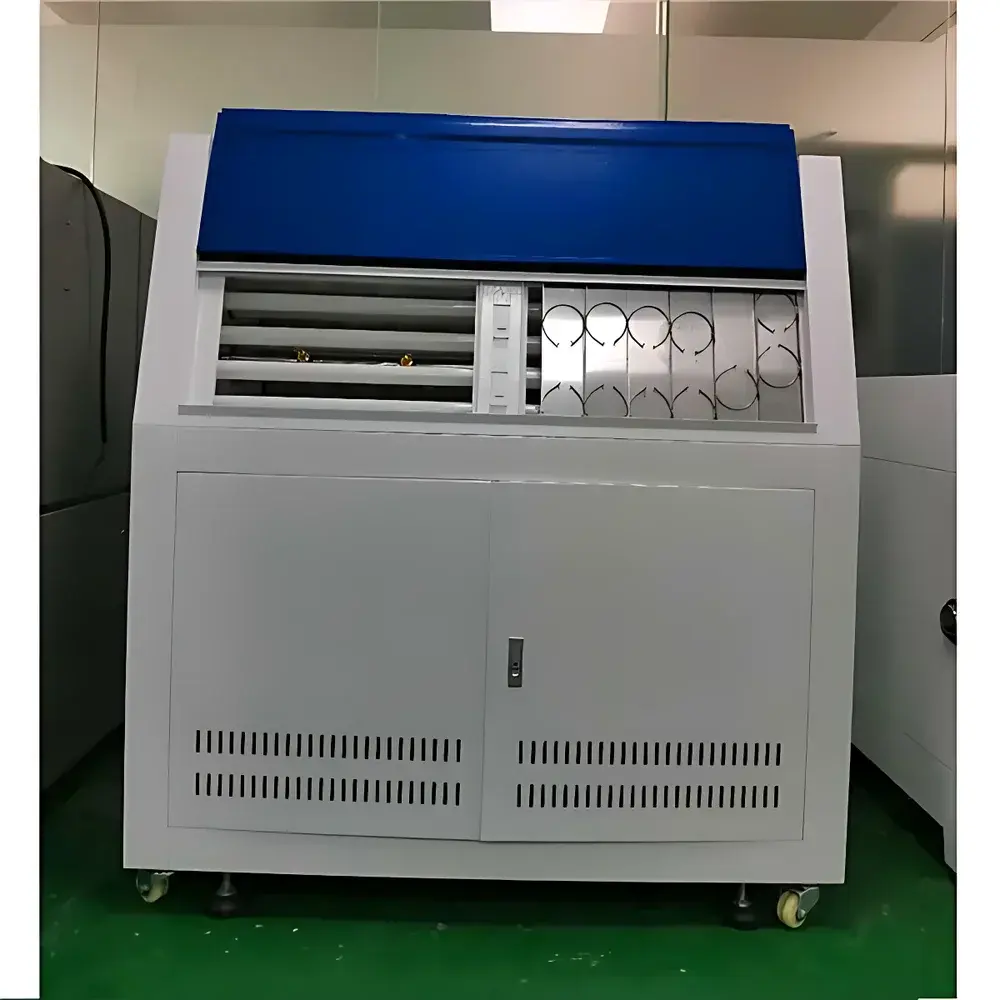
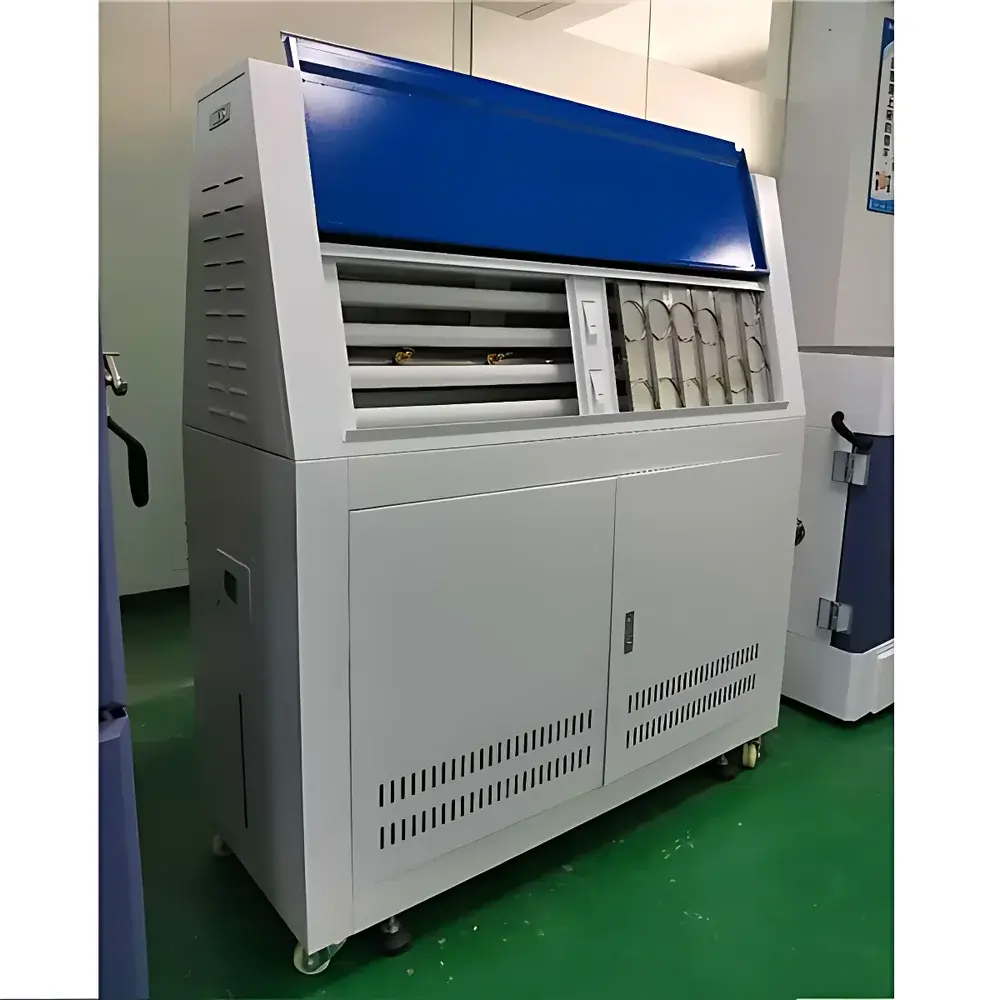
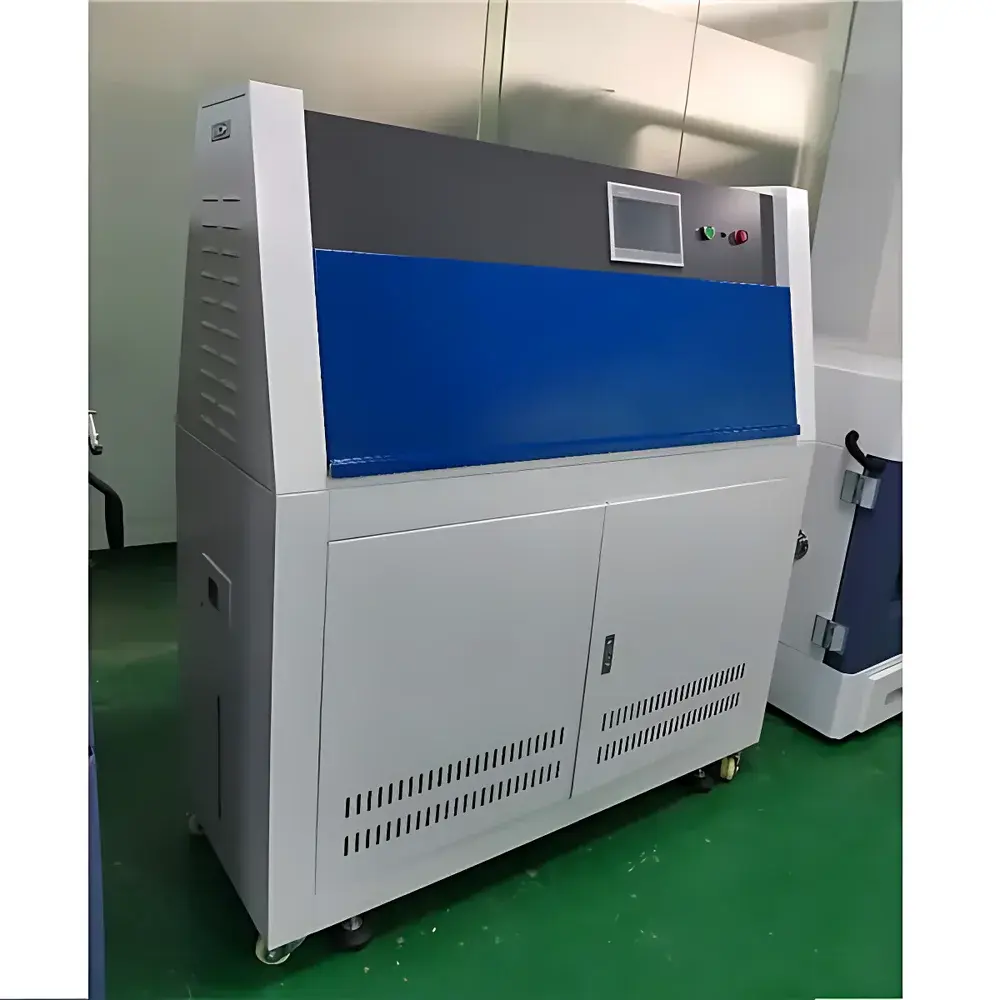
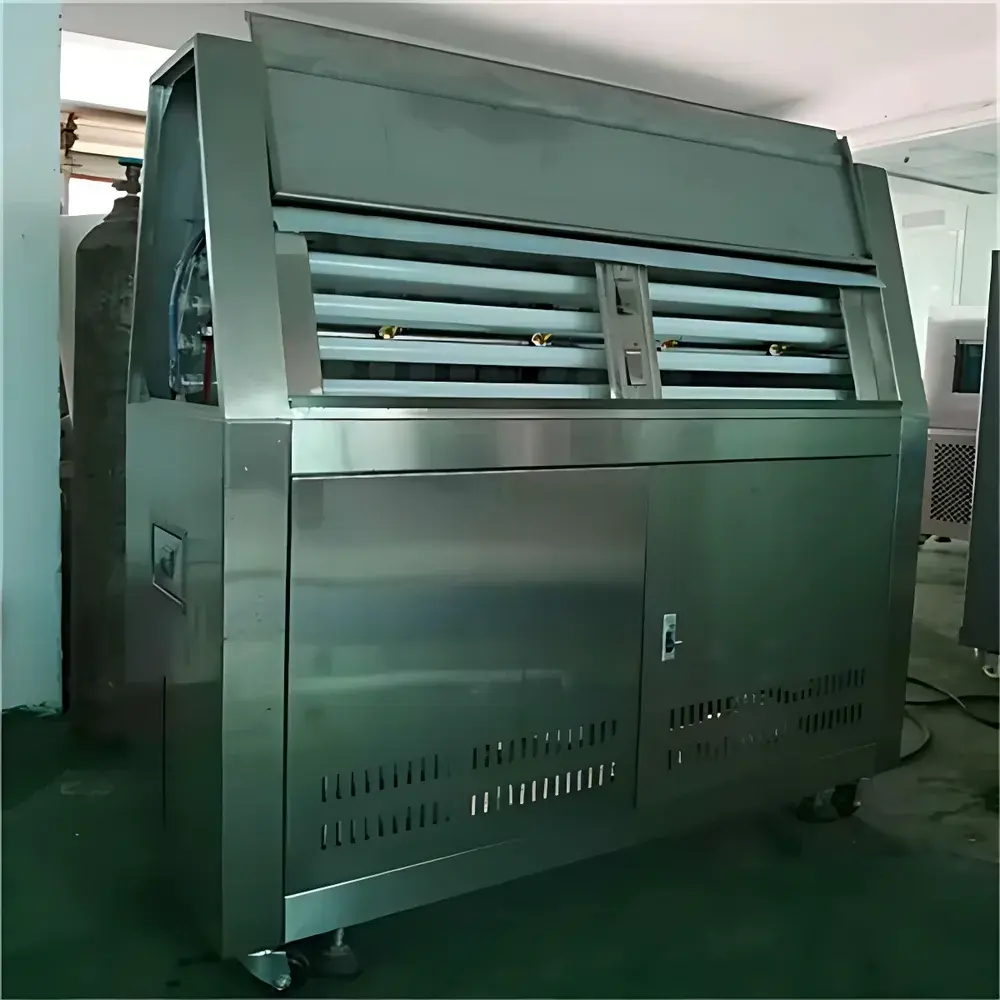
APEC AP-2-UV Advanced UV Aging Test Chamber with Radiant Intensity Monitoring
| Brand | APEC Technology (APKJ) |
|---|---|
| Origin | Guangdong, China |
| Manufacturer Type | OEM/ODM Manufacturer |
| Model | AP-2-UV |
| Test Duration Range | 1–999 hours (adjustable) |
| Irradiance Range | 0.35–1.0 W/m² |
| UV Lamp Power | 40 W per lamp |
| Humidity Range | ≥95% RH (in-chamber actual value) |
| Light Exposure Temperature Range | +10 to +70 °C |
| Black Panel Temperature Range | 45–80 °C |
| UV Wavelength Range | 315–400 nm (UVA) |
| Internal Chamber Dimensions (L×W×H) | 1160 × 450 × 500 mm |
Overview
The APEC AP-2-UV Advanced UV Aging Test Chamber is an engineered environmental simulation system designed to accelerate degradation mechanisms in organic coatings, polymers, automotive finishes, and architectural materials under controlled ultraviolet (UV) irradiation, condensation, and optional water spray cycles. Based on the ASTM G154 and ISO 4892-3 standards, the chamber employs fluorescent UV lamps—specifically UVA-340 or UVB-313—to replicate critical spectral regions of terrestrial sunlight that drive photochemical degradation. Unlike broad-spectrum xenon arc systems, this chamber isolates UV-driven failure modes—including chalking, gloss loss, color fading, microcracking, embrittlement, and oxidative crosslinking—enabling rapid, reproducible assessment of material durability without field exposure delays. The integrated radiant intensity monitoring function provides real-time irradiance feedback at the specimen plane, supporting traceable calibration and compliance with ISO/IEC 17025 laboratory requirements.
Key Features
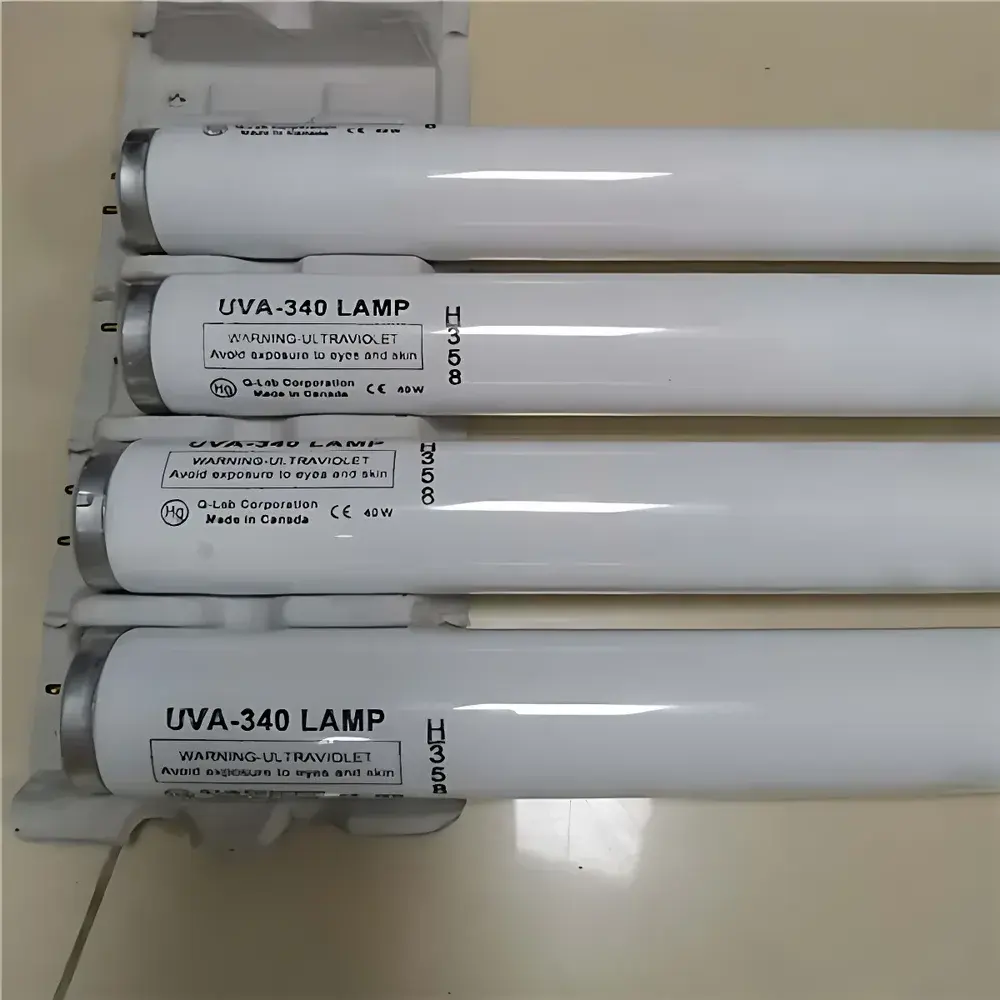
- Double-sided UV lamp array: 8 high-stability fluorescent lamps (40 W each), configurable as UVA-340 (315–400 nm) or UVB-313 (280–315 nm), with center-to-center spacing of 70 mm and precise 50 ± 3 mm specimen-to-lamp distance
- Stainless steel construction: 1.2 mm thick 304 SUS interior and exterior walls; seamless welding and corrosion-resistant finish for long-term operational integrity
- Uniform thermal management: Water-jacketed inner chamber heating with PID-controlled SSR output; temperature uniformity ±1 °C and stability ±0.5 °C across the 900 × 210 mm effective irradiation zone
- Automated condensation cycle: Heated water reservoir maintains ≥95% RH via saturated vapor generation; self-regulating water level control prevents dry-heating damage
- Optional calibrated water spray system: Adjustable pressure nozzles deliver reproducible wetting events synchronized with irradiation phases, simulating dew, rain, or thermal shock
- Intelligent control interface: TEMI880 color touchscreen controller (or RKC alternative) with programmable multi-step test profiles, data logging, RS232 communication port (optional), and real-time irradiance display
- Comprehensive safety architecture: Dual overtemperature cutoffs, ground fault circuit interrupter (GFCI), low-water protection, lamp life tracking (≥1600 h), and automatic emergency shutdown
Sample Compatibility & Compliance
The AP-2-UV accommodates standard specimens measuring 75 × 290 mm (up to 24 positions per cycle), with customizable aluminum or stainless steel sample racks ensuring planar alignment relative to the UV source. Specimen holders are non-reflective and thermally inert to minimize measurement artifacts. The chamber meets core regulatory frameworks for accelerated weathering validation, including ASTM D4329 (plastics), ASTM D4587 (coatings), ISO 11507 (paints and varnishes), and JIS D0205 (automotive finishes). Its irradiance control and black panel temperature monitoring support GLP-compliant test documentation when paired with external calibration certificates (NIST-traceable UV radiometers recommended). All electrical and mechanical subsystems conform to IEC 61000-6-2 (EMC immunity) and IEC 61000-6-4 (EMC emission) standards.
Software & Data Management
The TEMI880 controller records time-stamped temperature, humidity, irradiance, and black panel temperature at user-defined intervals (1–60 sec resolution), exporting CSV-formatted logs via USB or serial interface. Test programs support up to 99 segments with independent setpoints for UV intensity, condensation duration, spray timing, and thermal ramp rates. Audit trail functionality—when enabled—logs operator actions, parameter changes, and alarm events with timestamps, satisfying FDA 21 CFR Part 11 requirements for electronic records in regulated environments. Optional PC-based software enables remote monitoring, statistical trend analysis (e.g., ΔE* color shift vs. irradiance dose), and automated report generation compliant with ISO/IEC 17025 Clause 7.8.
Applications
This chamber serves quality assurance laboratories, R&D centers, and Tier-1 suppliers evaluating UV resistance of coil coatings, automotive clearcoats, PVC window profiles, outdoor signage films, and aerospace polymer composites. It supports formulation screening (e.g., UV absorber efficacy, HALS stabilizer performance), supplier qualification against OEM specifications (e.g., GMW14124, Ford CETP), and root-cause analysis of premature field failures. By correlating accelerated test outcomes with outdoor exposure data (e.g., Florida or Arizona natural aging), users establish predictive lifetime models for product warranty planning and lifecycle cost estimation.
FAQ
What UV spectra does the AP-2-UV replicate, and how is spectral accuracy maintained?
The system supports UVA-340 lamps (peak at 340 nm, closely matching solar UV below 360 nm) or UVB-313 lamps (broader, more aggressive spectrum). Spectral output is verified during factory calibration using a calibrated spectroradiometer; users must perform periodic lamp replacement (every ~1600 h) and recalibrate irradiance sensors per ISO 17025 procedures.
Can the chamber operate continuous UV-only cycles without condensation?
Yes—test profiles are fully programmable to include UV-only, UV/condensation, or UV/condensation/spray sequences, with independent duration and temperature setpoints for each phase.
Is the irradiance sensor NIST-traceable, and where is it positioned?
The built-in sensor measures irradiance at the specimen plane (50 ± 3 mm from lamp centerline); traceable calibration certificates are available upon request. For highest accuracy, users should supplement with an external, NIST-traceable broadband UV radiometer mounted in the same plane.
What maintenance intervals are recommended for optimal repeatability?
Lamp replacement every 1600 h, quarterly cleaning of quartz lamp sleeves and condensate trays, annual verification of temperature/humidity sensors, and biannual inspection of water-level float switches and spray nozzles.
Does the system support third-party LIMS integration?
Via RS232 serial output (optional), raw sensor data and alarm logs can be parsed by LIMS platforms supporting Modbus RTU or ASCII protocol; custom API development is available under OEM agreement.



