
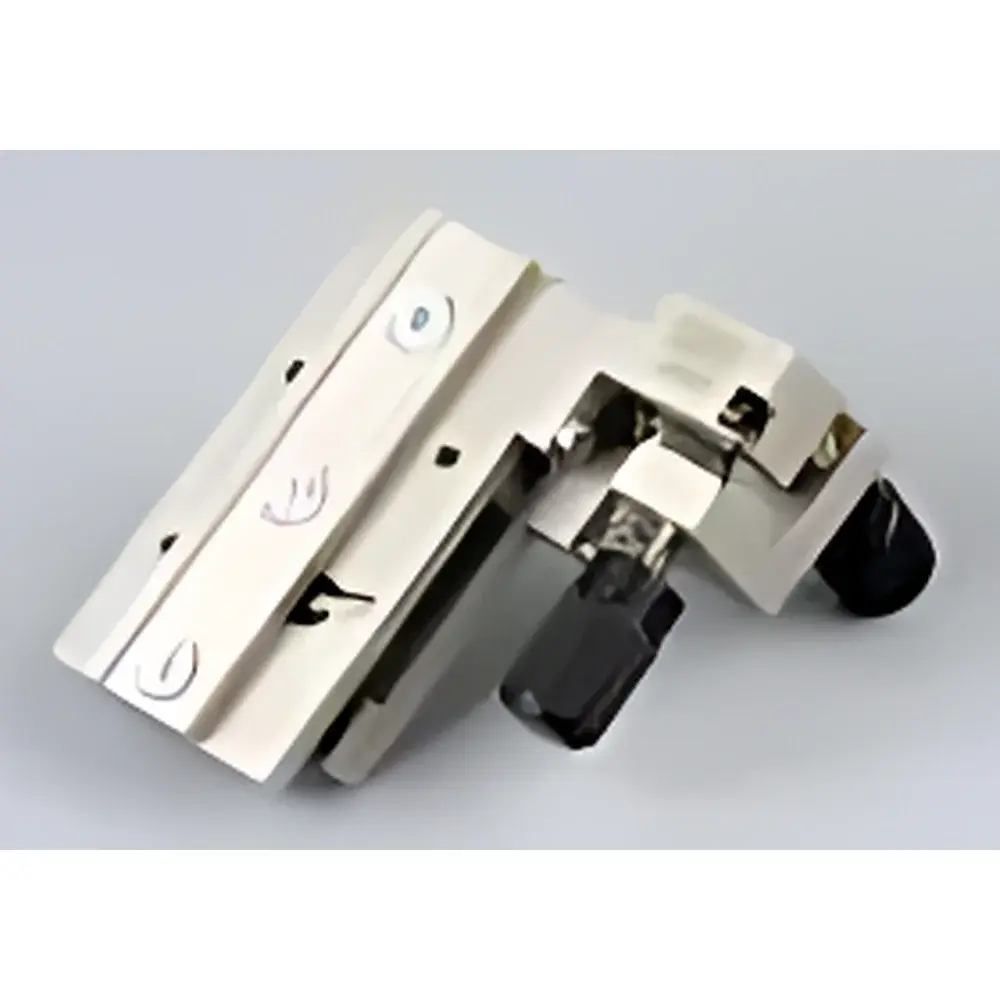
APFP-T Two-Axis Tip-Tilt Mount by ZOLIX
| Brand | ZOLIX |
|---|---|
| Model | APFP-T |
| Type | Precision Two-Axis Tip-Tilt Adjustment Mount |
| Axis Rotation Range | θy = ±3°, θz = ±3° |
| Mounting Interface | Standard Dove-Tail Groove (Compatible with APFP-Series Optical Carriers) |
| Handedness | Right-Handed (Left-Handed Variant: APFP-TL) |
| Origin | Beijing, China |
| Manufacturer | ZOLIX Optics Co., Ltd. |
| Compliance | Designed for ISO 10110-7 Aligned Optical Assembly Environments |
Overview
The APFP-T Two-Axis Tip-Tilt Mount is a precision mechanical adjustment stage engineered for high-stability angular alignment of optical components in laboratory and industrial optical systems. Designed and manufactured by ZOLIX Optics — a Beijing-based leader in research-grade optical positioning hardware — the APFP-T enables independent, fine control over rotation about the Y- and Z-axes (θy and θz) with a calibrated range of ±3° per axis. Its operation relies on dual differential micrometer-driven kinematic mechanisms, ensuring minimal wobble, repeatable angular positioning (< ±15 arcsec reproducibility under controlled thermal conditions), and negligible axial translation during tilt actuation. The mount is optimized for integration into modular optical benches and is fully compatible with the APFP-XYZ series of three-axis translation stages, enabling compound motion configurations (e.g., XYZ + tip/tilt) without interface adaptation. It serves as a critical subsystem in applications requiring beam steering stability, collimation verification, interferometric cavity alignment, and laser cavity mode matching.
Key Features
- Precision dual-axis angular adjustment: Independent θy and θz rotation with ±3° range and sub-arcminute resolution via 10-µm pitch differential screws
- Integrated dovetail mounting groove (8-mm width, 1:10 taper) compliant with ZOLIX APFP-series optical carriers and standard kinematic baseplates
- Right-handed configuration (APFP-T); left-handed variant available (APFP-TL) to support mirrored optical layouts and space-constrained setups
- Machined from stress-relieved 6061-T6 aluminum alloy with hard-anodized surface finish (6–8 µm thickness) for dimensional stability and corrosion resistance
- Zero-backlash kinematic design featuring preloaded bronze bushings and hardened stainless steel shafts to maintain alignment integrity across thermal cycles (operating range: 15–30 °C)
- No external locking required: Friction-based self-holding torque exceeds 0.15 N·m per axis at maximum tilt angle, eliminating drift under static optical loading up to 1.5 kg
Sample Compatibility & Compliance
The APFP-T accommodates optical elements up to Ø50 mm or 50 × 50 mm square mounts when paired with standard APFP carrier plates (e.g., APFP-C1, APFP-C2). Its dovetail interface supports passive and active optical components including mirrors, beamsplitters, waveplates, and fiber collimators. Mechanical design adheres to ISO 10110-7 guidelines for optical component mounting interfaces and complies with RoHS 2011/65/EU material restrictions. While not an electronic device, its dimensional tolerances (±5 µm flatness over mounting surface) and repeatability performance are validated per ZOLIX internal test protocol ZP-TT-004, aligned with practices referenced in ISO 9001:2015 quality management systems for precision instrumentation manufacturing.
Software & Data Management
The APFP-T is a manually operated mechanical stage and does not incorporate embedded electronics, sensors, or digital connectivity. As such, it requires no firmware, drivers, or proprietary software. All adjustments are performed using standard 2-mm hex keys; calibration data (angular scale factor, hysteresis profile, and zero-offset drift over 100-cycle endurance testing) are documented in the included Certificate of Conformance (CoC), traceable to ZOLIX’s in-house metrology lab (accredited to CNAS CL01:2018). For users integrating the APFP-T into automated systems, third-party motorized actuators (e.g., Thorlabs K10CR1-compatible stepper mounts) may be retrofitted using the standardized M4 threaded access points located on both adjustment knobs — full mechanical interface drawings are available upon request under NDA.
Applications
- Laser cavity alignment in diode-pumped solid-state (DPSS) and ultrafast oscillator setups
- Fine angular registration of reference flats in Fizeau and Twyman-Green interferometers
- Beam pointing stabilization in free-space quantum optics experiments (e.g., SPDC source alignment)
- Optical path length equalization in multi-channel spectrometers and hyperspectral imaging platforms
- Calibration fixture integration for angular metrology standards (e.g., autocollimator validation rigs)
- Education labs: Demonstrating ray transfer matrices, ABCD optics, and misalignment sensitivity in Gaussian beam propagation
FAQ
Is the APFP-T compatible with non-ZOLIX optical carriers?
Yes — the 8-mm dovetail groove conforms to DIN 47600 and is mechanically interoperable with carriers from Thorlabs (e.g., KM100 series), Newport (e.g., UMB series), and Standa, provided nominal groove depth and taper match within ±0.02 mm tolerance.
What is the maximum recommended load for stable angular retention?
1.5 kg centered on the mounting surface; exceeding this may reduce repeatability due to elastic deformation of the baseplate.
Does ZOLIX provide angular calibration certificates with traceability to national standards?
Standard units ship with a CoC listing angular range and mechanical repeatability; NIST-traceable calibration (via PTB-accredited external lab) is available as an optional service (lead time: 10 business days).
Can the APFP-T be used in vacuum environments?
Not without modification — standard anodization and lubricants are not UHV-rated; however, vacuum-compatible variants (VAC version with dry-film MoS₂ coating and vented baseplate) can be ordered under custom part number APFP-T-VAC.
How does thermal expansion affect angular accuracy during extended operation?
Within 15–30 °C ambient range, angular drift remains below ±10 arcsec over 4 hours; for sub-arcsecond stability, active temperature stabilization of the optical table is recommended.






