
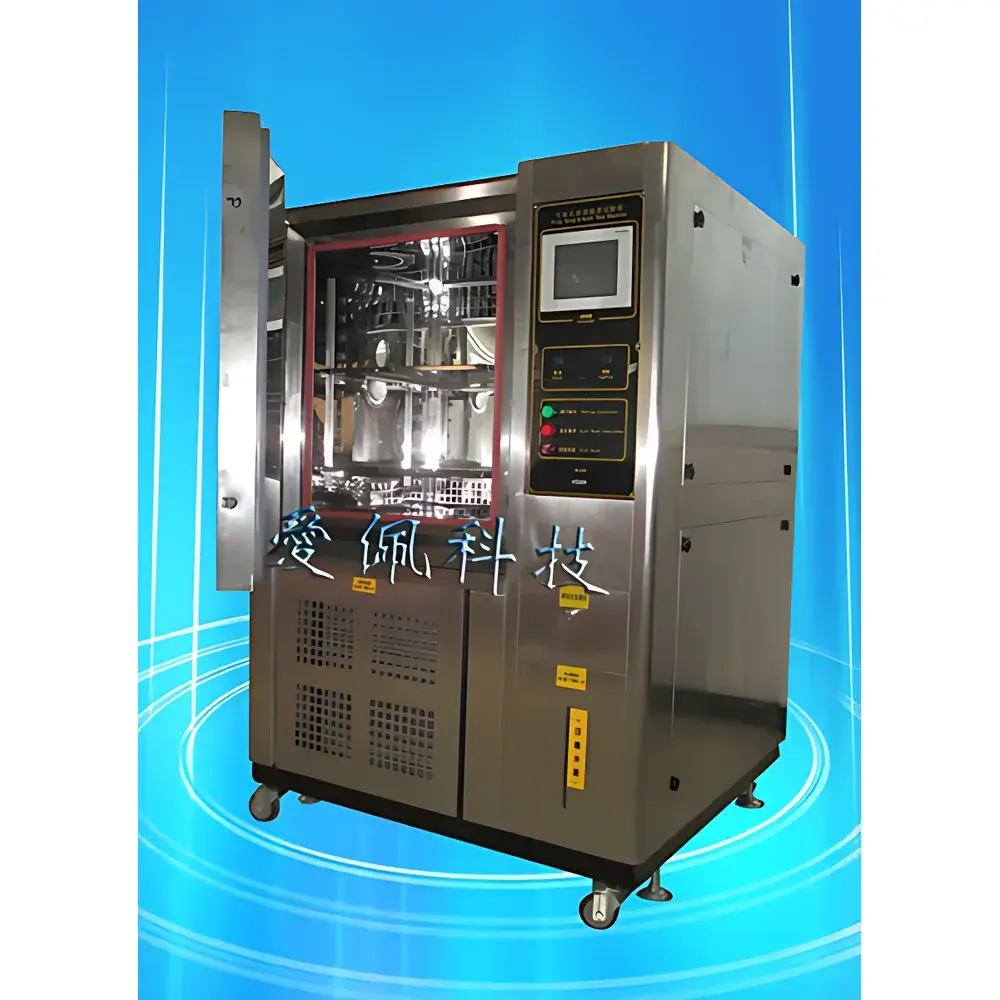
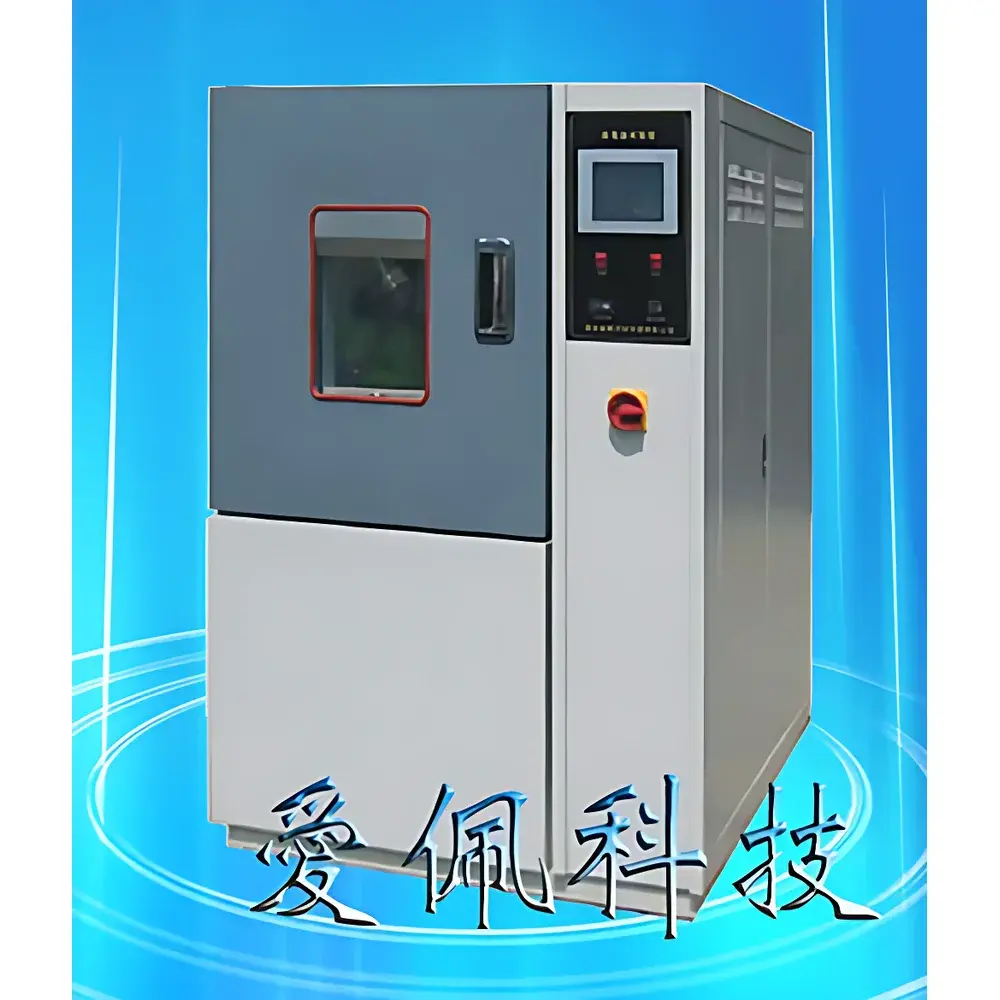
APKJ AP-225L-HX Temperature and Humidity Controlled Environmental Test Chamber for Adhesive Tape Testing
| Brand | APKJ |
|---|---|
| Origin | Guangdong, China |
| Manufacturer Type | Direct Manufacturer |
| Country of Origin | China |
| Model | AP-225L-HX |
| Pricing | Upon Request |
| Internal Volume | 225 L |
| Temperature Range | −40 °C to +150 °C (configurable) |
| Temperature Uniformity | ±2 °C |
| Temperature Control Accuracy | ±0.2 °C |
| Humidity Range | 20–98% RH (optional) |
| Humidity Control Accuracy | ±2.5% RH |
| Heating Rate | ~3 °C/min (RT to +150 °C in ~40 min) |
| Cooling Rate | ~1 °C/min (RT to −40 °C in ~65 min) |
| Construction | Interior – Mirror-finish SUS304 stainless steel |
| Refrigeration System | Air-cooled, single-stage or cascade (R404A/R23) with hermetic compressors (Tecumseh or Bitzer) |
| Controller | Programmable PID-based microprocessor controller (standard) |
| Safety Features | Independent over-temperature cutoff, compressor overheat/overcurrent/overload protection, fan thermal protection, low-water alarm (for humidification), audible/visual alarms |
| Interface Options | RS-485, USB data export, optional printer connectivity |
| Compliance | Designed to support ISO 17025-compliant test environments |
Overview
The APKJ AP-225L-HX Temperature and Humidity Controlled Environmental Test Chamber is an engineered solution for standardized conditioning and accelerated aging of pressure-sensitive adhesive tapes—including acrylic, rubber-based, silicone, and hot-melt formulations—under precisely regulated thermal and hygrothermal conditions. Based on the principle of forced-air convection with dual independent control loops for temperature and relative humidity, the chamber maintains stable, reproducible environmental profiles essential for evaluating peel adhesion, shear resistance, tack retention, and cohesive failure modes per international test standards. Its 225-liter internal volume accommodates full-width tape rolls, laminated substrates, or multi-specimen fixtures while ensuring uniform exposure across the working space—validated per ISO 16750-4 and IEC 60068-3-5 methodologies for spatial uniformity assessment (measured at 1/10 distance from all interior walls). The system operates within a configurable temperature range of −40 °C to +150 °C and optional 20–98% RH, enabling both low-temperature brittleness evaluation and high-humidity aging simulations critical for automotive, medical device, and electronics packaging applications.
Key Features
- High-stability dual-loop control architecture utilizing either dry-bulb/wet-bulb psychrometric sensing or calibrated capacitive RH transducers, coupled with fuzzy PID algorithms for minimized thermal/hygrometric overshoot and drift.
- Uniform airflow distribution achieved via centrifugal circulation fans and a wide-band forced convection path (top-out, bottom-in), ensuring ≤±2 °C temperature uniformity across the entire 225 L test volume.
- Mirror-finish SUS304 stainless steel interior with radius-rounded corners and removable adjustable shelves—designed for residue-free cleaning, chemical compatibility with solvent-based adhesives, and long-term corrosion resistance under cyclic condensation exposure.
- Energy-optimized refrigeration system featuring air-cooled cascade configuration (R404A primary stage / R23 secondary stage), compliant with Montreal Protocol phase-out schedules and certified for zero ozone depletion potential (ODP = 0).
- Dedicated 25 mm diameter access port located on the left side wall, facilitating real-time monitoring of specimen behavior via external force gauges, optical displacement sensors, or peel angle fixtures without compromising chamber integrity.
- Independent safety circuitry including redundant thermal cutouts, compressor thermal overload relays, fan stall detection, and visual/audible alarm activation upon deviation beyond user-defined thresholds.
Sample Compatibility & Compliance
The AP-225L-HX supports conditioning of adhesive-coated films, release liners, die-cut labels, transfer tapes, and laminated composites up to 300 mm in width. Its interior geometry and non-reactive surface permit direct mounting of ASTM D3330 peel test jigs, PSTC-1 loop-tack fixtures, or custom-designed shear plates. The chamber is routinely deployed in laboratories adhering to GLP and ISO/IEC 17025 requirements, with controller audit trails (optional touchscreen model) supporting 21 CFR Part 11 compliance when configured with user authentication, electronic signatures, and immutable data logging. Test methods validated within this platform include ASTM D1000 (adhesive tape aging), ASTM D3330 (peel adhesion), FINAT FTM 2 (rolling ball tack), and GB/T 2792 (180° peel strength)—all requiring strict environmental preconditioning prior to mechanical measurement.
Software & Data Management
The standard microprocessor controller provides real-time display of setpoints, actual values, and elapsed time on a 20×6-character CFL LCD with tactile keypad input. For advanced protocol management, the optional 7-inch resistive touchscreen controller offers multilingual UI (English/Chinese), graphical trend visualization of temperature and humidity profiles, and storage of up to 100 distinct test programs—each comprising 1000 programmable segments with ramp/soak logic and cycle repetition. All operational parameters and deviations are timestamped and stored internally (≥30 days of continuous data). USB export enables traceable CSV file generation for post-test statistical analysis in MATLAB, JMP, or Minitab. RS-485 Modbus RTU interface allows integration into centralized facility monitoring systems (e.g., Siemens Desigo, Schneider EcoStruxure), while optional thermal printer output satisfies paper-based record retention requirements per internal QA procedures.
Applications
- Preconditioning of pressure-sensitive adhesives prior to peel, tack, and shear testing per PSTC, FINAT, and AFERA specifications.
- Accelerated aging studies to assess shelf-life stability of medical-grade tapes under elevated temperature/humidity stress (e.g., 40 °C/75% RH for 30 days).
- Low-temperature performance validation of acrylic adhesives used in automotive trim bonding (−40 °C storage followed by dynamic peel assessment).
- Humidity-induced degradation analysis of silicone release coatings on PET liners exposed to 85 °C/85% RH ITH conditions.
- Environmental stress screening of flexible printed electronics encapsulated with conductive adhesives.
- Validation of packaging tape integrity during simulated transit conditions (ASTM D4169, ISTA 3A).
FAQ
What standards does the AP-225L-HX support for adhesive tape testing?
It facilitates preconditioning and aging per ASTM D3330, ASTM D1000, PSTC-1, FINAT FTM 1 & 2, GB/T 2792, and ISO 29862—provided ambient lab conditions meet required calibration and verification intervals.
Can the chamber be customized for non-standard temperature/humidity ranges?
Yes. APKJ offers engineering consultation for bespoke configurations—including extended low-temperature capability (−70 °C), enhanced humidity precision (±1% RH), or specialized internal fixtures—to align with proprietary test methods.
Is remote monitoring supported out of the box?
The base controller does not include Ethernet or Wi-Fi; however, the optional touchscreen model supports RS-485-to-Ethernet gateways for SCADA-level integration, and USB data dumps enable offline cloud upload via laboratory PCs.
How is temperature uniformity verified and documented?
Uniformity is measured using nine calibrated PT100 sensors placed at defined positions (center + six face centers + two corners) per ISO 16750-4 Annex B, with reports generated upon request for IQ/OQ documentation.
What maintenance intervals are recommended for long-term reliability?
Compressor oil and refrigerant levels should be inspected annually; condenser coils cleaned quarterly; and humidity sensor calibration verified every six months using NIST-traceable saturated salt solutions.



