
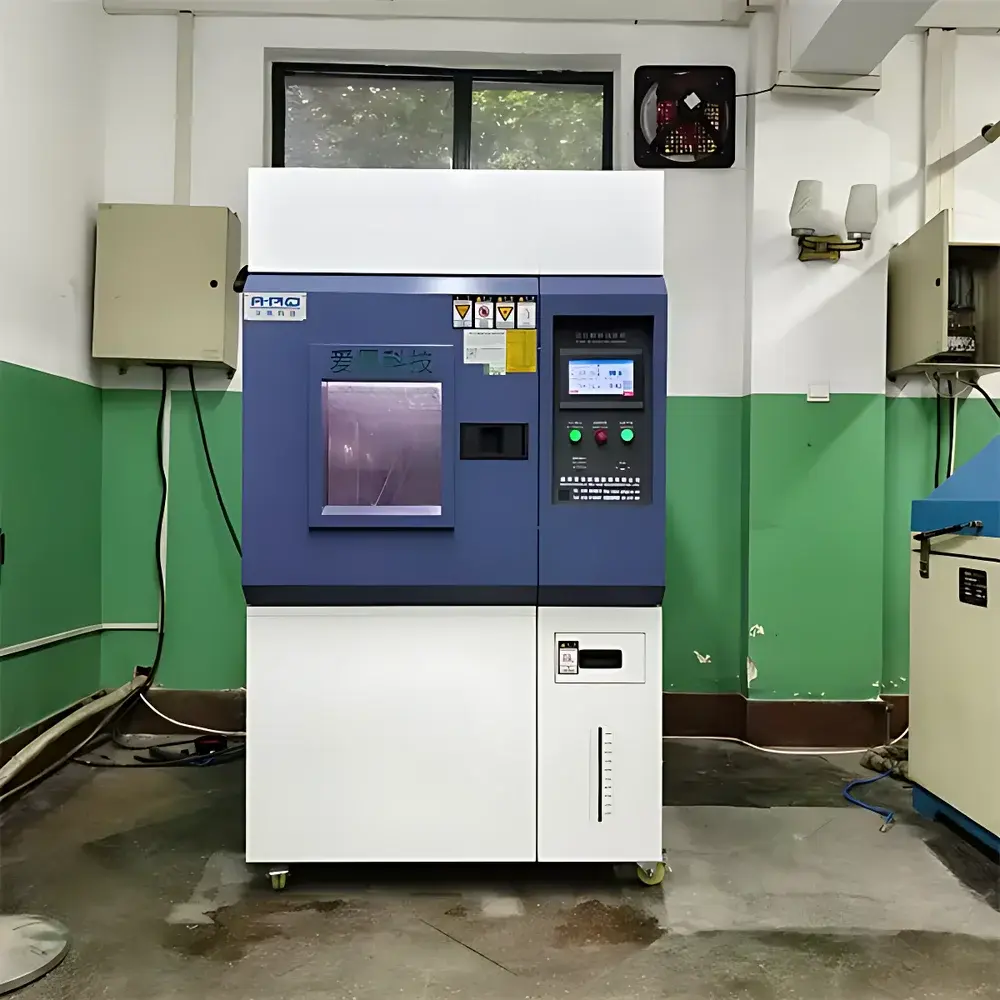
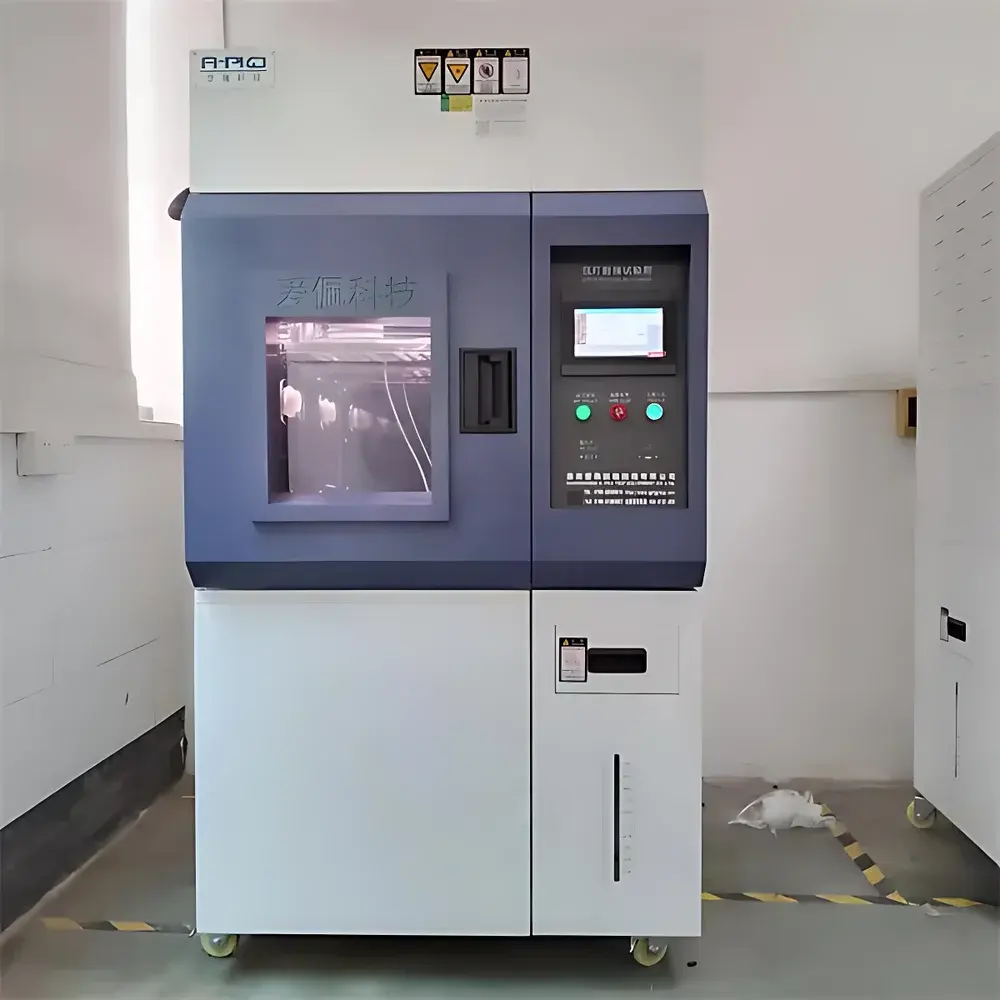
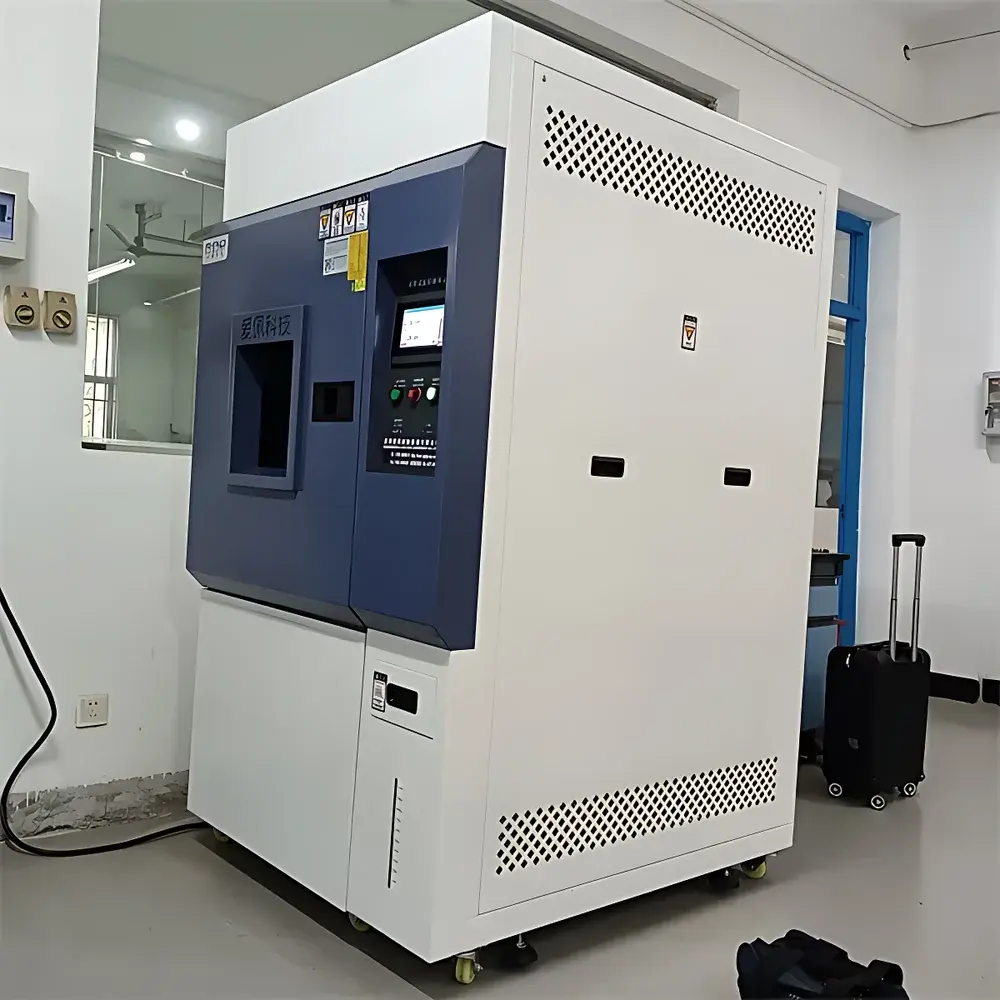
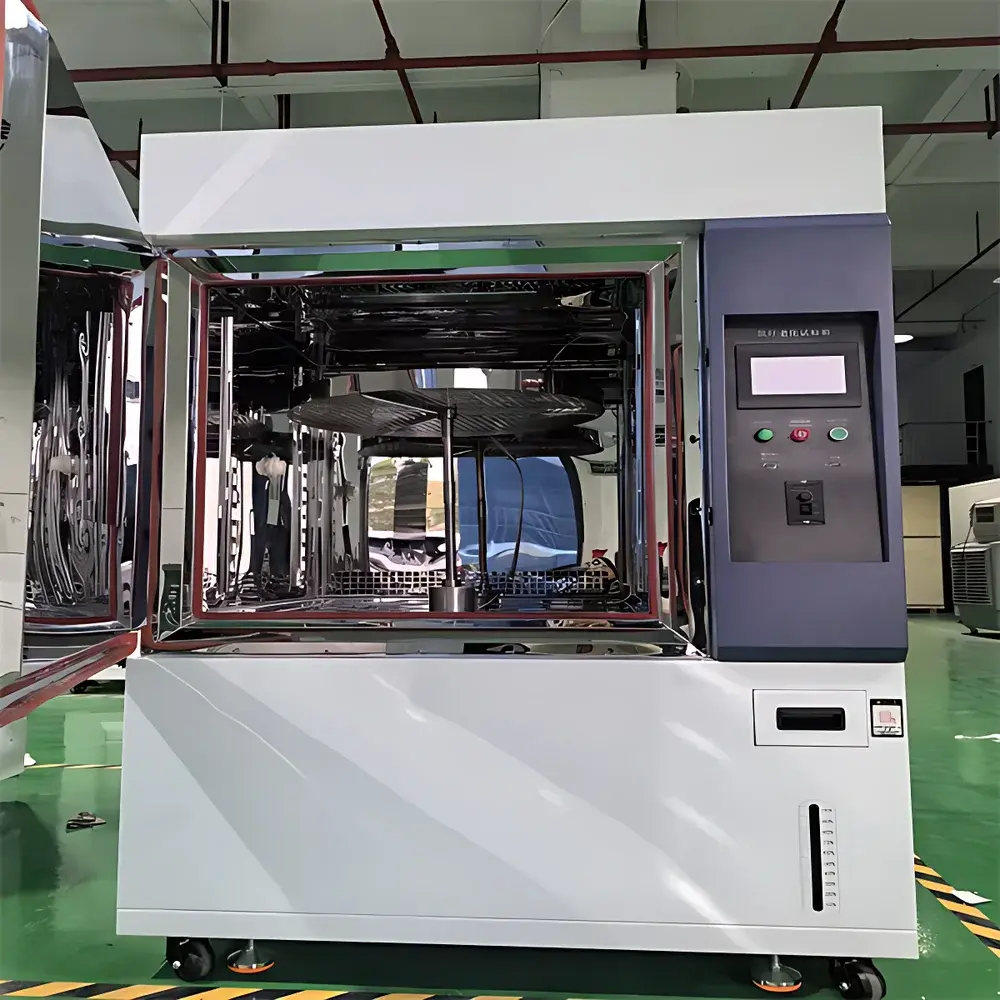
APKJ AP-XD-80A Xenon Arc Weathering Test Chamber
| Brand | APKJ |
|---|---|
| Origin | Guangdong, China |
| Manufacturer Type | Direct Manufacturer |
| Model | AP-XD-80A |
| Xenon Lamp Power | 1500 W |
| Irradiance Range | ≤1120 W/m² |
| Light Exposure Cycle | 1–999 h (adjustable) |
| Humidity Range | 20–98% RH |
| Internal Chamber Volume | 80 L |
| Chamber Dimensions (W×H×D) | 400 × 500 × 400 mm |
| Overall Dimensions (W×H×D) | 920 × 1670 × 950 mm |
| Weight | ~200 kg |
| Spectral Band Options | 340 nm (standard), 420 nm / 290–400 nm / 290–800 nm (optional, subject to filter configuration) |
Overview
The APKJ AP-XD-80A Xenon Arc Weathering Test Chamber is an engineered environmental simulation system designed for accelerated material degradation testing under controlled solar-spectrum irradiation. It utilizes a 1500 W air-cooled or water-cooled xenon arc lamp—calibrated to replicate the full spectral distribution of terrestrial sunlight (290–800 nm)—to induce photochemical, thermal, and hygrothermal stress in polymeric, coating, textile, automotive, and architectural materials. Unlike UV fluorescent or metal halide sources, xenon arc technology delivers spectrally accurate irradiance across ultraviolet (UV), visible, and near-infrared (NIR) bands, enabling correlation with real-world outdoor exposure per ISO 4892-2, ASTM G155, and SAE J2527. The chamber integrates precision temperature control (ambient to +80°C), programmable humidity regulation (20–98% RH), and condensation cycling to emulate diurnal moisture events—including dew formation and simulated rainfall—thereby reproducing the synergistic degradation mechanisms observed in natural weathering.
Key Features
- Calibrated 1500 W xenon arc lamp with spectral output traceable to CIE No. 85 reference spectra; standard 340 nm irradiance monitoring with optional broadband (290–400 nm) or extended-range (290–800 nm) irradiance sensors
- Modular quartz filter system (S1-type high-purity fused silica) ensures spectral match to ground-level solar irradiance; filters are maintenance-free under normal operation and require replacement only if physically damaged
- Programmable exposure cycles: light-only, light/dark, light/condensation, or sequential light/humidity/condensation phases; cycle duration adjustable from 1 to 999 hours per segment
- Dual-mode climate control: refrigerated dehumidification combined with steam-based humidification enables stable RH control from 20% to 98% RH at temperatures up to 70°C
- 80 L test volume with uniform irradiance distribution (±15% across specimen plane per ISO 4892-2 Annex B); internal dimensions optimized for standard ASTM D7869 and ISO 11341 specimen racks
- Robust stainless-steel chamber construction with insulated double-wall design and integrated safety interlocks for lamp overtemperature, door open, and coolant flow failure
Sample Compatibility & Compliance
The AP-XD-80A accommodates flat-panel specimens up to 150 mm × 150 mm × 10 mm (standard rack configuration), with optional multi-tier sample holders supporting up to 24 specimens per test cycle. It complies with international standards governing accelerated weathering methodology, including ISO 4892-2 (Plastics — Methods of exposure to laboratory light sources — Part 2: Xenon-arc lamps), ASTM G155 (Standard Practice for Operating Xenon Arc Light Apparatus for Exposure of Non-Metallic Materials), and AATCC TM16 (Colorfastness to Light). For regulated industries, the system supports GLP-compliant data integrity through audit-trail-enabled software (see Software & Data Management), and its irradiance calibration protocol aligns with NIST-traceable reference radiometers. Filter configurations can be selected to simulate either direct sunlight or filtered (window-glass-transmitted) solar radiation per ISO 4892-2 Clause 7.2.
Software & Data Management
The chamber operates via a touchscreen HMI with embedded microcontroller-based logic, offering intuitive setup of multi-step exposure profiles, real-time monitoring of irradiance (W/m² at user-selected wavelength), chamber temperature, relative humidity, and elapsed cycle time. All operational parameters—including setpoints, actual values, alarm logs, and lamp operating hours—are timestamped and stored internally for ≥30 days. Optional PC-based software (APKJ WeatherLink™) provides CSV export, trend graphing, comparative analysis across test runs, and electronic signature support compliant with FDA 21 CFR Part 11 requirements when deployed in validated environments. Calibration certificates for irradiance sensors and temperature/humidity probes are provided with each unit, and periodic recalibration services are available through APKJ’s ISO/IEC 17025-accredited service centers.
Applications
This xenon arc test chamber serves as a core tool in R&D laboratories, quality assurance departments, and third-party testing facilities evaluating long-term durability of organic materials subjected to solar radiation and climatic stress. Typical applications include: UV resistance validation of automotive exterior coatings and plastic trim; colorfastness assessment of textiles and printed packaging under daylight exposure; weathering performance benchmarking of roofing membranes and sealants per ASTM D6901; formulation optimization of UV stabilizers and HALS additives; and regulatory compliance testing for consumer electronics housings, medical device enclosures, and aerospace interior composites. Its ability to reproduce complex light/moisture/temperature interactions makes it particularly valuable for predicting gloss loss, chalking, cracking, embrittlement, and spectral reflectance shifts observed after years of field exposure.
FAQ
What spectral band is standard on the AP-XD-80A, and how is irradiance monitored?
The standard configuration uses a 340 nm irradiance sensor with S1 quartz filter, delivering calibrated output per ISO 4892-2 Annex C. Additional spectral bands (420 nm, 290–400 nm, or 290–800 nm) are available as factory-installed options.
Is the chamber suitable for testing specimens requiring window-glass filtration?
Yes—selectable optical filters allow simulation of both direct sunlight and window-glass-filtered irradiance per ISO 4892-2 Clause 7.2.
Does the system support automated condensation cycling?
Yes—programmable condensation cycles are implemented via controlled cooling of the specimen holder surface, replicating dew formation without external water spray.
What is the recommended maintenance interval for the xenon lamp and filters?
Xenon lamps are rated for ~1500 hours of operation; filter replacement is only required if physically compromised—no routine replacement schedule is specified.
Can test data be exported for regulatory submission (e.g., FDA, ISO 17025)?
Yes—APKJ WeatherLink™ software supports 21 CFR Part 11-compliant audit trails, electronic signatures, and secure data export in CSV or PDF format.



