
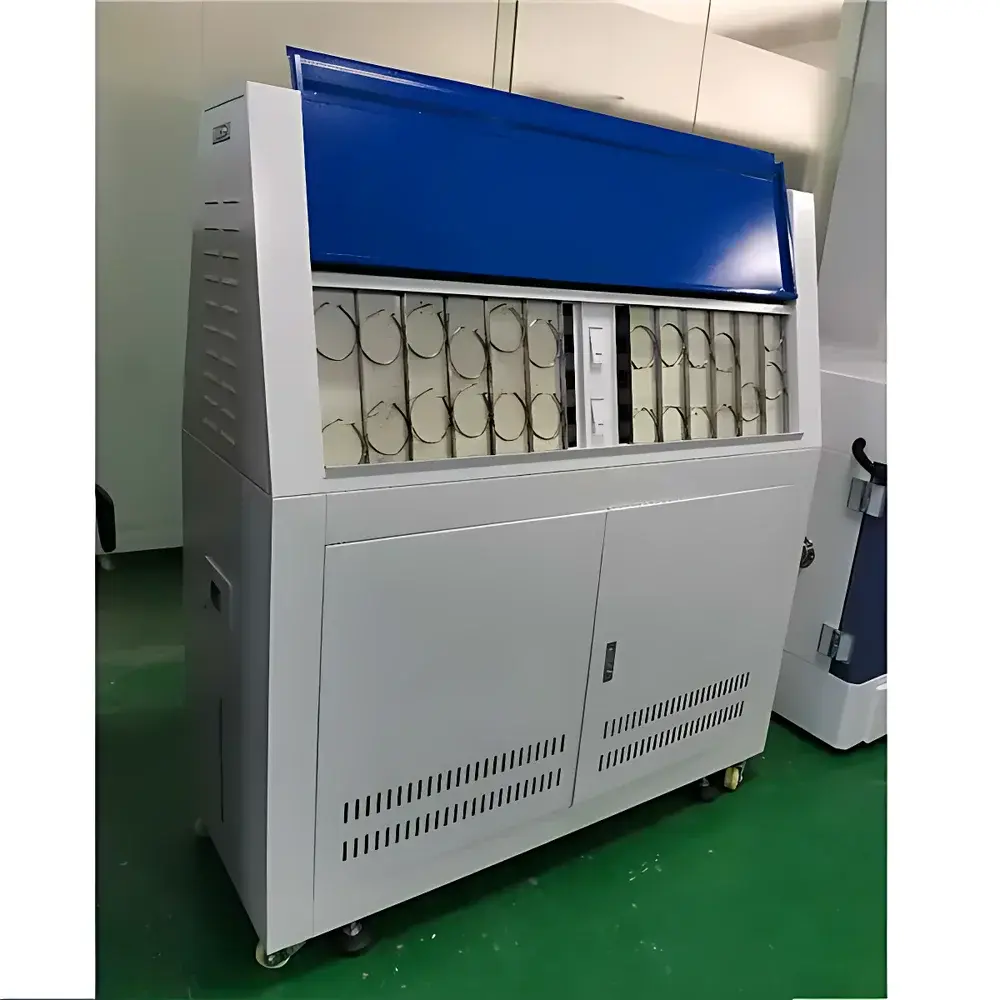
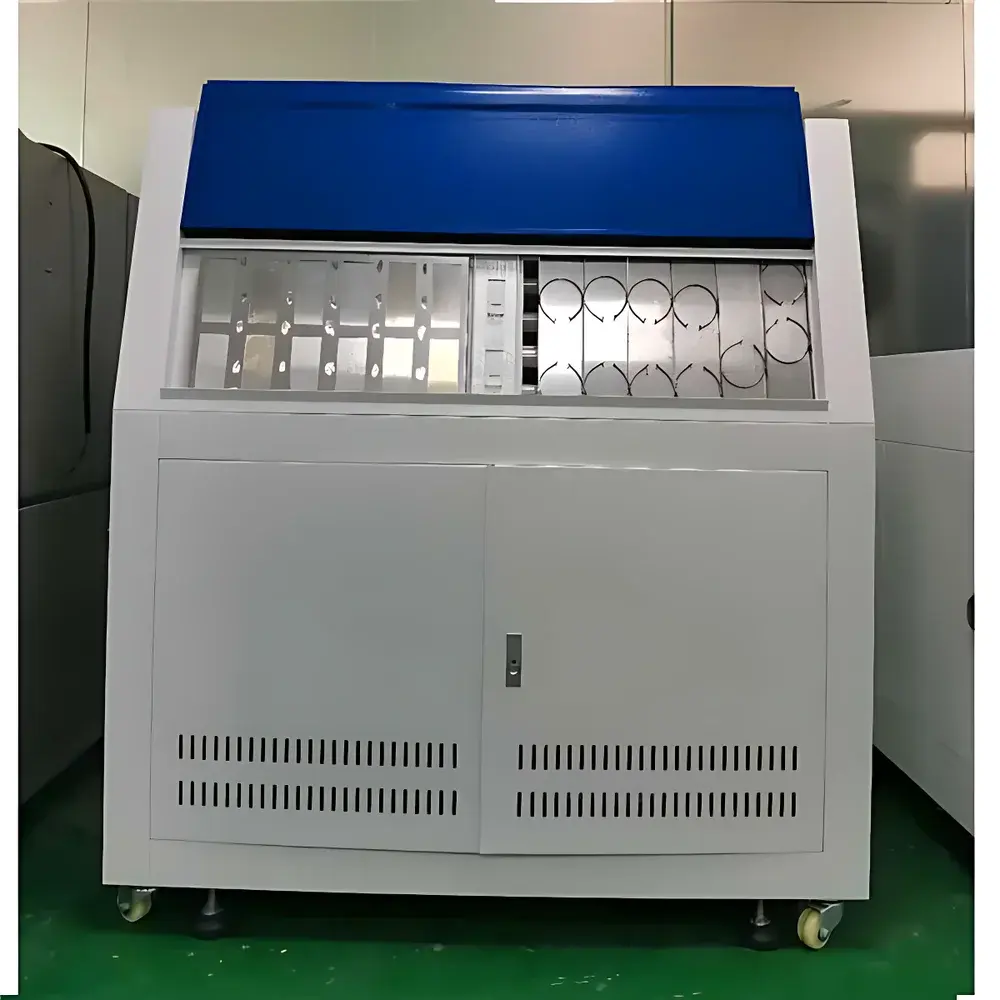
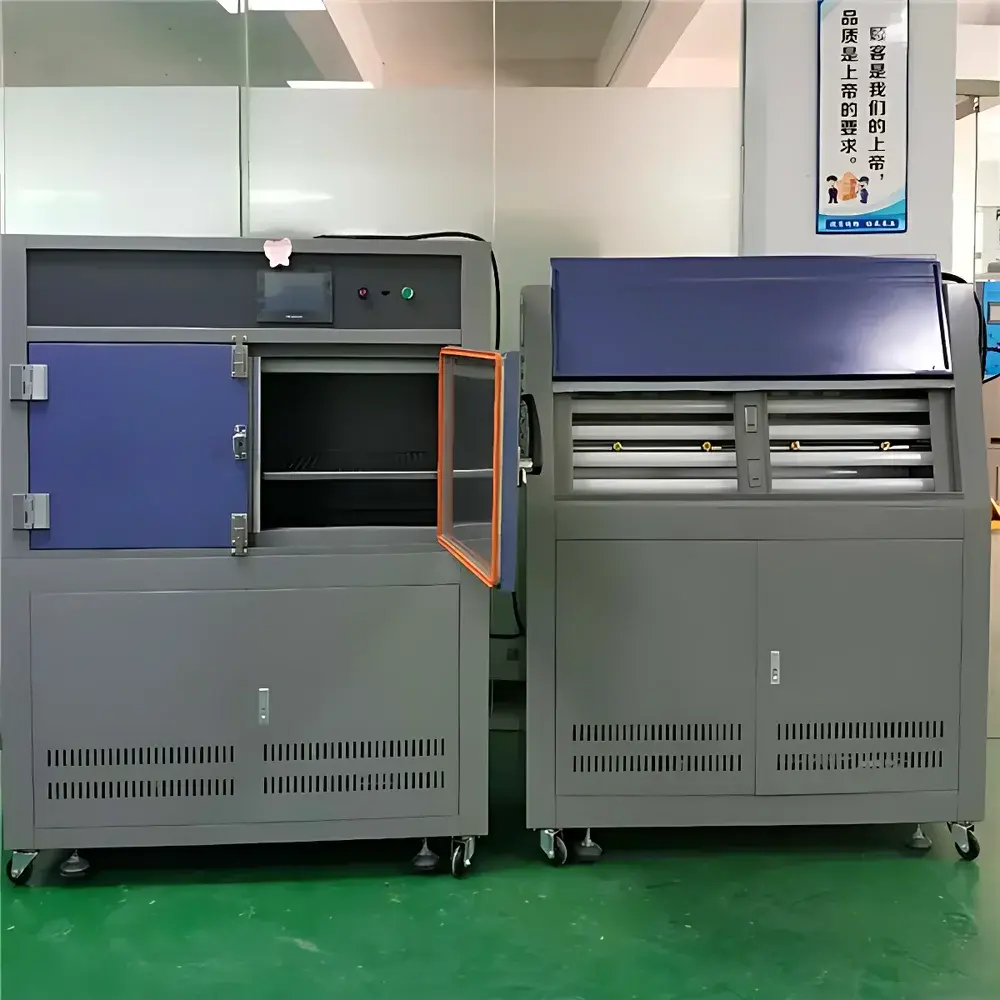
Apkji UL-Compliant UV Aging Test Chamber AP-3UVB
| Brand | Apkji (APKJ) |
|---|---|
| Origin | Guangdong, China |
| Manufacturer Type | Direct Manufacturer |
| Country of Origin | China |
| Model | AP-3UVB |
| Price | USD 5,700 (approx.) |
| Test Duration Range | 1–999 h·min·sec |
| Irradiance Range | 0.35–1.0 W/m² (adjustable) |
| Lamp Power | 40 W per tube |
| Humidity Range | ≥95% RH |
| Illuminated Chamber Temperature Range | +10°C to 70°C |
| Black Panel Temperature Range | 45°C to 80°C |
| UV Wavelength Bands | 280–315 nm (UVB), 315–400 nm (UVA) |
| Internal Chamber Dimensions (L×W×H) | 1160 × 450 × 500 mm |
Overview
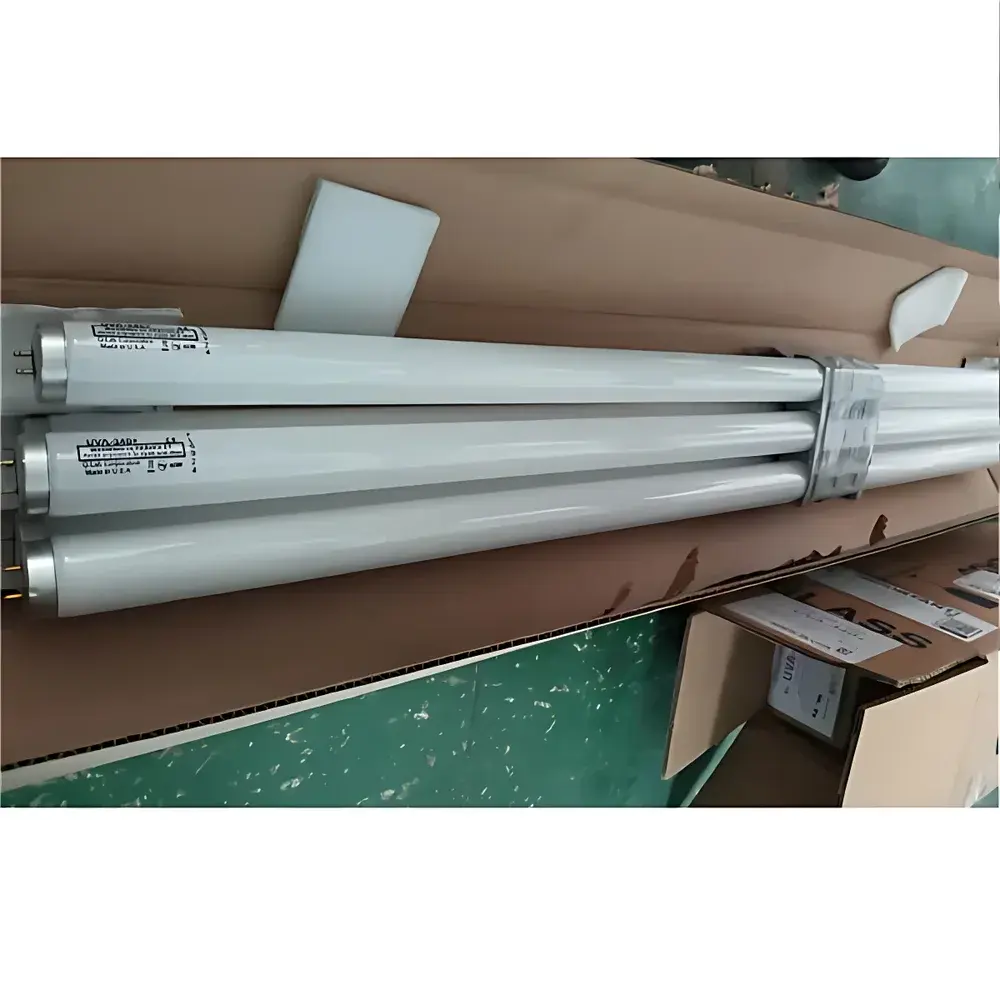
The Apkji UL-Compliant UV Aging Test Chamber AP-3UVB is an engineered environmental test system designed for accelerated photochemical degradation assessment of polymeric materials under controlled ultraviolet radiation, humidity, and thermal stress. It operates on the principle of artificial solar simulation using fluorescent UV lamps—specifically UVA-340 (peak at 340 nm) and UVB-313 (peak at 313 nm)—to replicate the most damaging short-wavelength UV components of natural sunlight. The chamber integrates condensation-based moisture exposure, enabling realistic simulation of diurnal cycles where irradiated surfaces undergo thermal-hygrometric stress followed by dew formation during non-irradiated periods. This dual-mode exposure aligns with ASTM G154, ISO 4892-3, and UL 746C protocols for evaluating surface degradation mechanisms including chalking, gloss loss, cracking, blistering, embrittlement, and photo-oxidative discoloration in plastics, coatings, elastomers, and adhesives.
Key Features
- UL-compliant design architecture validated for safety-critical material qualification in electrical insulation and housing applications
- Dual-band UV lamp configuration supporting both UVA-340 (1.0 W/m² @ 340 nm) and UVB-313 (0.68 W/m² @ 313 nm) irradiance profiles per IEC 60068-2-5 and ASTM D4329
- Precision black panel temperature control (45–80°C) with thermocouple feedback and AI-based PID regulation for ±0.5°C stability
- High-humidity condensation cycle enabled by saturated steam generation and controlled chamber wall cooling—maintaining ≥95% RH during dark phases
- Stainless steel interior and exterior construction (SUS304) with aluminum alloy sample rack assembly ensuring corrosion resistance and dimensional stability
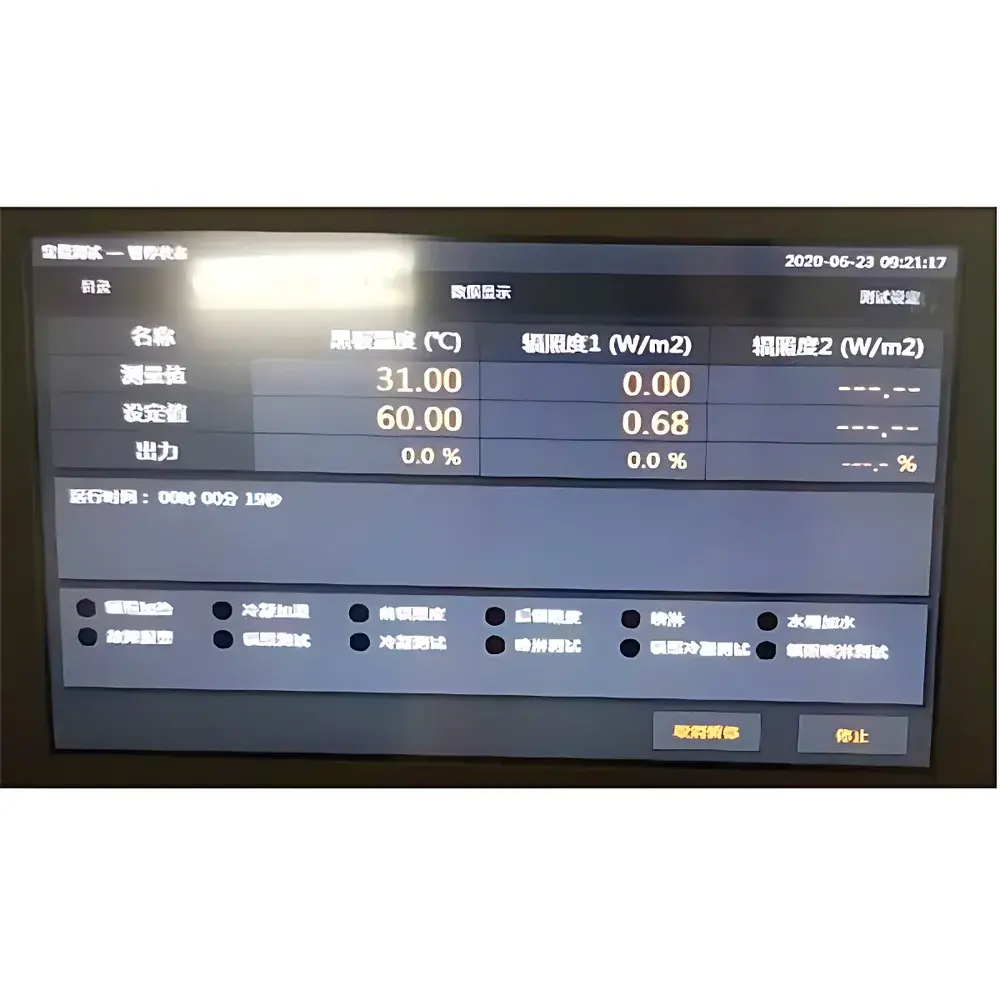
- Intelligent digital controller with dual-mode regulation (on/off + AI adaptive), real-time irradiance monitoring interface, and programmable multi-step test profiles
- Optional UV radiometer integration for closed-loop irradiance compensation—automatically adjusts lamp output to offset spectral drift or lamp aging
- Comprehensive safety suite: overtemperature cutoff, dry-run protection, ground fault interruption, compressor overpressure shutdown, and audible/visual alarm with automatic power isolation
Sample Compatibility & Compliance
The AP-3UVB accommodates flat-panel specimens up to 1160 × 450 mm mounted on standardized 50 mm-spaced lamp racks (center-to-center distance: 70 mm; sample-to-lamp gap: 50 ± 2 mm). Its operational envelope supports testing per globally recognized standards including ASTM G154 (Cycle 1–4), ISO 4892-3 (Method A/B), IEC 60068-2-5, UL 746C (polymeric materials for electrical equipment), and GB/T 14522 (Chinese national standard for UV weathering). All control algorithms and calibration traceability are documented to support GLP-compliant laboratory audits and FDA 21 CFR Part 11–ready data integrity workflows when paired with optional software logging.
Software & Data Management
The integrated microprocessor controller records time-stamped temperature, humidity, irradiance (if sensor-equipped), and operational status events to non-volatile memory. Optional PC connectivity enables export of CSV-formatted datasets compatible with LIMS environments. Firmware supports audit trail logging with user authentication, change history, and electronic signature capability—meeting requirements for regulated industries requiring traceable test execution. Calibration certificates for temperature sensors and irradiance meters are provided with NIST-traceable documentation upon request.
Applications
- Accelerated weathering validation of automotive interior trim, exterior body coatings, and LED lens materials
- UL certification pre-screening for polyamide, polycarbonate, and PBT housings used in electrical enclosures
- Formulation development for UV-stabilized PVC compounds, acrylic paints, and silicone sealants
- Quality assurance of outdoor signage substrates, photovoltaic encapsulants, and architectural membranes
- Comparative lifetime modeling of additive packages (HALS, benzotriazoles, triazines) under controlled UV dose accumulation
- Research-grade photo-degradation kinetics studies requiring reproducible spectral irradiance and condensation cycling
FAQ
What UV spectra does the AP-3UVB emulate, and how are they selected?
It supports two standardized UV bands: UVA-340 (315–400 nm), which best matches terrestrial sunlight below 400 nm, and UVB-313 (280–315 nm), delivering higher-energy photons for aggressive stress testing. Selection is lamp-based and configurable via hardware setup—not software switching.
Is black panel temperature measurement included as standard?
Yes. A calibrated black panel thermometer is integrated into the chamber wall adjacent to the sample plane, complying with ASTM G154 Section 7.3 requirements for surface temperature monitoring.
Can the chamber operate without condensation cycles?
Yes. The controller allows standalone UV irradiation mode, dark-only thermal/humidity conditioning, or fully coupled UV/condensation sequences—each programmable with independent setpoints and durations.
What maintenance intervals are recommended for UV lamps?
Lamps should be replaced after 1,600 hours of cumulative operation or when irradiance falls below 90% of initial calibration—whichever occurs first. Radiometer-equipped units auto-flag replacement thresholds.
Does the system meet CE or UL listing requirements?
The AP-3UVB is constructed to UL 508A industrial control panel standards and conforms to IEC 61000-6-2/6-4 EMC directives. Full UL certification requires end-user application-specific evaluation; however, the design basis satisfies UL 746C material-level testing prerequisites.



