
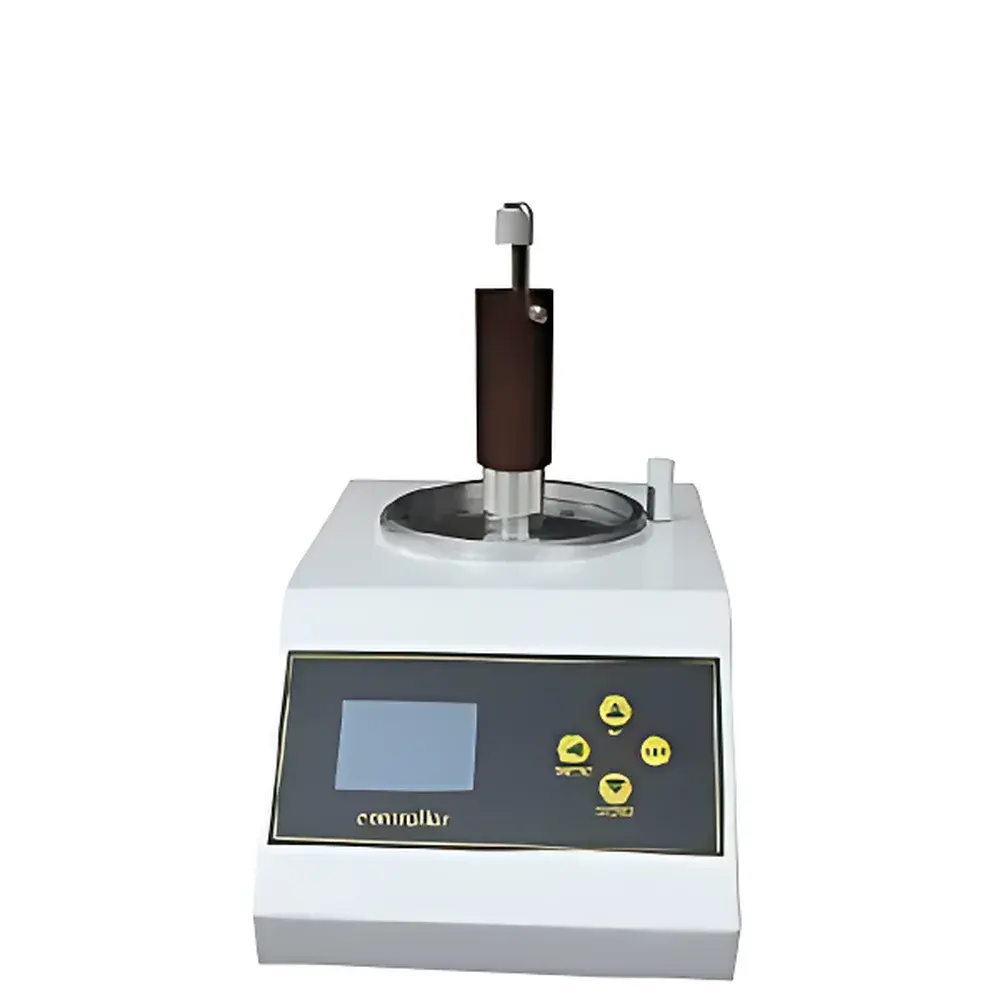
APL DK-400 Static Headspace Sampler
| Brand | APL |
|---|---|
| Origin | Sichuan, China |
| Manufacturer Type | Direct Manufacturer |
| Region Category | Domestic (China) |
| Model | DK-400 |
| Instrument Type | Static Headspace Sampler |
| Automation Level | Manual Operation |
| Vial Heating Range | Ambient to 250 °C |
| Valve & Transfer Line Temperature Control Range | Ambient to 220 °C |
| Sample Loop Volume | 1.0 mL |
| Vial Capacity | 9 positions |
| Vial Size | 40 mL |
Overview
The APL DK-400 Static Headspace Sampler is a purpose-engineered, cost-optimized sample introduction system designed for gas chromatography (GC) analysis of volatile and semi-volatile organic compounds. It operates on the principle of static headspace equilibration—where a sealed sample vial is heated to establish thermodynamic equilibrium between the condensed phase (liquid or solid matrix) and the vapor phase above it. A precisely metered volume of the equilibrated headspace gas is then transferred via a heated, gas-tight syringe into the GC inlet. This technique eliminates solvent extraction, derivatization, or filtration steps, significantly reducing analytical bias, contamination risk, and labor-intensive preparation—especially critical in high-throughput QC labs and regulated environments such as pharmaceutical manufacturing and forensic toxicology.
Key Features
- Heated, gas-tight needle assembly with integrated thermal management to prevent analyte condensation and dilution during transfer—ensuring quantitative integrity and minimizing carryover.
- High thermal stability: Vial oven temperature control with ±0.1 °C accuracy across a full range of ambient to 250 °C (1 °C programmable increments), enabling precise method development for diverse volatiles including low-boiling solvents and high-boiling aldehydes.
- 9-position vial carousel accommodates standard 40 mL crimp-top headspace vials, supporting batch processing without robotic complexity—ideal for laboratories prioritizing reliability, ease of maintenance, and operational transparency.
- Independent temperature control of the injection valve and transfer line (up to 220 °C) prevents cold spots and ensures consistent vapor-phase integrity from vial to GC column.
- Manual operation architecture provides full procedural visibility and operator control—facilitating method validation, troubleshooting, and compliance with GLP/GMP documentation requirements where audit trails must reflect human-initiated actions.
Sample Compatibility & Compliance
The DK-400 supports direct analysis of aqueous solutions, organic liquids, suspensions, powders, polymers, and biological matrices (e.g., blood, urine, tissue homogenates) without prior cleanup. Its design aligns with widely adopted regulatory frameworks: methods developed on this platform are routinely referenced in USP , ICH Q3C(R8), ASTM D7217 (for residual solvents in pharmaceuticals), and ISO 11843-2 (detection capability assessment). While the instrument itself does not generate electronic audit trails, its manual workflow is fully compatible with laboratory information management systems (LIMS) and paper-based SOPs required under FDA 21 CFR Part 11–compliant environments when paired with documented analyst signatures and instrument logbooks.
Software & Data Management
The DK-400 operates without proprietary software—relying instead on user-defined GC method parameters entered directly via front-panel controls. All temperature setpoints, equilibration times (programmable from 0 to 9999 minutes), and sequence logic are stored in non-volatile memory. This architecture avoids software licensing dependencies, reduces cybersecurity surface area, and simplifies qualification (IQ/OQ/PQ) for regulated users. Data output consists solely of GC-compatible analog signals (TTL trigger pulse for injection timing) and stable thermal profiles—enabling seamless integration with Agilent, Thermo Fisher, Shimadzu, PerkinElmer, and other major GC platforms via standard pneumatic and electrical interfaces.
Applications
- Pharmaceutical Quality Control: Residual solvent testing in active pharmaceutical ingredients (APIs) and final drug products per ICH Q3C guidelines.
- Forensic Toxicology: Quantitative ethanol, acetaldehyde, and acetone determination in whole blood and urine specimens—supporting court-admissible reporting per SWGTOX standards.
- Food & Beverage Safety: Detection of hexane residues in edible oils, ethylene oxide in spices, and acetaldehyde migration in PET beverage containers.
- Environmental Monitoring: Analysis of chloroform, carbon tetrachloride, and vinyl chloride in drinking water per EPA Method 502.2 and ISO 15681-2.
- Automotive & Materials Science: VOC emission profiling from interior trim materials and polymer off-gassing studies per ISO 12219-4.
FAQ
Is the DK-400 compatible with split/splitless GC inlets?
Yes—it delivers a fixed 1.0 mL headspace gas volume at controlled temperature and pressure, making it suitable for both split and splitless injection modes when properly calibrated.
Can I use 20 mL headspace vials with this instrument?
No—the heating block and carousel are engineered exclusively for standard 40 mL crimp-top vials; using alternate sizes compromises thermal uniformity and seal integrity.
Does the unit support timed or pressure-controlled equilibration?
Equilibration is time-based only; pressure equilibration is not implemented, consistent with static headspace methodology per ASTM D6196 and ISO 17935.
What maintenance is required for long-term precision?
Routine cleaning of the needle path and vial septum piercer, annual verification of oven temperature uniformity (per ASTM E220), and periodic replacement of silicone/PTFE septa are recommended.
Is method transfer possible from automated headspace systems?
Yes—static headspace methods are fundamentally transferable; however, re-optimization of equilibration time, temperature, and salt addition may be necessary due to differences in vial geometry and thermal mass.
Related Products





