
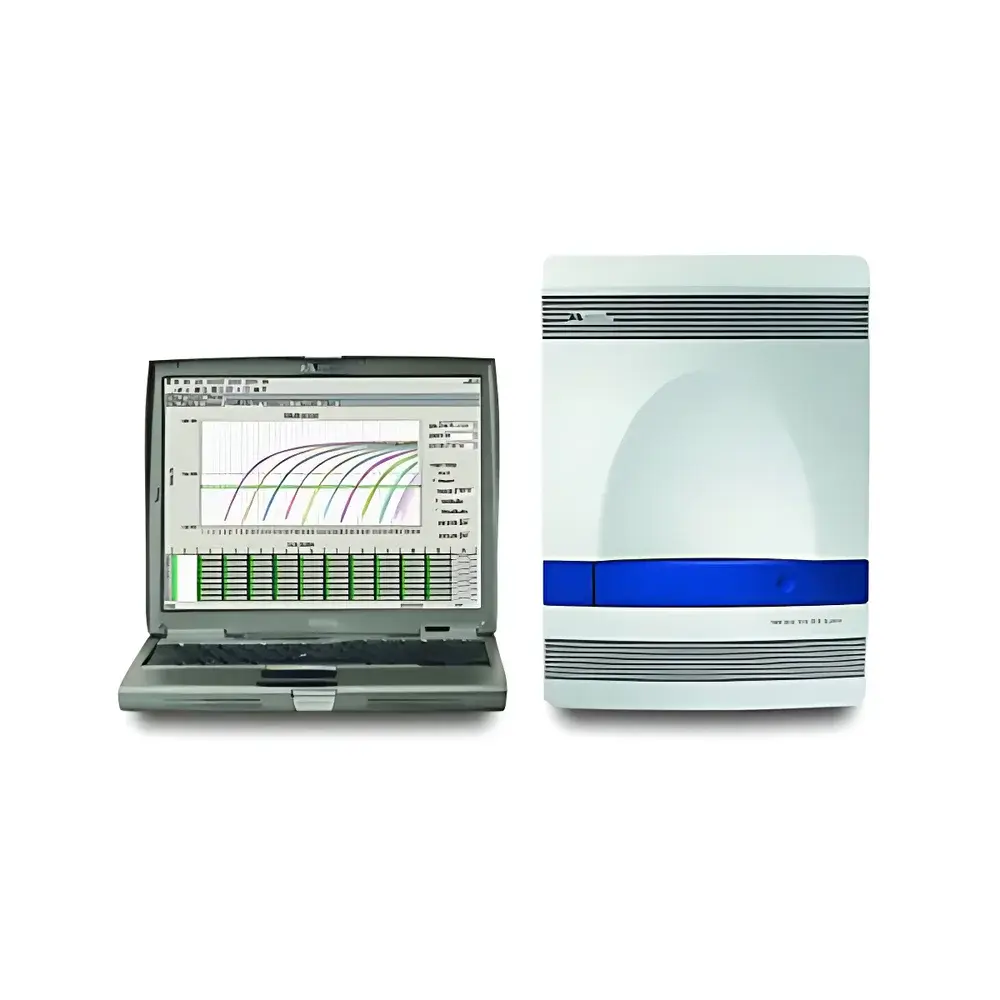
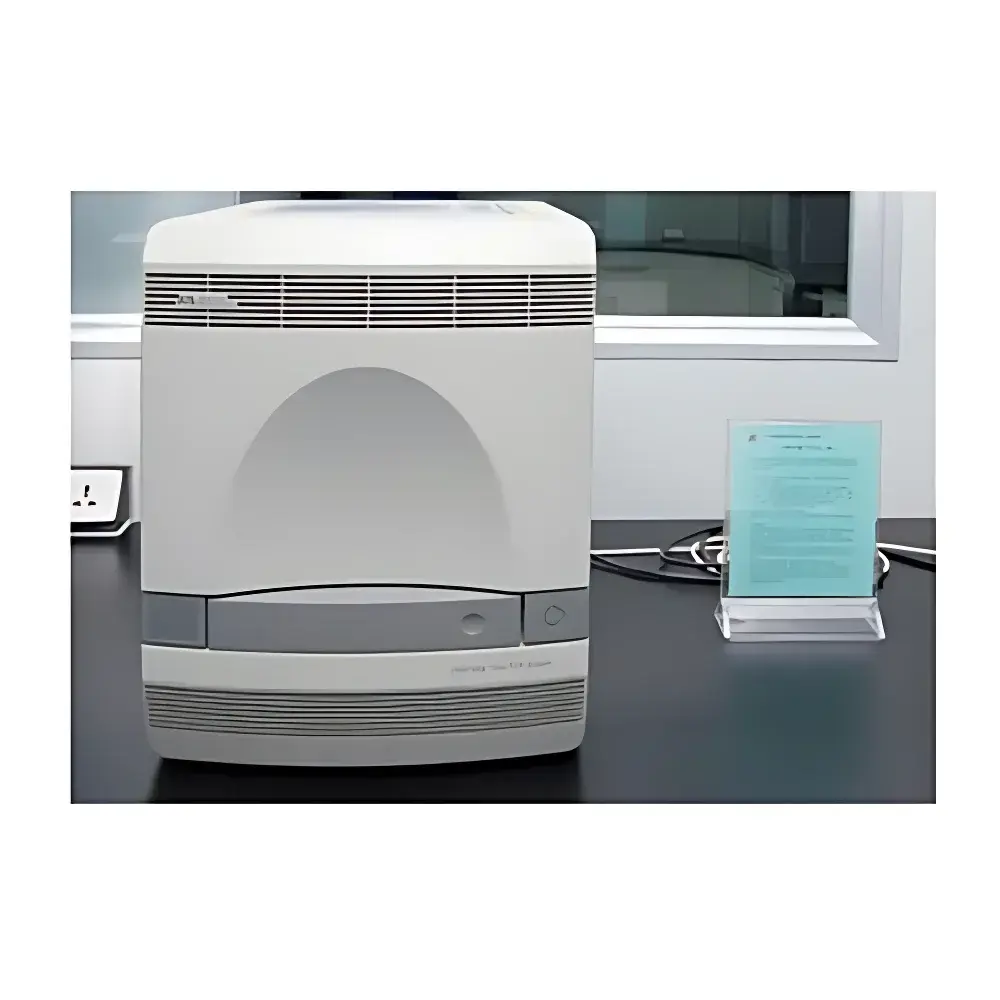
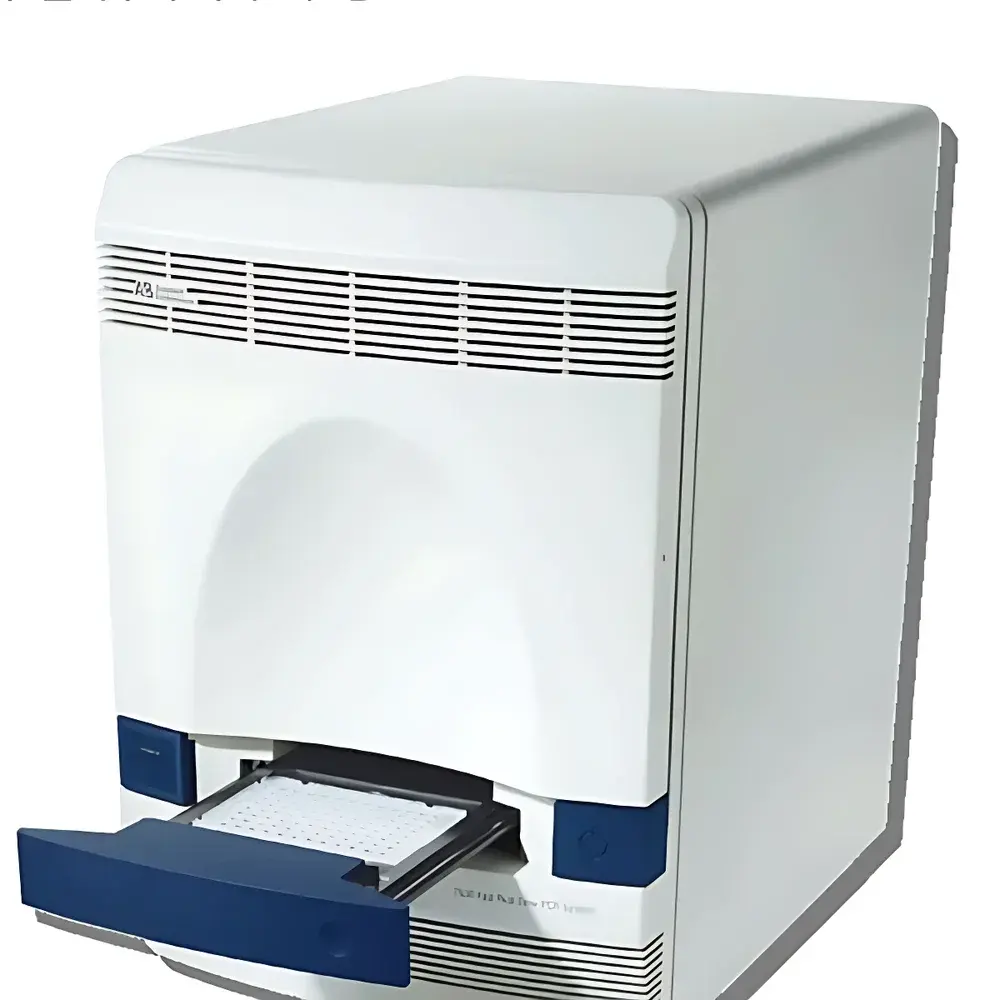
Applied Biosystems ABI 7500 Real-Time Fluorescence Quantitative PCR System
| Brand | Applied Biosystems |
|---|---|
| Origin | USA |
| Model | ABI 7500 |
| Instrument Type | Real-Time Fluorescence Quantitative PCR System |
| Sample Throughput | 96-well and 48-well formats |
| Maximum Heating Rate | 12°C/s |
| Temperature Accuracy | ±0.1°C (at 55°C) |
| Well-to-Well Temperature Uniformity | <0.3°C (at 55°C) |
Overview
The Applied Biosystems ABI 7500 Real-Time Fluorescence Quantitative PCR System is a high-performance, thermally robust real-time PCR platform engineered for precise nucleic acid quantification using sequence-specific fluorescent probe chemistries—including TaqMan®, Molecular Beacons, and SYBR® Green I. Based on the principle of fluorescence resonance energy transfer (FRET) and real-time monitoring of amplification kinetics, the system captures fluorescence signals during each thermal cycle across five optical channels (470–660 nm excitation/emission), enabling multiplex detection of up to five targets per reaction. Its Peltier-based thermal control architecture delivers rapid ramping (up to 12°C/s), exceptional temperature accuracy (±0.1°C at 55°C), and outstanding well-to-well uniformity (<0.3°C), ensuring high reproducibility in absolute and relative quantification, genotyping, and gene expression profiling.
Key Features
- Five-color optical detection system with independent excitation and emission filters for flexible assay design and robust multiplexing.
- Dual-block thermal cycler architecture supporting both 96-well standard and 48-well fast-format reaction plates—enabling method flexibility without hardware modification.
- Advanced thermal calibration protocol compliant with ASTM E2887-21 guidelines for thermal performance validation in quantitative PCR instruments.
- Integrated passive reference dye (ROX) normalization to correct for well-to-well volume and optical path variability.
- Robust mechanical design with sealed optical chamber and vibration-dampened stage, minimizing signal drift during extended runs (e.g., 40+ cycles).
- Pre-installed firmware compatible with legacy ABI 7500 Sequence Detection Software v2.3 and later versions—ensuring continuity in validated laboratory workflows.
Sample Compatibility & Compliance
The ABI 7500 accommodates standard 0.2 mL skirted or semi-skirted 96-well plates and 48-well fast plates conforming to ANSI/SBS standards. It supports all common qPCR consumables—including low-profile tubes, optical seals, and certified nuclease-free plates—without requiring proprietary accessories. From a regulatory standpoint, the instrument meets key requirements for use in GLP- and GMP-aligned environments: its software audit trail functionality (when used with compliant data management systems), electronic signature support, and thermal traceability align with FDA 21 CFR Part 11 expectations for data integrity. While the instrument itself is not CE-marked as an IVD device, it is widely deployed in research-use-only (RUO) and clinical trial support labs under ISO 13485 and CLIA-compliant quality systems.
Software & Data Management
Data acquisition and analysis are performed using the ABI 7500 SDS (Sequence Detection Software), which provides threshold cycle (Ct) determination, standard curve generation, comparative ΔΔCt analysis, and melt curve interpretation. Raw fluorescence data (.eds files) are stored in vendor-neutral formats compatible with third-party analysis tools such as LinRegPCR and qBase+. The software supports export to CSV, Excel, and XML for integration into LIMS and ELN platforms. For laboratories requiring full 21 CFR Part 11 compliance, the system can be configured with external time-stamped audit logging servers and role-based user access controls—though native electronic signature implementation requires supplementary validation documentation per organizational SOPs.
Applications
The ABI 7500 is routinely employed in molecular diagnostics development, vaccine efficacy studies, microbial load quantification (e.g., viral titer assays), SNP genotyping via allelic discrimination, and mRNA expression profiling across academic, pharmaceutical, and contract research organizations. Its sensitivity (detecting ≤10 copies/reaction) and dynamic range (>9 logs) make it suitable for low-abundance target detection in challenging matrices such as FFPE-derived RNA or environmental water samples. In QC/QA settings, it serves as a reference platform for assay transfer, stability-indicating method validation, and comparability studies between new and legacy qPCR instruments.
FAQ
Is the ABI 7500 compatible with current reagent kits and master mixes?
Yes—it accepts all commercially available TaqMan probes, hydrolysis assays, intercalating dyes, and reverse transcription reagents without modification.
Does the system support fast cycling protocols?
While not a “Fast”-designated model like the ABI 7500 Fast, the standard ABI 7500 achieves comparable run times when using fast-optimized master mixes and 48-well plates.
Can raw data be exported for independent statistical analysis?
Yes—fluorescence intensity values per well and cycle are fully exportable in tabular format for downstream processing in R, Python, or GraphPad Prism.
What maintenance is required to ensure long-term thermal accuracy?
Annual calibration verification using NIST-traceable temperature standards and routine cleaning of the optical window and thermal block surfaces are recommended per Applied Biosystems’ Service Manual Rev. D.
Is service and parts support still available for this legacy platform?
Yes—third-party service providers and authorized refurbishers maintain inventory of critical components including thermal blocks, optical assemblies, and power supplies; firmware updates remain accessible via Thermo Fisher’s legacy support portal.




