
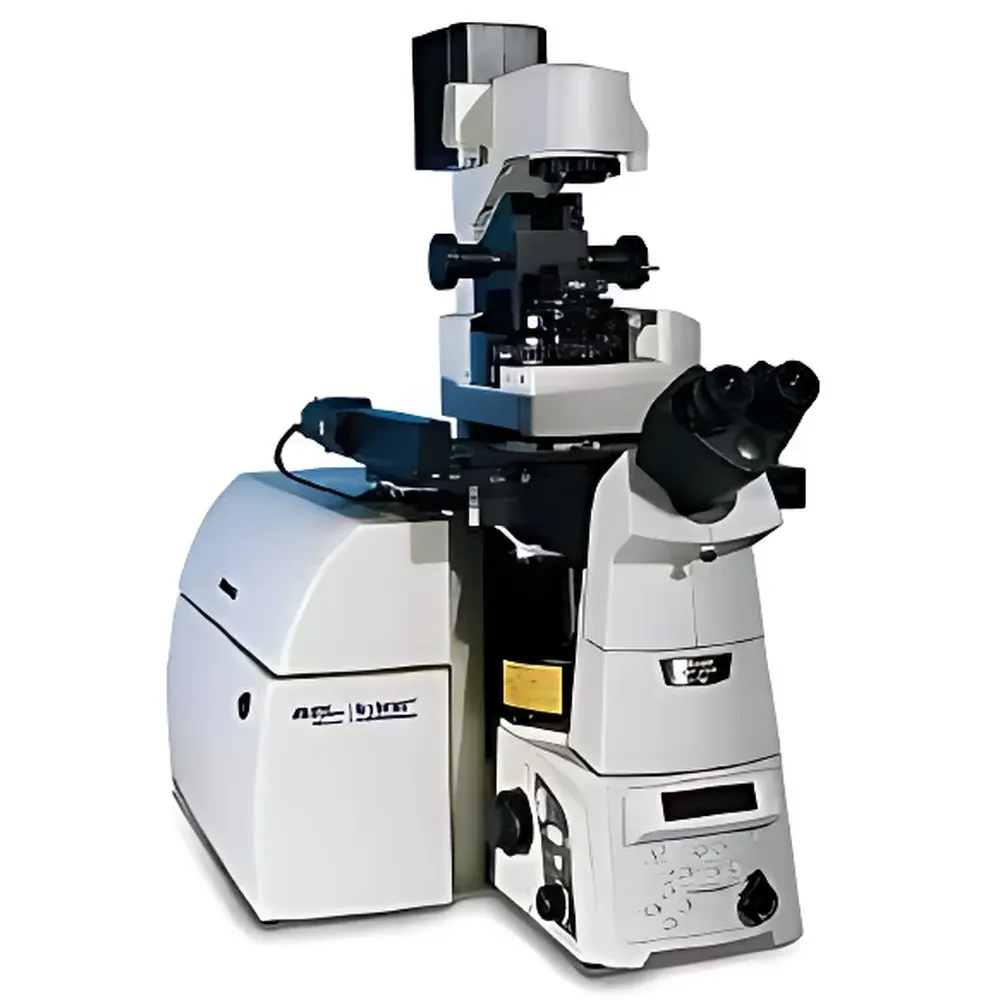
Applied Biosystems ArcturusXT™ Laser Capture Microdissection System
| Brand | Applied Biosystems |
|---|---|
| Origin | USA |
| Model | ArcturusXT™ |
| Laser Types | Near-Infrared (NIR) for LCM + Ultraviolet (UV) for Precision Cutting |
| Microscope Platform | Nikon Eclipse® Ti-E Inverted Research Microscope |
| Sample Compatibility | Glass slides, membrane-coated slides (contact/non-contact), petri dishes, standard glass |
| Software | ArcturusXT™ Control Software + Optional AutoScanXT Image Analysis Module |
| Compliance | Designed for GLP/GMP-aligned workflows |
Overview
The Applied Biosystems ArcturusXT™ Laser Capture Microdissection (LCM) System is a dual-laser, research-grade platform engineered for spatially resolved molecular analysis at single-cell and tissue-region resolution. It uniquely integrates solid-state near-infrared (NIR) laser capture microdissection—optimized for gentle, non-destructive transfer of intact cells or subcellular structures—with high-precision ultraviolet (UV) laser ablation for rapid, clean excision of morphologically defined regions. This co-localized dual-laser architecture enables researchers to perform both contact-based NIR thermoplastic film activation and non-contact UV photodisruption on the same instrument, without reconfiguration or sample relocation. The system is built around the Nikon Eclipse® Ti-E inverted research microscope, delivering diffraction-limited optical performance, motorized precision stages, and modular portability for integration with high-resolution digital imaging, fluorescence microscopy, or time-lapse acquisition. Its design prioritizes biomolecular integrity: NIR capture preserves native RNA, DNA, and protein conformation in frozen, FFPE, or live-cell preparations, while UV cutting minimizes thermal spread and collateral damage during dense-tissue sectioning.
Key Features
- Dual-laser architecture: 1064 nm solid-state NIR laser for low-energy, membrane-mediated cell capture; 355 nm solid-state UV laser for sub-micron ablation accuracy and minimal heat-affected zone
- Motorized, trajectory-ball-controlled stage with 100 mm × 100 mm travel range and ≤0.1 µm positional repeatability
- Integrated pen-touch display interface with real-time image overlay, intuitive toolbars, and context-sensitive parameter adjustment
- Modular optical path: Dual-port configuration supports simultaneous brightfield/fluorescence imaging and optional high-sensitivity camera coupling
- Interchangeable slide holders accommodating standard glass slides (1″ × 3″), frame-mounted membranes (e.g., CapSure®, PEN), petri dishes (up to 100 mm), and custom substrates
- Adjustable halogen illumination with neutral density filtering and optional tunable fluorescence excitation modules (DAPI/FITC/TRITC/Cy5)
Sample Compatibility & Compliance
The ArcturusXT™ system accommodates diverse histological and cytological specimen formats without compromising molecular fidelity. It supports cryosections (4–20 µm), FFPE sections (3–10 µm), cytospin preparations, and adherent cultured cells on standard glass or polymer-coated substrates. Both contact-mode (via ethylene vinyl acetate (EVA) or polyethylene naphthalate (PEN) membrane transfer) and non-contact UV ablation modes are compatible with HistoGene®-stained frozen sections, Paradise® PLUS–processed FFPE tissues, and immunofluorescent preparations using standard protocols. The platform conforms to analytical method validation principles outlined in ISO/IEC 17025 and supports traceable, ALCOA+ (Attributable, Legible, Contemporaneous, Original, Accurate, Complete, Consistent, Enduring, Available) data handling. When operated within a validated computing environment, its electronic record functionality aligns with FDA 21 CFR Part 11 requirements for audit trails, user authentication, and electronic signatures—critical for translational biomarker discovery and regulated preclinical studies.
Software & Data Management
The ArcturusXT™ Control Software provides full instrument orchestration via a Windows-based GUI, enabling synchronized control of stage movement, objective turret selection, focus calibration, illumination intensity, laser pulse duration/energy, cap transfer sequencing, and QC confirmation steps. Every action—including timestamped image captures (static TIFF/JPEG and AVI video), laser firing events, and parameter adjustments—is logged in an encrypted, tamper-evident audit trail. Optional AutoScanXT software extends capability through supervised machine learning: users define morphological criteria (e.g., nuclear size, cytoplasmic texture, staining intensity thresholds) to automatically detect and outline target regions across whole-slide scans, reducing manual annotation time by >70% in large-cohort studies. Export formats include annotated ROI coordinates (XML/CSV), multi-channel TIFF stacks, and metadata-rich .arct files compatible with downstream NGS library prep pipelines and bioinformatics platforms (e.g., Partek Flow®, QIAGEN CLC).
Applications
- Single-cell genomics and transcriptomics from heterogeneous tumor microenvironments
- Neuroanatomical mapping of region-specific gene expression in postmortem brain tissue
- Stem cell niche isolation for epigenetic profiling and lineage tracing
- Pathogen-host interface analysis in infected tissue sections (e.g., viral inclusion bodies, granulomas)
- Quality-controlled microdissection of FFPE biobank specimens for retrospective biomarker validation
- Developmental biology studies requiring precise embryonic tissue subregion isolation
FAQ
What types of tissue sections are compatible with the ArcturusXT™ system?
Frozen sections (OCT-embedded), FFPE sections, cytology smears, and live-cell monolayers on glass or polymer substrates are all supported. No specialized embedding or coating is required for basic operation.
Can the system be used for both RNA and DNA isolation workflows?
Yes. The NIR capture mode preserves nucleic acid integrity across both modalities; PicoPure® and RiboAmp® PLUS kits are specifically validated for downstream extraction and amplification from ArcturusXT™-isolated material.
Is UV laser cutting suitable for delicate samples such as neural tissue?
The 355 nm UV laser operates with pulse durations <10 ns and spot sizes down to 1 µm, enabling precise incisions with negligible thermal diffusion—ideal for preserving ultrastructural detail in neuropil or vascular networks.
How does the system ensure reproducibility across operators and laboratories?
Standardized calibration routines, automated focus-lock algorithms, integrated stage homing, and version-controlled software protocols minimize inter-user variability. System performance verification is supported via NIST-traceable calibration slides and documented SOP templates.
Is remote operation or integration with LIMS possible?
The system supports TCP/IP communication and COM/DCOM interfaces, enabling integration with laboratory information management systems (LIMS) and centralized instrument monitoring platforms. Remote desktop access is permitted under secure network policies compliant with institutional IT governance frameworks.
Related Products




