
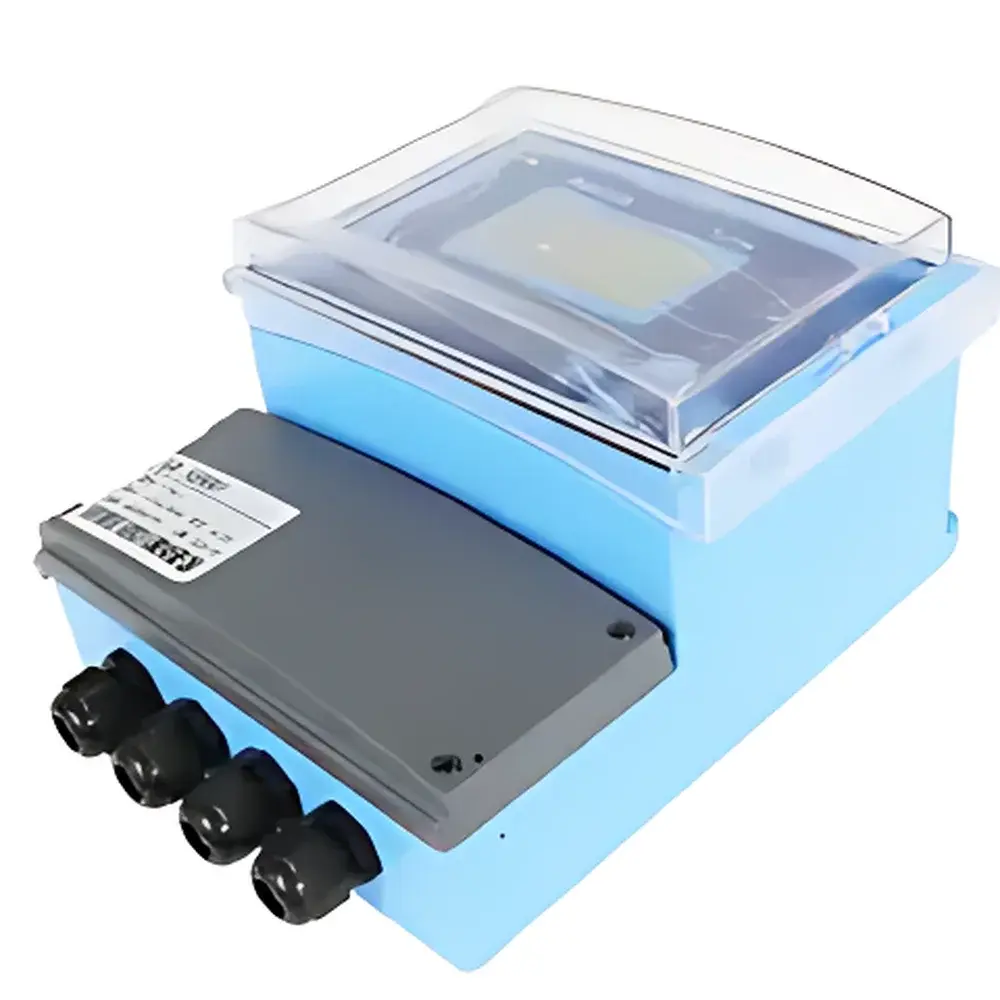
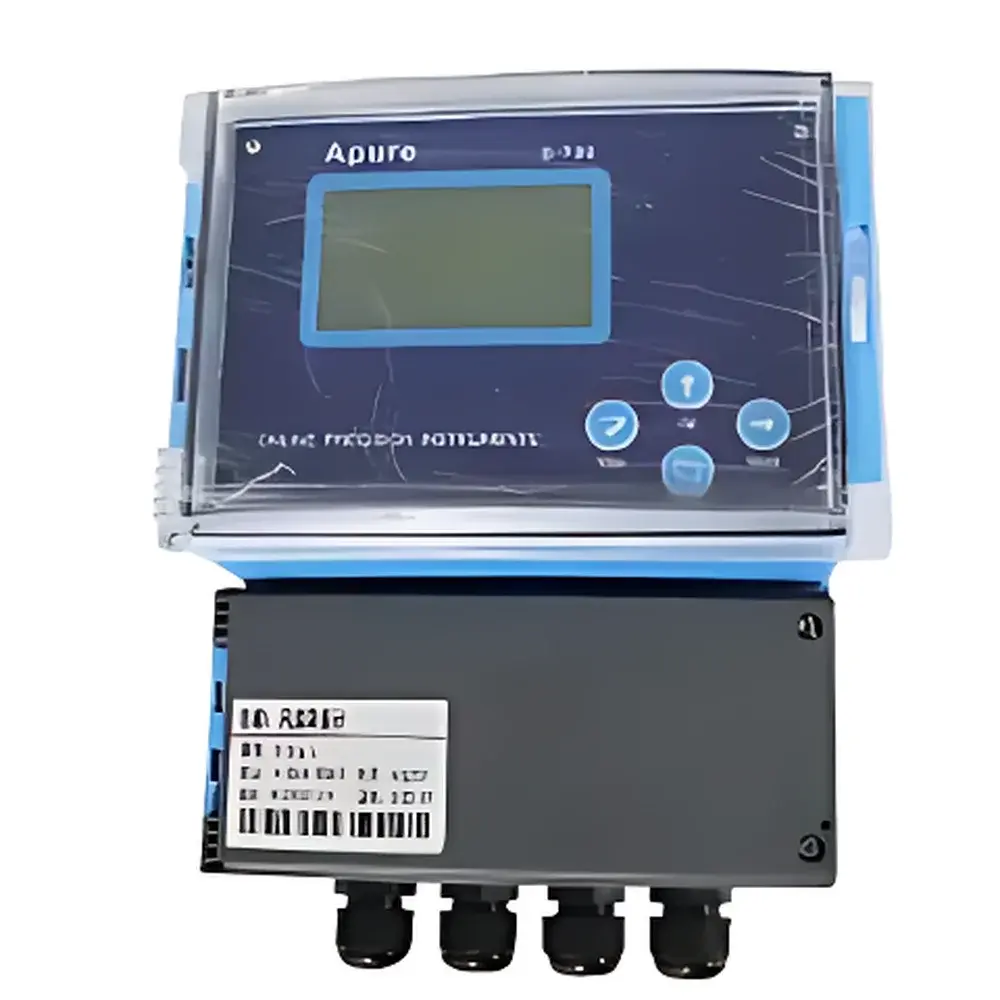
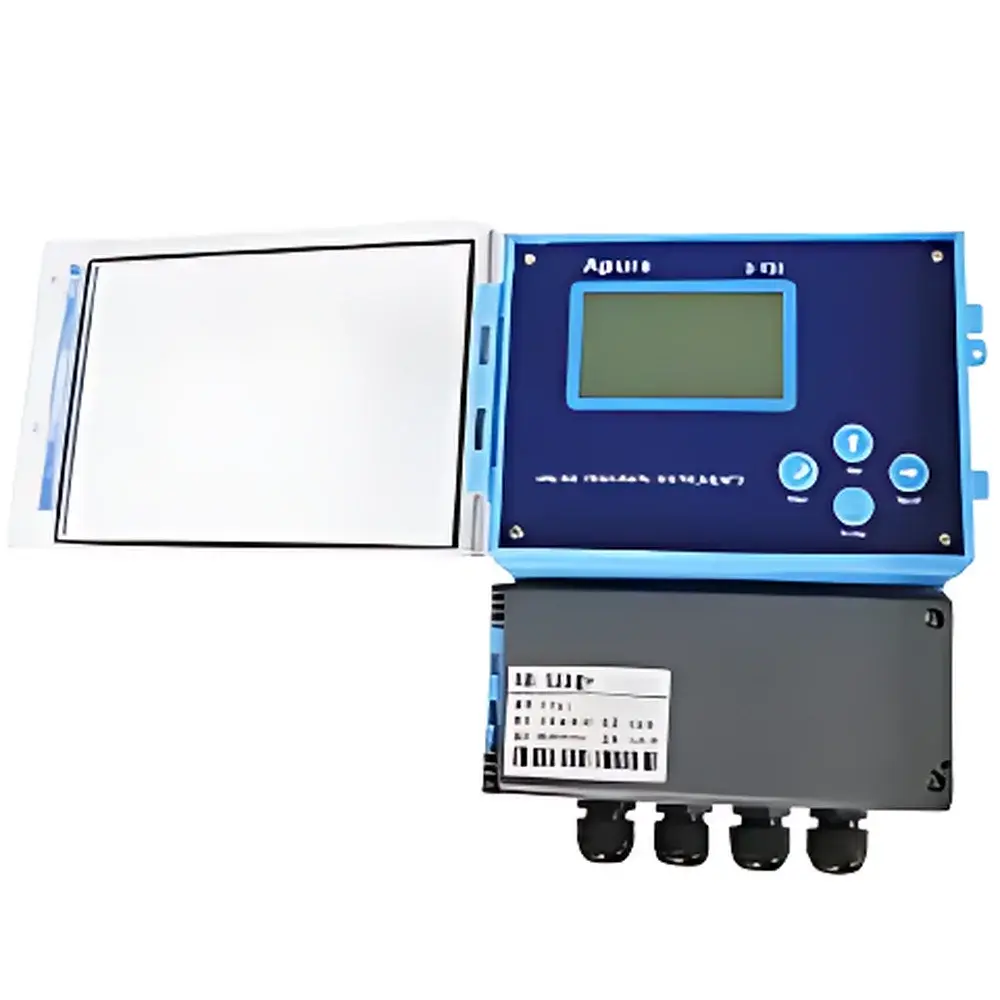
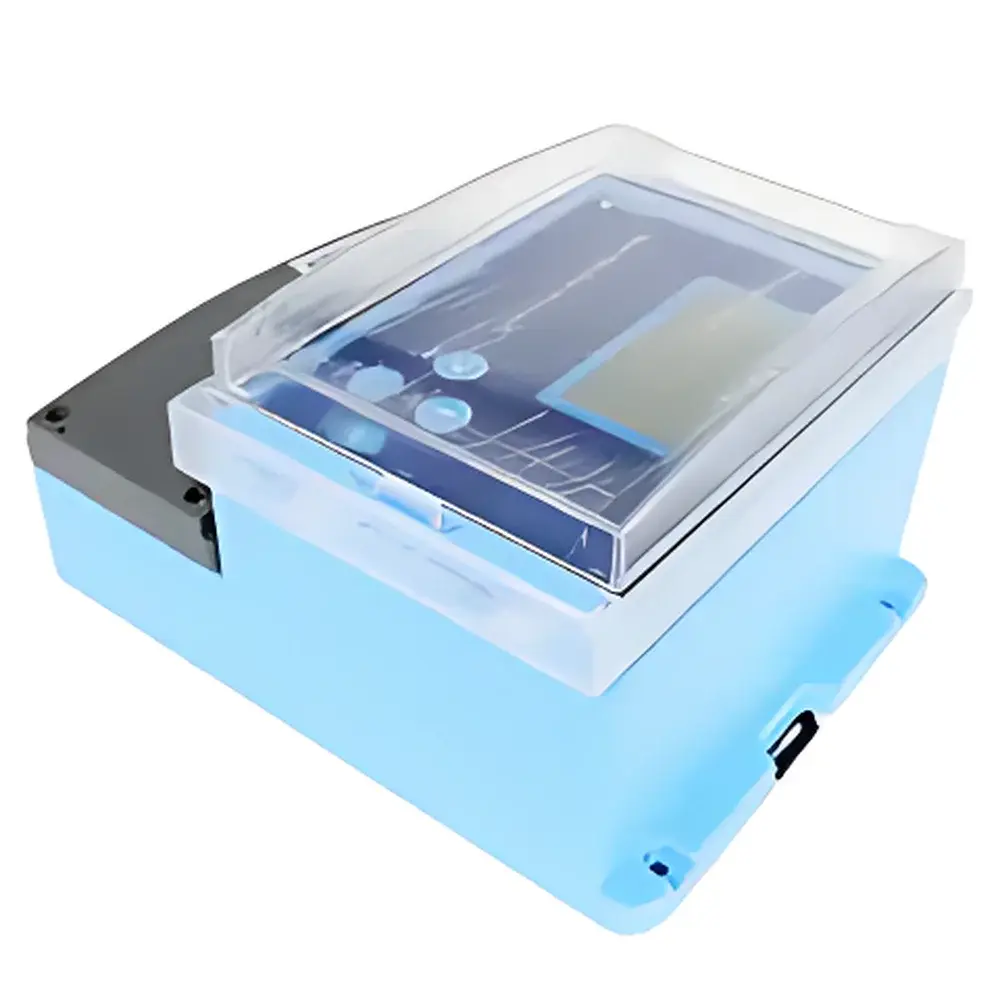
Apure S-730 Wall-Mounted Suspended Solids Analyzer
| Brand | Apure |
|---|---|
| Origin | Shanghai, China |
| Manufacturer Type | Direct Manufacturer |
| Product Category | Domestic (China-made) |
| Model | S-730 |
| Instrument Type | Online Analyzer |
| Measurement Range | 0–30 g/L |
| Display | LCD |
| Units | g/L, mg/L, NTU |
| Resolution | 0.001 g/L or 1 mg/L |
| Accuracy | ±1.0% FS |
| Repeatability | ±1.0% FS |
| Ambient Temperature | −20 to +60 °C |
| Relative Humidity | (65 ± 20)% |
| Analog Output | 4–20 mA (750 Ω load) |
| Alarm Output | Dual SPDT relays |
| Digital Output | RS485 (optional) |
| Power Supply | AC 220 V ±10% or DC 24 V |
| Housing Material | SS316 |
| Process Temp. Range | 0–60 °C |
| Max. Pressure Rating | 1.0 MPa |
| Process Connection | 3/4″ NPT |
| IP Rating | IP68 |
| Installation Options | Immersion bracket or inline pipe insertion |
| Standard Cable | Shielded, 10 m |
Overview
The Apure S-730 Wall-Mounted Suspended Solids Analyzer is an industrial-grade online turbidity and suspended solids (TSS) monitoring instrument engineered for continuous, real-time measurement in municipal wastewater treatment plants, industrial effluent streams, and process water circuits. It operates on the principle of multi-beam optical transmission and scattering detection—employing collimated infrared or visible light sources and multiple photodetectors arranged at strategic angular positions. This multi-beam architecture mitigates signal drift caused by fouling, air bubbles, or variable flow conditions, delivering stable output even under challenging hydraulic environments. Unlike single-beam transmissometers or basic nephelometers, the S-730 dynamically compensates for ambient light interference, window contamination, and temperature-induced refractive index shifts—ensuring high reproducibility across extended deployment cycles without frequent recalibration.
Key Features
- Multi-beam optical sensing system with automatic compensation for sensor window fouling, air entrainment, and ambient light fluctuations
- Simultaneous display of primary measurement (TSS in g/L), analog output current (4–20 mA), real-time timestamp, and concentration percentage relative to full-scale range
- Configurable dual relay outputs supporting fail-safe high/low alarm logic per user-defined thresholds—compatible with PLC interlocks and SCADA integration
- Two-point calibration protocol (zero and span) using traceable standard suspensions (e.g., Formazin or kaolin), enabling field correction of sensor drift without disassembly
- Flexible mechanical mounting: adjustable immersion bracket for open-channel or tank applications; threaded pipe insertion probe for pressurized pipelines (3/4″ NPT)
- Unit switching between g/L, mg/L, and NTU—mapped via internal conversion algorithms aligned with ISO 7027 and EPA Method 180.1 conventions
- Bilingual (English/Chinese) menu-driven interface with intuitive navigation, parameter lockout, and audit-trail-enabled configuration logging
Sample Compatibility & Compliance
The S-730 is validated for use with aqueous matrices containing non-absorbing or weakly absorbing particulates—such as activated sludge, secondary clarifier effluent, digested biosolids, and industrial cooling water. Its stainless steel 316 wetted parts and IP68-rated housing ensure chemical resistance to chlorinated disinfectants, mild acids, and alkaline cleaning agents typical in wastewater infrastructure. While not certified for drinking water compliance under NSF/ANSI 61, it meets CE marking requirements for electromagnetic compatibility (EN 61326-1) and low-voltage safety (EN 61000-6-2/6-3). The analog and digital outputs support integration into systems compliant with IEC 61511 (functional safety) and ISO 55000 (asset management), and its relay logic can be configured to satisfy SIL 1-level process shutdown criteria when paired with appropriate safety controllers.
Software & Data Management
Data acquisition and configuration are managed locally via the front-panel LCD interface; no external PC is required for routine operation. RS485 Modbus RTU communication (addressable, 9600 baud, 8N1) enables bidirectional data exchange with distributed control systems (DCS), programmable logic controllers (PLCs), or centralized SCADA platforms. All configuration changes—including calibration coefficients, alarm setpoints, and unit selections—are timestamped and stored in non-volatile memory. Though the device does not embed FDA 21 CFR Part 11-compliant electronic signatures or audit trails, its deterministic output behavior and deterministic relay state logging support GLP-aligned operational records when deployed within documented QA/QC procedures. Optional third-party middleware (e.g., Ignition SCADA or Siemens Desigo CC) may extend historical trending, alarm aggregation, and predictive maintenance analytics.
Applications
- Real-time monitoring of mixed liquor suspended solids (MLSS) in aeration basins to optimize blower energy consumption and nutrient dosing
- Clarifier performance assessment via underflow and overflow TSS profiling—supporting early detection of sludge bulking or washout events
- Effluent compliance verification against discharge permits (e.g., EPA NPDES limits) with automated reporting triggers
- Process control feedback for centrifuge feed consistency, belt filter press dosing, or membrane bioreactor (MBR) flux regulation
- Industrial pretreatment monitoring for food processing, pulp & paper, or pharmaceutical manufacturing wastewater streams
FAQ
What calibration standards are recommended for the S-730?
Formazin suspension (for NTU traceability) or gravimetrically prepared kaolin or silica standards (for g/L traceability) are advised. Calibration should occur at two points: zero (deionized water) and mid- or high-range (e.g., 15 g/L), following ISO 7027 protocols.
Can the S-730 operate in pressurized pipelines?
Yes—the probe is rated for continuous service up to 1.0 MPa (10 bar) at temperatures between 0–60 °C, making it suitable for insertion into gravity-fed or pumped mainlines with proper NPT sealing.
Is temperature compensation automatic?
The built-in Pt1000 RTD measures process temperature in real time and applies algorithmic compensation to optical signal gain, minimizing thermal drift across the specified operating range.
How often does the sensor require cleaning or maintenance?
Under typical municipal wastewater conditions, quarterly manual wipe-down of the optical windows is sufficient; heavily fouling environments may require semi-monthly inspection. No consumables or replacement lamps are required—the LED light source has a rated lifetime exceeding 50,000 hours.
Does the S-730 support HART communication?
No—only 4–20 mA analog output with digital superimposition is unsupported. Communication is limited to RS485 Modbus RTU (optional) and local LCD interface.







