
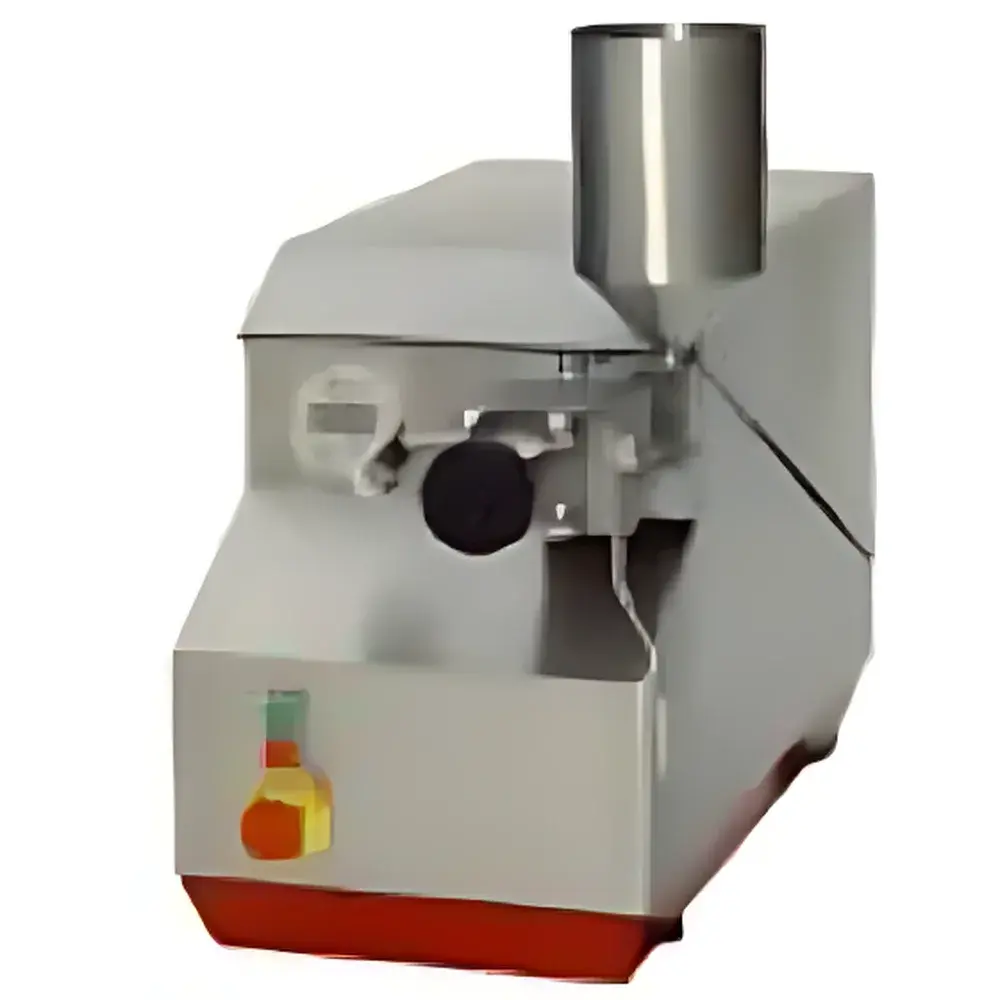
APV APV-2000 Laboratory High-Pressure Homogenizer
| Brand | APV |
|---|---|
| Origin | Germany |
| Model | APV-2000 |
| Maximum Operating Pressure | 2000 bar |
| Adjustable Pressure Range | 0–2000 bar |
| Flow Rate | 11 L/h |
| Homogenization Valve Type | SEO Zirconia Ceramic Valve |
| Valve Material | Zirconia Ceramic Alloy |
| Cooling & Lubrication System | Integrated Water-Cooled Plunger System |
| Temperature Monitoring | Digital Display (Pressure + Sample Temperature) |
| Overpressure Alarm | Yes |
| Max Feed Particle Size | ≤500 µm |
| Operating Temperature Range | Up to 100 °C |
| Power Supply | 380 V / 50 Hz |
| Power Consumption | 3 kW |
| Noise Level | 50 dB(A) |
| Dimensions (W×H×L) | 370 × 620 × 818 mm |
| Weight | 105 kg |
| CIP/SIP Capable | Yes |
| Compliance | CE, ISO 9001 |
Overview
The APV APV-2000 Laboratory High-Pressure Homogenizer is an engineered solution for scalable, reproducible high-shear processing of sensitive biological and colloidal formulations. Based on the principle of controlled microfluidic cavitation and turbulent shear induced by rapid pressure drop across a precisely engineered ceramic valve, this homogenizer delivers consistent sub-100 nm particle size reduction with narrow polydispersity index (PDI) — critical for parenteral nanomedicine development including liposomes, lipid emulsions, solid lipid nanoparticles (SLN), nanostructured lipid carriers (NLC), and microemulsions. Designed and manufactured in Germany, the APV-2000 maintains architectural fidelity to industrial-scale APV systems, eliminating scale-up uncertainty between lab, pilot, and production environments. Its motor-driven hydraulic intensifier pump operates without compressed air or pneumatic actuators — preventing moisture ingress, oil contamination, or pressure instability commonly associated with air-driven systems. This architecture ensures compliance with stringent GMP/GLP workflows and supports uninterrupted 24-hour operation under continuous load.
Key Features
- Two-stage homogenization valve system enabling precise control over primary disruption and secondary refinement — essential for achieving monomodal particle distributions in complex biopharmaceutical dispersions.
- SEO zirconia ceramic alloy homogenization valve offering >6× longer service life compared to tungsten carbide or hardened steel alternatives, minimizing downtime and consumables cost over extended R&D campaigns.
- Integrated water-cooled plunger lubrication system, identical in design to production-grade APV units, ensuring thermal stability and mechanical reliability during prolonged operation at maximum pressure (2000 bar).
- Digital pressure and sample temperature display with real-time overpressure cutoff — enhancing operator safety and experimental repeatability.
- CIP (Clean-in-Place) and SIP (Sterilize-in-Place) compatibility validated per FDA guidance for aseptic processing of injectables, cell culture media, and sterile APIs.
- Low-noise operation at ≤50 dB(A), meeting ISO 11201 acoustic emission standards for laboratory environments requiring minimal ambient disturbance.
- Manual handwheel pressure adjustment with continuous 0–2000 bar range — enabling fine-tuned optimization for delicate samples such as Vero cells, yeast, bacterial lysates, and plant/algae extracts without thermal degradation.
Sample Compatibility & Compliance
The APV-2000 accommodates a broad spectrum of biological and synthetic feedstocks: microbial cells (e.g., E. coli, Pichia pastoris, Mycobacterium tuberculosis), mammalian and insect cells (including Vero and CHO lines), plant tissues, pollen, algae, and viscous emulsions (e.g., soy lecithin-based lipid emulsions). Its stainless-steel wetted path and inert zirconia valve ensure compatibility with aggressive solvents, surfactants, and pH-extreme buffers. The system complies with CE Machinery Directive 2006/42/EC, conforms to ISO 9001:2015 quality management requirements, and supports audit-ready documentation for FDA 21 CFR Part 11-compliant data integrity when integrated with validated SCADA or LIMS platforms.
Software & Data Management
While the APV-2000 operates via analog/manual interface for maximal robustness and regulatory simplicity, its digital pressure and temperature outputs are compatible with third-party analog-to-digital acquisition modules (e.g., National Instruments DAQ, Beckhoff EtherCAT I/O). Users may log timestamped pressure profiles, thermal transients, and cycle counts using compliant electronic notebooks (e.g., LabArchives, IDBS E-WorkBook) to fulfill ALCOA+ data governance principles. Optional analog signal conditioning enables integration into centralized process control systems for automated batch reporting and deviation tracking — supporting Stage 1–3 process validation per ICH Q5C and Q5D.
Applications
- Pharmaceutical R&D: Liposome extrusion replacement, nanosuspension stabilization, lipid nanoparticle (LNP) formulation for mRNA delivery, and sterile fat emulsion manufacturing (e.g., Intralipid®-type products).
- Bioprocessing: High-yield intracellular protein recovery from recombinant yeast/bacteria, nucleic acid isolation from tough-walled organisms (e.g., Aspergillus, pollen), and organelle fractionation.
- Food & Nutraceuticals: Cold homogenization of dairy emulsions, plant-based milk alternatives, and bioactive ingredient encapsulation (e.g., curcumin, resveratrol).
- Materials Science: Dispersion of graphene oxide, quantum dots, and metal-organic frameworks (MOFs) in aqueous/organic media for functional coatings and sensors.
FAQ
Is the APV-2000 suitable for GMP-regulated environments?
Yes — its SIP/CIP capability, CE marking, ISO 9001-conformant manufacturing, and absence of compressed-air-dependent components make it appropriate for preclinical and clinical-phase manufacturing support under EU Annex 1 and USP <1229> guidelines.
Can the APV-2000 be scaled directly to production?
Yes — the APV-2000 shares identical valve geometry, fluid dynamics, and pressure-generation architecture with APV’s industrial homogenizers (e.g., APV 1000/2000 series), enabling direct linear scale-up with minimal re-optimization.
What maintenance intervals are recommended for the zirconia ceramic valve?
Under typical lab-use conditions (≤4 hrs/day at 1500–2000 bar), valve replacement is required every 6–12 months — significantly exceeding the 1–2 month interval typical for tungsten carbide valves.
Does the system require external cooling water?
Yes — a closed-loop chilled water supply (10–25 °C, ≥2 L/min flow rate) is mandatory for sustained operation above 1000 bar to maintain plunger seal integrity and thermal equilibrium.
Is remote monitoring or automation possible?
While the base unit is manually operated, analog 4–20 mA outputs for pressure and temperature allow connection to PLCs, DCS, or custom HMI interfaces for semi-automated batch execution and electronic record retention.



