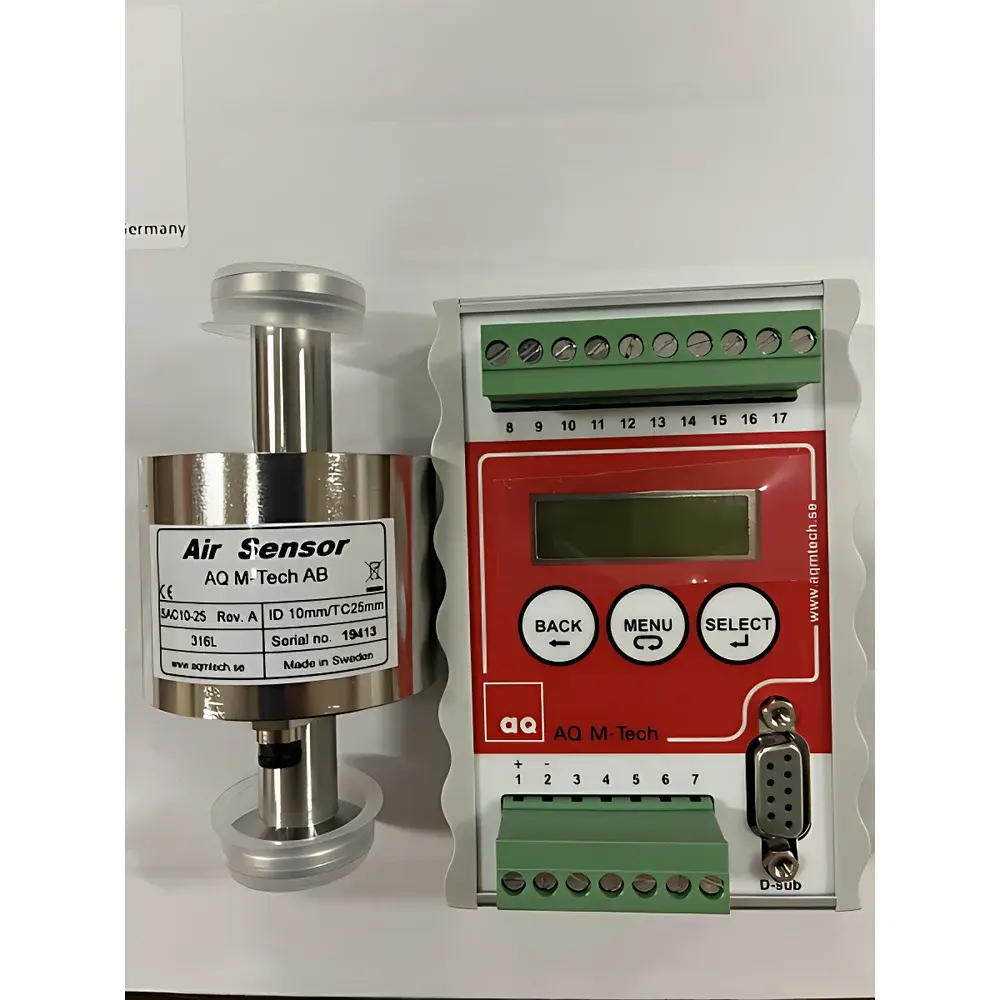
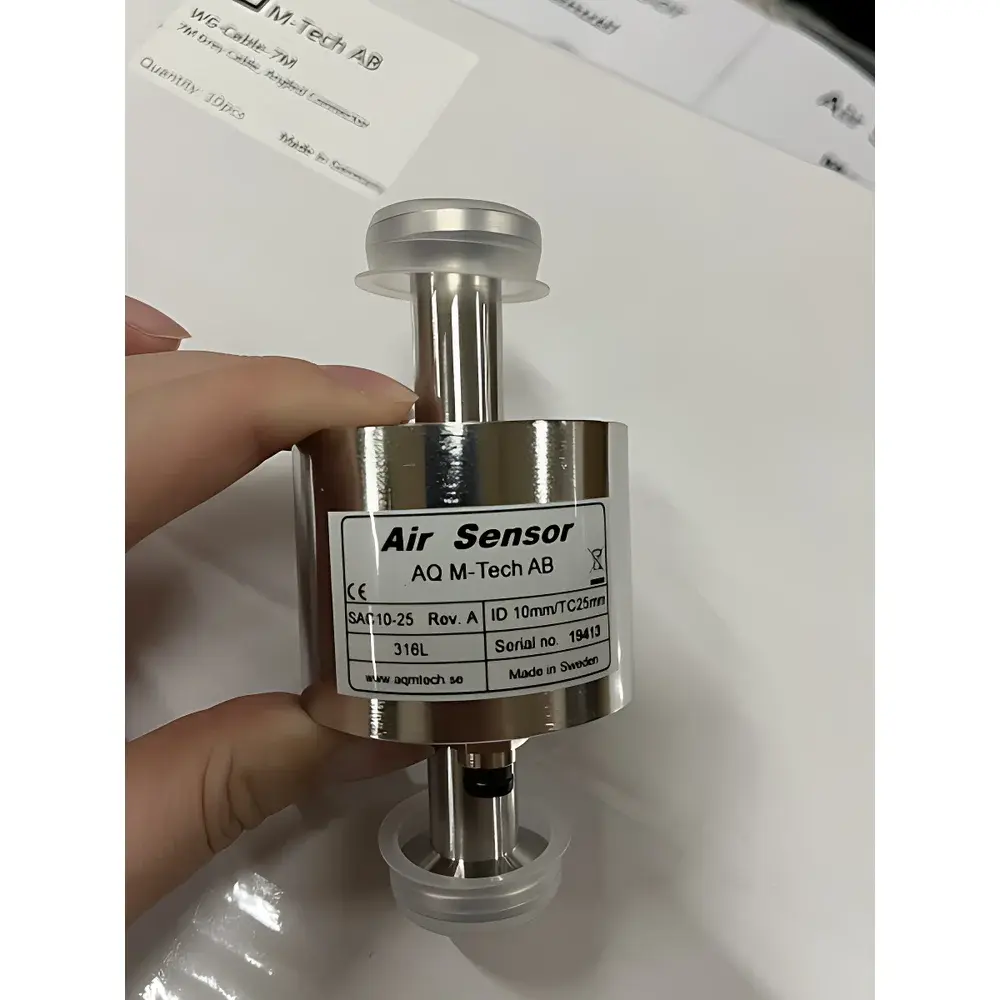
AQ M-Tech FCS10-25 Acid-Resistant Stainless Steel Air Flow Sensor
| Brand | AQ M-Tech |
|---|---|
| Origin | Sweden |
| Model | FCS10-25 |
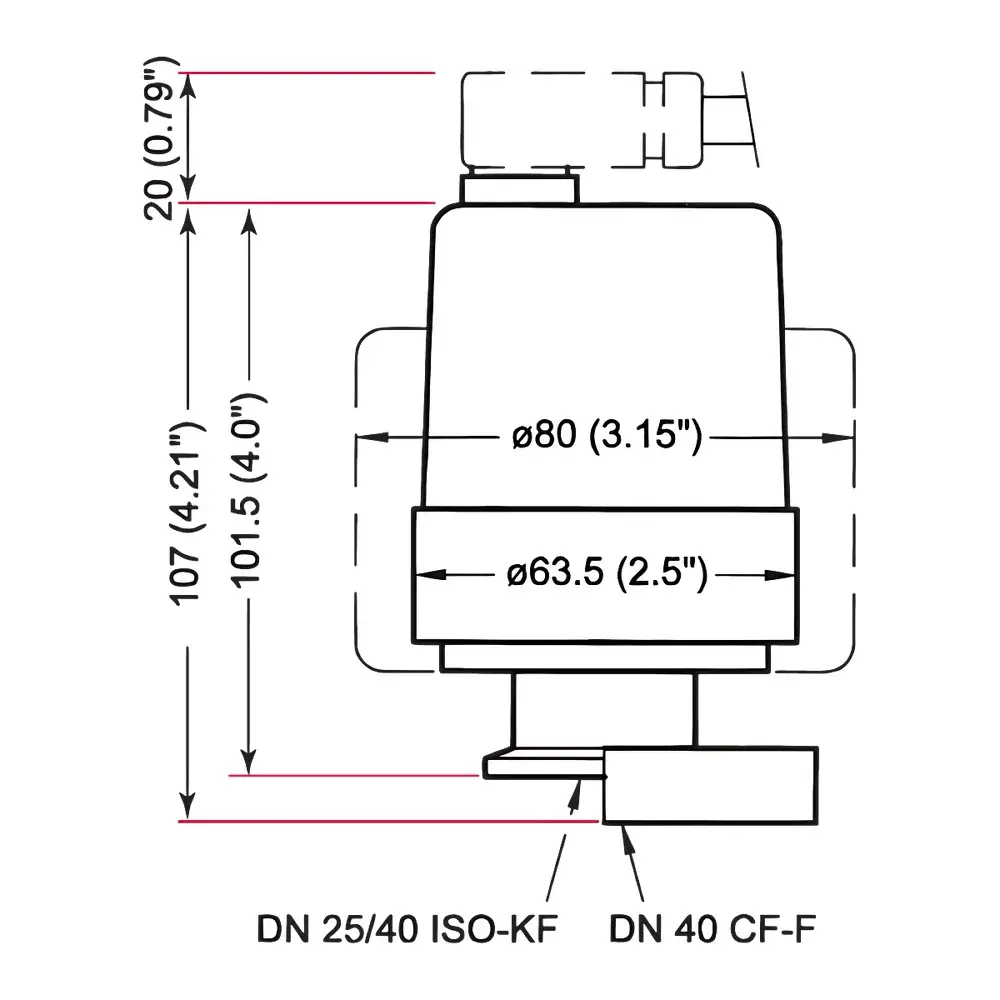
| Inner Diameter | 10.0 mm |
| Outer Diameter | 51 mm |
| Tri-Clamp Connection | 25 mm |
| Standard Cable Length | 5 m |
| Optional Cable Length | 25 m |
| Housing Material | ASTM A276 Type 316L Stainless Steel |
| Compliance | FDA-compliant wetted surfaces, EHEDG-certified hygienic design |
Overview
The AQ M-Tech FCS10-25 is a hygienic, in-line air flow sensor engineered for precise monitoring and control of compressed air, purge gas, or inert gas streams in regulated process environments. Designed according to hygienic engineering principles, it employs thermal dispersion measurement technology — where differential temperature sensing across a heated element yields mass flow rate proportional to convective heat loss — enabling direct mass flow readout without pressure or temperature compensation under stable operating conditions. Its fully welded 316L stainless steel (ASTM A276) body, polished to Ra ≤ 0.8 µm surface finish, ensures corrosion resistance against acidic condensates, cleaning-in-place (CIP) agents (e.g., nitric acid, phosphoric acid), and steam-in-place (SIP) cycles up to 135 °C. The sensor is intended for installation in sanitary piping systems using ISO 2852 / DIN 11851 tri-clamp (TC) fittings, with the FCS10-25 variant configured for 25 mm (1″) TC connections and a 10 mm internal flow path optimized for low-flow applications such as bioreactor sparging, filter integrity testing, and lyophilizer chamber purging.
Key Features
- Hygienic construction: Fully traceable 316L stainless steel housing and wetted parts; no crevices, dead legs, or elastomeric seals in the flow path
- Thermal dispersion sensing principle: High repeatability (±0.5% of reading) and linearity (±1% FS) over 10:1 turndown ratio
- Tri-clamp (TC) mounting: Compliant with ISO 2852 and EHEDG Doc. 8 standards for quick, leak-tight installation and disassembly
- Surface finish: Electropolished to Ra ≤ 0.8 µm on all wetted surfaces; passivated per ASTM A967 (Nitric Acid Method)
- Electrical interface: 4–20 mA analog output with HART® 7 protocol support; optional Modbus RTU via RS-485
- IP67-rated connector housing with FDA-approved silicone cable jacket (UL AWM Style 20276); standard 5 m PUR-sheathed cable with PG13.5 gland
Sample Compatibility & Compliance
The FCS10-25 is validated for use with non-aggressive, non-particulate gas media including compressed air, nitrogen, argon, carbon dioxide, and oxygen within pharmaceutical, biotechnology, and food-grade processing systems. It meets key regulatory and industry requirements: FDA 21 CFR Part 11 readiness (when integrated with compliant DCS/SCADA), EHEDG Guideline Doc. 8 (hygienic design), ISO 8573-1:2010 Class 2 purity compliance when installed downstream of appropriate filtration and drying, and PED 2014/68/EU for Category I pressure equipment (max. 10 bar). All materials contacting process gas are certified per EN 10204 3.1 material test reports, and weld procedures are qualified per ASME BPVC Section IX.
Software & Data Management
The sensor operates as a field device within distributed control architectures and does not require embedded firmware configuration. Configuration and diagnostics are performed via HART communicator or compatible asset management software (e.g., Emerson DeltaV AMS, Honeywell Experion PKS). Data logging, alarm thresholds, and linearization tables are managed at the system level. When deployed in GxP environments, audit trails, electronic signatures, and change control are enforced by the host system — the FCS10-25 itself provides immutable serial-numbered calibration data stored in non-volatile memory, supporting GLP/GMP traceability requirements. Calibration certificates (ISO/IEC 17025 accredited) are supplied with each unit.
Applications
- Biopharmaceutical upstream processing: Monitoring sparge air flow into stirred-tank bioreactors and single-use bags
- Downstream purification: Controlling nitrogen blanket flow during chromatography column storage and buffer tank inerting
- Sterile manufacturing: Verifying purge flow rates during isolator decontamination cycles and vial washer inlet air validation
- Vaccine production: Quantifying CO₂ flow in cell culture incubators and fermenter headspace control loops
- FDA-regulated food processing: Ensuring consistent air knife flow in packaging line sanitation and modified atmosphere packaging (MAP) gas mixing verification
FAQ
Is the FCS10-25 suitable for use with corrosive gases such as chlorine or hydrogen sulfide?
No. While the 316L housing resists organic acids and oxidizing cleaners, it is not rated for continuous exposure to halogens, sulfur compounds, or strongly reducing gases. Consult the chemical compatibility matrix before deployment.
Can the sensor be sterilized in place using saturated steam?
Yes — the FCS10-25 is rated for SIP cycles up to 135 °C for 30 minutes; however, thermal shock must be avoided during cooldown to prevent condensate-induced stress on the thermal sensor element.
Does the device require periodic recalibration?
Per ISO/IEC 17025 and industry best practice, annual calibration is recommended. Field verification using NIST-traceable dry calibrators is supported via HART loop test functionality.
What is the maximum allowable system pressure?
The sensor is rated for continuous operation at up to 10 bar (145 psi) at 20 °C; derating applies above 80 °C per ASME B31.3 process piping guidelines.
Is third-party validation documentation available?
Yes — IQ/OQ protocols, FAT/SAT checklists, and URS alignment reports are provided upon request for GMP-compliant installations.