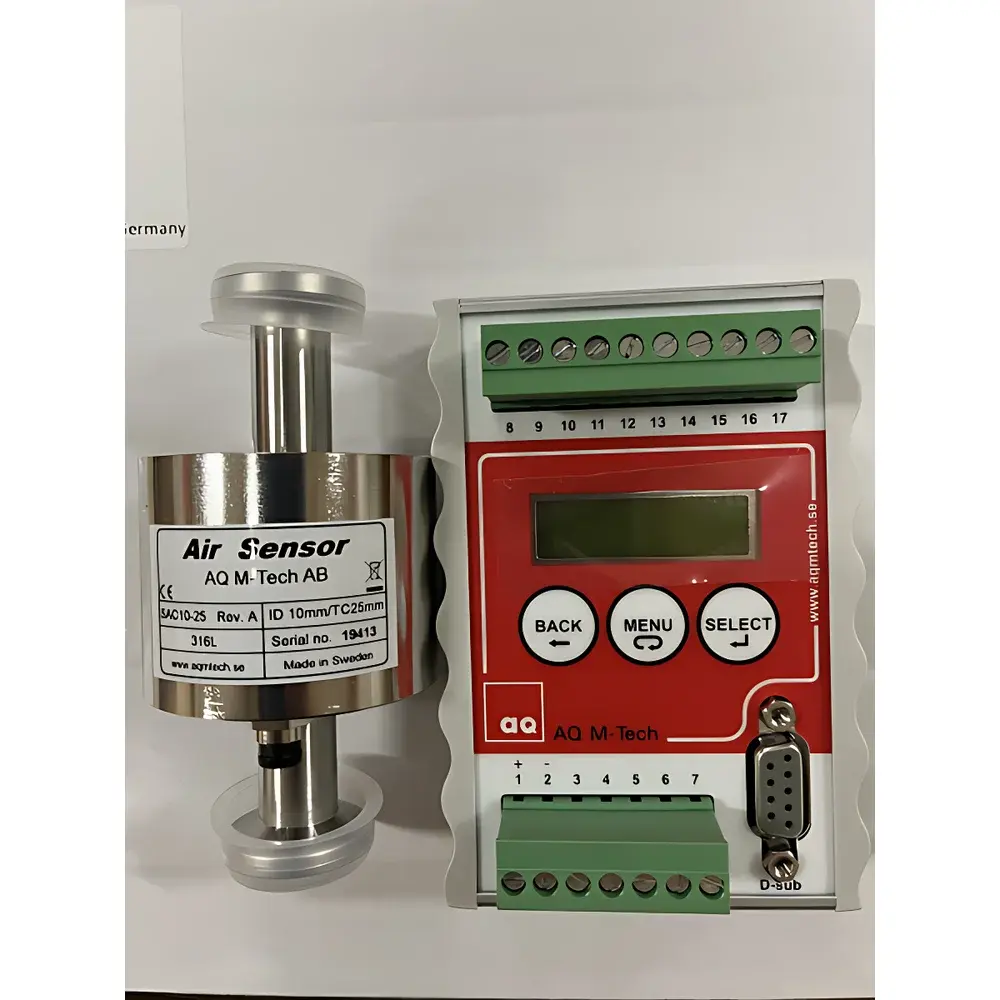
AQ M-Tech LS85 Non-Contact Ultrasonic Level Switch
| Brand | AQ M-Tech |
|---|---|
| Origin | Sweden |
| Model | LS85 |
| Operating Temperature (Continuous) | −15 °C to 60 °C (Ex model: max 60 °C) |
| Operating Temperature (Short-term) | up to 130 °C (Ex model: max 60 °C) |
| Vessel Diameter Range | 79–91 mm |
| Standard Cable Length | 7 m |
| Optional Cable Length | 20 m |
| ATEX Certification | II 2G Ex ia IIB T4 Gb (SP13ATEX3645X) |
Overview
The AQ M-Tech LS85 is a non-invasive, clamp-on ultrasonic level switch engineered for continuous, contactless monitoring of liquid level in rigid-walled process vessels. Unlike traditional float, capacitive, or radar-based sensors, the LS85 operates on the principle of time-of-flight ultrasonic transmission through the vessel wall and contained medium. A piezoelectric transducer mounted externally emits low-frequency acoustic pulses that propagate through the container wall, across the liquid column, reflect at the liquid–gas interface, and return to the sensor. The elapsed transit time is converted into an analog level signal (4–20 mA) or discrete switch output, enabling real-time detection of high/low level thresholds without penetration, wetted parts, or process interruption. Designed specifically for industrial environments where hygiene, corrosion resistance, or explosion risk preclude internal instrumentation, the LS85 delivers reliable point-level or continuous-level indication while maintaining full process integrity.
Key Features
- True non-contact operation: No vessel penetration, no wetted components, zero risk of leakage or contamination
- Clamp-on mechanical mounting: Secured via epoxy adhesive or stainless-steel band; no welding, drilling, or flange modification required
- ATEX-certified intrinsically safe variant available (II 2G Ex ia IIB T4 Gb), compliant with Directive 2014/34/EU for use in Zone 1 hazardous areas
- Optimized transducer geometry for cylindrical and flat-bottomed vessels; tailored variants support vessel diameters from 79 mm to 91 mm
- Wide operating temperature range: −15 °C to +60 °C continuous duty; short-term exposure up to +130 °C (non-Ex models only)
- Compatible with stainless steel, glass, and rigid plastic (e.g., PP, PVDF, PET) vessel materials — validated per ISO 15142-1 for acoustic coupling performance
- Integrated diagnostics: Self-test routine, signal strength monitoring, and fault reporting via status LED and output signaling
Sample Compatibility & Compliance
The LS85 is validated for use with homogeneous liquids exhibiting acoustic impedance within the operational envelope of standard industrial fluids (e.g., water, hydrocarbons, acids, alkalis, solvents, and aqueous slurries with 10,000 mPa·s), foaming surfaces, or vessels with excessive internal coating thickness (>2 mm) or air gaps between wall and liquid. Regulatory compliance includes ATEX certification (SP13ATEX3645X), conformity with EMC Directive 2014/30/EU (EN 61326-1), and Low Voltage Directive 2014/35/EU. For pharmaceutical or food-grade applications, the device supports integration into systems aligned with FDA 21 CFR Part 11 requirements when paired with compatible control units such as the D72 Ultrasonic Controller, which provides audit-trail-enabled configuration logging and user access controls.
Software & Data Management
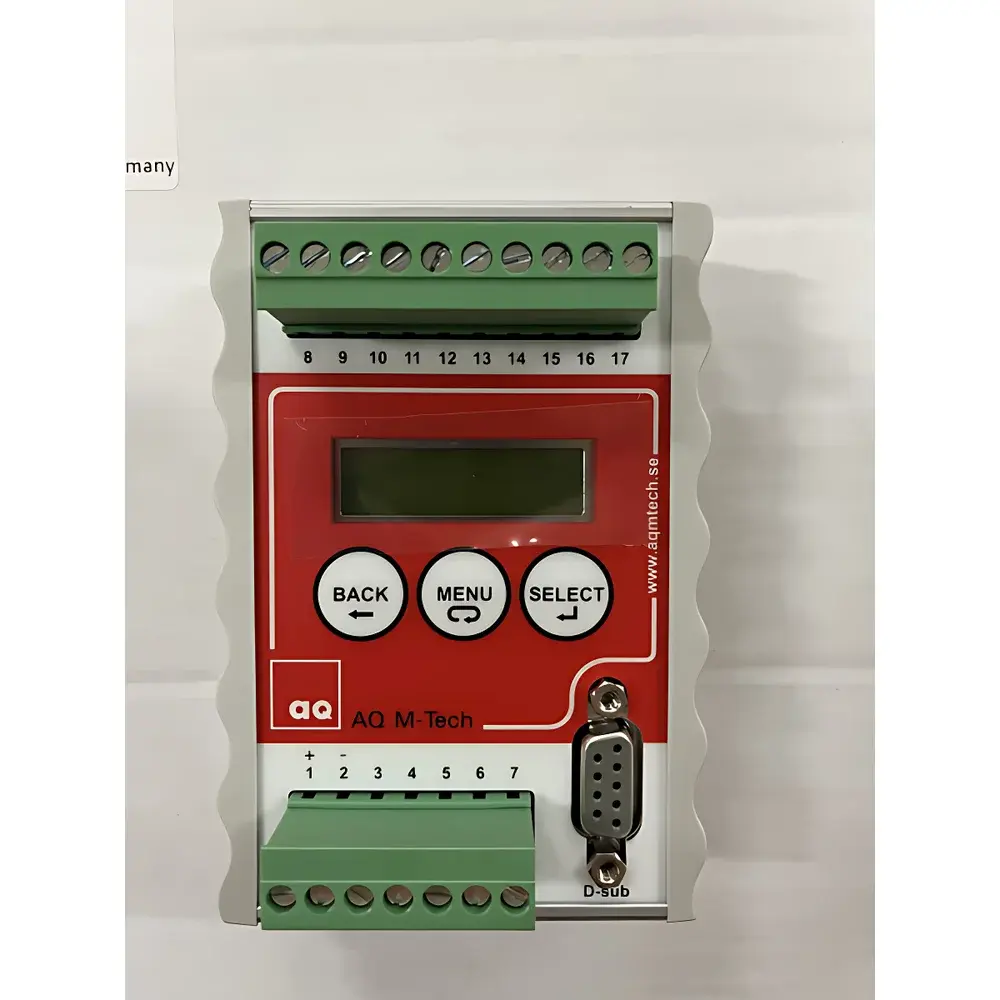
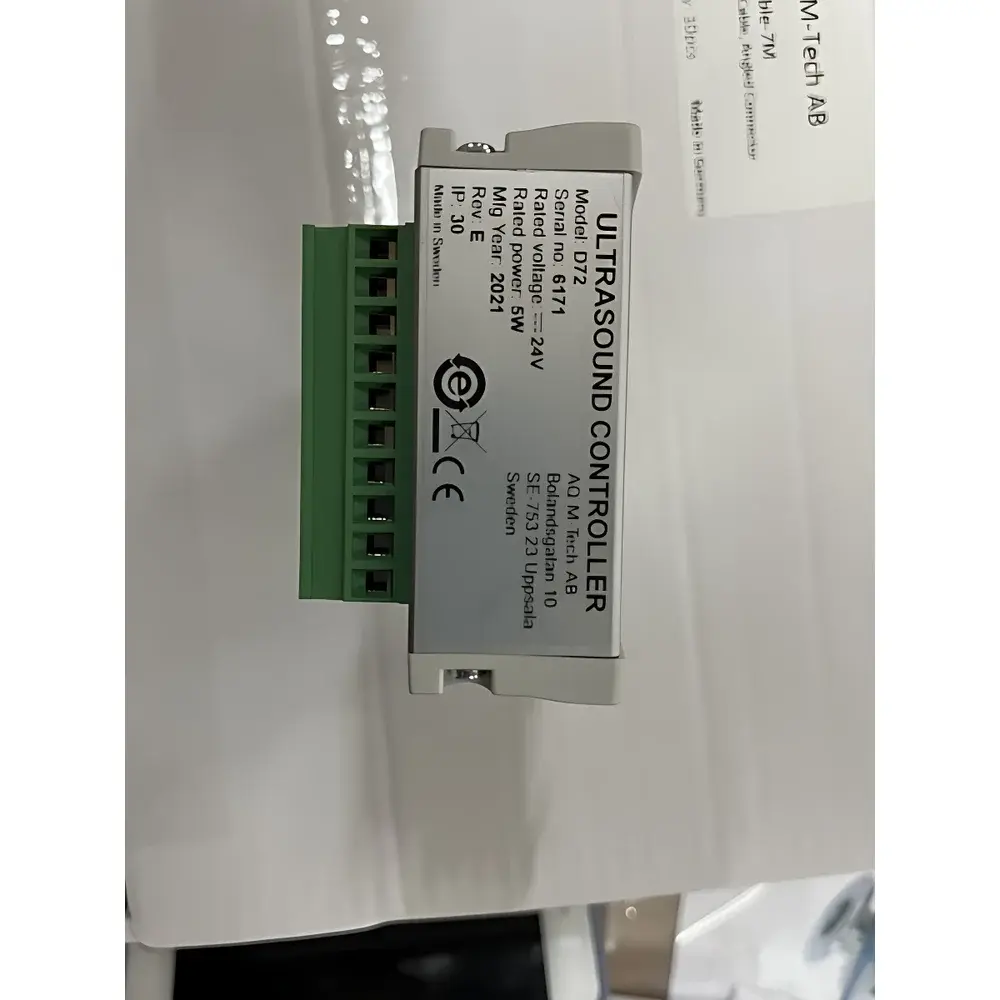
The LS85 functions as a field-level sensing element and interfaces directly with AQ M-Tech’s D72 Ultrasonic Controller or third-party PLCs via 4–20 mA analog output or SPDT relay (configurable as NO/NC). The D72 controller enables full parameterization—including damping time, hysteresis setting, calibration offset, and fail-safe mode selection—via local keypad or Modbus RTU (RS-485). Firmware updates and configuration backups are performed using AQ ConfigTool (Windows-based), which generates timestamped, version-controlled configuration files compliant with GLP/GMP documentation standards. All configuration changes are logged with user ID, timestamp, and parameter delta, satisfying traceability requirements under ISO/IEC 17025 and ASTM E2500-13 for analytical instrument qualification.
Applications
- Low-level alarm and pump protection in chemical storage tanks and intermediate bulk containers (IBCs)
- High-level overflow prevention in batch reactors, mixers, and dosing vessels
- Level verification in sanitary CIP/SIP systems where sterilizable internals are prohibited
- Monitoring of aggressive media (e.g., HCl, NaOH, HNO₃) in corrosion-sensitive installations
- Explosion-hazardous zones (Zone 1) including solvent recovery units, paint mixing stations, and fuel blending facilities
- Pharmaceutical buffer tank supervision where single-use or non-invasive design meets USP analytical instrument qualification criteria
FAQ
Does the LS85 require vessel wall preparation prior to installation?
Yes — the external mounting surface must be clean, dry, and free of paint, rust, or thermal insulation. Acoustic coupling gel is applied between transducer and wall; for permanent installations, structural epoxy bonding is recommended per AQ M-Tech Technical Bulletin TB-ULS-002.
Can the LS85 measure level in partially filled horizontal cylindrical tanks?
No — the LS85 is calibrated for vertical orientation and assumes a flat, horizontal liquid surface. Horizontal tank applications require geometric correction algorithms not supported by this device.
Is recalibration required after temperature cycling?
The LS85 incorporates temperature-compensated time-of-flight measurement; factory calibration remains valid across its specified operating range. Field verification using known reference level is recommended annually per ISO 5725-2.
What is the maximum allowable wall thickness for reliable operation?
For stainless steel (304/316), maximum wall thickness is 12 mm; for glass, ≤15 mm; for rigid plastics, ≤20 mm — all assuming nominal acoustic attenuation and uniform material density.
How does the LS85 handle foam or vapor layers above the liquid?
Foam >10 mm thick or persistent vapor condensate may attenuate or scatter the ultrasonic signal, resulting in false low-level readings. In such cases, application-specific evaluation per IEC 61511 Layer of Protection Analysis (LOPA) is advised.