
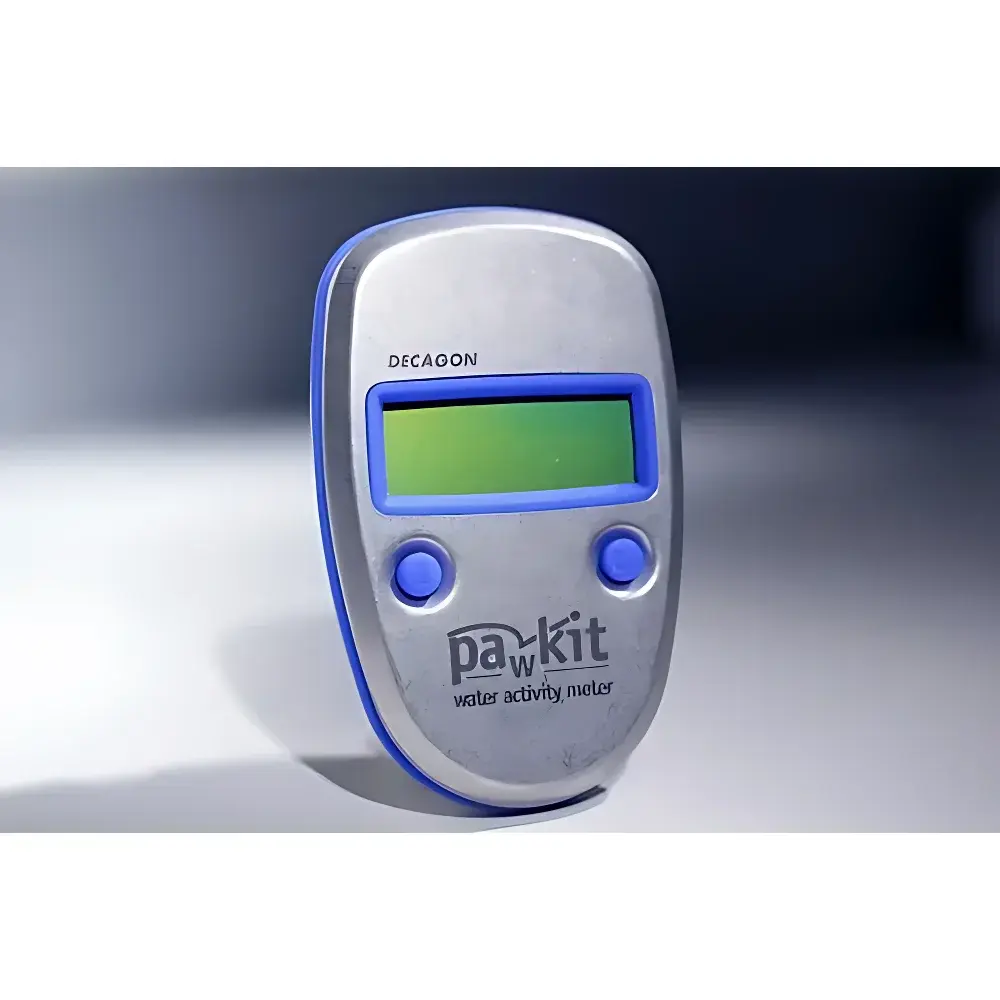
Aqualab Pawkit Portable Water Activity Analyzer
| Brand | Aqualab |
|---|---|
| Origin | USA |
| Manufacturer Type | Authorized Distributor |
| Origin Category | Imported |
| Model | Pawkit |
| Price Range | USD 1,400–7,000 (est.) |
| Sensor Type | Capacitive Hygrometric Sensor |
| Accuracy | ±0.02 aw |
| Resolution | ±0.01 aw |
| Measurement Range | 0.00–1.00 aw |
| Repeatability | ±0.01 aw (typical, per AOAC 978.17) |
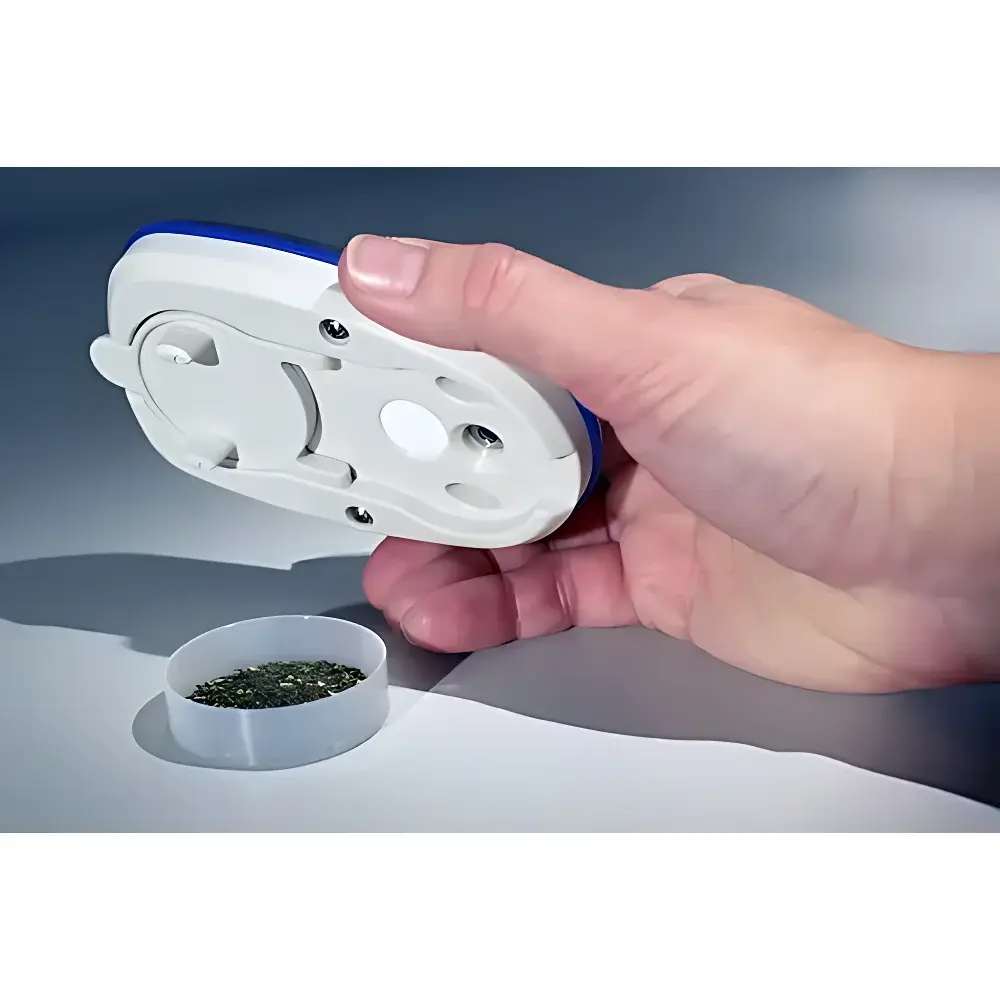
| Sample Cup Volume | 7 mL (max. 15 mL) |
| Measurement Time | < 5 min |
| Display | 6-digit custom LCD (3-digit aw + 3-digit °C) |
| Dimensions | 6.6 × 10.7 × 2.0 cm |
| Weight | 115 g |
| Power Supply | Two 3 V CR2032 lithium coin cells (3-year typical service life) |
| Operating Environment | 4–60 °C |
| Certifications | CE Marked |
| Warranty | 1 year parts & labor (extendable) |
Overview
The Aqualab Pawkit Portable Water Activity Analyzer is an engineered solution for rapid, field-deployable water activity (aw) measurement in food, pharmaceutical, cosmetic, and agricultural production environments. Unlike benchtop dew point or chilled-mirror instruments, the Pawkit employs a high-stability capacitive hygrometric sensor calibrated against saturated salt standards traceable to NIST. Its operational principle relies on dynamic equilibrium sensing: the sensor detects relative humidity (RH) of the vapor phase above a sample at controlled thermal equilibrium, then calculates aw as RH/100. Designed explicitly for non-laboratory use, it eliminates dependence on climate-controlled rooms, external power, or operator training beyond basic SOP adherence. With a certified accuracy of ±0.02 aw and repeatability of ±0.01 aw, the Pawkit meets the performance criteria defined in AOAC Official Method 978.17 for routine quality control screening—making it suitable for HACCP monitoring, shelf-life prediction support, and raw material verification where portability and speed are critical.
Key Features
- True handheld form factor: 115 g mass and 10.7 cm longest dimension enable one-handed operation and pocket-level portability.
- Integrated sensor and electronics architecture: No removable probes or calibration drift-prone interfaces—sensor and readout are co-located and factory-aligned.
- Sub-5-minute measurement cycle: Achieves thermal and vapor-phase equilibrium rapidly via optimized chamber geometry and low-thermal-mass sensor housing.
- Self-contained power system: Dual CR2032 batteries provide ≥3 years of typical usage (5–10 measurements/day), with no charging circuitry or external adapters required.
- Dual-parameter real-time display: Simultaneous 3-digit aw and 3-digit sample temperature (°C) shown on a sunlight-readable, custom 6-digit LCD.
- Ruggedized mechanical design: Stainless steel housing with silicone elastomer base provides impact resistance, slip mitigation, and compatibility with washdown environments (IP54-rated enclosure).
- AOAC-compliant validation: Factory-calibrated using NIST-traceable saturated salt solutions (e.g., LiCl, MgCl₂, NaCl, KCl) per AOAC 978.17 protocol.
Sample Compatibility & Compliance
The Pawkit accommodates solid, semi-solid, and powdered samples within its 7 mL standard cup (15 mL max). It is validated for use with low-moisture foods (e.g., cereals, nuts, dried fruits), intermediate-moisture products (e.g., jerky, confections), and hygroscopic excipients (e.g., lactose, microcrystalline cellulose). Sample preparation follows AOAC 978.17 guidelines: homogenization, equilibration at ambient lab conditions for ≥1 hr prior to measurement, and cup filling to consistent depth (~1 cm). The device complies with CE marking requirements for electromagnetic compatibility (2014/30/EU) and low-voltage safety (2014/35/EU). Its measurement methodology is formally recognized by AOAC International as an Official First Action Method for water activity determination in food matrices, supporting regulatory alignment with FDA Food Safety Modernization Act (FSMA) preventive controls and EU Regulation (EC) No 2073/2005 on microbiological criteria.
Software & Data Management
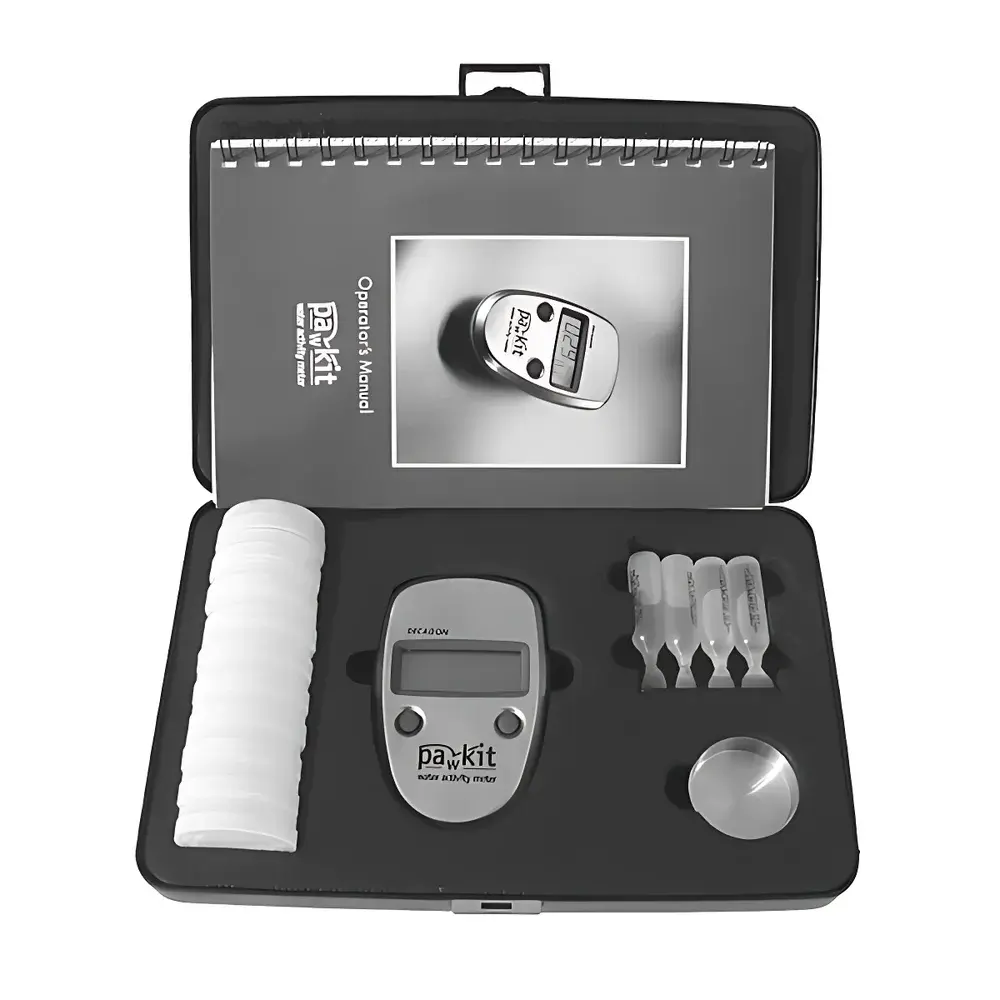
The Pawkit operates as a standalone instrument with no onboard data logging, wireless transmission, or PC connectivity. This design prioritizes reliability, battery longevity, and GMP-aligned simplicity—eliminating firmware update dependencies, cybersecurity vulnerabilities, or audit trail complexity. All calibration and verification records are maintained externally per GLP/GMP requirements: users perform periodic verification using supplied NIST-traceable standard solutions (LiCl, MgCl₂, NaCl, KCl) and document results manually or in LIMS-integrated spreadsheets. The included Quick Start Guide and full User Manual specify calibration frequency recommendations (quarterly for QC labs; pre-shift verification for production floor use), environmental monitoring logs, and deviation handling per ISO/IEC 17025 Clause 7.7.
Applications
- Food manufacturing: In-line verification of drying endpoints, incoming ingredient acceptance (e.g., flour, spices), and finished product release testing.
- Pharmaceutical production: Excipient qualification, blend uniformity assessment, and stability-indicating checks during packaging line trials.
- Agricultural cooperatives: On-farm grain moisture and aw screening prior to storage or transport—reducing mycotoxin risk exposure.
- R&D laboratories: Rapid comparative studies of formulation variants (e.g., humectant efficacy, preservative synergy) without scheduling benchtop instrument time.
- Contract testing facilities: Mobile auditing support for third-party compliance assessments under BRCGS, SQF, or FSSC 22000 certification schemes.
FAQ
Does the Pawkit require annual recalibration by the manufacturer?
No. Recalibration is not mandatory on a fixed schedule. Users perform verification with included standard solutions before each shift or daily, per internal SOPs aligned with ISO/IEC 17025.
Can the Pawkit measure pastes or viscous materials like honey or syrups?
Yes—provided the sample surface is level and covers the sensor aperture uniformly. For highly viscous or volatile samples, a 10–15 minute equilibration period is recommended prior to measurement.
Is the device compatible with FDA 21 CFR Part 11 requirements?
The Pawkit does not generate electronic records and therefore falls outside the scope of Part 11. Its use supports Part 11 compliance when paired with validated manual entry into compliant LIMS or ELN systems.
What is the expected service life of the capacitive sensor?
The sensor is rated for ≥50,000 measurements under normal operating conditions (4–40 °C, non-condensing RH). Degradation is gradual and detectable via routine verification drift exceeding ±0.02 aw.
How is temperature compensation handled during measurement?
The integrated thermistor measures sample temperature in real time and applies a physics-based correction to the RH-to-aw conversion, ensuring accuracy across the full 4–60 °C operating range.




