
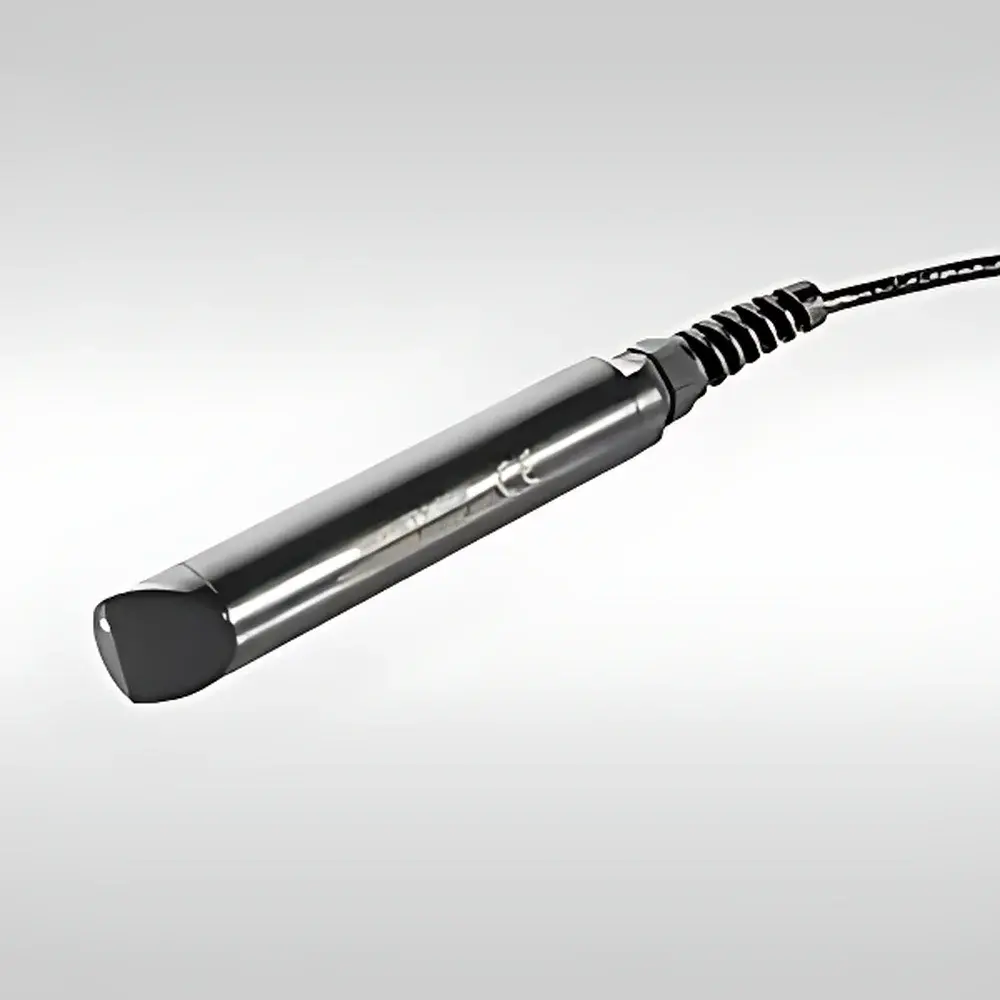
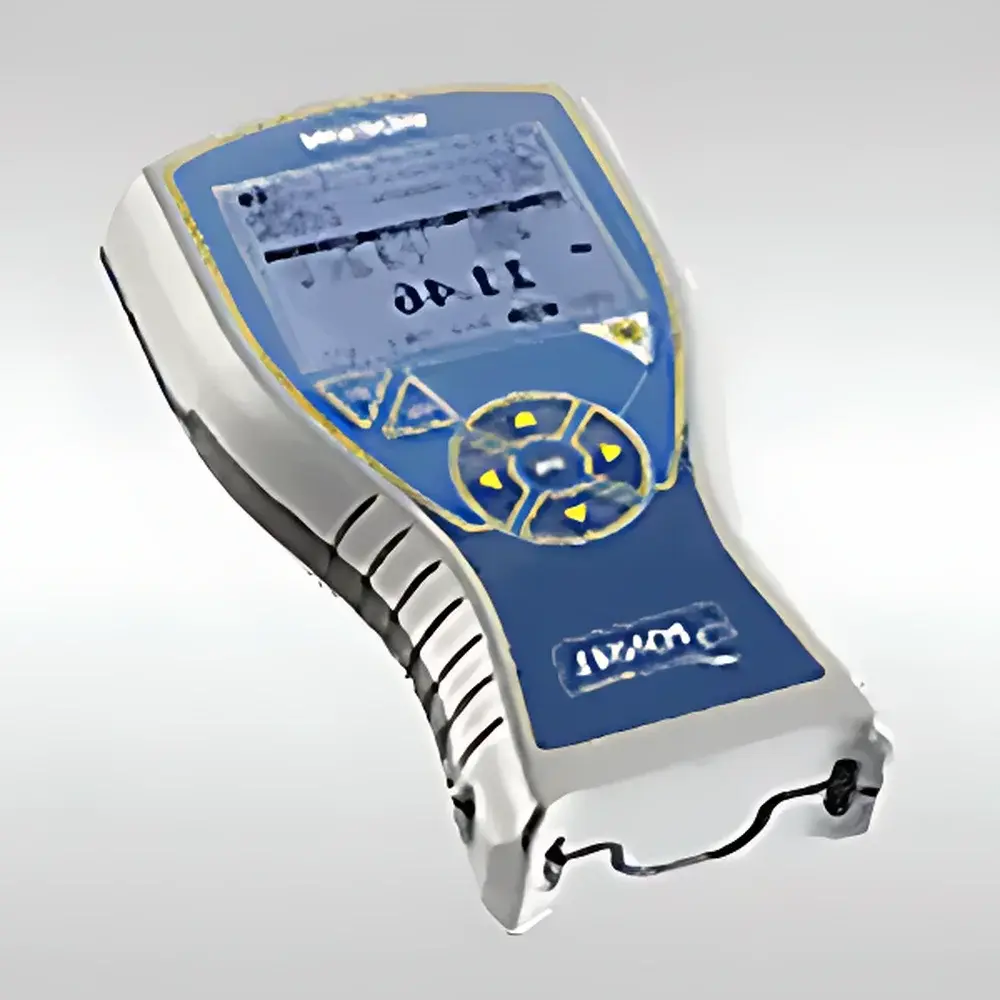
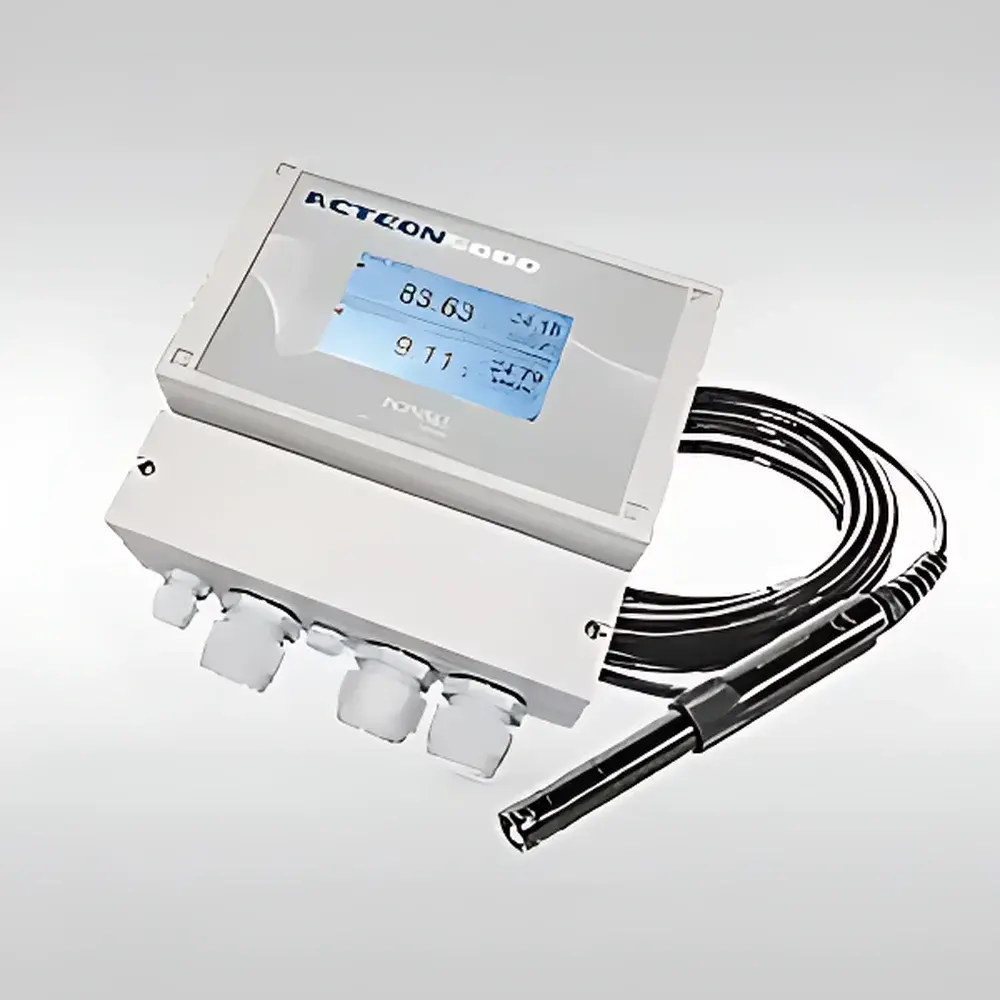
AQUALABO NTU Turbidity Sensor
| Brand | AQUALABO |
|---|---|
| Origin | France |
| Model | NTU |
| Type | Online Turbidity Sensor |
| Measurement Range | 0–4000 NTU |
| Resolution | 0.01 NTU |
| Accuracy | ±5% of reading |
| Operating Temperature | 0–50 °C |
| Output Protocols | Modbus RTU over RS-485 (standard), SDI-12 (optional) |
| Enclosure Rating | IP68 |
| Power Supply | 5–12 V DC |
| Typical Current Consumption | 820 µA (RS-485, 1 Hz), 4.2 mA (SDI-12, 1 Hz) |
| Dimensions | Ø27 mm × 170 mm (sensor + 3 m cable) |
| Weight | 300 g |
| Pressure Rating | 5 bar |
| Optical Principle | 90° infrared scattered light nephelometry at 850 nm |
| Calibration Standard | Formalin-based turbidity standards per NF EN 872 (0–500 mg/L) and NF T 90-105-2 (>500 mg/L) |
Overview
The AQUALABO NTU Turbidity Sensor is an online, submersible optical sensor engineered for continuous, high-stability turbidity monitoring in water and wastewater applications. It operates on the principle of 90° infrared scattered light nephelometry at a fixed wavelength of 850 nm—a method standardized under ISO 7027 and widely adopted for its immunity to color interference and robust performance in variable ambient lighting conditions. Unlike traditional white-light turbidimeters, the 850 nm infrared source minimizes spectral sensitivity to natural organic matter (NOM) absorption and eliminates photobleaching effects during long-term deployment. The sensor’s optical path employs fiber-coupled infrared LEDs and matched photodiodes, enabling precise detection of scattered intensity proportional to suspended particle concentration. Its measurement range spans 0–4000 NTU across five auto-switching sub-ranges (0–50, 0–200, 0–1000, 0–4000 NTU, and 0–4500 mg/L), with automatic range selection ensuring optimal signal-to-noise ratio across diverse sample matrices—from clarified drinking water to raw sewage influent.
Key Features
- Infrared nephelometric design compliant with ISO 7027 and EPA Method 180.1 for reliable, inter-laboratory comparable turbidity data
- IP68-rated housing constructed from chemically resistant materials: PVC body, Delrin structural components, fused silica (quartz) optical windows, PMMA lens elements, and nickel-plated brass fittings
- Low-power architecture supporting battery- or solar-powered remote deployments: standby current as low as 40 µA; active RS-485 operation draws only 820 µA at 1 Hz sampling
- Dual digital output interface—Modbus RTU over industrial-grade RS-485 (default) and SDI-12 (optional)—enabling seamless integration into SCADA systems, PLCs, environmental data loggers, and telemetry platforms
- Onboard non-volatile memory stores calibration coefficients, firmware version, serial number, and timestamped measurement history—accessible via protocol query without external configuration tools
- Integrated NTC thermistor enables real-time temperature compensation across the full operating range (0–50 °C), referenced to standard calibration curves per NF EN 872 and NF T 90-105-2
Sample Compatibility & Compliance
The NTU sensor is validated for use in municipal drinking water distribution networks, wastewater treatment plant influent/effluent streams, surface water monitoring stations, and industrial process effluents. Its optical design mitigates fouling-related drift through optimized flow dynamics around the quartz window and resistance to biofilm adhesion. Calibration traceability follows French national standards: formalin-based suspensions calibrated per NF EN 872 (for 0–500 mg/L equivalents) and NF T 90-105-2 (for higher concentrations). While not certified to GLP or FDA 21 CFR Part 11 out-of-the-box, the sensor’s deterministic Modbus register mapping, immutable calibration storage, and audit-ready timestamped data output support integration into validated environments when paired with compliant host software and procedural controls.
Software & Data Management
Data acquisition occurs via standardized Modbus function codes (e.g., Read Holding Registers 40001–40010), returning turbidity (NTU), temperature (°C), sensor status flags, and internal diagnostics. All values are transmitted as 16-bit signed integers or IEEE 754 single-precision floats, depending on register configuration. No proprietary drivers or cloud dependencies are required—integration is achievable using open-source Modbus libraries (e.g., pymodbus, libmodbus) or commercial SCADA toolkits (Ignition, WinCC, Citect). Raw measurements and calibration metadata persist locally within the sensor’s EEPROM, eliminating reliance on external configuration files and ensuring data integrity during communication interruptions. Optional SDI-12 implementation adheres strictly to ANSI/TIA-561-B specifications, supporting multi-sensor daisy-chaining on shared bus lines.
Applications
- Real-time compliance monitoring at drinking water treatment plant effluent points per EU Directive 98/83/EC and US EPA Surface Water Treatment Rule
- Influent quality control in activated sludge and membrane bioreactor (MBR) systems to optimize aeration and chemical dosing
- Early-warning detection of sediment resuspension or illicit discharge events in combined sewer overflows (CSOs) and stormwater networks
- Long-term trend analysis in lake and reservoir management programs tracking eutrophication dynamics
- Process validation in pharmaceutical water-for-injection (WFI) loop monitoring where particulate load correlates with filter integrity
FAQ
What calibration standards are supported?
The sensor is factory-calibrated using formalin-based turbidity standards traceable to NF EN 872 (0–500 mg/L) and NF T 90-105-2 (>500 mg/L). End users may perform two-point field calibration using certified reference standards.
Is temperature compensation automatic?
Yes—the integrated NTC thermistor continuously measures sensor head temperature, and compensation is applied in real time using polynomial coefficients stored in onboard memory.
Can the sensor operate submerged indefinitely?
Yes—rated IP68 to 5 bar (≈50 m water column), it is approved for permanent submersion in flowing or static water bodies, including tidal zones and pressurized pipelines.
Does the sensor require periodic cleaning or consumables?
No—its solid-state optical architecture contains no moving parts, lamps, or reagents. Routine maintenance is limited to periodic visual inspection of the quartz window; optional wiper or ultrasonic cleaning modules may be added externally.
How is firmware updated?
Firmware updates are performed via Modbus register write sequences using a compatible master device; no physical access or disassembly is required.




