
AQUAREAD AP-7000 Multi-Parameter Water Quality Monitor
| Brand | AQUAREAD |
|---|---|
| Origin | United Kingdom |
| Model | AP-7000 |
| Instrument Type | Online Water Quality Analyzer |
| Detection Capability | Multi-Parameter |
| IP Rating | IP68 |
| Operating Temperature | −5 °C to +50 °C |
| Submersion Depth | 150 mm (min) to 100 m (max) |
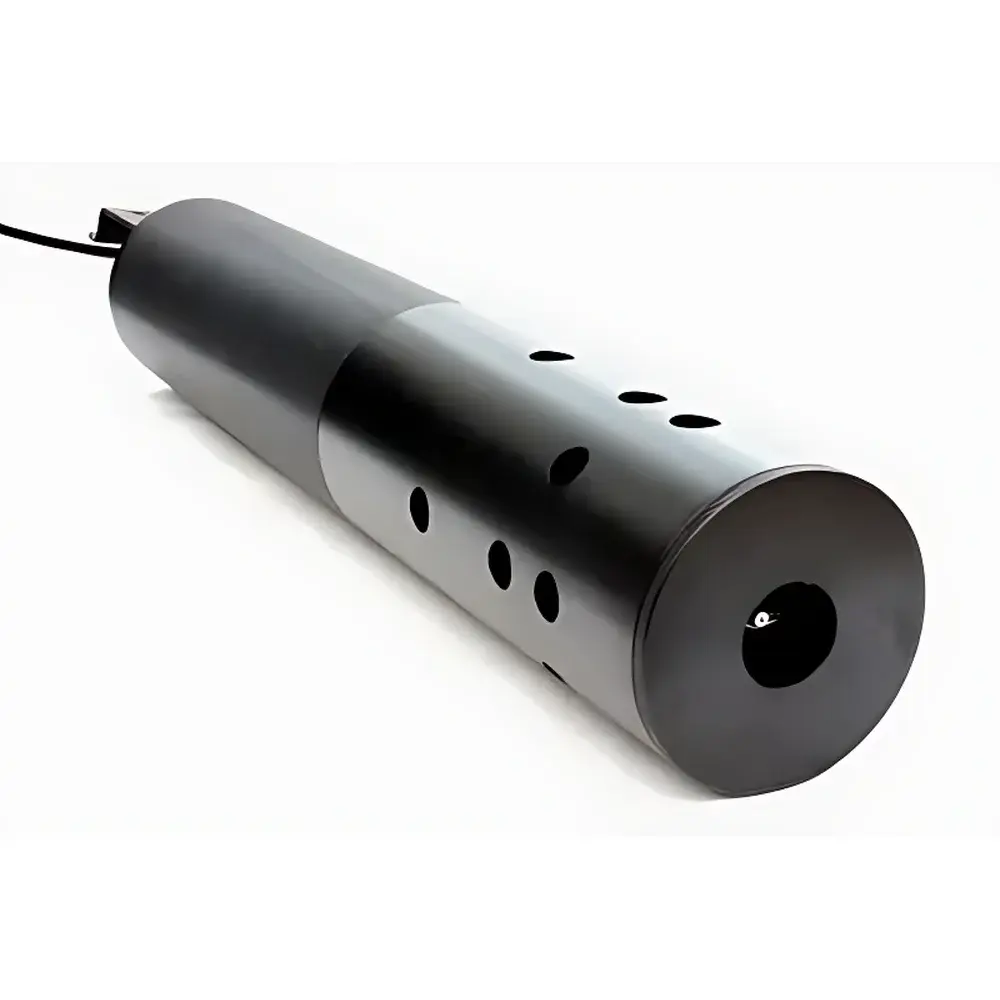
| Dimensions (L × Ø) | 450 mm × 77 mm |
| Weight (excl. cable) | 1350 g |
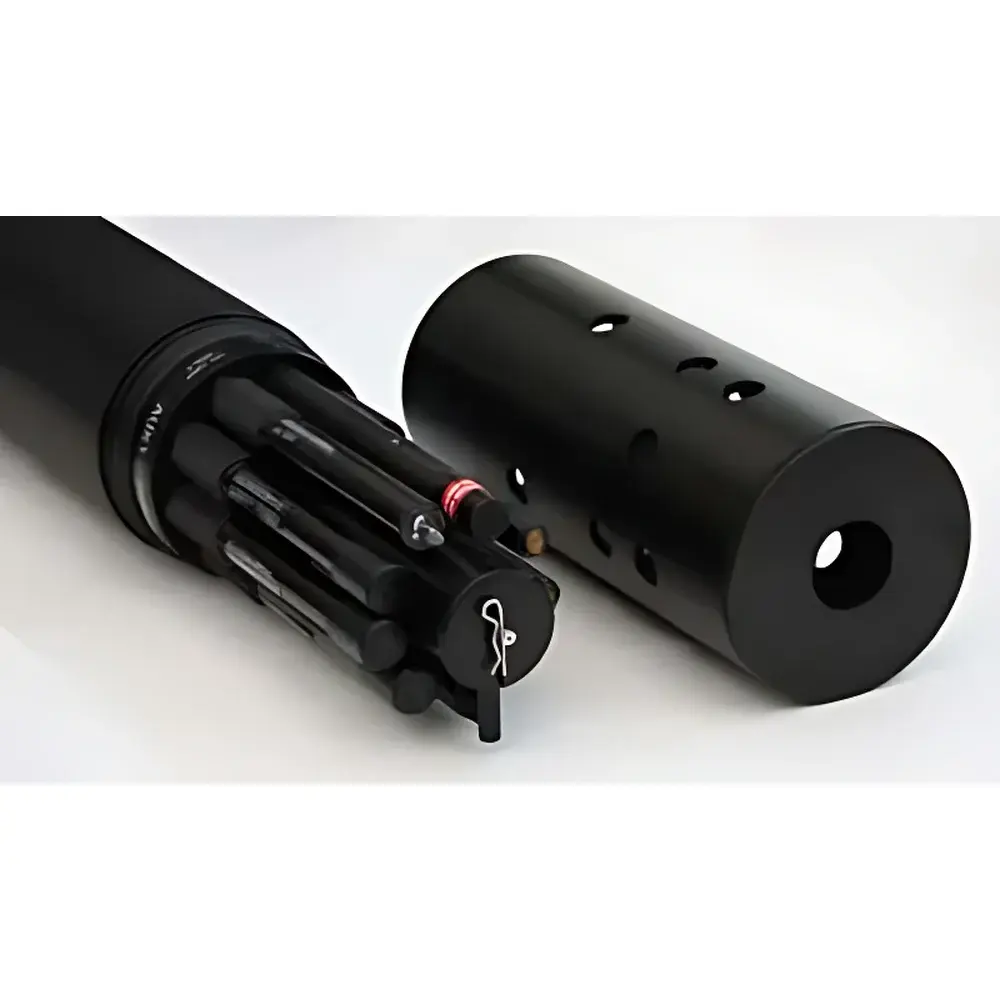
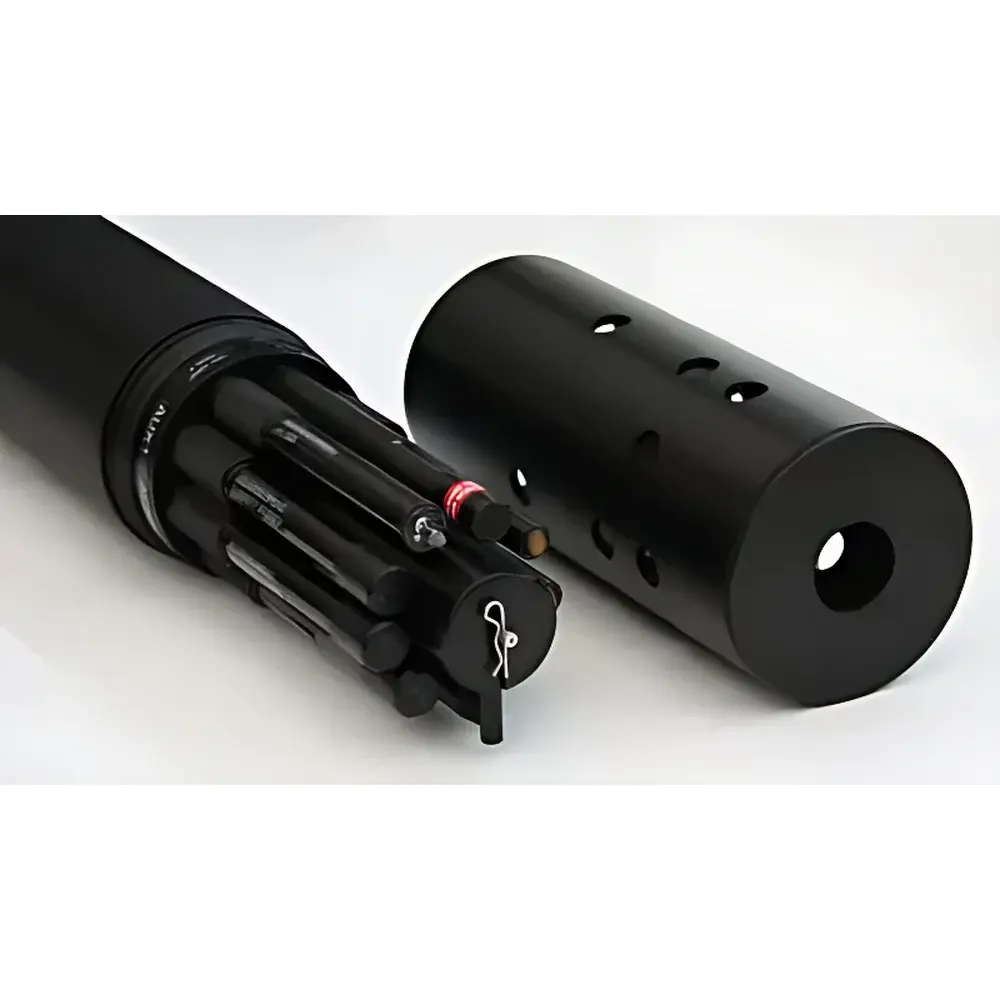
| Sensor Interfaces | 7 optical sensor ports (standard: DO, pH, ORP, EC, depth, temperature) + 6 configurable ISE/optical sensor inputs |
| Communication Options | SDI-12, Modbus RTU (RS-485), analog outputs (4–20 mA), Bluetooth, USB, GPS-enabled handheld interface |
Overview
The AQUAREAD AP-7000 is a submersible, multi-parameter water quality monitor engineered for continuous, long-term in-situ deployment in rivers, lakes, reservoirs, estuaries, and wastewater channels. It operates on a modular optical and electrochemical sensing architecture, integrating seven factory-calibrated optical sensors—dissolved oxygen (luminescence-based), pH (optical indicator), ORP (redox potential), conductivity (EC), pressure (depth), and temperature—within a single robust probe body. Its design eliminates moving parts and relies on solid-state optical detection principles to ensure high reproducibility and minimal drift over extended field deployments. The AP-7000 is not a portable spot-check device but a purpose-built environmental monitoring platform compliant with ISO 5814 (DO), ISO 7888 (conductivity), and EN ISO 10523 (pH) measurement protocols. Its permanent IP68-rated housing enables uninterrupted operation at depths up to 100 meters, making it suitable for both shallow-stream profiling and deep-water column profiling applications under variable hydraulic and biological loading conditions.
Key Features
- Anti-fouling system: Integrated mechanical wiper and anti-biofouling optical window coating reduce biofilm accumulation, extending maintenance intervals beyond 30 days in eutrophic environments.
- Modular sensor expansion: Six auxiliary sensor ports support simultaneous connection of ISE-based ion-selective electrodes (e.g., NH₄⁺, NO₃⁻, Cl⁻, F⁻) or additional optical probes (e.g., turbidity, chlorophyll-a, CDOM), enabling site-specific parameter customization without hardware replacement.
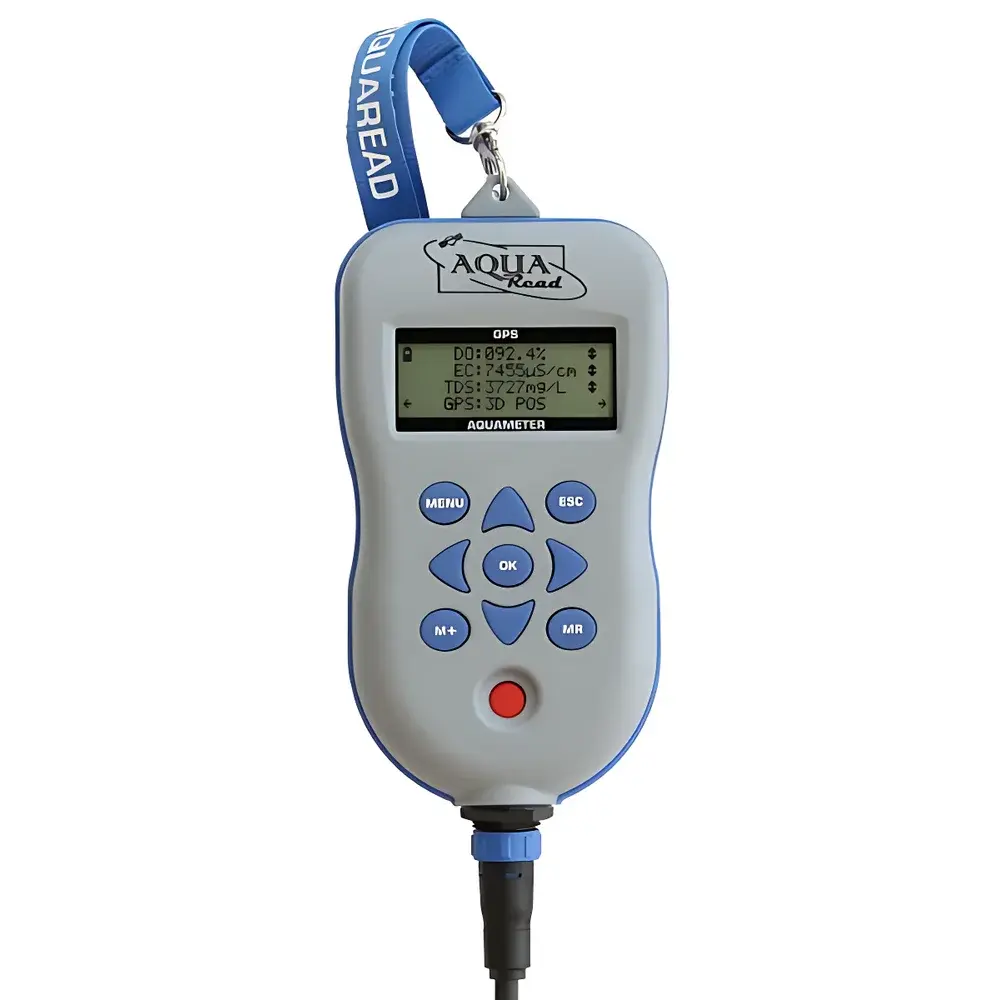
- Dual operational modes: Supports real-time field interrogation via the Aquaread GPS Aquameter handheld unit (with onboard GPS geotagging and spectral display) and autonomous long-term logging via the Aquaread Logger (up to 12 months on internal lithium-thionyl chloride battery).
- Industrial-grade telemetry: The AP-7000-SDI variant provides native SDI-12 and Modbus RTU (RS-485) digital outputs, facilitating direct integration into SCADA, PLC, and municipal telemetry infrastructures without protocol conversion hardware.
- Environmental resilience: Rated IP68 for permanent submersion; operating range from −5 °C to +50 °C accommodates seasonal thermal stratification and freeze-thaw cycles in temperate and subtropical zones.
Sample Compatibility & Compliance
The AP-7000 is validated for use in natural surface waters, groundwater, treated effluents, and brackish estuarine matrices with salinities up to 40 psu. Its optical pH and DO sensors are insensitive to hydrogen sulfide interference and exhibit negligible response hysteresis in fluctuating redox environments. All electrochemical measurements comply with ASTM D1293 (pH), ASTM D1125 (conductivity), and ASTM D888 (dissolved oxygen) standard test methods. The instrument’s firmware supports GLP-compliant data logging, including timestamped calibration records, sensor diagnostics, and audit-trail metadata—fully traceable for regulatory reporting under EU WFD (Water Framework Directive) and US EPA Clean Water Act Section 304(h) monitoring programs.
Software & Data Management
Data acquisition and configuration are managed through Aquaread’s AquaSuite software (Windows/macOS), which supports automated calibration curve generation, multi-point validation reports, and export to CSV, Excel, or XML formats compatible with LIMS and GIS platforms. Raw sensor outputs include 16-bit resolution analog signals (4–20 mA) and digitally compensated values transmitted via ASCII or binary Modbus frames. All logged datasets embed NMEA-0183 GPS coordinates when paired with the Aquameter, enabling spatial interpolation and time-series mapping in QGIS or ArcGIS. Firmware updates are delivered via secure HTTPS OTA (over-the-air) protocol, ensuring version control and cybersecurity alignment with IEC 62443-3-3 guidelines.
Applications
- Regulatory compliance monitoring for drinking water intakes and wastewater discharge points per ISO 5667-3 and EN 14181.
- Real-time algal bloom early warning systems using synchronized chlorophyll-a, pH, and DO profiles.
- Stormwater runoff characterization across urban catchments with dynamic EC and turbidity tracking.
- Long-term ecological assessment of hypolimnetic oxygen depletion in stratified reservoirs.
- Integration into national hydrometric networks requiring SDI-12 compatibility with existing datalogger infrastructure (e.g., Campbell Scientific CR1000X, OTT Hydromet CTD divers).
FAQ
Can the AP-7000 be deployed in seawater?
Yes—the probe housing and optical windows are corrosion-resistant to 40 psu salinity; however, ISE sensors for Na⁺ or K⁺ require marine-grade calibration and periodic reference electrode maintenance.
Is the system compliant with FDA 21 CFR Part 11 for regulated pharmaceutical water monitoring?
While the AP-7000 meets technical performance criteria for purified water (PW) and water-for-injection (WFI) verification, full Part 11 compliance requires supplementary audit-trail configuration via AquaSuite Enterprise Edition and external electronic signature integration.
What is the recommended recalibration interval for optical DO and pH sensors?
Factory calibration remains stable for ≥6 months in low-fouling freshwater; annual recalibration is advised for regulatory submissions, with in-field verification possible using certified zero-oxygen and buffer solutions.
Does the AP-7000 support wireless mesh networking?
No—wireless transmission is limited to point-to-point Bluetooth (≤10 m) or cellular/GSM telemetry via optional third-party modems; mesh capability requires external LoRaWAN or NB-IoT gateways.
Are sensor replacements user-serviceable in the field?
Optical modules are sealed and non-user-replaceable; however, ISE cartridges and flow cells (e.g., for the optional inline flow-through chamber) are designed for field-swappable installation with torque-limited tooling.







