
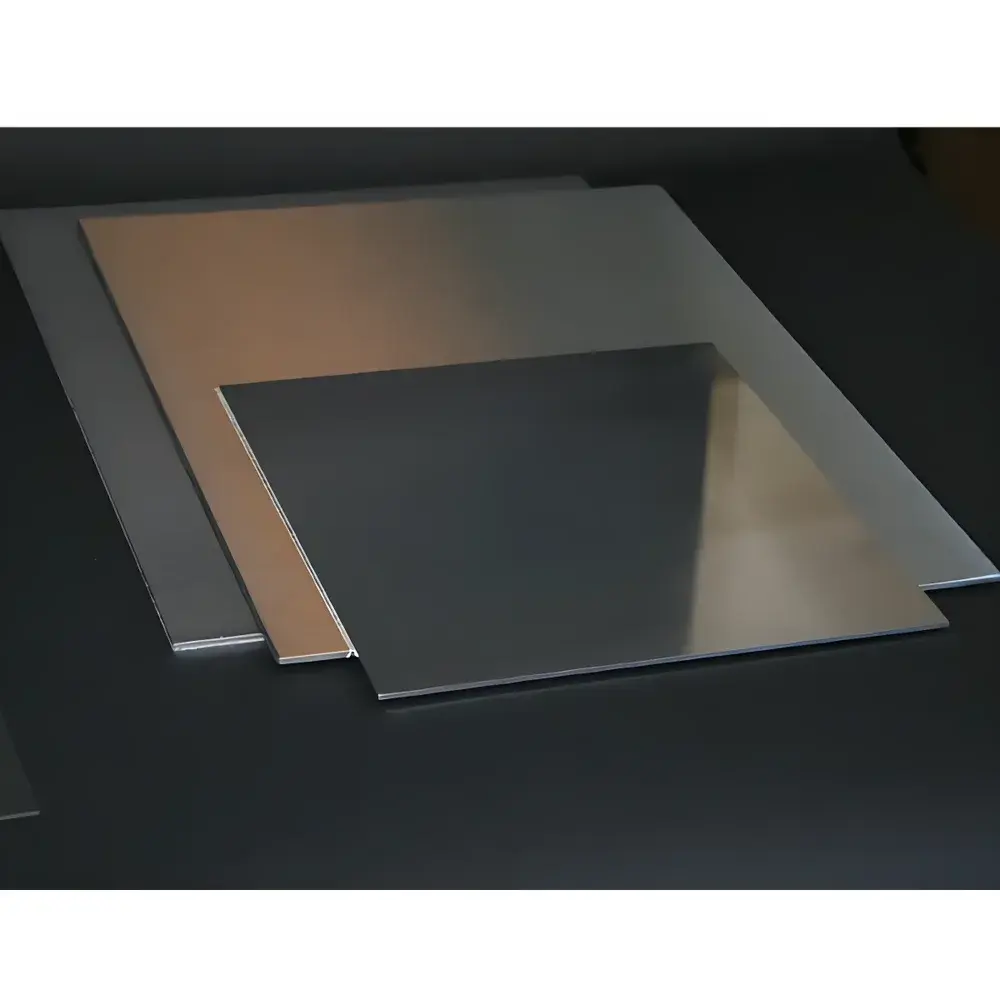
Artinis MTF Test Tool for Digital Breast Tomosynthesis and Mammography Systems
| Brand | Artinis |
|---|---|
| Origin | Netherlands |
| Model | MTF Test Tool |
| Compliance | EPQC 4th Ed., EUREF Type Test Protocol v1.3, IEC 61223-3-2:2007, IEC 61223-2-6:2019, NHSBSP Equipment Report 0604 (3rd Ed., Apr 2009) |
| Dimensions (Stainless Steel Tool) | 120 × 60 × 0.8 mm |
| Edge Ripple Tolerance | ±50 µm on both 120 mm edges |
| Aluminum Reference Plate | 200 × 200 × 2 mm |
| Thickness Tolerance (Al Plate) | ±50 µm |
Overview
The Artinis MTF Test Tool is a precision-engineered physical phantom designed specifically for quantitative assessment of spatial resolution performance in digital breast tomosynthesis (DBT) and full-field digital mammography (FFDM) systems. It operates on the established principle of the edge-spread function (ESF) method, where high-contrast, machined edge transitions—fabricated with traceable dimensional tolerances—are imaged under clinical acquisition protocols. The resulting line-spread function (LSF) is derived via numerical differentiation of the ESF, and the modulation transfer function (MTF) is computed as the magnitude of the Fourier transform of the LSF. This methodology aligns directly with international standards governing diagnostic imaging quality control, including IEC 61223-3-2:2007 (acceptance testing) and IEC 61223-2-6:2019 (routine constancy testing), ensuring metrological consistency across global radiology departments and accredited QA laboratories.
Key Features
- Precision-machined stainless steel test tool with nominal dimensions of 120 mm × 60 mm × 0.8 mm, featuring two opposing 120 mm edges engineered to exhibit controlled, sinusoidal ripple with amplitude ≤ ±50 µm perpendicular to the plate surface—enabling robust ESF sampling without edge aliasing artifacts.
- Accompanying reference aluminum plate (200 mm × 200 mm × 2 mm) with thickness tolerance maintained within ±50 µm, calibrated to serve as a stable, low-scatter backing material during MTF acquisition and to minimize beam hardening effects in dual-energy or spectral imaging workflows.
- Geometrically optimized design compliant with European Guidelines for Quality Assurance in Breast Cancer Screening and Diagnosis (EPQC, 4th Edition) and EUREF Type Test Protocol Version 1.3—ensuring compatibility with standardized test procedures adopted by national screening programs across the EU and UK.
- Material selection adheres to radiographic equivalence requirements: stainless steel provides high X-ray contrast at typical mammographic beam qualities (e.g., Mo/Rh, W/Rh, 28–35 kVp), while the aluminum plate ensures reproducible scatter conditions comparable to those encountered in clinical breast compression.
- Tool geometry supports both manual and automated MTF analysis workflows; edge orientation is unambiguous, eliminating rotational ambiguity during image registration and facilitating integration with DICOM-based QA software platforms.
Sample Compatibility & Compliance
The Artinis MTF Test Tool is validated for use with all major FFDM and DBT systems operating within standard mammographic energy ranges (25–35 kVp) and detector technologies—including amorphous selenium (a-Se), cesium iodide (CsI), and cadmium telluride (CdTe) flat-panel detectors. Its physical construction meets mechanical and radiographic specifications outlined in NHSBSP Equipment Report 0604 (3rd Edition, April 2009), which defines acceptance and constancy test criteria for full-field digital mammography systems deployed in the UK National Health Service Breast Screening Programme. All dimensional tolerances are verified using certified coordinate measuring machine (CMM) calibration reports traceable to NPL (UK) and VSL (Netherlands) national standards. The tool satisfies regulatory expectations for periodic performance verification under GLP-aligned QA programs and supports audit readiness for ISO/IEC 17025-accredited medical physics laboratories.
Software & Data Management
While the Artinis MTF Test Tool is a hardware phantom and does not include proprietary software, its design enables seamless integration with third-party image analysis platforms commonly used in clinical medical physics, such as ImageJ/Fiji (with MTF plug-ins), MATLAB-based QA toolkits, and commercial DICOM QA suites (e.g., QATM, RADDose3D, or RadIQ). The consistent edge geometry and documented manufacturing tolerances allow for reliable algorithmic extraction of ESF/LSF curves without user-dependent ROI placement bias. When used in conjunction with FDA 21 CFR Part 11-compliant QA documentation systems, the tool supports electronic record retention of MTF results—including acquisition parameters (kVp, mAs, target/filter, detector mode), measurement date, operator ID, and pass/fail status against pre-defined thresholds per IEC 61223-2-6:2019 Annex D.
Applications
- Acceptance testing of new FFDM and DBT installations per IEC 61223-3-2:2007 Clause 7.3.2 (spatial resolution verification).
- Annual or semi-annual constancy testing mandated by national screening programs (e.g., NHSBSP, EUREF, and German Mammography Screening Program).
- Troubleshooting image sharpness degradation following detector recalibration, grid replacement, or compression paddle servicing.
- Multi-center clinical trial QA harmonization—ensuring cross-site comparability of spatial resolution metrics in DBT reconstruction algorithm studies.
- Training and competency assessment for medical physicists and radiographers performing routine mammographic QA.
FAQ
Is the Artinis MTF Test Tool compatible with both 2D mammography and tomosynthesis modes?
Yes—the tool’s edge geometry and contrast properties are validated for use in both FFDM and DBT acquisition protocols, provided the system’s focal spot size and detector pixel pitch fall within the range specified by IEC 61223-2-6:2019.
Does the aluminum reference plate require periodic recalibration?
No—the aluminum plate serves as a stable, passive backing material; its dimensional stability is assured by certified manufacturing tolerances (±50 µm thickness), and no active calibration is required between uses.
Can this tool be used for mammography systems operating above 35 kVp?
It is not recommended for non-mammographic beam qualities (e.g., general radiography or cone-beam CT); the stainless steel edge contrast and aluminum scatter characteristics are optimized for the 25–35 kVp range typical of breast imaging.
How frequently should MTF testing be performed according to international guidelines?
IEC 61223-2-6:2019 recommends constancy testing at least every six months for FFDM systems and quarterly for DBT systems in high-volume screening environments; local regulatory authorities may impose stricter intervals.
Are CMM calibration certificates supplied with each unit?
Yes—each Artinis MTF Test Tool is delivered with a traceable calibration report documenting edge ripple amplitude, plate thickness uniformity, and dimensional conformity to EPQC and EUREF specifications.




