
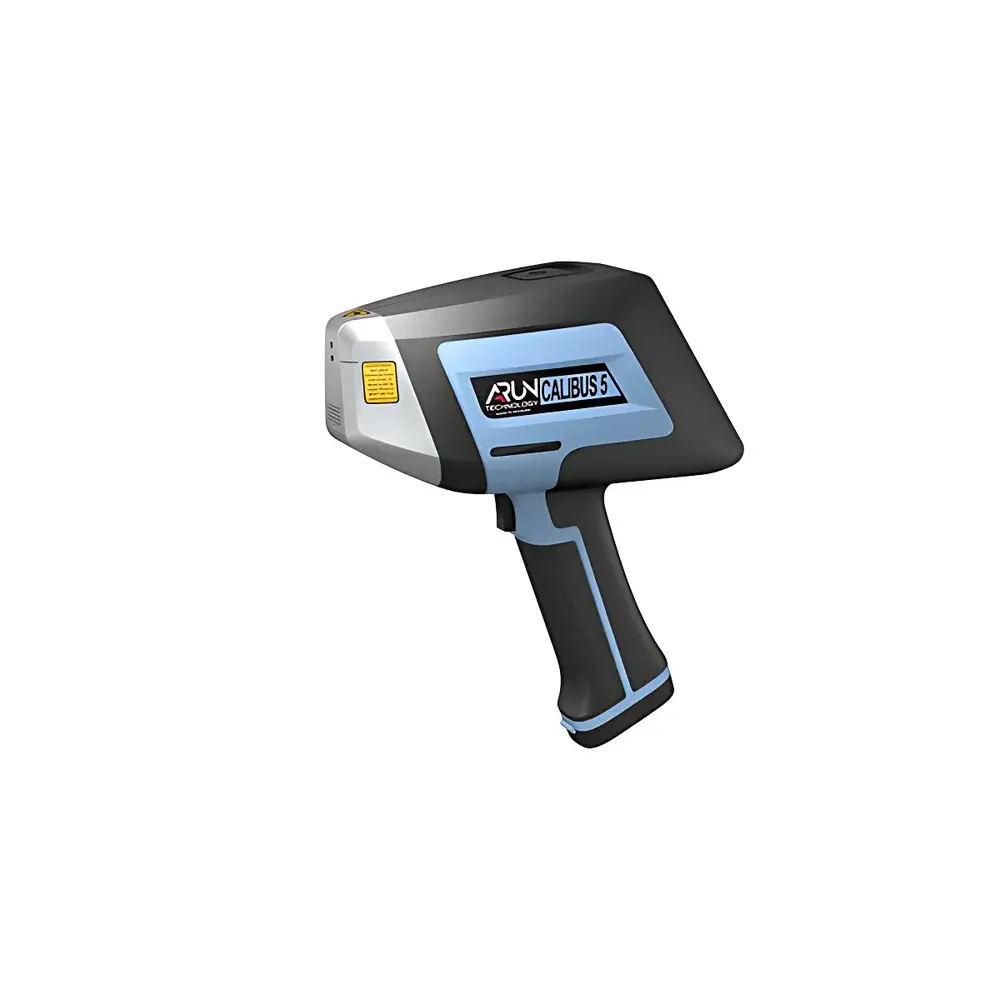
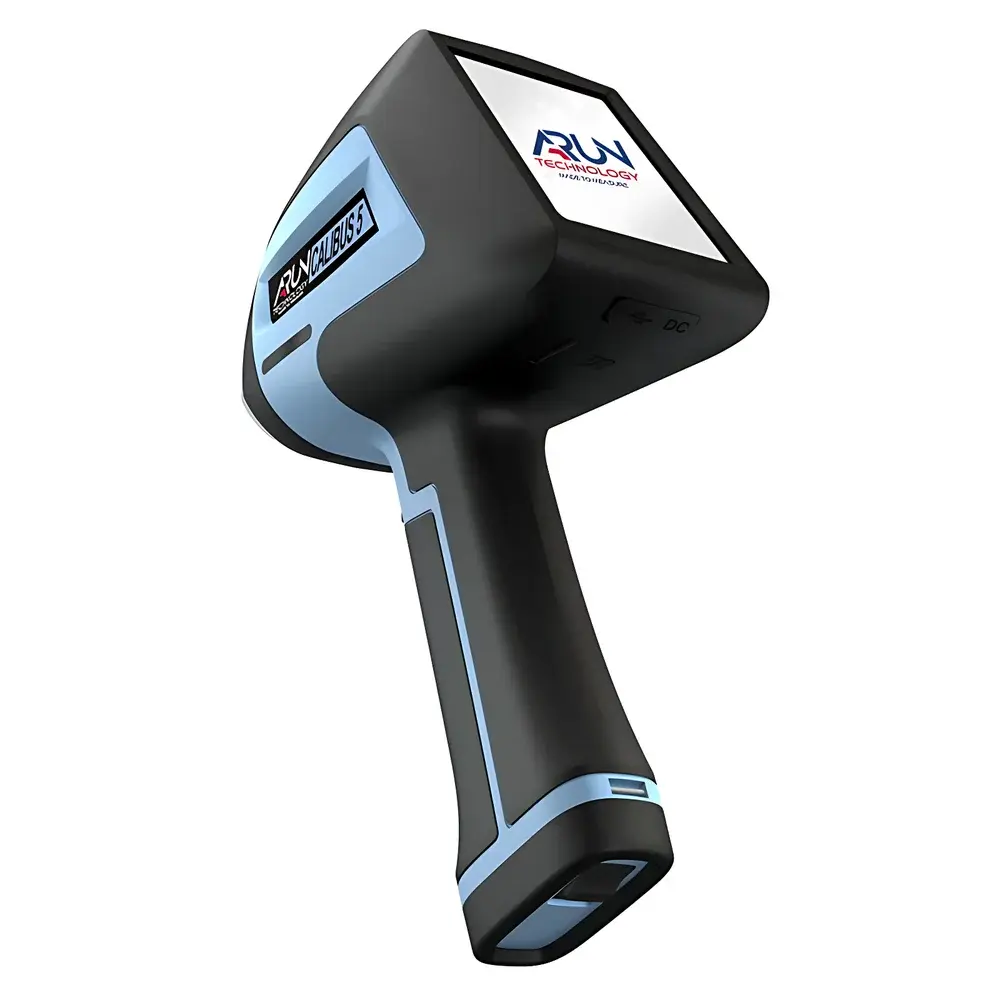
ARUN CALIBUS Series Handheld Laser-Induced Breakdown Spectroscopy (LIBS) Analyzer
| Brand | ARUN TECHNOLOGY LTD. |
|---|---|
| Origin | United Kingdom |
| Manufacturer Type | Authorized Distributor |
| Product Origin | Imported |
| Model | CALIBUS Handheld LIBS |
| Instrument Type | Handheld |
| Integration | Fully Integrated |
| Laser Pulse Energy | 400 mJ per pulse (typical, Q-switched Nd:YAG at 1064 nm) |
Overview
The ARUN CALIBUS Series Handheld Laser-Induced Breakdown Spectroscopy (LIBS) Analyzer is an industrial-grade elemental analysis instrument engineered for rapid, in-situ, and non-destructive compositional characterization of metallic materials. Based on the fundamental principle of laser-induced plasma spectroscopy, the system focuses a high-energy, nanosecond-duration pulsed laser onto the sample surface to generate a transient micro-plasma (>10,000 K). Emitted atomic and ionic line spectra from the cooling plasma are collected via a broadband optical path and resolved by a high-throughput Czerny–Turner spectrometer coupled with a scientific-grade back-illuminated CMOS detector (200–950 nm spectral range). Unlike X-ray fluorescence (XRF), LIBS does not require radioactive sources or vacuum environments and enables direct detection of light elements—particularly carbon (C), lithium (Li), beryllium (Be), boron (B), magnesium (Mg), silicon (Si), and sodium (Na)—with sub-0.01 wt% detection limits in optimized steel matrices. Designed and validated by ARUN TECHNOLOGY LTD.—a UK-based instrumentation firm with over 38 years of specialization in metallurgical spectroscopy—the CALIBUS platform delivers laboratory-grade quantitative accuracy under field conditions, supporting traceable elemental analysis compliant with ASTM E2926-23 (Standard Test Method for Determination of Elements in Metals by LIBS) and ISO 11885:2022 (Water quality — Determination of selected elements by inductively coupled plasma optical emission spectrometry — *principles applicable to LIBS calibration traceability*).
Key Features
- Full-spectrum elemental detection from Li (Z=3) to U (Z=92), with exceptional sensitivity and stability for carbon quantification—critical for low-alloy steel, stainless steel, and cast iron grade identification
- High-resolution optical architecture featuring aberration-corrected optics and thermally stabilized spectrometer housing, minimizing wavelength drift across ambient temperatures (−10 °C to 50 °C)
- Pulsed Nd:YAG laser source (1064 nm, 4–6 ns pulse width, 400 mJ/pulse, 1–10 Hz repetition rate) with Class 4 laser safety interlocks and integrated beam shutter
- Integrated 7-inch capacitive touchscreen with glove-compatible UI, real-time spectral preview, and on-device multivariate calibration models (PLS, PCA, SVM)
- No sample preparation required: analyzes conductive and non-conductive solids—including painted, oxidized, or coated surfaces—without grinding, polishing, or acid digestion
- IP54-rated ruggedized enclosure with MIL-STD-810G shock/vibration resistance and drop-tested to 1.2 m onto concrete
Sample Compatibility & Compliance
The CALIBUS analyzer accommodates bulk metals, welds, pipes, forgings, scrap fragments, and thin sheets ≥0.5 mm thickness. It operates independently of electrical conductivity or surface finish—enabling analysis of galvanized, anodized, or rusted samples without pre-cleaning. All firmware and hardware comply with IEC 61000-6-3 (EMC emissions), IEC 61000-6-2 (immunity), and EN 60825-1:2014 (laser safety). Device firmware supports audit trails, user access levels (operator/administrator), and electronic signature workflows aligned with FDA 21 CFR Part 11 requirements for regulated environments. Calibration certificates are traceable to NIST SRM 2172 (low-alloy steel) and BAM RM 012 (stainless steel), with documented uncertainty budgets per ISO/IEC 17025.
Software & Data Management
CALIBUS runs proprietary ARUN SpectraSuite™ v4.x firmware with embedded chemometric engine supporting factory-loaded and user-customizable calibrations. Data export options include CSV, XML, and PDF reports with embedded spectral plots, confidence metrics, and measurement metadata (laser shots, ambient temperature, humidity, GPS coordinates). Cloud synchronization via secure TLS 1.3 connection enables centralized fleet management, remote calibration updates, and trend analysis across multi-site deployments. All raw spectra and processed results are stored locally on encrypted eMMC storage (32 GB) with automatic backup to network shares or USB 3.0 drives.
Applications
- Metallurgical Process Control: Real-time verification of melt chemistry, ladle analysis, and continuous casting composition monitoring
- Scrap Sorting & Recycling: High-throughput classification of mixed ferrous/non-ferrous streams (e.g., 304 vs. 316 stainless, Al 6061 vs. 7075, Cu–Zn vs. Cu–Sn alloys)
- Asset Integrity Management: In-service inspection of pressure vessels, pipelines, and structural components for material substitution or degradation
- Quality Assurance in Fabrication: Incoming material inspection, weld filler verification, and heat-affected zone (HAZ) analysis
- Regulatory Compliance Testing: Verification against ASTM A105, ASTM A36, EN 10027, and GB/T 222 for carbon equivalency and alloy grade conformance
FAQ
What is the typical detection limit for carbon in low-alloy steel?
Carbon detection limits range from 0.008–0.015 wt% (3σ) depending on matrix homogeneity, surface condition, and number of laser shots averaged (default: 10 pulses).
Can CALIBUS analyze coated or painted metal surfaces?
Yes—surface coatings up to ~50 µm thick (e.g., paint, zinc, epoxy) are ablated within the first 1–3 laser pulses; subsequent spectra reflect underlying substrate composition.
Is calibration transfer possible between different CALIBUS units?
Yes—cross-instrument calibration transfer is supported via spectral normalization algorithms and reference-free standardization using internal argon plasma lines.
Does the system require annual recalibration?
No scheduled recalibration is mandated; however, performance verification using certified reference materials (CRMs) is recommended before critical measurements or after mechanical shock events.
How is data integrity ensured during offline operation?
All measurements are timestamped, digitally signed, and stored with full audit trail—including operator ID, GPS location, environmental sensor logs, and raw spectral files—ensuring ALCOA+ compliance for GMP/GLP environments.
Related Products




