
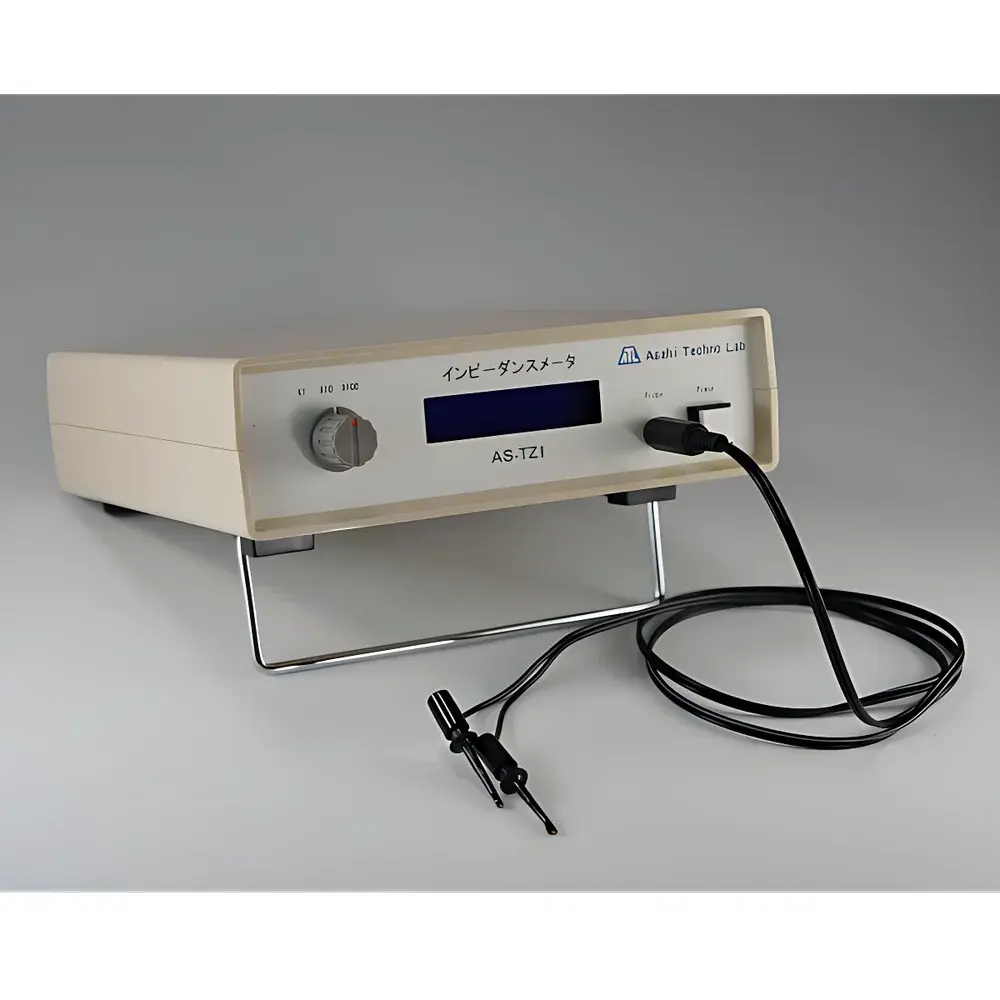
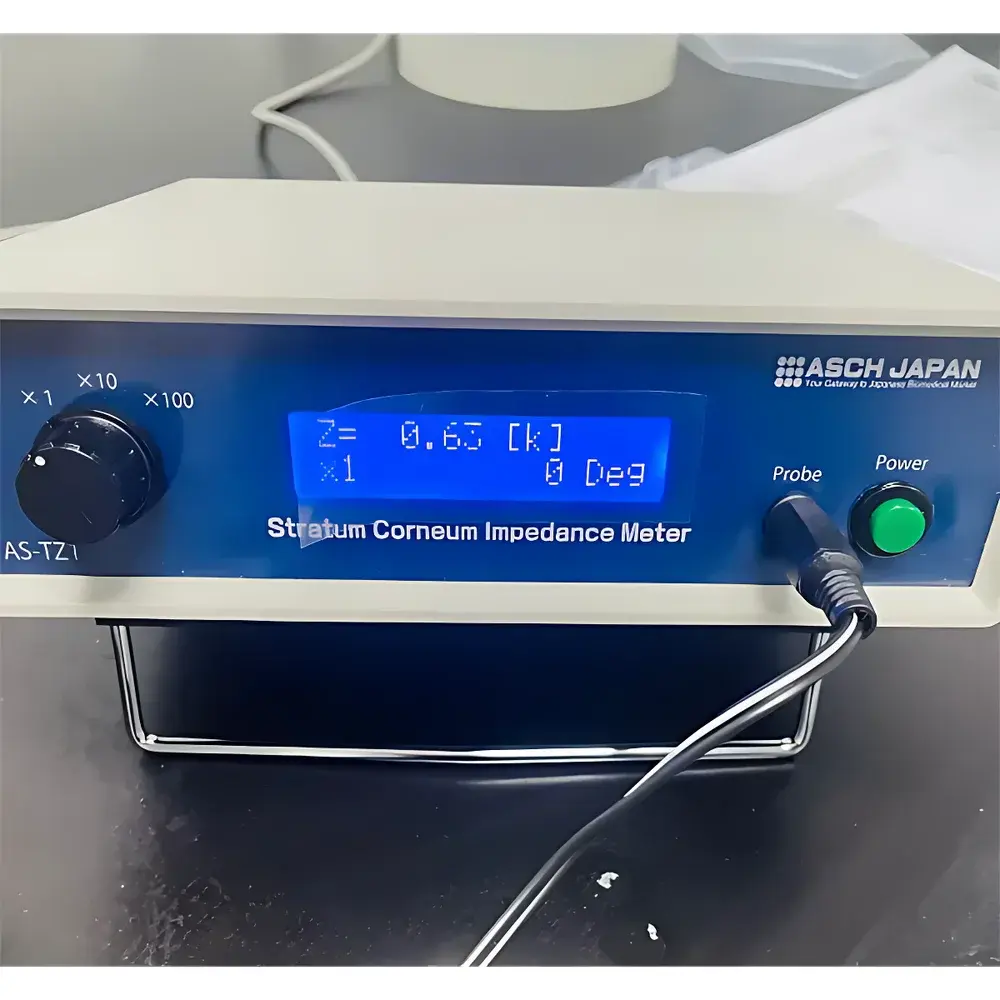
ASCH AS-TZ1 Trans-Epidermal Electrical Resistance (TEER) Meter
| Brand | ASCH |
|---|---|
| Origin | Japan |
| Model | AS-TZ1 |
| Measurement Principle | Low-frequency AC impedance |
| Impedance Range | 0.5–99 kΩ |
| Phase Angle Range | 0–90° |
| Repeatability | ±2% (0.1–10 kΩ), ±1% (10–99 kΩ) |
| Excitation Voltage | 5 V DC |
| Test Frequency | 12 Hz |
| Electrodes | Ag/AgCl (donor side), Ag (receiver side) |
| Display | 65 × 15 mm LCD |
| Dimensions | 190 × 60 × 200 mm |
| Power Supply | 6 V DC (battery-operated) |
Overview
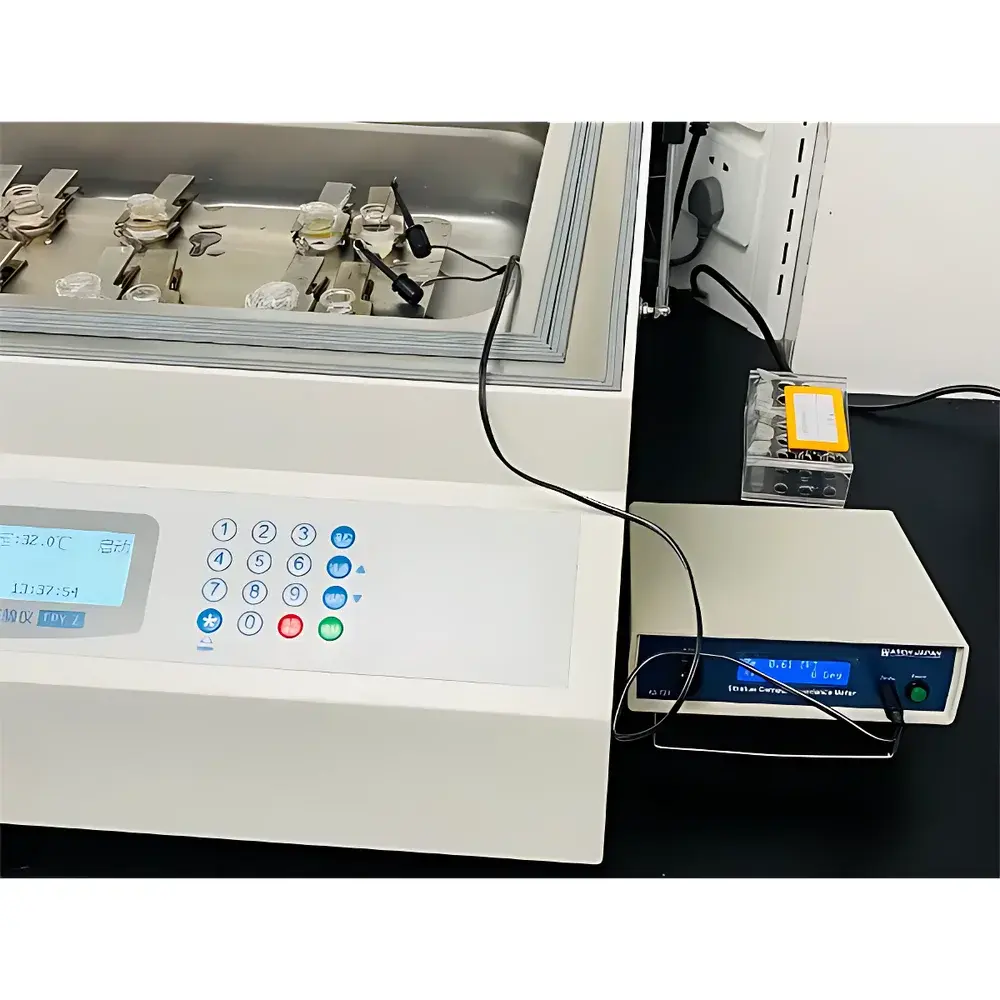
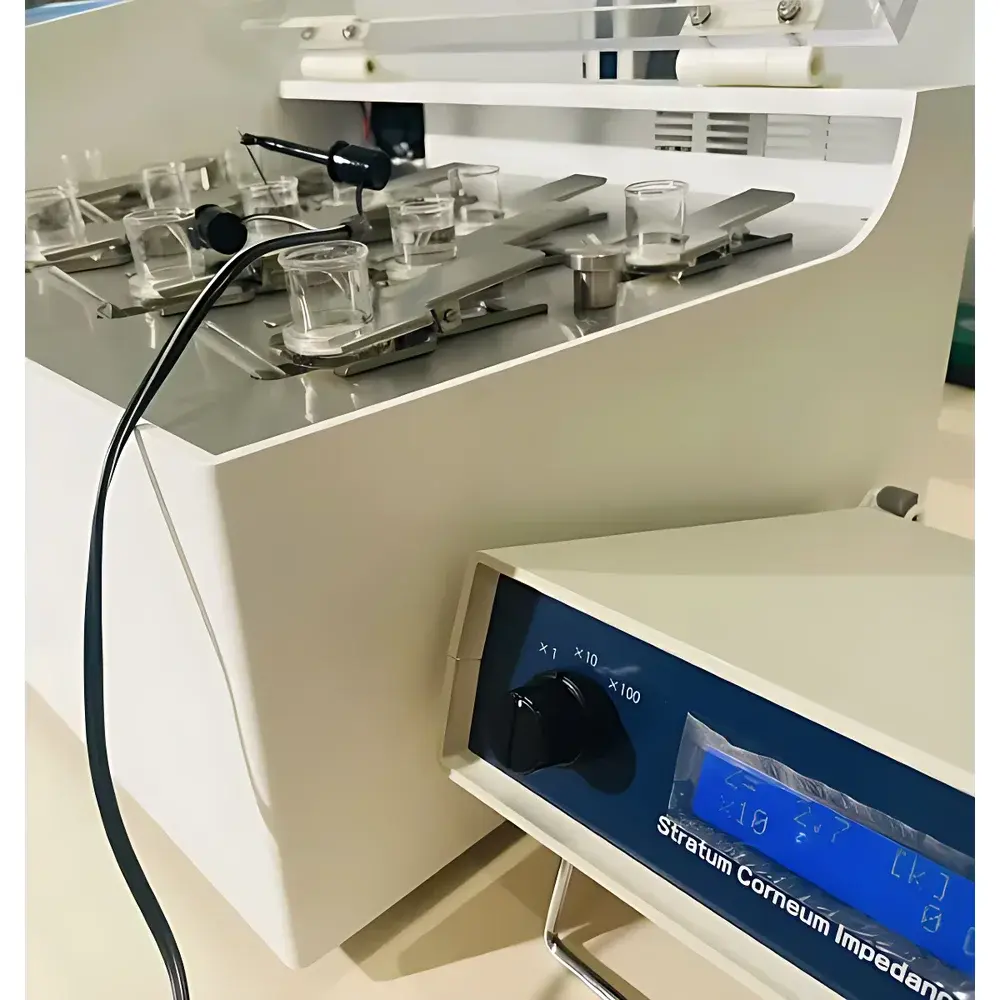
The ASCH AS-TZ1 Trans-Epidermal Electrical Resistance (TEER) Meter is a precision handheld instrument engineered for quantitative, non-invasive assessment of epidermal barrier integrity in ex vivo skin models. It operates on the principle of low-frequency (12 Hz) alternating current impedance spectroscopy, applying a controlled 5 V excitation signal across paired electrodes—Ag/AgCl on the donor side and pure silver on the receptor side—to measure the ohmic resistance conferred primarily by the stratum corneum. This resistance, expressed in kiloohms (kΩ), serves as a direct electrophysiological correlate of intercellular lipid organization and keratinocyte cohesion. Unlike subjective visual inspection or indirect metrics such as TEWL, TEER provides a rapid, objective, and reproducible functional readout essential for qualifying skin membranes prior to in vitro permeation testing (IVPT), formulation screening, or 3D reconstructed epidermis validation. Its battery-powered architecture ensures stable operation in regulated lab environments, Franz diffusion cell setups, or mobile preclinical testing stations without reliance on mains power.
Key Features
- Real-time dual-parameter output: simultaneous display of impedance magnitude (0.5–99 kΩ) and phase angle (0–90°), enabling differentiation between resistive and capacitive contributions to barrier function.
- High measurement repeatability: ±2% within 0.1–10 kΩ range and ±1% from 10–99 kΩ—validated against NIST-traceable impedance standards under ISO/IEC 17025-aligned calibration protocols.
- Low-frequency (12 Hz) AC excitation minimizes electrode polarization effects and electrolyte double-layer interference, ensuring stable readings across variable ionic strength media (e.g., PBS pH 7.4 or 0.9% NaCl).
- Compact, ergonomic design (190 × 60 × 200 mm) with integrated 65 × 15 mm LCD—optimized for integration into Franz diffusion cell rigs and laminar flow hoods.
- Battery-driven 6 V DC operation supports uninterrupted measurements during multi-hour membrane equilibration periods at controlled temperature (e.g., 32 °C skin surface condition).
Sample Compatibility & Compliance
The AS-TZ1 is validated for use with excised mammalian skin tissues—including porcine (e.g., Yucatan or Bama miniature pig), murine, and human-derived full-thickness or split-thickness specimens—as well as commercially available 3D epidermal equivalents (e.g., EpiDerm™, SkinEthic™ RHE). It meets methodological requirements specified in multiple regulatory frameworks: CDE’s *Technical Guidance on IVRT and IVPT for Topical Generic Drugs* (July 2024, draft), FDA’s *In Vitro Permeation Test Studies for Topical Drug Products* (October 2022), EMA’s *Guideline on Quality of Transdermal Patches* (2014), and USP *Semisolid Drug Products—Performance Tests*. TEER data generated using this instrument supports GLP-compliant study documentation when paired with audit-trail-enabled logging systems and calibrated electrode maintenance records.
Software & Data Management
While the AS-TZ1 operates as a standalone meter with no embedded firmware or USB connectivity, its analog output interface (0–5 V proportional to impedance) enables seamless integration with external data acquisition systems (e.g., LabVIEW, MATLAB, or custom Python-based DAQ platforms) for time-series recording, statistical batch analysis, and automated pass/fail thresholding (e.g., ≥5 kΩ for intact porcine skin). Users are advised to maintain manual logbooks or electronic laboratory notebooks (ELN) compliant with 21 CFR Part 11 requirements when archiving TEER values alongside experimental metadata (tissue source, storage duration, hydration status, electrode contact time).
Applications
- Pre-screening of excised skin membranes prior to IVPT studies to exclude compromised specimens and reduce inter-assay variability in flux calculations.
- Evaluation of chemical penetration enhancer (CPE) efficacy—quantifying dose-dependent reductions in TEER to infer disruption mechanisms (e.g., lipid fluidization vs. protein denaturation).
- Quality control of reconstructed human epidermis (RHE) models used in OECD TG 439 (in vitro skin irritation) or TG 431 (skin corrosion).
- Method development for transdermal patch release kinetics, where baseline TEER correlates with adhesive–skin interfacial resistance and drug partitioning behavior.
- Academic research on barrier pathophysiology—including atopic dermatitis, psoriasis, or aged skin models—using impedance-derived structural indices.
FAQ
What electrode configuration is required for accurate TEER measurement with the AS-TZ1?
The instrument requires one Ag/AgCl electrode placed in the donor chamber and one pure silver electrode in the receptor chamber—both immersed in isotonic buffer (e.g., PBS pH 7.4). Electrode positioning must ensure symmetrical contact with the stratum corneum surface and avoid air gaps or lateral leakage paths.
Can the AS-TZ1 be used with Franz diffusion cells from different manufacturers?
Yes—the AS-TZ1 is compatible with standard vertical Franz cells (e.g., Hanson, Logitech, Crown) provided the electrode ports accommodate 2-mm-diameter rod electrodes and the chamber geometry permits unobstructed current path alignment across the skin membrane.
How frequently should electrodes be cleaned and calibrated?
Ag/AgCl electrodes should be rinsed with deionized water and gently polished with alumina slurry after each use; silver electrodes require periodic immersion in 10% nitric acid followed by thorough rinsing. Calibration against certified impedance standards (e.g., 1 kΩ, 10 kΩ, 50 kΩ) is recommended before each experimental series or daily in high-throughput labs.
Does the AS-TZ1 comply with FDA 21 CFR Part 11 for electronic records?
The device itself does not generate electronic records; however, when interfaced with validated DAQ software featuring audit trails, electronic signatures, and secure user access controls, the resulting TEER datasets may satisfy Part 11 requirements for submission-ready regulatory packages.




