ASD CGA Online Gas Analyzer
| Brand | ASD |
|---|---|
| Origin | Canada |
| Model | CGA |
| Price | USD 28,000 (approx.) |
| Linearity Error | <0.1% FS |
| Repeatability | <0.1% FS |
| Span Drift | ≤1% per 30 days |
| Response Time (T90) | 5 seconds |
| Explosion Protection | Not certified (non-hazardous area use only) |
| Sensor Technologies | FID, NDIR, Paramagnetic, Electrochemical (eCell), Alumina-based Hygrometer (Al₂O₃), EPD (Electrostatic Precipitation Detector) |
| Temperature Compensation | Integrated |
| Pressure Compensation | Integrated |
| Calibration Options | Multi-point auto-calibration available per module |
| Module Architecture | Up to 3 internal sensor modules + 1 external Al₂O₃ module |
| Data Logging | Onboard with real-time trend visualization |
Overview
The ASD CGA Online Gas Analyzer is an industrial-grade, multi-technology gas analysis platform engineered for continuous, real-time monitoring of critical gas compositions in non-hazardous process environments. Unlike single-technology analyzers, the CGA integrates up to four independent detection principles—paramagnetic (for O₂), non-dispersive infrared (NDIR) for CO₂ and hydrocarbons, flame ionization detection (FID) for total hydrocarbons (THC as CH₄ equivalent), electrochemical (eCell) for O₂ or toxic species, alumina-based capacitive hygrometry (Al₂O₃) for moisture, and electrostatic precipitation detection (EPD) for aerosol-bound particulates—within a unified, modular chassis. Each sensor operates with dedicated electronic flow control, ensuring stable sample delivery under variable line pressure and temperature conditions. The system employs dual-compensated measurement algorithms (pressure and temperature) to maintain accuracy across dynamic process conditions, making it particularly suitable for air separation units (ASUs), bulk gas production lines, and high-purity bottling facilities where trace-level impurity detection and long-term baseline stability are mission-critical.
Key Features
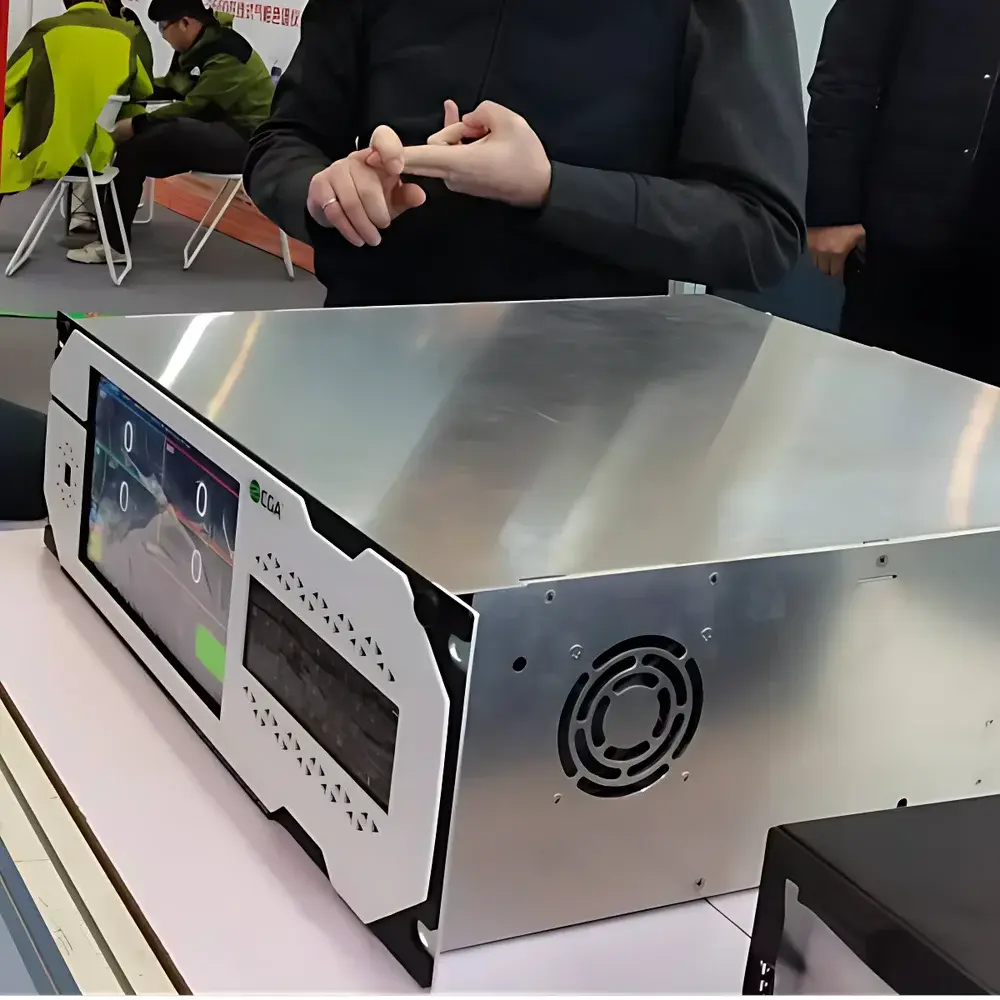
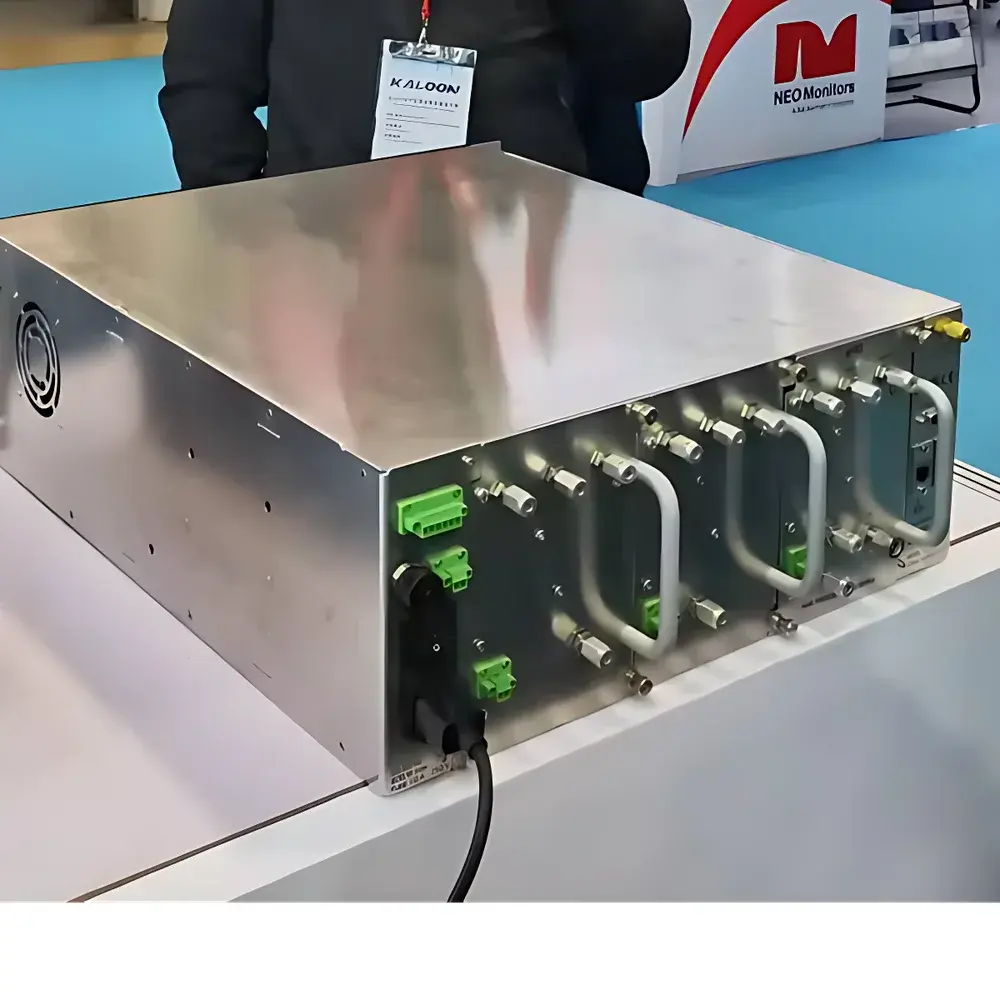
- Modular sensor architecture: Supports up to three internal hot-swappable sensor modules and one externally mounted Al₂O₃ moisture sensor—enabling field-replaceable maintenance without process interruption or instrument removal from the sample rack.
- Dedicated mass-flow control per sensor channel: Eliminates cross-channel interference and ensures consistent residence time and signal integrity across all detection technologies.
- Integrated environmental compensation: Real-time pressure and temperature correction applied at the firmware level for all sensor outputs, minimizing drift induced by ambient or process fluctuations.
- Advanced analog front-end electronics combined with adaptive digital signal processing: Delivers high signal-to-noise ratio and low baseline wander, essential for sub-ppm detection limits and repeatable quantification.
- Optional automated calibration system: Configurable per module for zero/span verification using certified gases; supports multi-point calibration routines compliant with ASTM D6299 and ISO 8573-8 protocols.
- Low total cost of ownership: Modular design reduces mean time to repair (MTTR); no need for factory return or specialized tools for routine sensor replacement or recalibration.
Sample Compatibility & Compliance
The CGA is designed for clean, dry, non-corrosive gas streams typical of ASU product lines (e.g., gaseous O₂, N₂, Ar), air feed inlets, and bottled gas filling stations. It accommodates sample pressures from 0.5 to 2.0 bar(g) and temperatures from 5 °C to 45 °C. Moisture measurement via Al₂O₃ module extends operational range down to –20 °C dew point (1000 ppmv H₂O) and up to +20 °C dew point (23,000 ppmv). While not intrinsically safe or explosion-proof (IEC 60079-0/11), the analyzer complies with CE marking requirements for EMC (EN 61326-1) and safety (EN 61010-1). Its software architecture supports audit trail generation and user-access controls aligned with GLP and FDA 21 CFR Part 11 readiness when deployed with optional secure logging and electronic signature modules.
Software & Data Management
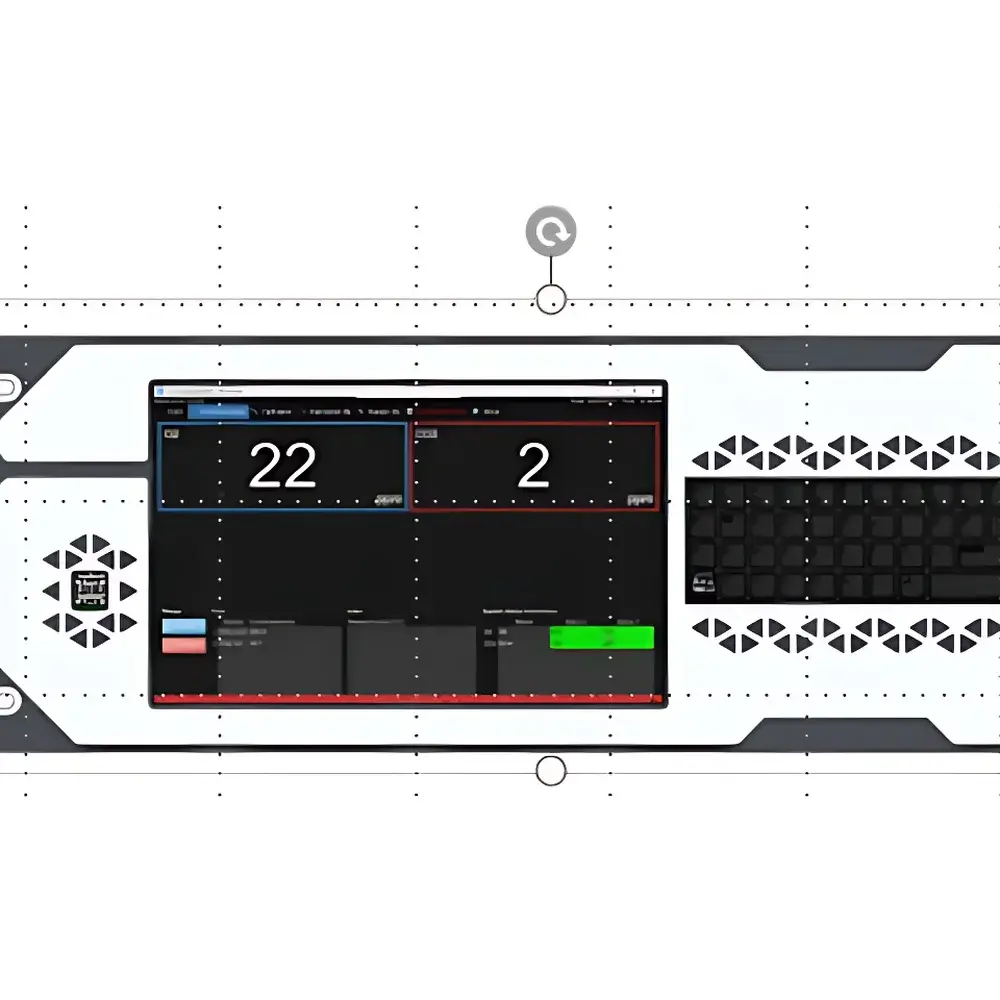
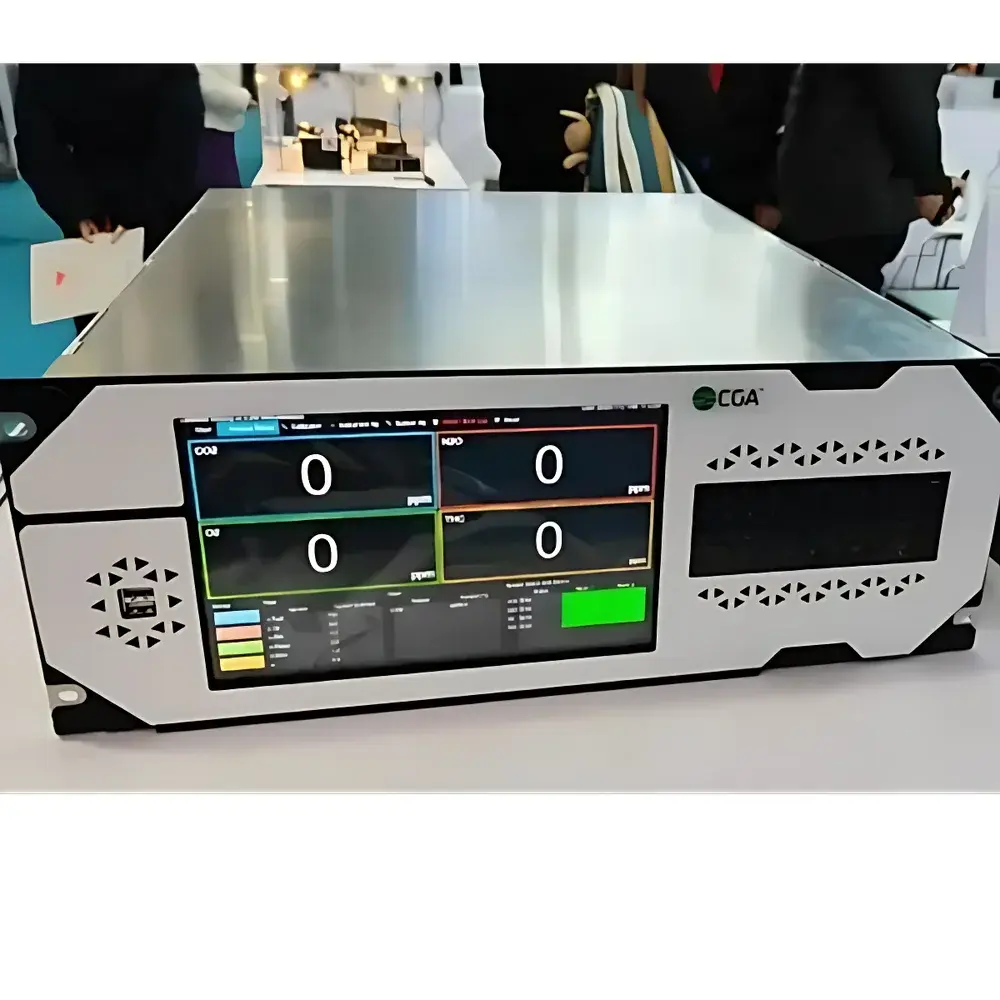
The embedded CGA Control Suite provides local HMI operation via a 7-inch resistive touchscreen with intuitive navigation and real-time graphical display of concentration trends, alarm status, and diagnostic flags. All measurements are timestamped and stored internally (≥30 days at 1-second resolution) with export capability via USB or Ethernet (Modbus TCP, OPC UA optional). Remote access is supported through secure HTTPS-enabled web interface, allowing configuration, diagnostics, and historical data retrieval without proprietary client software. Data files conform to CSV and XML schemas compatible with LIMS integration and third-party SCADA systems. Calibration logs, sensor health metrics, and drift reports are automatically generated and archived with digital signatures where enabled.
Applications
- Air separation unit (ASU) product purity assurance: Continuous monitoring of O₂, N₂, Ar, CO₂, THC, and moisture in high-purity oxygen/nitrogen streams per ISO 8573-1 Class 2–4 specifications.
- Process control at air inlet stages: Early detection of CO₂ breakthrough or hydrocarbon contamination upstream of molecular sieves.
- Bulk gas cylinder filling and packaging lines: Final quality verification prior to sealing, ensuring compliance with ISO 8573-1 and CGA G-4.1 standards.
- On-site nitrogen generation systems: Real-time verification of O₂ and moisture content in membrane- or PSA-generated N₂.
- Research and development laboratories: Flexible multi-analyte platform for method development and validation studies involving gas-phase reaction monitoring.
FAQ
What gas species can the CGA measure simultaneously?
The CGA supports concurrent measurement of O₂ (paramagnetic or eCell), CO₂ (NDIR), THC (FID), moisture (Al₂O₃), and optionally O₂/N₂ ratio or aerosol loading (EPD), depending on installed modules.
Is the analyzer suitable for hazardous area installation?
No. The CGA lacks intrinsic safety certification or explosion-proof enclosure rating and must be installed in non-classified, ventilated environments per IEC 60079-14 guidelines.
How often does the system require calibration?
Under stable operating conditions, quarterly multi-point calibration is recommended; however, automatic daily zero checks and monthly span verification can extend intervals per ASTM D6299 Annex A3 guidance.
Can sensor modules be upgraded or reconfigured post-installation?
Yes. Modules are mechanically and electrically standardized; swapping an NDIR CO₂ sensor for an NDIR CH₄ sensor—or adding an eCell O₂ module—requires only hardware insertion and firmware parameter loading.
Does the system support remote diagnostics and firmware updates?
Yes. Secure remote login enables live diagnostics, log download, and over-the-air firmware updates via TLS-encrypted HTTP(S) connection, subject to network policy approval.