
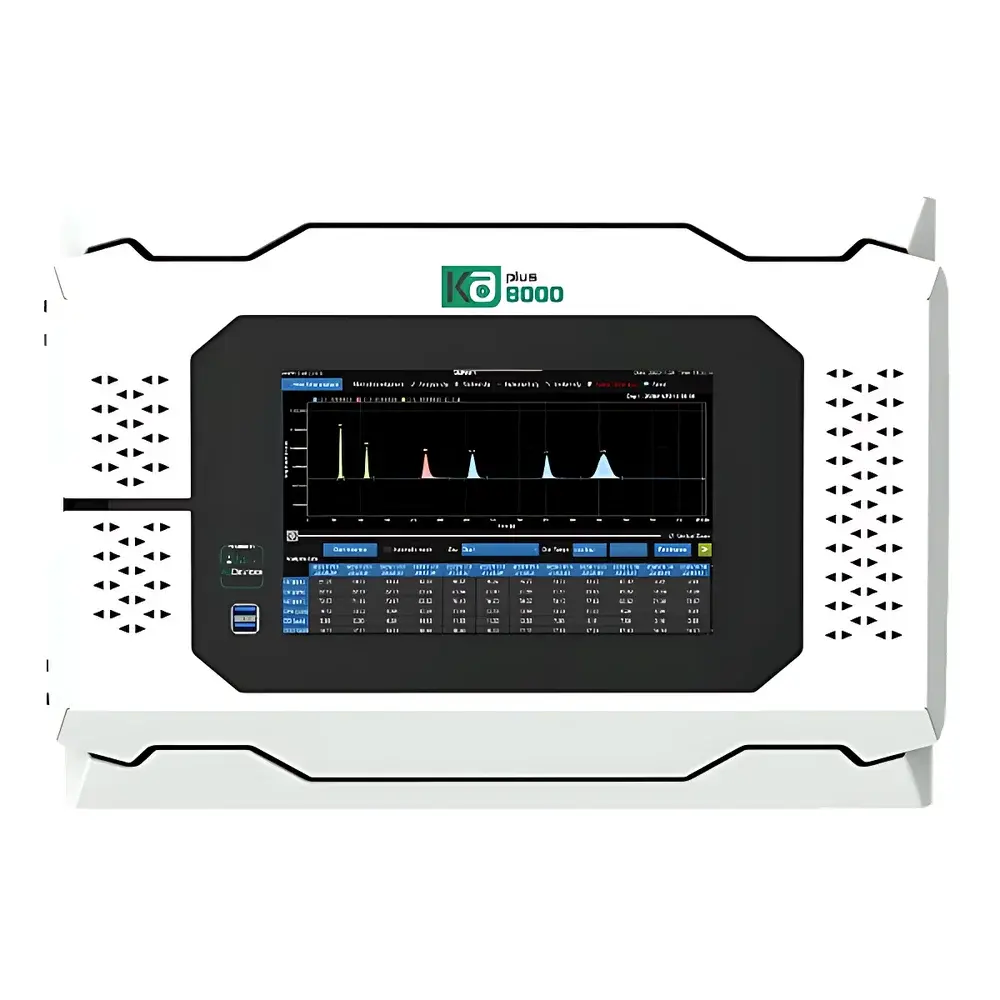
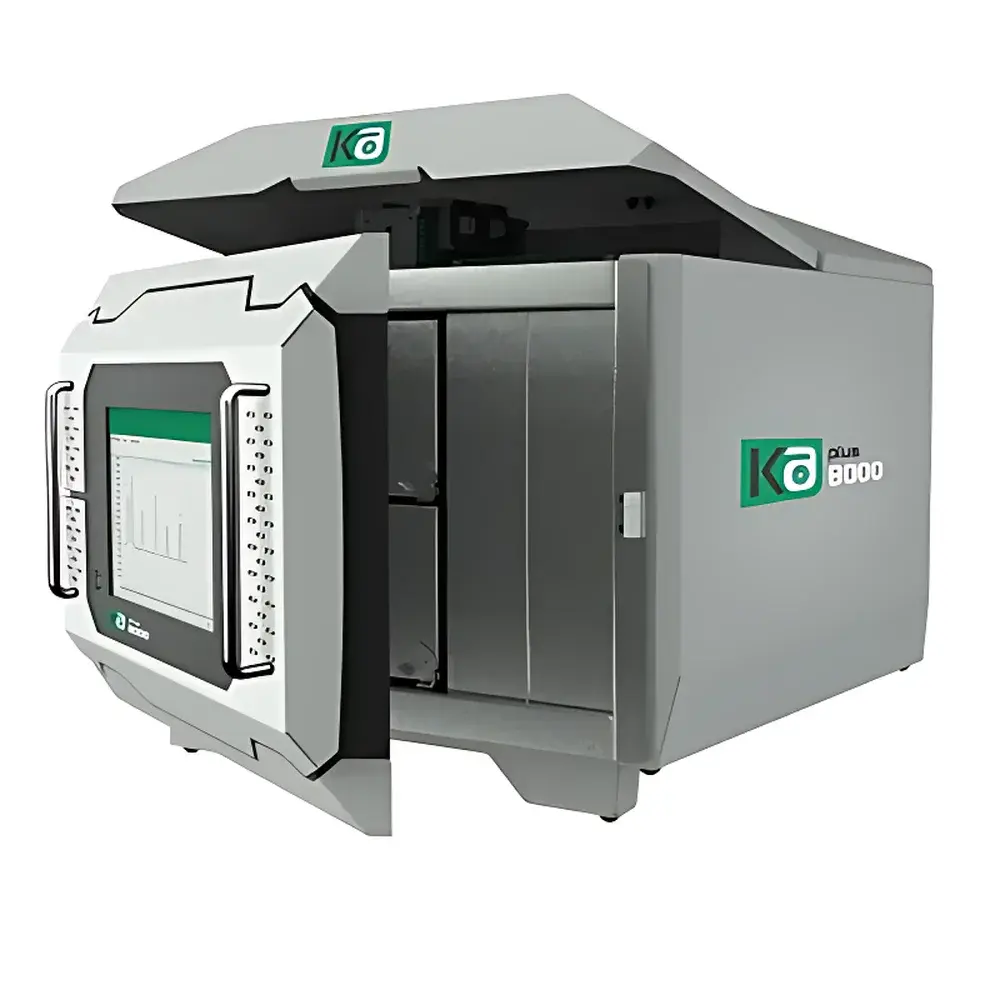
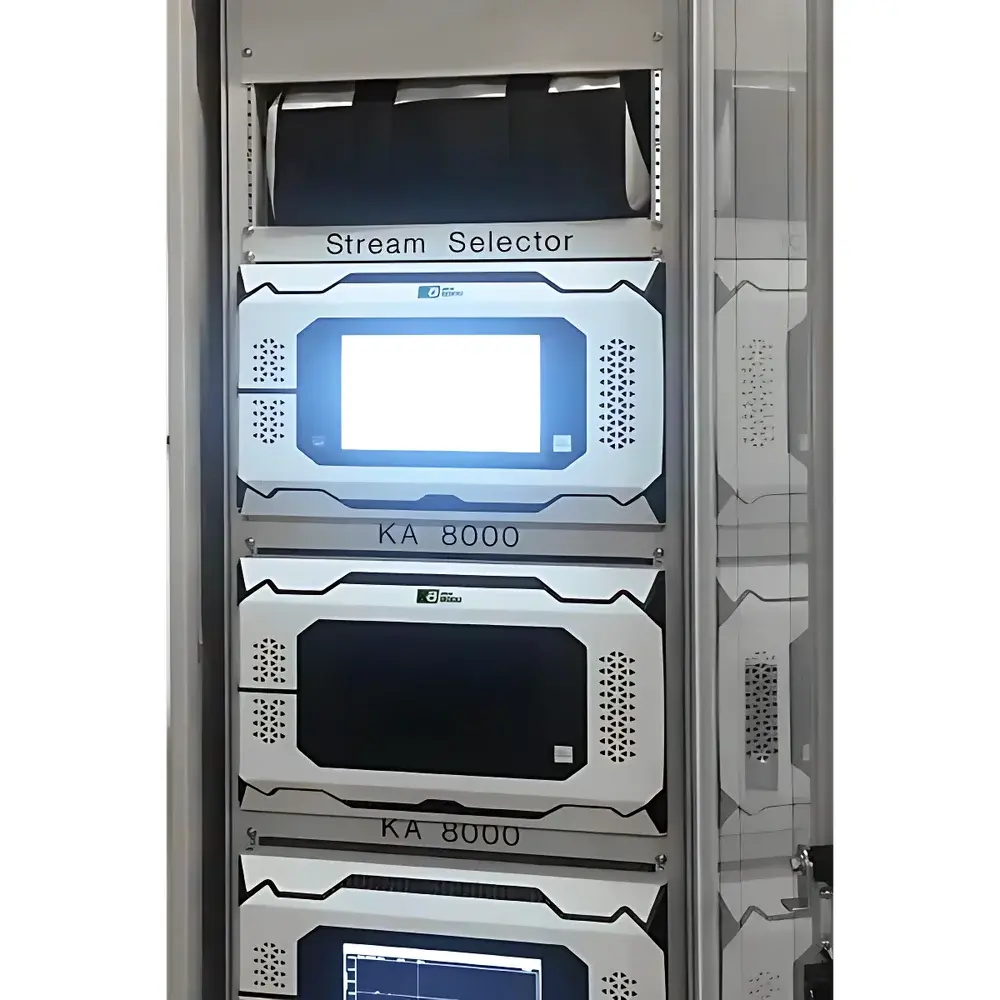
ASD KA8000plus-S Sulfur-Specific Gas Chromatograph
| Brand | ASD |
|---|---|
| Origin | Canada |
| Model | KA8000plus-S |
| Instrument Type | Laboratory Gas Chromatograph |
| Application Field | Hydrogen Fuel Purity Analysis |
| Temperature Control Range | Ambient +4 °C to 450 °C |
| Maximum Ramp Rate | 75 °C/min |
| Cooling Rate | ~6 min (400 °C → 50 °C) |
| Carrier Gas Flow Range & Control | 30–100 mL/min |
| Carrier Gas Pressure Range & Control | 90–100 psig |
| Injector Max Operating Temperature | 400 °C |
| Injector Pressure Setting Range | 3–25 psig |
| Injector Total Flow Setting Range | 5–200 mL/min |
| Detector | SePDD (Sulfur-Enhanced Plasma Discharge Detector) |
| Valve Configuration | PLSV Inert 6-Port Valve with 2 mL Inert Quantitative Loop |
| Carrier Gas Requirement | Ultra-High-Purity Helium (≥5.0, purified to <1 ppb total impurities via ASDPure gas purifier) |
| Detection Limit | <0.5 ppb (as H₂S equivalent, direct injection) |
Overview
The ASD KA8000plus-S is a purpose-built sulfur-specific gas chromatograph engineered for ultra-trace quantification of sulfur-containing impurities in high-purity hydrogen fuel streams. It employs a proprietary Sulfur-Enhanced Plasma Discharge Detector (SePDD), operating on low-power, non-flame plasma excitation—eliminating the need for hydrogen or air supply gases and enabling inherently stable, interference-free sulfur-selective detection. Unlike conventional pulsed flame photometric detectors (PFPD) or sulfur chemiluminescence detectors (SCD), the SePDD delivers linear response across sub-ppb to low-ppm sulfur concentrations without saturation or quenching effects, making it uniquely suited for ISO 14687-2:2023 compliance testing. The system is fully integrated with inert flow-path components—including a PLSV (Passivated Low-Dead-Volume) 6-port valve and 2 mL inert quantitative loop—to preserve reactive sulfur species (e.g., H₂S, COS, CH₃SH, SO₂, mercaptans) throughout sample introduction, separation, and detection. Designed specifically for hydrogen quality assurance laboratories, the KA8000plus-S meets the stringent analytical requirements of PEM fuel cell manufacturers, hydrogen refueling station operators, and third-party certification bodies.
Key Features
- Sulfur-selective SePDD detector with sub-0.5 ppb detection limit (H₂S equivalent) using direct-injection analysis—no cryo-trapping, thermal desorption, or pre-concentration required.
- Fully inert fluidic path from inlet to detector: electropolished stainless steel tubing, SilcoNert®-passivated valves and loops, and low-dead-volume fittings minimize adsorption and catalytic decomposition of labile sulfur compounds.
- Temperature-programmable oven with rapid heating (up to 75 °C/min) and accelerated cooling (~6 min from 400 °C to 50 °C), enabling high-throughput analysis of complex sulfur speciation profiles within ≤12 min run times.
- Helium-only operation: eliminates dependency on combustible fuel gases; compatible with ASDPure carrier gas purifier delivering ≤1 ppb total hydrocarbon/oxygen/moisture impurities from standard 5.0 helium.
- Injector temperature stability up to 400 °C with precise pressure and total flow control (3–25 psig / 5–200 mL/min), ensuring reproducible vaporization and transfer of trace sulfur standards.
- Robust architecture compliant with IEC 61000-6-3 (EMC) and UL 61010-1 safety standards; designed for continuous unattended operation in GLP/GMP-regulated environments.
Sample Compatibility & Compliance
The KA8000plus-S is validated for analysis of gaseous hydrogen samples containing sulfur impurities at concentrations ranging from 0.1 ppb to 100 ppb. It supports direct injection of compressed hydrogen (up to 15 MPa via regulated sampling interface) and is compatible with certified reference gas mixtures traceable to NIST SRMs. Method performance adheres to ISO 14687-2:2023 Annex B (sulfur compound measurement), ASTM D7622–22 (standard test method for sulfur in hydrogen by GC–SePDD), and EU Directive 2023/1737 on clean hydrogen certification. All hardware and software configurations support audit-ready electronic records per FDA 21 CFR Part 11 requirements when deployed with compliant LIMS integration.
Software & Data Management
Control and data acquisition are managed via ASD ChromaLink v4.2 software—a Windows-based platform featuring intuitive method setup wizards, real-time chromatogram overlay, automated peak integration with sulfur-species identification libraries (H₂S, COS, MeSH, DMS, SO₂), and customizable reporting templates aligned with ISO 14687 test certificates. Raw data files (.chd) include full instrument parameter logs, detector voltage traces, and system suitability metrics (e.g., retention time RSD <0.15%, peak area RSD <2.5% over 24 h). Audit trail functionality records all user actions, method modifications, and calibration events with timestamped, non-erasable entries.
Applications
- Quality control of proton exchange membrane (PEM) fuel cell hydrogen feedstock per ISO 14687-2 specifications.
- Validation of hydrogen purification systems (e.g., palladium membrane filters, adsorbent beds) during commissioning and routine maintenance.
- Trace sulfur profiling in green hydrogen produced via electrolysis, where catalyst poisoning risk demands rigorous monitoring of process-derived contaminants.
- Third-party certification testing for H₂ fuel suppliers seeking Clean Hydrogen Certification Program (CHCP) or TÜV Rheinland accreditation.
- Research applications in catalyst deactivation studies, sulfur adsorption kinetics, and development of novel sulfur scavengers.
FAQ
Does the KA8000plus-S require hydrogen or air for detector operation?
No. The SePDD operates solely on helium carrier gas and low-voltage plasma excitation—no external fuel or oxidant gases are needed.
Can the system quantify individual sulfur species such as COS or methanethiol?
Yes. With appropriate column selection (e.g., fused-silica PLOT Al₂O₃/KCl or DB-Sulfur), baseline separation and library-matched identification of ≥12 sulfur compounds is achievable.
Is the ASDPure gas purifier mandatory for operation?
It is strongly recommended and required for achieving stated detection limits; unpurified helium introduces sulfur-bearing contaminants that compromise blank integrity and method sensitivity.
What is the typical calibration frequency for regulatory compliance?
Initial qualification includes system suitability testing (SST) with multi-level sulfur standards; subsequent calibrations are performed daily or per batch, per ISO 14687-2 Section 8.3 requirements.
How is data integrity ensured during long-term deployment?
ChromaLink v4.2 enforces role-based access control, electronic signatures, and immutable audit trails—fully supporting 21 CFR Part 11 and EU Annex 11 validation protocols.



