
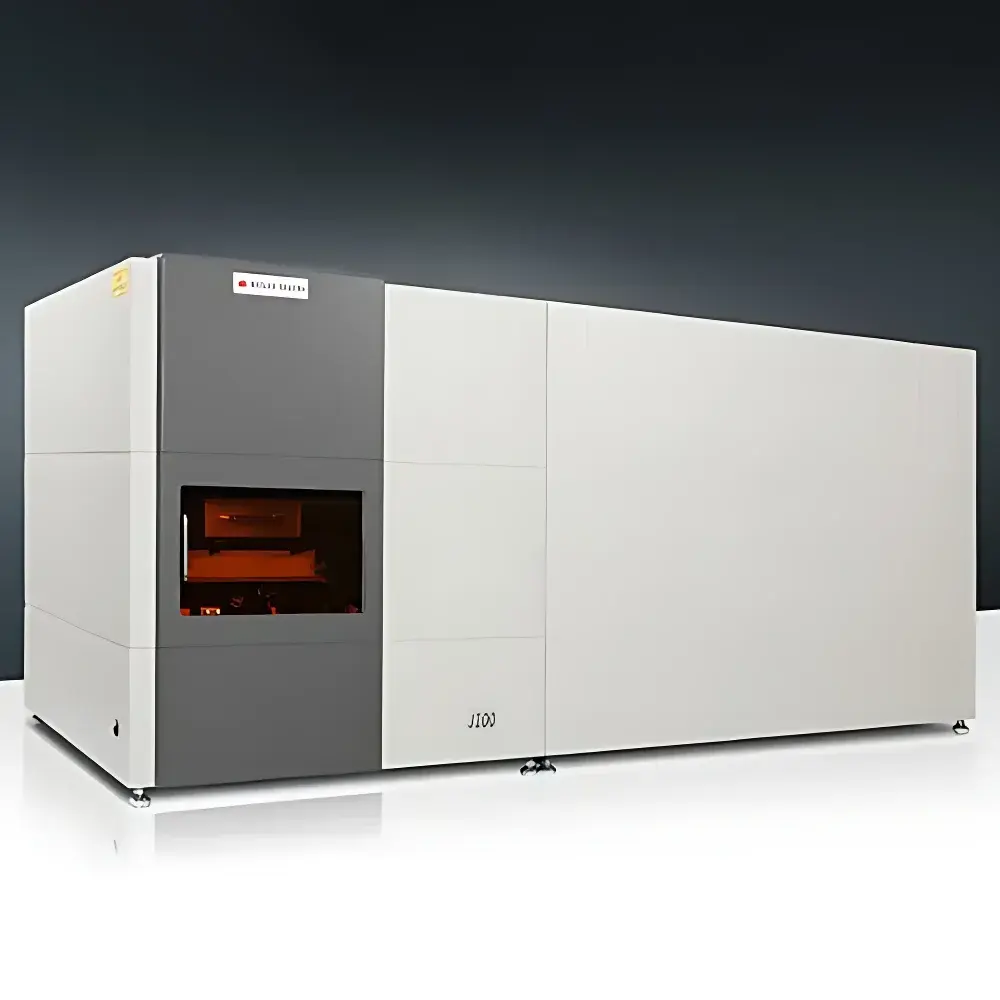
ASI J200-1 Femtosecond Laser Ablation System
| Brand | ASI |
|---|---|
| Origin | USA |
| Manufacturer Type | Authorized Distributor |
| Origin Category | Imported |
| Model | J200-1 |
| Instrument Type | Benchtop |
| Integration | Modular |
| Laser Pulse Energy | 200 µJ (at 800 nm, 1 kHz) |
| Motion Stage | X-Y travel range 100 mm × 100 mm, positioning resolution 0.2 µm |
| Spectrometer | Czerny–Turner optical design |
| Detector | Intensified CCD (ICCD) |
| Certification | CE |
| Optional Upgrade | Tandem LA Configuration |
| Power Supply | 110–240 VAC, 50/60 Hz, 5 A (10 A fuse) |
Overview
The ASI J200-1 Femtosecond Laser Ablation System is a precision-engineered benchtop instrument designed for high-fidelity sample introduction into inductively coupled plasma mass spectrometry (LA-ICP-MS) and laser-induced breakdown spectroscopy (LIBS). Unlike nanosecond or picosecond ablation sources, the J200-1 employs ultrashort (<100 fs) laser pulses at 800 nm wavelength to induce non-thermal ablation—minimizing thermal diffusion, melting, fractionation, and elemental/isotopic discrimination. This enables stoichiometric transfer of solid-phase composition into the ICP source, where aerosol particles are fully atomized and ionized with exceptional reproducibility. The system is built upon over three decades of fundamental research in laser–matter interaction and LA-ICP-MS methodology by ASI’s core engineering team, resulting in a platform optimized for quantitative microanalysis of geological, metallurgical, biological, and nuclear materials without strict reliance on matrix-matched reference standards.
Key Features
- Femtosecond pulse duration (<100 fs) ensures minimal heat-affected zone and near-ideal stoichiometric ablation across conductive and non-conductive matrices.
- Modular architecture supports seamless integration with commercial ICP-MS and LIBS detection systems, including synchronization via TTL trigger signals for plasma stability.
- High-precision motorized X–Y stage with 100 mm × 100 mm travel range and sub-micron (0.2 µm) positioning resolution enables repeatable spatial targeting and rastering.
- Intelligent gas delivery system with programmable valve sequencing allows independent control of carrier (Ar or He), shield, and supplemental gases—ensuring consistent aerosol transport and stable ICP ignition.
- Integrated Czerny–Turner spectrograph coupled to an intensified CCD (ICCD) detector provides real-time spectral acquisition for LIBS mode operation and ablation plume diagnostics.
- User-defined sampling patterns—including grids, lines, curves, random point arrays, and custom vector-based shapes—are created directly on live microscope images via intuitive software interface.
Sample Compatibility & Compliance
The J200-1 accommodates flat, polished, or embedded solid samples up to 25 mm in thickness and 150 mm in diameter. It supports conductive (e.g., metals, alloys), semi-conductive (e.g., sulfides, oxides), and insulating materials (e.g., silicates, glasses, polymers) without charge compensation. All hardware and firmware comply with CE marking requirements for electromagnetic compatibility (EMC Directive 2014/30/EU) and low-voltage safety (LVD Directive 2014/35/EU). The system architecture supports audit-trail-enabled operation under GLP and GMP frameworks when paired with compliant ICP-MS data acquisition software; optional firmware modules facilitate 21 CFR Part 11–aligned electronic signatures and user access controls.
Software & Data Management
Control and visualization are managed through ASI’s proprietary LA-Studio software suite, which provides synchronized coordination of laser firing, stage motion, gas flow timing, and detector acquisition. The software includes pre-configured method templates aligned with ASTM D7692 (standard guide for LA-ICP-MS analysis of solids) and ISO/IEC 17025–recommended calibration workflows. Raw ablation data (pulse-resolved intensity, position logs, gas pressure traces) are stored in HDF5 format with embedded metadata (timestamp, operator ID, instrument configuration hash). Export options include CSV, mzML (for MS coupling), and vendor-neutral ASCII formats compatible with third-party quantification tools such as Iolite, Glitter, and PyLA.
Applications
- High-spatial-resolution trace element and isotopic mapping of zircon, apatite, and monazite for geochronology and petrogenetic modeling.
- Quantitative analysis of inclusion chemistry in metallurgical alloys and additive-manufactured components.
- Direct solid sampling of forensic glass, paint chips, and gunshot residue without acid digestion.
- In situ U–Pb, Lu–Hf, and Sm–Nd isotopic analysis in planetary materials and nuclear fuel particles.
- Time-resolved LIBS depth profiling of thin-film stacks, corrosion layers, and battery electrode cross-sections.
FAQ
What laser wavelength and repetition rate does the J200-1 operate at?
The system uses a Ti:sapphire amplifier delivering pulses centered at 800 nm with a maximum repetition rate of 1 kHz.
Can the J200-1 be upgraded to support dual-pulse (Tandem) ablation?
Yes—optional Tandem LA configuration enables sequential irradiation with two independently tunable femtosecond beams for enhanced signal intensity and reduced fractionation in challenging matrices.
Is helium required as a carrier gas for optimal ICP-MS performance?
Helium is recommended for most applications due to its superior aerosol transport efficiency and reduced polyatomic interferences; however, the system supports both Ar and He via configurable valve routing.
Does the J200-1 include automated focus calibration?
Yes—the integrated autofocus routine uses reflected beam intensity feedback to maintain optimal focal plane alignment across variable sample topographies.
How is data traceability ensured during regulated analyses?
All instrument parameters, stage coordinates, and gas settings are logged with UTC timestamps and digitally signed at acquisition; raw files contain cryptographic hashes for integrity verification per ISO/IEC 17025:2017 Annex A.2.




