
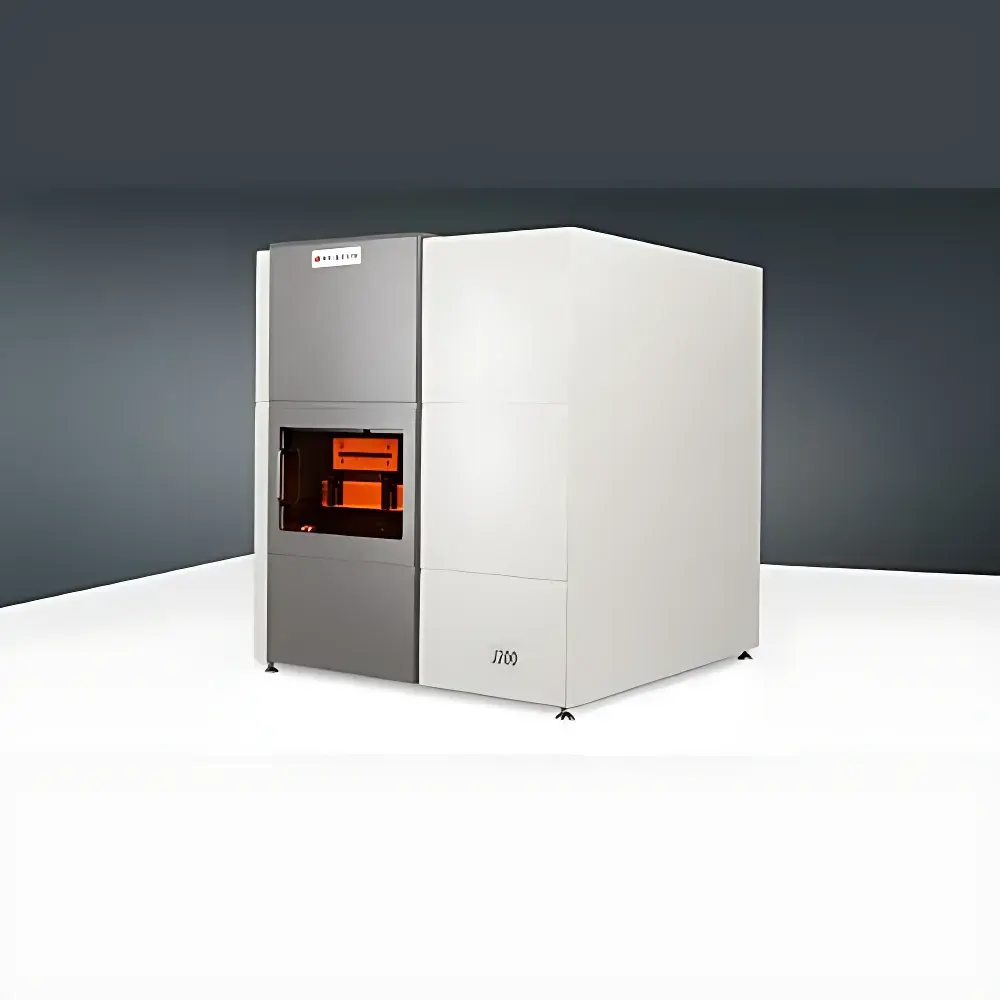
ASI J200 Laser-Induced Breakdown Spectroscopy (LIBS) Instrument
| Brand | ASI |
|---|---|
| Origin | USA |
| Manufacturer Type | Authorized Distributor |
| Origin Category | Imported |
| Model | J200 |
| Price Range | USD 13,500 – 40,500 (est.) |
| Instrument Type | Benchtop |
| Integration | Modular |
| Laser Pulse Energy | 200 mJ per pulse at 1064 nm |
Overview
The ASI J200 Laser-Induced Breakdown Spectroscopy (LIBS) Instrument is a benchtop analytical system engineered for rapid, multi-elemental elemental analysis without sample preparation. It operates on the fundamental principle of laser-induced plasma generation: a high-energy, Q-switched Nd:YAG laser pulse (1064 nm, 200 mJ) is focused onto the sample surface, creating a transient microplasma (~10,000–20,000 K). The emitted atomic and ionic line spectra from this plasma are collected via a high-throughput optical train and dispersed using an echelle spectrometer coupled with an intensified CCD (ICCD) detector. Spectral acquisition occurs in the wavelength range of 200–980 nm with sub-nanometer resolution, enabling simultaneous detection of major, minor, and trace elements across the periodic table. Designed for laboratory-based research, quality assurance, and process monitoring environments, the J200 delivers robust performance across heterogeneous, conductive, non-conductive, and hydrated matrices—including metals, ceramics, polymers, soils, biological tissues, and battery materials.
Key Features
- Modular architecture supporting flexible configuration: interchangeable focusing optics, variable delay generators, and optional vacuum/purge gas interfaces for enhanced UV spectral transmission.
- Dedicated hardware synchronization between laser trigger, ICCD gate timing, and spectrometer acquisition—ensuring precise temporal control over plasma emission capture (gate widths adjustable from 1 ns to 10 µs).
- Patented light-collection optics featuring high numerical aperture (NA > 0.22) and optimized f/number coupling, maximizing photon throughput from the plasma plume to the spectrometer entrance slit.
- Intuitive, role-based graphical user interface (GUI) with configurable user permissions (Operator, Supervisor, Administrator), audit-trail logging, and password-protected method storage.
- Integrated calibration routines including internal wavelength reference (Hg/Ar lamp) and intensity stabilization via real-time plasma continuum normalization.
Sample Compatibility & Compliance
The J200 accommodates solid, powdered, and pelletized samples up to 100 mm × 100 mm × 50 mm (W × L × H), with optional XYZ motorized stage for automated mapping (5 µm step resolution). No conductive coating or vacuum chamber is required, making it suitable for direct analysis of insulators, plant tissues, glass fragments, and coated substrates such as semiconductor leadframes. The system complies with IEC 61000-6-3 (EMC emissions) and IEC 60825-1:2014 (laser safety Class 4), and supports GLP/GMP-aligned workflows through secure electronic signatures, method versioning, and 21 CFR Part 11–ready software modules (when deployed with validated IT infrastructure). All spectral data files adhere to ASTM E2731-21 (Standard Practice for LIBS Data Exchange) and can be exported in .csv, .spc, or vendor-neutral JCAMP-DX format.
Software & Data Management
The proprietary ChemStation™ software suite provides full spectral acquisition, preprocessing (background subtraction, cosmic ray removal, spectral alignment), multivariate calibration (PLS, PCA, SVM), and quantitative modeling using univariate peak integration or chemometric regression. Built-in spectral libraries include NIST Atomic Spectra Database (ASD) v5.10, USGS mineral standards, and application-specific reference sets (e.g., steel alloys per ASTM E2926, battery cathode materials per ISO 18562-3). Data management includes time-stamped acquisition logs, instrument parameter snapshots, and metadata embedding compliant with FAIR principles (Findable, Accessible, Interoperable, Reusable). Raw and processed datasets are stored in encrypted SQLite databases with automatic daily backup scheduling and optional network drive synchronization.
Applications
- Quantitative elemental profiling of ferrous and non-ferrous alloys (e.g., Cr, Ni, Mn, Mo in stainless steels per ASTM E2926-13).
- In-line composition verification of Li-ion battery electrode slurries and dried cathodes (Ni, Co, Mn, Al, Fe) during R&D and pilot-scale manufacturing.
- Forensic glass discrimination based on trace element ratios (e.g., Sr/Ba, Mg/Si, Zr/Ti) with inter-laboratory reproducibility demonstrated in ENFSI Glass Working Group intercomparisons.
- Rapid Pb screening on SnAgCu solder coatings (<50 nm thickness) on Cu alloy leadframes—achieving LODs < 50 ppm with <3% RSD (n=12).
- Direct leaf-tissue analysis for nutrient (K, Ca, Mg) and heavy metal (Cd, As, Pb) monitoring in agronomic studies, eliminating acid digestion artifacts.
- Depth-resolved stratigraphy of thin-film photovoltaic stacks (e.g., CIGS, perovskite layers) using controlled ablation depth profiling (1–5 µm/pulse).
FAQ
What sample preparation is required prior to LIBS analysis with the J200?
None for most solid samples. Flat, clean surfaces yield optimal results; irregular or highly reflective samples may benefit from light abrasion or low-angle polishing. Powders require pelletization with cellulose binder at 10–15 ton pressure.
Can the J200 perform quantitative analysis without matrix-matched standards?
Yes—via internal standardization (e.g., using C or O lines) or fundamental parameter (FP) modeling. However, highest accuracy (<5% relative error) is achieved using matrix-matched calibration standards traceable to NIST SRMs.
Is vacuum or inert gas purging necessary for UV spectral detection?
Not mandatory, but recommended for enhanced signal-to-noise below 220 nm (e.g., for P, S, Cl, F detection). The J200 supports optional argon purge or vacuum manifold integration.
How is measurement reproducibility ensured across different operators and sessions?
Through hardware-level pulse-to-pulse energy monitoring, auto-focus feedback loops, standardized ablation spot size (50–100 µm), and software-enforced method templates with locked acquisition parameters and calibration curves.
Does the J200 support regulatory compliance for pharmaceutical or medical device QA/QC?
Yes—when deployed with validated ChemStation™ configurations, electronic signature modules, and documented IQ/OQ/PQ protocols aligned with FDA 21 CFR Part 11, ISO/IEC 17025, and EU GMP Annex 11 requirements.





