
ASIDA ASIDA 5000 Series Online X-ray Radiographic Inspection System for Cylindrical Lithium-ion Battery Production Lines
| Brand | ASIDA |
|---|---|
| Origin | Guangdong, China |
| Manufacturer Type | Authorized Distributor |
| Origin Category | Domestic (China) |
| Model | ASIDA 5000 Series |
| Pricing | Upon Request |
| X-ray Tube Voltage | ≤110 kV |
| X-ray Tube Current | ≤450 µA |
| Focal Spot Size | 5 µm |
| Cooling Method | Forced Air Cooling |
| Flat Panel Detector Active Area | 54 mm × 48 mm |
| Spatial Resolution | 20.8 lp/mm |
| Image Resolution Options | 2000 × 2249 px or 1000 × 1124 px |
| Repeatability Accuracy | ±60 µm |
| Throughput | ≥50 parts per minute (ppm) |
| False Positive Rate | ≤2% |
| Miss Detection Rate | 0.0% |
| Overall Yield Assurance | ≥99.5% |
| Radiation Leakage | ≤1 µSv/hr (compliant with IEC 61331-1 and ISO 15708-2) |
Overview
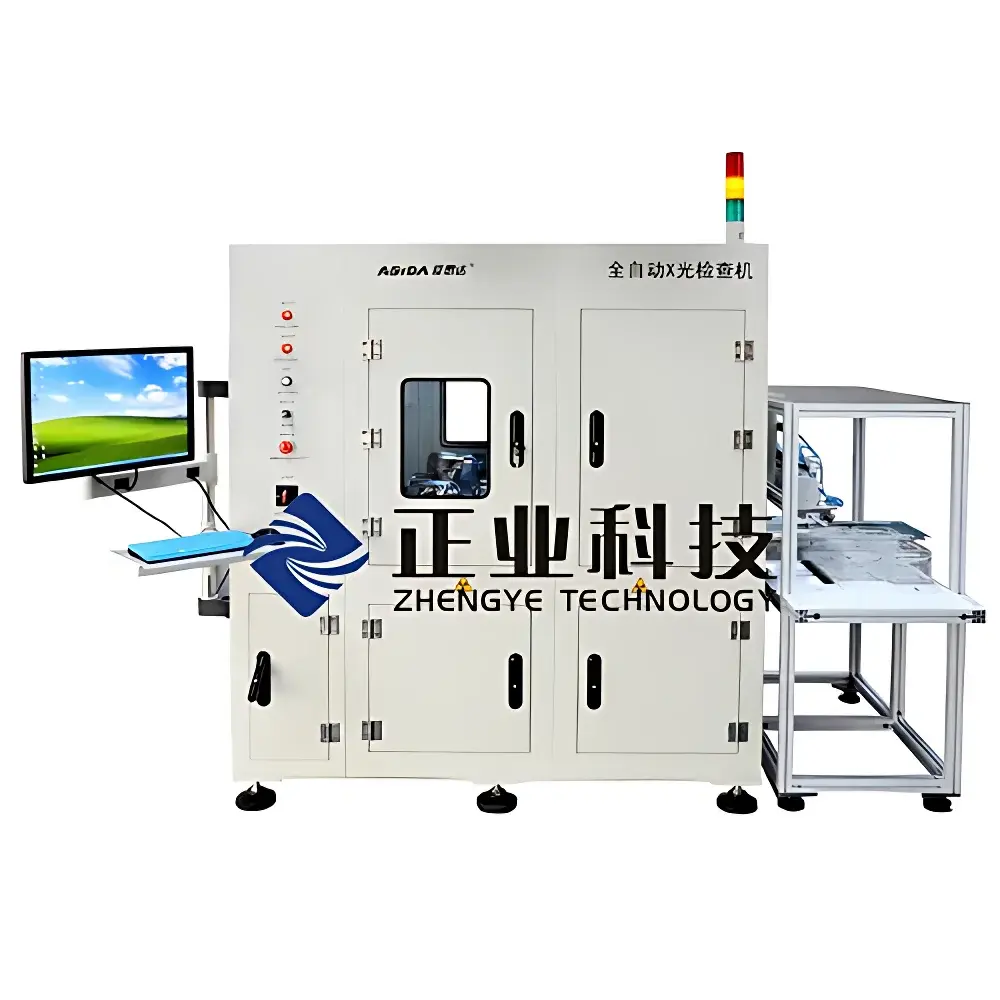
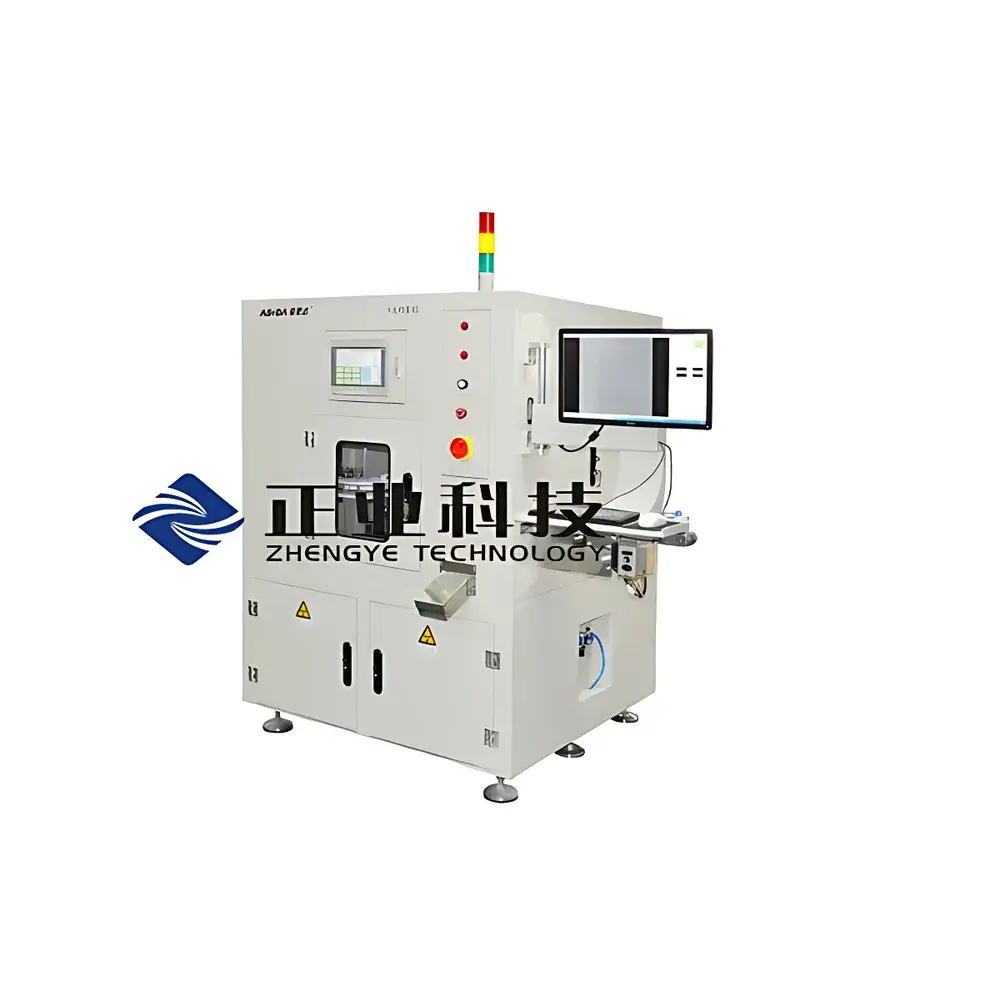
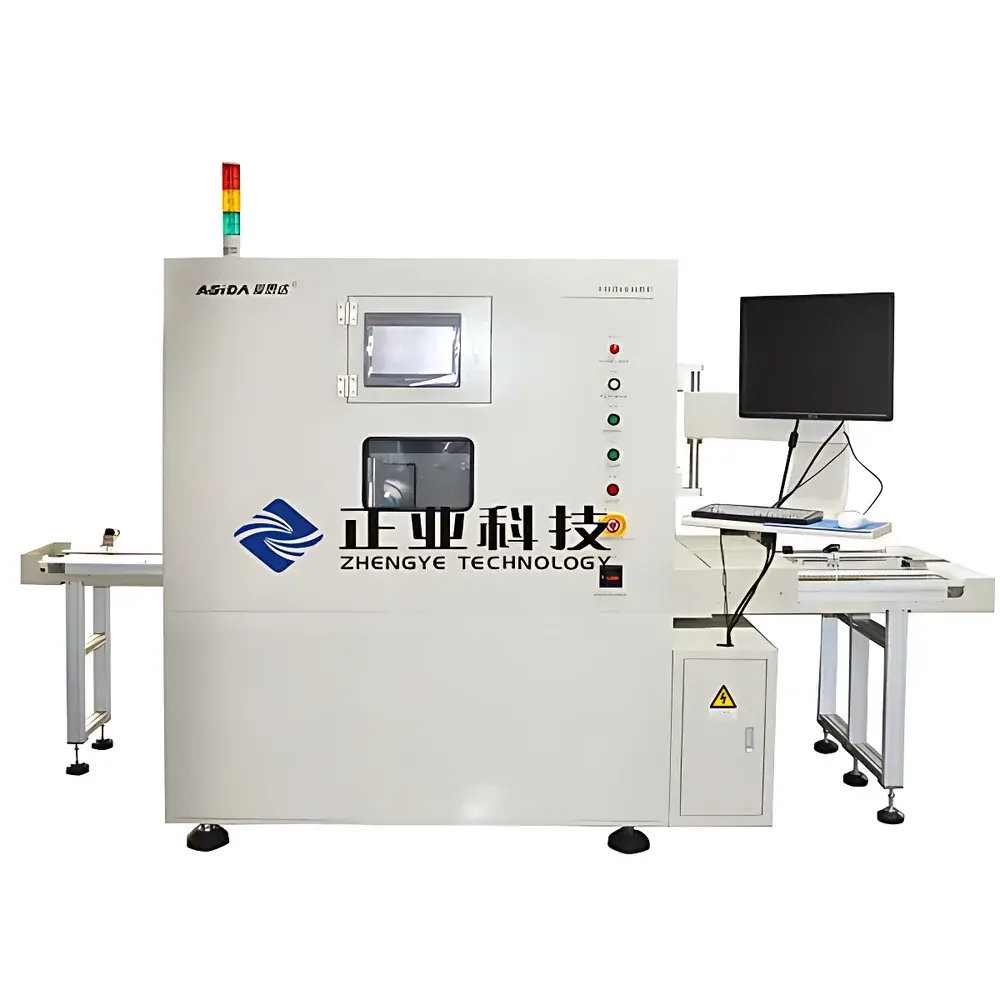
The ASIDA 5000 Series Online X-ray Radiographic Inspection System is an industrial-grade, fully automated non-destructive testing (NDT) platform engineered specifically for high-throughput quality assurance in lithium-ion battery manufacturing. Utilizing high-resolution digital radiography based on microfocus X-ray imaging, the system enables real-time internal structural evaluation of cylindrical cells—including electrode alignment (anode/cathode stacking), tab geometry (tab length, orientation, weld integrity), separator positioning, and internal conductor continuity. Unlike conventional offline sampling methods, the ASIDA 5000 operates inline—integrated directly into conveyor-based production lines—to deliver 100% inspection coverage without process interruption. Its core architecture adheres to the physical principles of attenuation-based X-ray imaging: differential absorption across material densities generates contrast-rich grayscale projections, which are reconstructed into quantifiable, metrologically traceable images for defect classification.
Key Features
- Fully automated inspection cycle: integrated conveyor feed, robotic handling (optional), real-time image acquisition, AI-assisted defect classification, and pneumatic sorting of pass/fail units.
- Real-time system health monitoring: continuous logging of X-ray tube parameters (kV, µA, exposure time), detector temperature, mechanical actuator status, safety interlock states, and network connectivity—all visualized via a unified HMI interface.
- Multi-region synchronized imaging: simultaneous acquisition of up to four orthogonal or oblique projection views per cell (e.g., axial cross-section, radial slice, top-down tab view), rendered side-by-side with overlayed measurement annotations and pass/fail flags.
- Triple-layer radiation safety architecture: interlocked access doors with redundant hardware cut-offs, lead-acrylic shielding rated to <1 µSv/hr at 5 cm from any external surface, and automatic beam shutdown upon door breach or motion detection—fully compliant with IEC 62495 and national occupational exposure limits.
- Modular scalability: configurable detector resolution modes (2000×2249 for precision metrology; 1000×1124 for high-speed throughput), optional dual-tube configuration for multi-energy discrimination, and PLC-level integration support (PROFINET, EtherNet/IP, Modbus TCP).
Sample Compatibility & Compliance
The ASIDA 5000 accommodates standard cylindrical lithium-ion cell formats including 18650, 21700, 26650, and 32113 (diameter range: 14–33 mm; length range: 45–115 mm). It supports both dry-cell and pre-activated (wet-jellyroll) configurations, with no requirement for vacuum or inert atmosphere. All mechanical fixtures are non-contact and electrostatically dissipative to prevent damage to sensitive electrode coatings. From a regulatory standpoint, the system meets ISO 15708-2 (non-destructive testing — X-ray computed tomography — qualification of CT systems), ASTM E2737 (standard guide for digital radiographic inspection), and EU Directive 2013/59/Euratom for artificial radiation sources. Audit trails, user authentication logs, and parameter change history comply with FDA 21 CFR Part 11 requirements when operated under validated software configuration.
Software & Data Management
The proprietary ASIDA VisionSuite v4.2 software provides calibrated image processing, geometric distortion correction, and statistical process control (SPC) dashboards. Raw DICOM-compliant image data and structured XML reports (including timestamp, cell ID, defect type, confidence score, and dimensional measurements) are stored locally or exported to MES/SCADA via secure SFTP or OPC UA. Measurement algorithms undergo annual NIST-traceable verification using certified step gauges and wire mesh phantoms. Software validation documentation—including IQ/OQ/PQ protocols—is available upon request for GMP/GLP environments. Role-based access control enforces separation of operator, engineer, and administrator privileges, with full revision history for all calibration and threshold adjustments.
Applications
Primary use cases include incoming raw material screening (jellyroll assembly verification), in-process inspection after can sealing and electrolyte filling, and final shipment release testing. Specific defect categories reliably identified include: tab misalignment (>±0.15 mm), internal short-circuit precursors (foil burrs, separator wrinkles), weld voids (>50 µm diameter), electrode slurry delamination, and can wall deformation exceeding ISO 20930 tolerances. The system is widely deployed in Tier-1 battery cell factories across China, Southeast Asia, and Eastern Europe, supporting both LFP and NMC chemistries. Integration with factory-wide OEE tracking enables direct correlation between radiographic yield loss and upstream process deviations (e.g., coating thickness variation, winding tension drift).
FAQ
What is the maximum allowable cell diameter and height for this system?
Standard configuration supports cylindrical cells up to 33 mm in diameter and 115 mm in height. Custom gantry extensions are available for larger formats.
Does the system require external cooling water or compressed air?
No—forced-air cooling suffices for the X-ray tube and detector under continuous operation at rated throughput.
Can the software export measurement data to our existing SPC platform?
Yes—via CSV, JSON, or native OPC UA connectivity with configurable polling intervals and tag mapping.
Is radiation shielding certification provided with installation?
Yes—each unit ships with a third-party radiation survey report and site-specific shielding validation certificate.
How frequently must the X-ray tube be calibrated?
Tube output and focal spot stability are verified during biannual preventive maintenance; no daily recalibration is required due to closed-loop feedback control.
Related Products



