
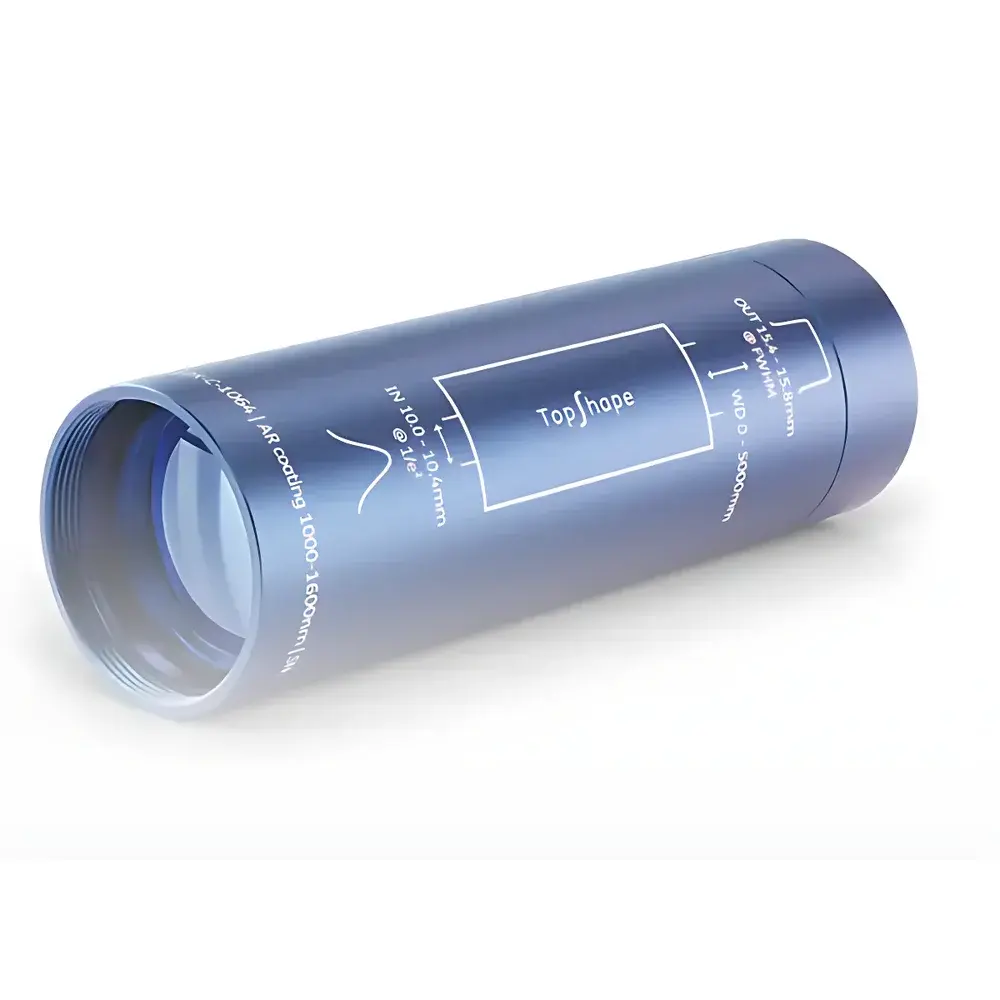
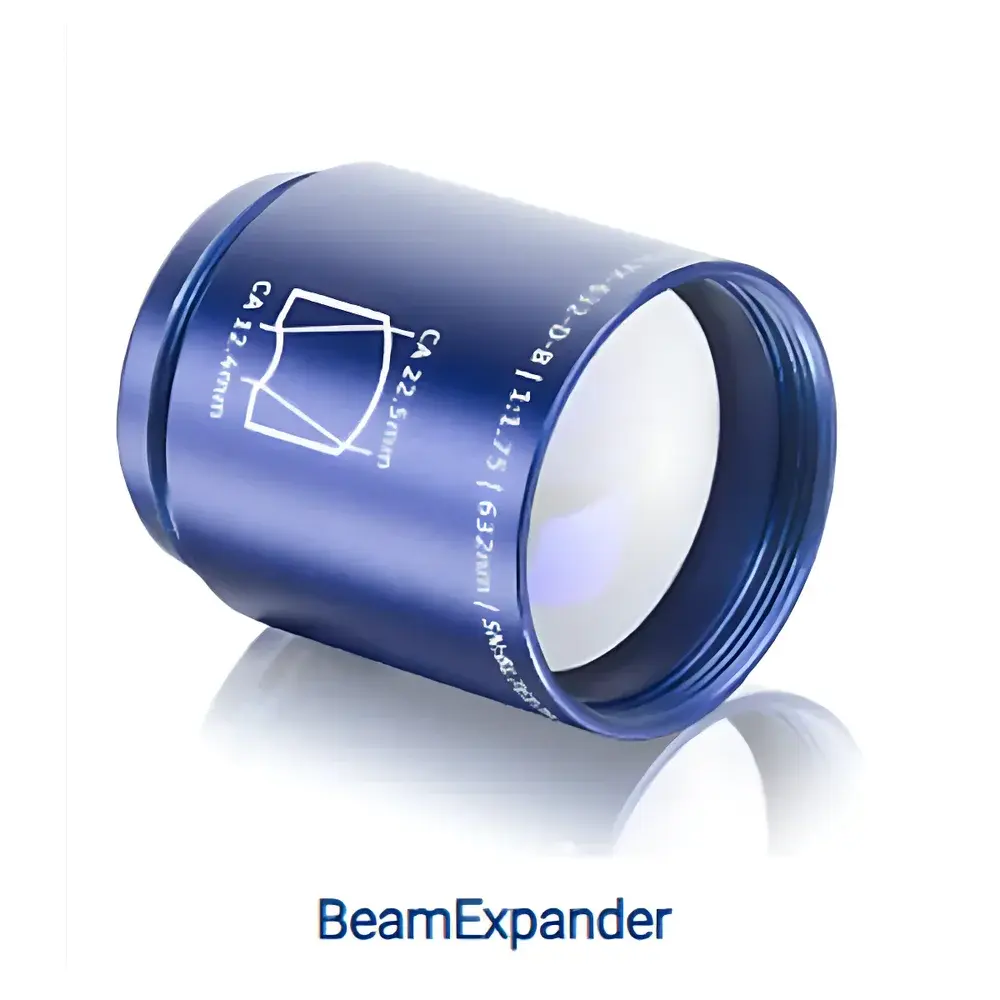
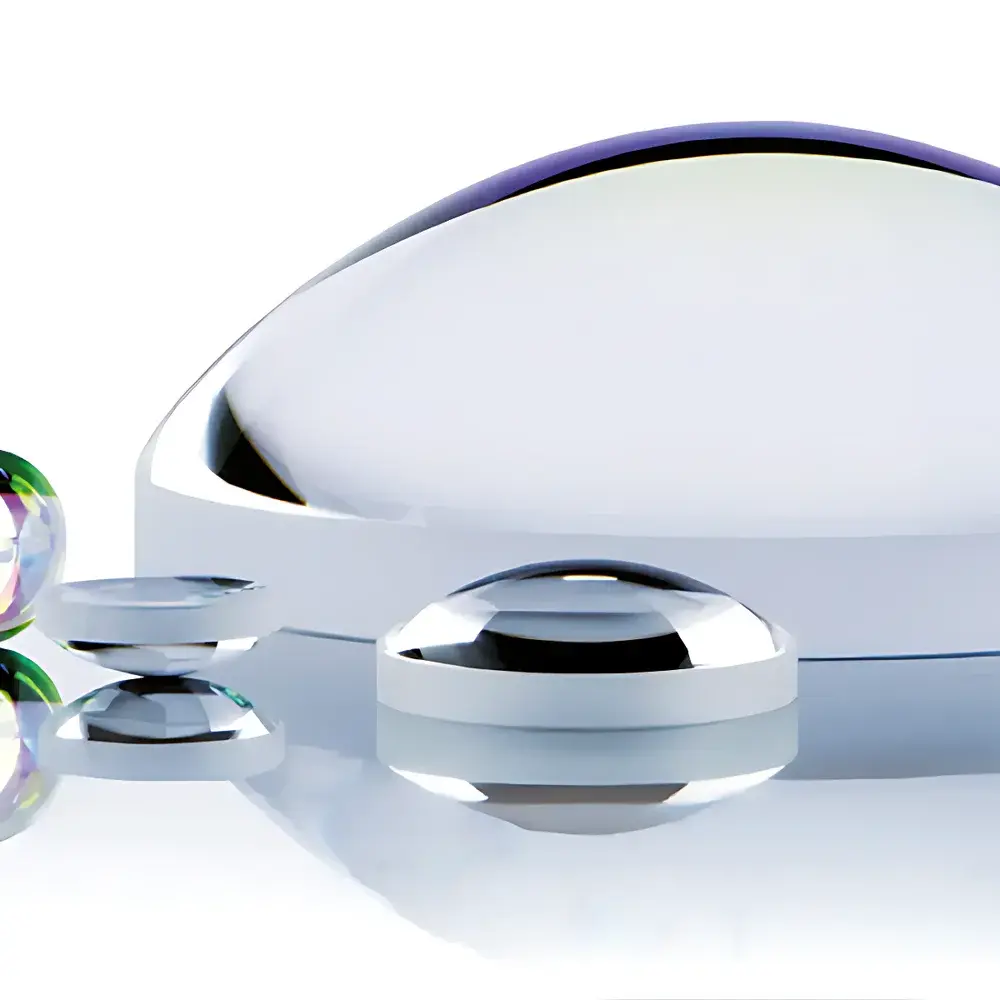
Asphericon a|TopShape TSM25-10-LD-B-632 Beam Homogenizer
| Brand | Asphericon |
|---|---|
| Origin | Germany |
| Model | TSM25-10-LD-B-632 |
| Thread | M28×0.75 mm |
| Outer Diameter Mount | 30 mm |
| Length | 92.3 mm |
| Input Beam Diameter (1/e²) | 10 mm (±10%) |
| Output Beam FWHM | 15.4 mm |
| Output Aperture | 15.4 mm |
| Stable Beam Profile Range | up to 1500 mm |
| Design Wavelength | 632 nm |
| Spectral Range | 530–800 nm |
| Laser Damage Threshold | 12 J/cm², 100 Hz, 6 ns @ 532 nm |
Overview
The Asphericon a|TopShape TSM25-10-LD-B-632 is a high-precision reflective beam homogenizer engineered to transform collimated Gaussian laser beams into uniform, diffraction-limited top-hat intensity profiles with exceptional spatial consistency. Based on advanced aspheric phase-plate design principles and optimized for long-distance operation, this optical component leverages non-imaging optics theory—specifically tailored refractive and reflective wavefront shaping—to achieve near-theoretical uniformity without introducing significant wavefront error or chromatic aberration. Unlike conventional diffractive or microlens-based homogenizers, the a|TopShape series employs monolithic, all-reflective or hybrid aspheric surfaces manufactured via deterministic single-point diamond turning and ion-beam figuring, ensuring sub-50 nm surface roughness and RMS wavefront error 90% beam uniformity across the full output aperture, making it suitable for industrial laser processing, precision metrology, and scientific illumination systems where consistent irradiance distribution is critical.
Key Features
- Engineered for high-fidelity beam transformation: Converts collimated Gaussian input (1/e² = 10 mm ±10%) into a uniform top-hat profile with FWHM output diameter of 15.4 mm
- Extended working distance capability: Maintains >90% intensity uniformity over a stable beam profile range up to 1500 mm—optimized for integration into large-format optical benches or material processing stations
- Broad spectral compatibility: AR-coated for optimal transmission across 530–800 nm, supporting common visible and NIR laser sources including HeNe (632.8 nm), DPSS (532 nm), and diode lasers (635–785 nm)
- Robust mechanical architecture: Precision-machined aluminum housing with M28×0.75 mounting thread, 30 mm outer diameter, and 92.3 mm total length—designed for repeatable alignment and thermal stability under laboratory and OEM conditions
- Laser damage resistant: Certified to 12 J/cm² (100 Hz, 6 ns pulse width, 532 nm reference); optional V-coating available for higher peak-power applications requiring enhanced LIDT at target wavelengths
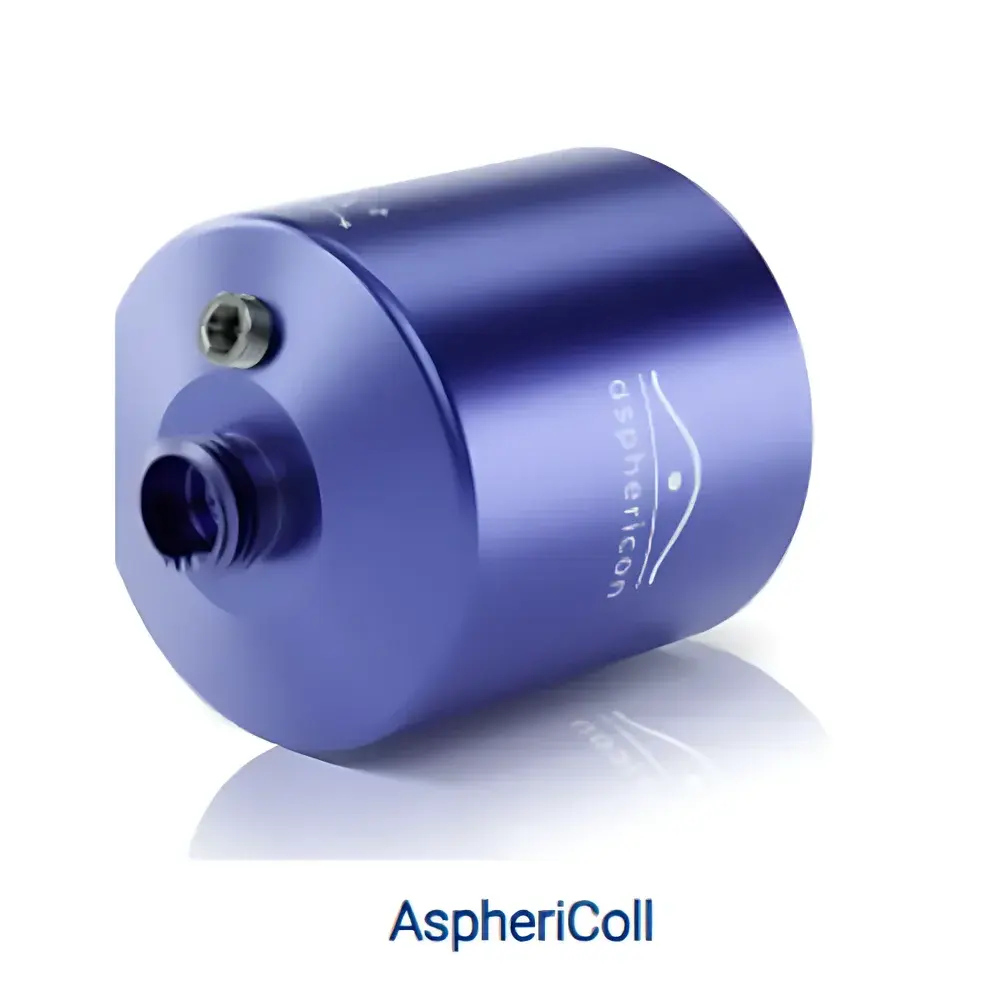
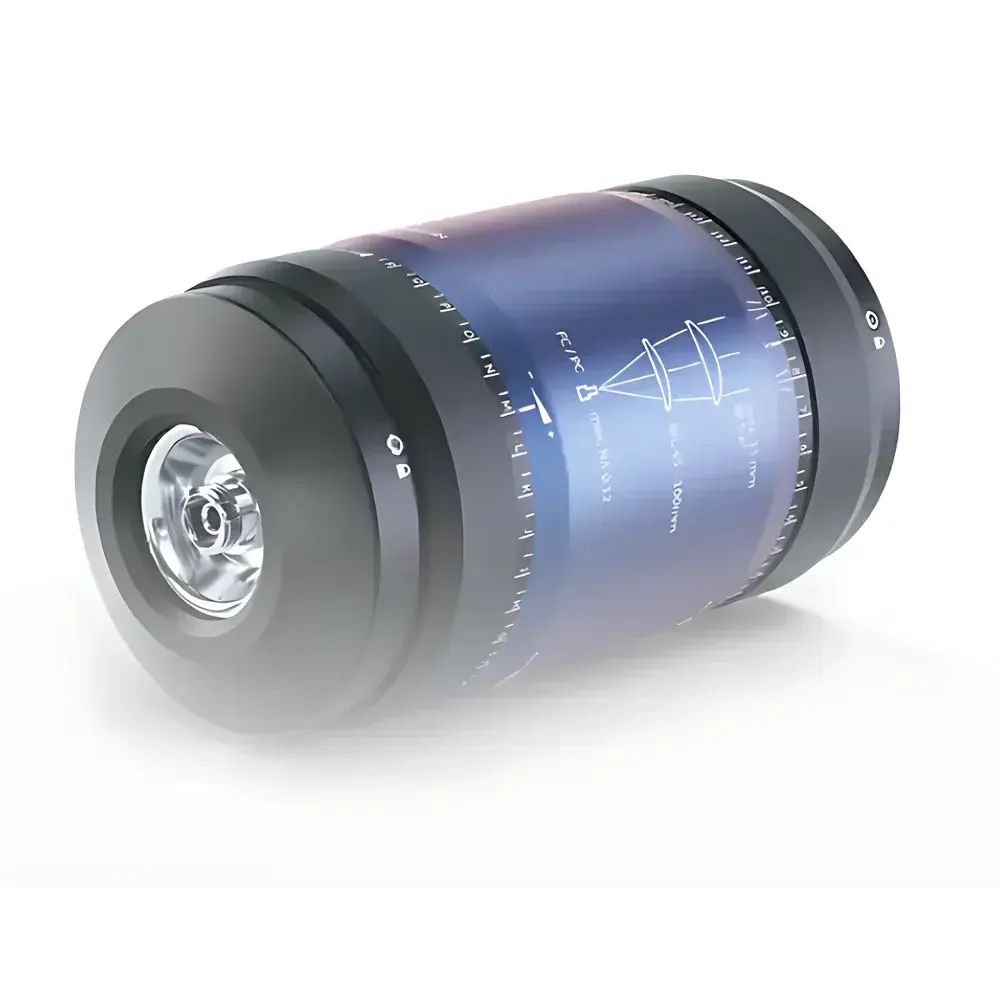
- Interchangeable system integration: Compatible with Asphericon’s a|VariColl fiber collimators for active compensation of NA-induced beam divergence, enabling dynamic optimization of input beam parameters prior to homogenization
Sample Compatibility & Compliance
The TSM25-10-LD-B-632 is designed for use with collimated, spatially coherent laser sources operating within its specified spectral band (530–800 nm) and input beam diameter tolerance (10 mm ±10% at 1/e²). It complies with ISO 10110-7:2017 for surface form accuracy and ISO 10110-8:2017 for surface imperfections (60–40 scratch-dig specification). All optical substrates are fabricated from low-thermal-expansion Schott S-LAH64 glass and undergo rigorous interferometric verification using Zygo Verifire™ or similar certified metrology platforms. The component meets RoHS Directive 2011/65/EU and REACH Regulation (EC) No. 1907/2006 requirements. While not a medical device, its performance characteristics support applications aligned with ISO 13485-compliant laser system integration and are routinely deployed in setups adhering to GLP and GMP documentation practices for photonic process validation.
Software & Data Management
Asphericon provides comprehensive optical design data for seamless integration into simulation environments: Zemax OpticStudio (.ZAR), CODE V (.SEQ), OSLO (.OSL), VirtualLab Fusion (.vlf), and STEP (.stp) mechanical models are available upon request through the Asphericon Technical Support Portal. No proprietary firmware or embedded software is included—the TSM25-10-LD-B-632 operates as a passive optical element. However, Asphericon’s a|Analysis suite (freely downloadable) enables users to import measured beam profiles (via Thorlabs BeamView, Ophir Pyrocam, or DataRay WinCamD datasets) and compare experimental uniformity metrics—including flatness deviation, edge steepness (10–90% rise distance), and RMS intensity variation—against theoretical predictions derived from the provided Zemax model. Audit trails for calibration certificates and surface metrology reports are retained per ISO/IEC 17025:2017 requirements.
Applications
- Laser material processing: Uniform irradiance delivery for selective laser melting (SLM), annealing, and thin-film ablation where spatial power density control directly impacts process repeatability and microstructural homogeneity
- Optical metrology: Illumination source for structured light projection, Shack-Hartmann wavefront sensing, and interferometric surface profiling requiring stable, low-noise top-hat illumination
- Biophotonics instrumentation: Fluorescence excitation and optogenetic stimulation systems demanding precise, artifact-free beam shaping over extended working distances
- OEM laser system integration: Compact, mountable homogenizer for embedded laser engines in semiconductor inspection tools, LIBS analyzers, and confocal microscopy platforms
- Research-grade optical trapping: Creation of symmetric intensity distributions for multi-spot optical tweezers arrays and holographic optical trapping configurations
FAQ
What is the maximum permissible input beam divergence for stable top-hat generation?
The TSM25-10-LD-B-632 requires an input beam divergence 90% uniformity over its full 1500 mm working range. Higher divergence necessitates pre-collimation via a|VariColl or equivalent adjustable collimator.
Can this homogenizer be used with pulsed lasers outside the 532 nm reference condition?
Yes—its broadband AR coating ensures >95% transmission across 530–800 nm. For ultrashort pulses (1 kHz), consult Asphericon’s LIDT application note for wavelength- and pulse-duration-specific derating guidelines.
Is mechanical recalibration required after thermal cycling?
No—monolithic construction and matched CTE housing eliminate relative drift. Verified operational stability is maintained across −10 °C to +50 °C ambient ranges per MIL-STD-810G thermal shock testing.
How does the LD version differ from standard a|TopShape units?
The LD variant features modified aspheric coefficients and internal spacing to extend the Rayleigh range of the shaped beam while preserving near-diffraction-limited output quality—enabling uniformity retention at distances where standard versions exhibit >5% intensity falloff.
Are custom coatings or substrate materials available?
Yes—V-coating for enhanced LIDT, UV-enhanced AR (250–400 nm), or IR-optimized variants (up to 2500 nm) are available under Asphericon’s Custom Optics Program (lead time: 8–12 weeks).





