
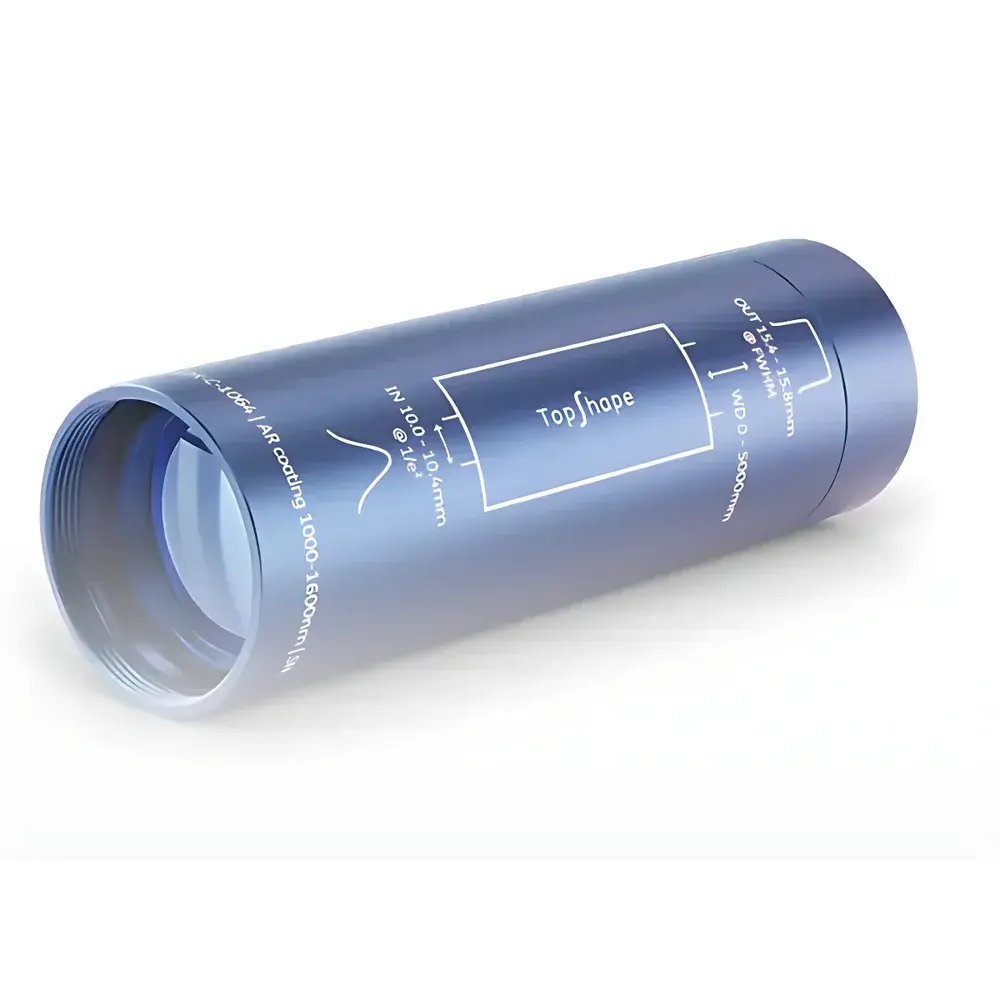
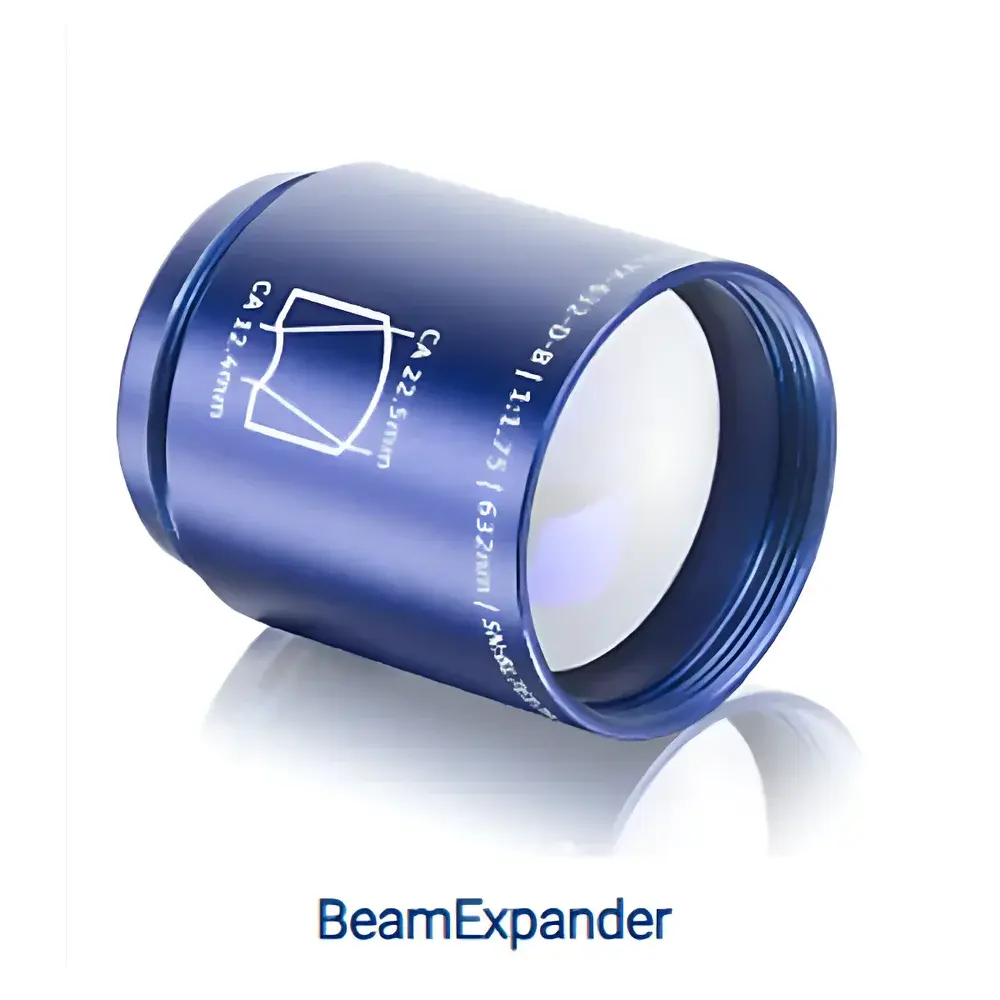
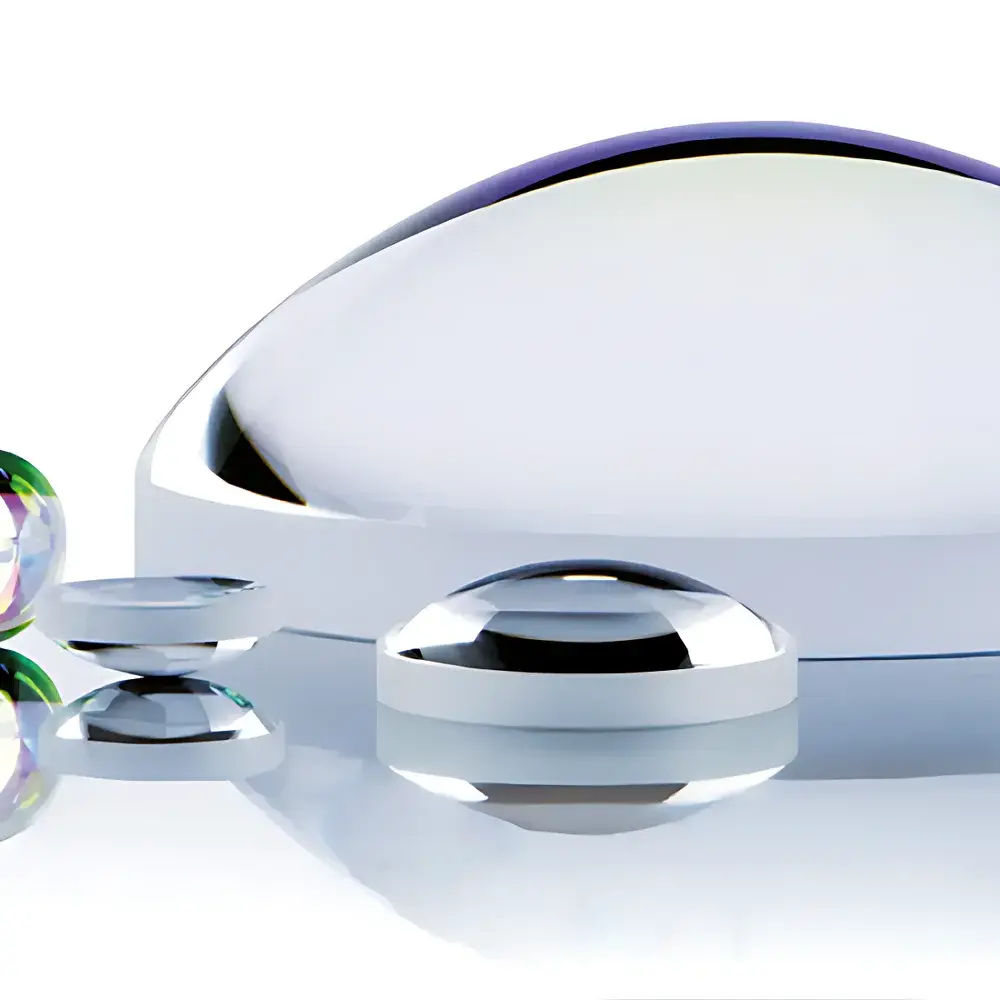
Asphericon a|TopShape TSM25-10-LD-B-780 Beam Shaper
| Brand | Asphericon |
|---|---|
| Origin | Germany |
| Model | TSM25-10-LD-B-780 |
| Mount Thread | M28×0.75 mm |
| Outer Diameter | 30 mm |
| Length | 92.8 mm |
| Input Beam Diameter (1/e²) | 10 mm (±10%) |
| Output Beam FWHM | 15.4 mm |
| Output Aperture | 15.4 mm |
| Stable Beam Profile Range | up to 1500 mm |
| Design Wavelength | 780 nm |
| Spectral Range | 620–1040 nm |
| Laser Damage Threshold | 12 J/cm² (100 Hz, 6 ns, 532 nm) |
Overview
The Asphericon a|TopShape TSM25-10-LD-B-780 is a high-precision, all-refractive beam shaper engineered to transform collimated Gaussian laser beams into uniform, diffraction-limited top-hat (flat-top) intensity profiles with exceptional spatial homogeneity. Based on proprietary aspheric optical design and deterministic manufacturing, this device operates via controlled wavefront manipulation—leveraging optimized phase profiles across two custom aspheric surfaces—to redistribute irradiance without introducing significant wavefront error or chromatic aberration. Unlike diffractive solutions, the a|TopShape series delivers broadband compatibility and high laser damage resistance while maintaining near-diffraction-limited output quality. The “LD” (Long Distance) configuration enables stable top-hat generation at working distances up to 1500 mm—ideal for applications requiring extended beam propagation, such as laser material processing, optical trapping, and structured illumination microscopy—while preserving >90% beam uniformity over the entire stabilized range.
Key Features
- Optical performance: Beam uniformity of 90–95% (measured RMS and peak-to-valley flatness across output profile)
- Extended working distance: Up to 1500 mm for stable top-hat formation (≥90% uniformity maintained)
- Broad spectral coverage: Optimized for 620–1040 nm; compatible with common near-infrared lasers including 780 nm diode, Ti:sapphire, and fiber sources
- Precision mechanical integration: M28×0.75 mm external thread for direct mounting into standard optomechanical systems; compact 30 mm outer diameter and 92.8 mm length facilitate integration in space-constrained setups
- Input tolerance: Accepts ±10% variation in input beam diameter (1/e² = 10 mm), enabling robust operation under real-world alignment drift or source fluctuations
- Laser durability: Coated with high-LIDT anti-reflection layers; certified damage threshold of 12 J/cm² at 100 Hz, 6 ns pulse width, 532 nm (scalable to higher thresholds with optional V-coating)
- Wavefront fidelity: Designed to minimize residual wavefront error; typical transmitted wavefront error < λ/10 @ 633 nm (RMS) when used with diffraction-limited input
Sample Compatibility & Compliance
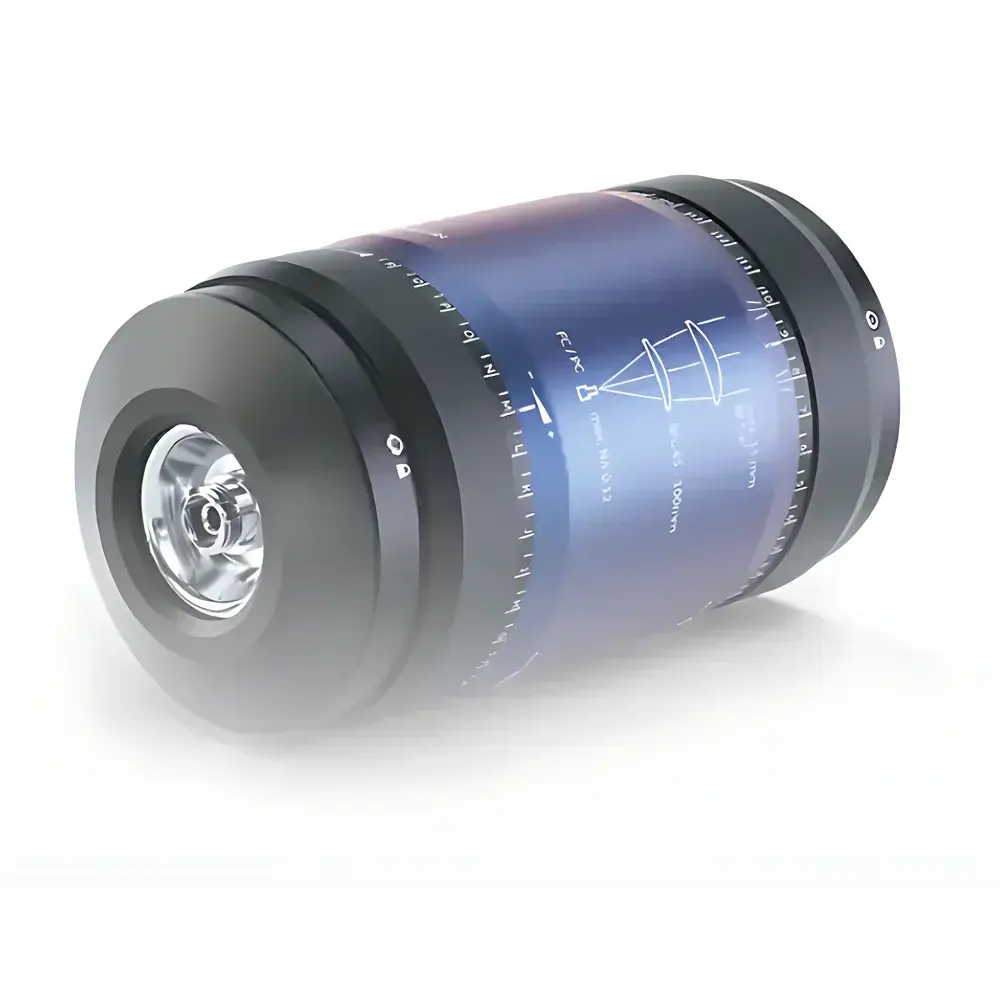
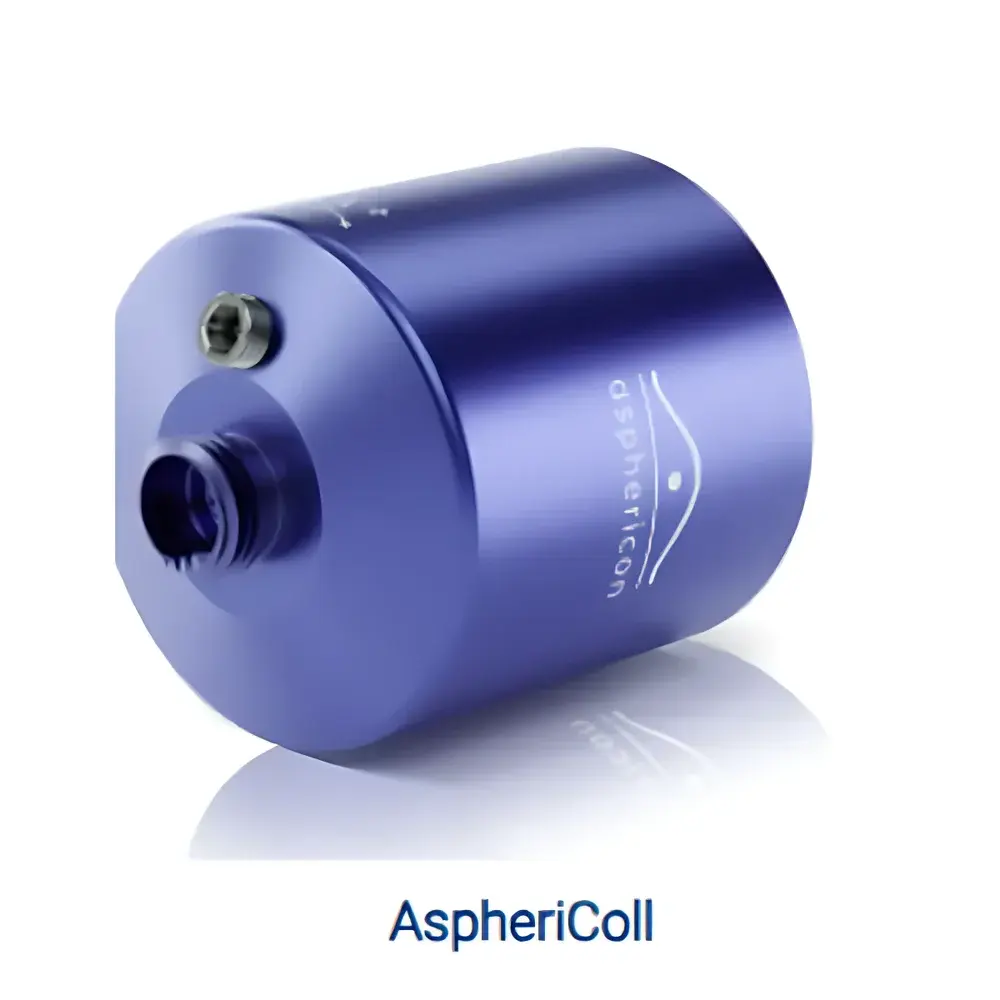
The TSM25-10-LD-B-780 is compatible with collimated, spatially coherent laser sources operating within its specified spectral band. It requires an input beam with M² ≤ 1.1 and divergence < 0.5 mrad to ensure optimal top-hat formation. When paired with Asphericon’s a|VariColl fiber collimator (e.g., VCM25-10-B-780), it achieves full utilization of its design specifications—including stable working distance and uniformity—by delivering precisely controlled beam diameter (1/e² = 10.0–10.4 mm) and divergence. The component complies with ISO 10110-7 surface quality standards (60–40 scratch-dig), and all coatings meet ISO 9211-3 environmental durability requirements. While not a medical or safety-certified device per se, its optical design supports configurations compliant with IEC 60825-1:2014 (laser product safety) when integrated into fully qualified systems. Documentation includes Zemax-compatible optical design files (sequential and non-sequential formats), STEP mechanical models, and coating spectral reflectance/transmittance data—facilitating traceability and system-level validation per GLP/GMP or ISO/IEC 17025 workflows.
Software & Data Management
Asphericon provides comprehensive technical documentation—not software-driven control—for the TSM25-10-LD-B-780. No embedded firmware or driver software is required, as the device functions passively. However, users receive downloadable optical simulation assets (Zemax .ZMX, CodeV .COD, OSLO .OSL, VirtualLab Fusion .vlf) enabling rigorous beam propagation modeling, tolerance analysis, and integration verification prior to physical implementation. These files include full surface sag tables, coating dispersion models, and realistic scattering estimates based on measured surface roughness (<0.5 nm RMS). For metrology traceability, each unit ships with individual interferometric test reports (Zygo Verifire™ or similar) showing transmitted wavefront error maps and intensity profile measurements at design wavelength. All documentation adheres to ISO/TR 14657:2021 guidelines for optical component data exchange, supporting audit readiness in regulated environments requiring 21 CFR Part 11–compliant records management.
Applications
- Laser micromachining: Uniform energy distribution improves edge quality and reduces thermal stress in ablation of polymers, thin-film solar cells, and transparent conductive oxides
- Biophotonics: Enables consistent photostimulation in optogenetics and uniform illumination in light-sheet fluorescence microscopy (LSFM)
- Optical trapping & manipulation: Provides stable intensity gradients for multi-beam holographic optical tweezers (HOT) and acoustic-optic deflector (AOD) systems
- Sensor calibration: Serves as a reference flat-top source for characterizing CMOS/CCD pixel response uniformity and linearity across large-area detectors
- Free-space optical communications: Supports beam conditioning for spatial-mode multiplexing and adaptive optics pre-compensation stages
- Industrial metrology: Integrated into structured light projectors for high-accuracy 3D scanning where intensity stability directly impacts triangulation precision
FAQ
What is the maximum allowable input beam divergence for optimal top-hat performance?
For guaranteed ≥90% uniformity at 1500 mm working distance, input divergence must remain below 0.5 mrad (full angle) with M² ≤ 1.1. Higher divergence degrades edge steepness and central flatness.
Can the TSM25-10-LD-B-780 be used with pulsed lasers outside the 532 nm LIDT certification?
Yes—its fused silica substrate and broadband AR coating support nanosecond to femtosecond pulses across 620–1040 nm. For pulse durations 1 kHz, consult Asphericon’s application engineering team for customized V-coating options and empirical LIDT validation.
Is mechanical adjustment required to achieve the 1500 mm working distance?
No. The LD configuration is fixed-optic; the 1500 mm working distance is achieved inherently by design. Alignment consists solely of coaxial positioning of the input beam center and wavefront tilt compensation using kinematic mounts.
How does this compare to diffractive beam shapers in terms of efficiency and spectral stability?
Refractive a|TopShape devices maintain >97% transmission across the band (vs. ~85–92% for DOEs), exhibit no zero-order leakage or wavelength-dependent focal shift, and avoid polarization sensitivity inherent in many grating-based solutions.
Do you provide mounting adapters or kinematic platforms for this model?
Yes—Asphericon offers compatible SM28-threaded lens tubes (e.g., LT28-100), XYZ translation stages (KST-100), and vacuum-compatible mounts (VM-TSM25). Custom interface plates for OEM integration are available upon request with NDA.



