
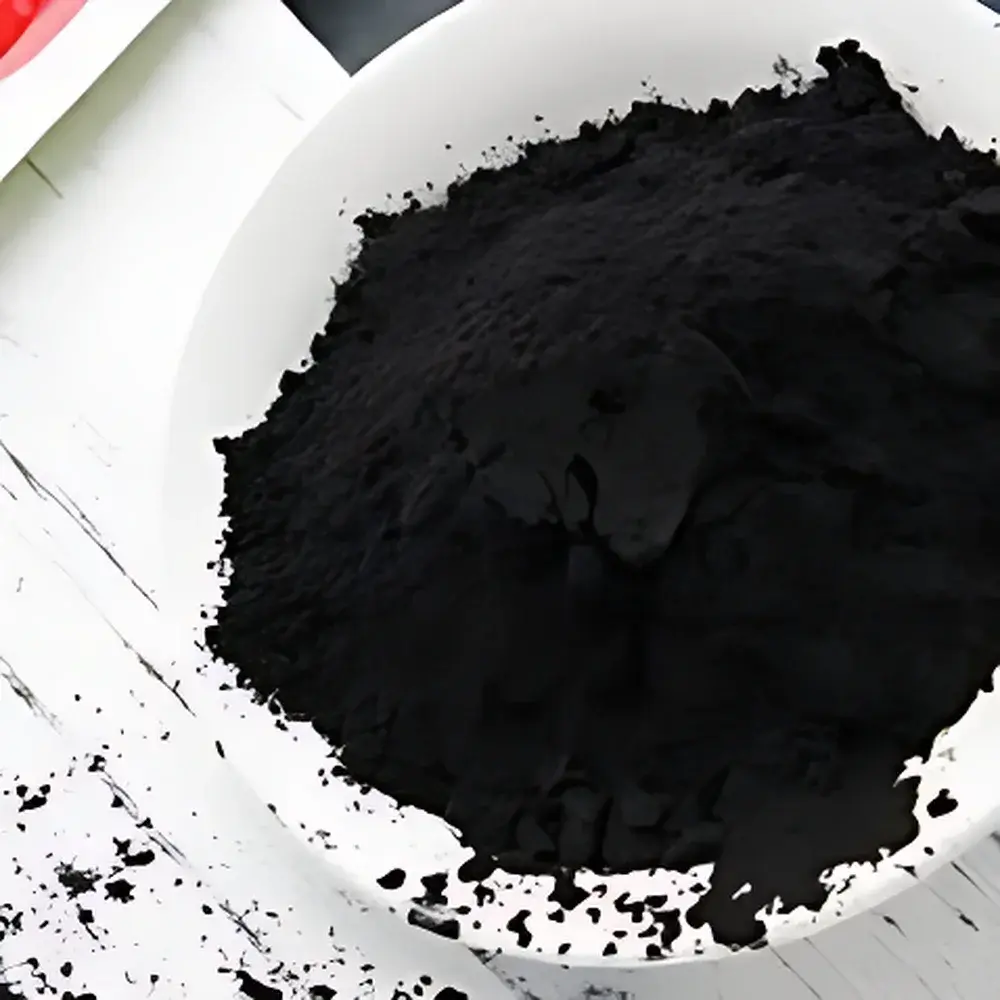
ASTM ITRB2 Industrial Tint Reference Black (Standard Reference Carbon Black)
| Origin | USA |
|---|---|
| Manufacturer Type | Authorized Distributor |
| Origin Category | Imported |
| Model | ASTM ITRB2 |
| Pricing | Available Upon Request |
Overview
The ASTM ITRB2 Industrial Tint Reference Black is a certified standard reference material (SRM) specifically engineered for the quantitative evaluation of carbon black tinting strength in rubber, plastics, inks, and pigment dispersions. Unlike general-purpose carbon blacks, ITRB2 is manufactured under strict process control to ensure batch-to-batch homogeneity, traceable metrological stability, and certified performance parameters aligned with ASTM D3265 and ISO 18509. It operates on the principle of comparative reflectance measurement—where the optical density (ΔE or ΔL*) of a standardized dispersion (e.g., in linseed oil or polymer matrix) is measured against a calibrated reference scale. This enables laboratories to validate instrument calibration, assess inter-laboratory reproducibility, and verify method accuracy per ASTM D1510 (iodine adsorption), ASTM D2414 (oil absorption number), and ASTM D3265 (tint strength). As the second generation of the Industrial Tint Reference Black series, ITRB2 supersedes earlier ITRB1 formulations and is fully compatible with modern spectrophotometric platforms including HunterLab, X-Rite Ci7800, and Konica Minolta CM-3600A.
Key Features
- Certified reference material with NIST-traceable characterization data for iodine adsorption number (IAN), oil absorption number (OAN), and tinting strength (TS)
- Batch-certified uncertainty ≤ ±1.2% (k=2) for iodine adsorption and ≤ ±1.8% (k=2) for OAN, verified via interlaboratory round-robin testing
- Stabilized surface chemistry and particle size distribution (PSD) confirmed by TEM and BET nitrogen adsorption (surface area: 78–82 m²/g)
- Supplied in hermetically sealed, argon-purged aluminum laminate pouches (100 g nominal net weight) to prevent oxidation and moisture uptake
- Compliant with ISO Guide 34:2019 (general requirements for reference material producers) and ISO/IEC 17034:2016 (competence requirements for reference material producers)
Sample Compatibility & Compliance
ITRB2 is validated for use across multiple dispersion media—including refined linseed oil (per ASTM D3265), polyethylene masterbatch (ISO 18509 Annex B), and aqueous sodium dodecyl sulfate (SDS) suspensions. Its physical form (free-flowing dry powder, median particle size d50 ≈ 28 nm, DBP absorption ≈ 112 cm³/100 g) ensures consistent wetting and deagglomeration during high-shear milling (e.g., using Cowles-type dispersers or planetary ball mills). All certification reports include full compliance statements referencing ASTM D1510–23, ASTM D2414–22, ASTM D3265–21, and ISO 18509:2020. The material is classified as non-hazardous under GHS and carries no REACH SVHC or TSCA listing. Documentation supports GLP-compliant usage in regulated environments, including FDA-regulated medical device manufacturing and automotive Tier-1 supplier quality labs.
Software & Data Management
Each ITRB2 shipment includes a digital Certificate of Analysis (CoA) in PDF/A-1b format, embedded with machine-readable metadata (XMP) compliant with ASTM E2500–17. The CoA contains raw spectral data (380–780 nm at 5 nm intervals), gravimetric dispersion protocols, and statistical summaries of interlaboratory validation (n ≥ 12 labs). Users may import CoA data directly into LIMS platforms (e.g., LabWare LIMS, Thermo Fisher SampleManager) via ASTM E1382-compliant XML schema. For audit readiness, all certificates include digital signatures compliant with ISO/IEC 17025:2017 Clause 7.8.2 and support 21 CFR Part 11 electronic signature requirements when paired with validated e-signature workflows.
Applications
- Calibration and verification of benchtop and inline spectrophotometers used in carbon black quality control
- Validation of ASTM D3265-based tint strength test methods across R&D, QC, and third-party testing labs
- Reference benchmarking for new carbon black grades during product development (e.g., low-volatility, low-PAH, or silica-hybrid blacks)
- Proficiency testing in interlaboratory comparison programs administered by ASTM Committee D24 and ISO TC 45/SC 3
- Supporting ISO 9001:2015 clause 7.1.5.2 (measurement traceability) and IATF 16949:2016 requirement 7.1.5.3.1 (calibration of monitoring and measuring resources)
FAQ
What distinguishes ITRB2 from SRB8 or IRB8 series?
ITRB2 is optimized exclusively for tint strength assessment, whereas SRB8 serves broad physical property validation (reinforcement, abrasion resistance) and IRB8 targets rubber compound processing behavior. ITRB2 has tighter tolerances on particle size distribution and surface oxygen content to minimize scattering variability in reflectance measurements.
Is ITRB2 suitable for use in automated inline color measurement systems?
Yes—its certified spectral reflectance profile and low batch variance enable reliable integration with closed-loop color control systems in extrusion and calendering lines, provided dispersion protocols are strictly followed.
How long is the shelf life, and what storage conditions are required?
When stored unopened at 15–25°C and 60% RH invalidates certification.
Can ITRB2 be used for regulatory submissions to FDA or EMA?
Yes—certificates include full metrological traceability to NIST SRM 1860a and comply with ICH Q5E comparability guidance; however, users must validate its suitability within their specific analytical procedure per ICH Q2(R2).
Does the CoA include uncertainty budgets for each certified parameter?
Yes—each CoA provides expanded uncertainty (k=2) for iodine number, OAN, and tint strength, broken down by type A (statistical) and type B (systematic) components per ISO/IEC Guide 98-3 (GUM).






