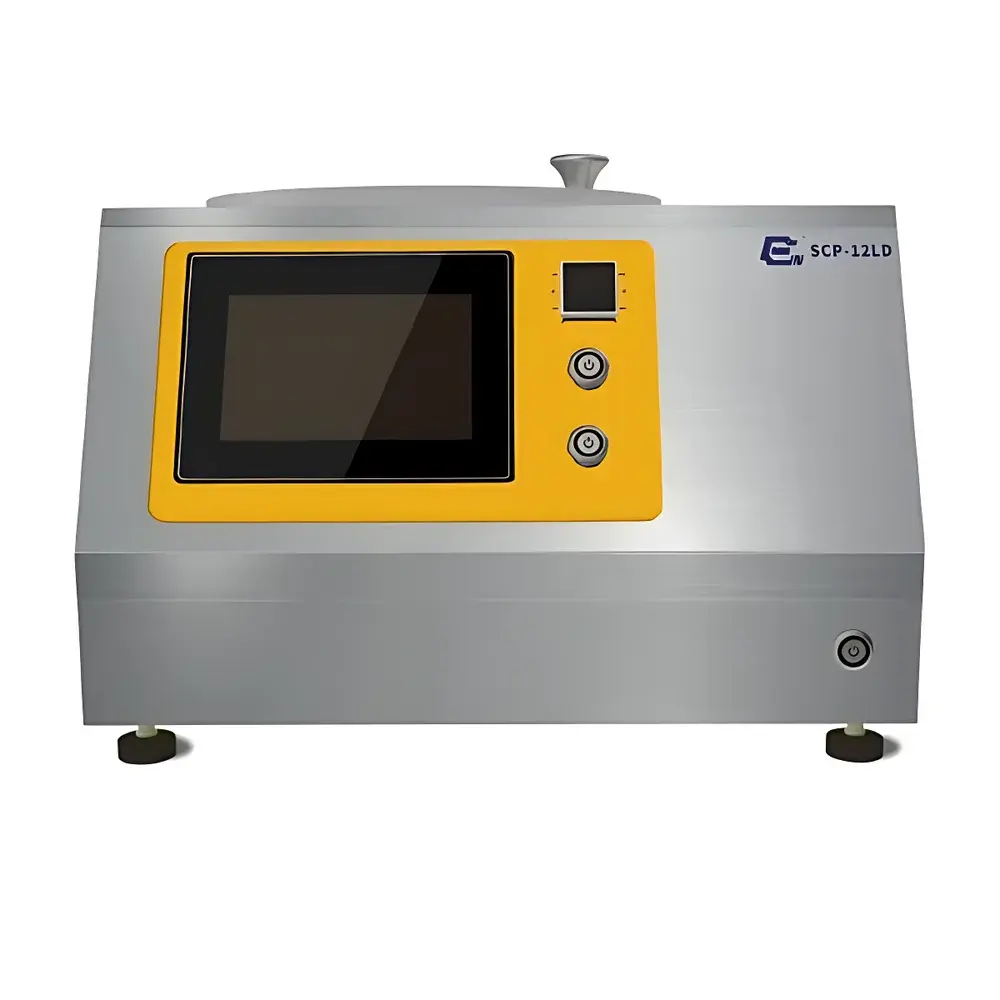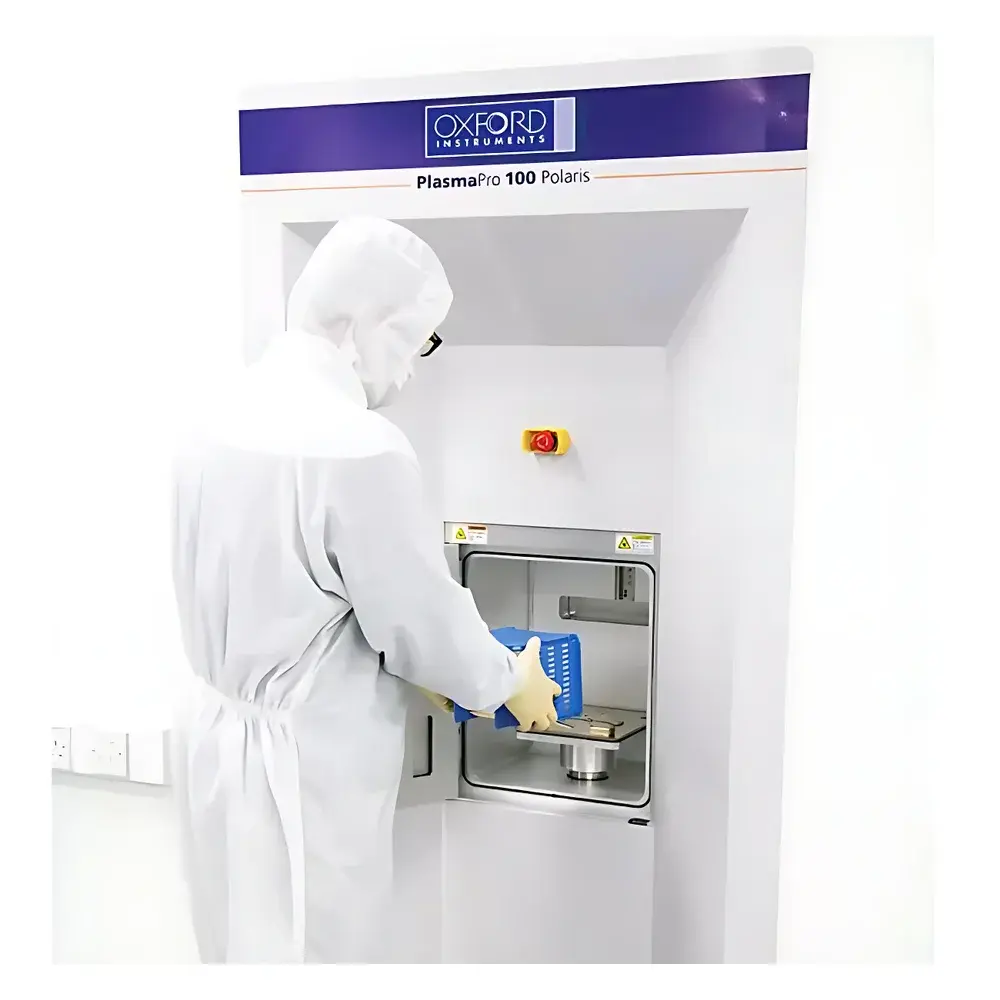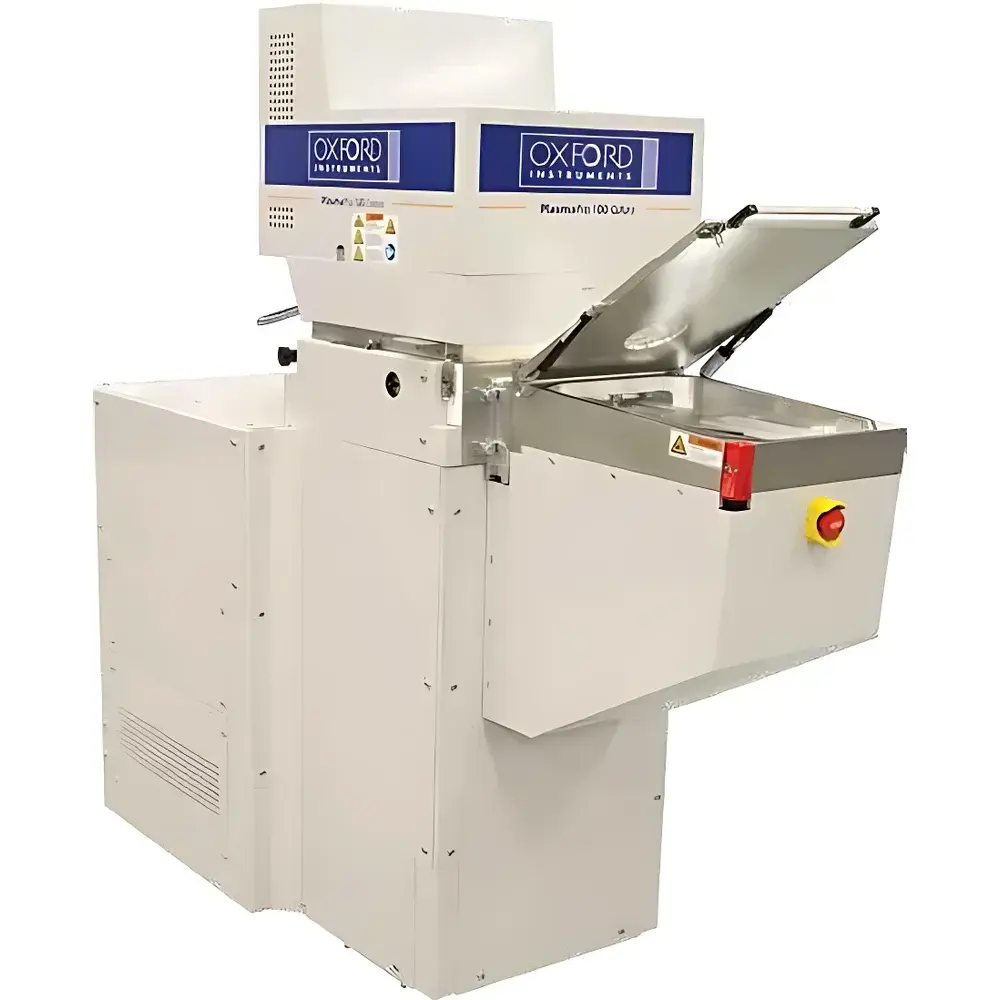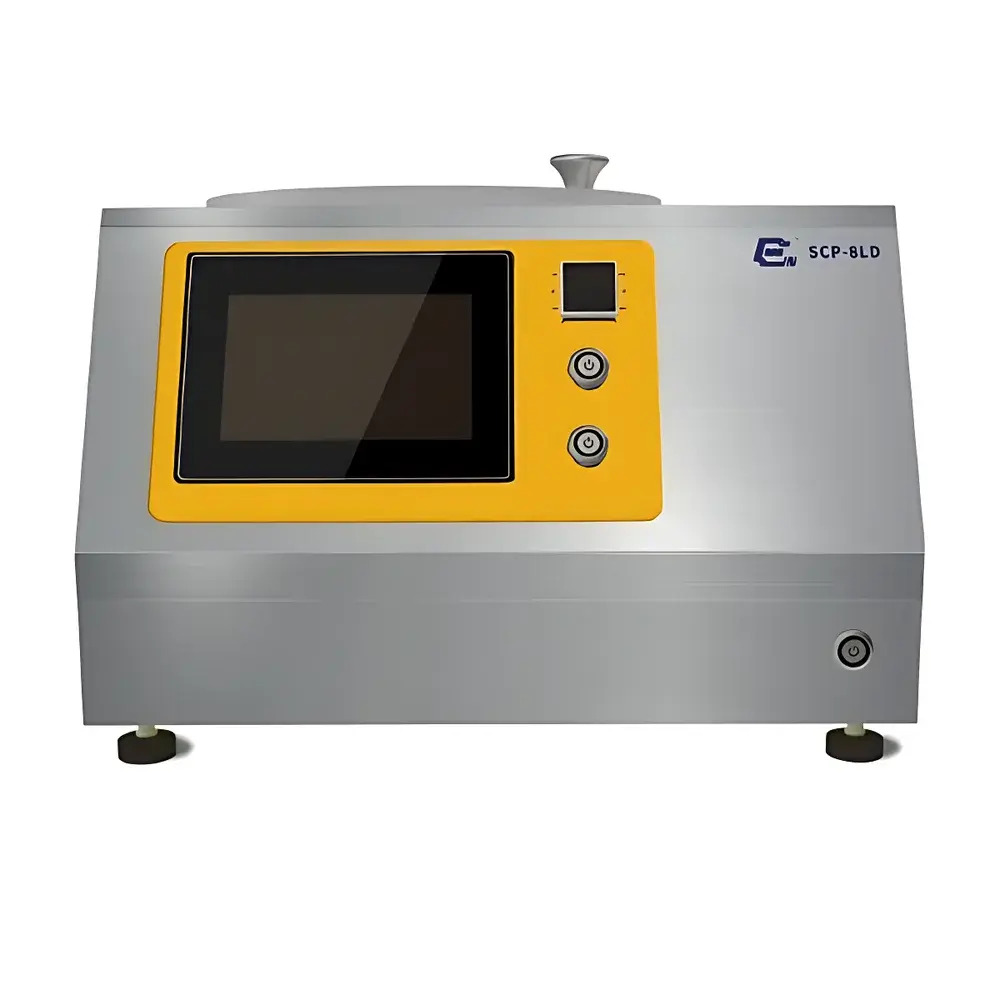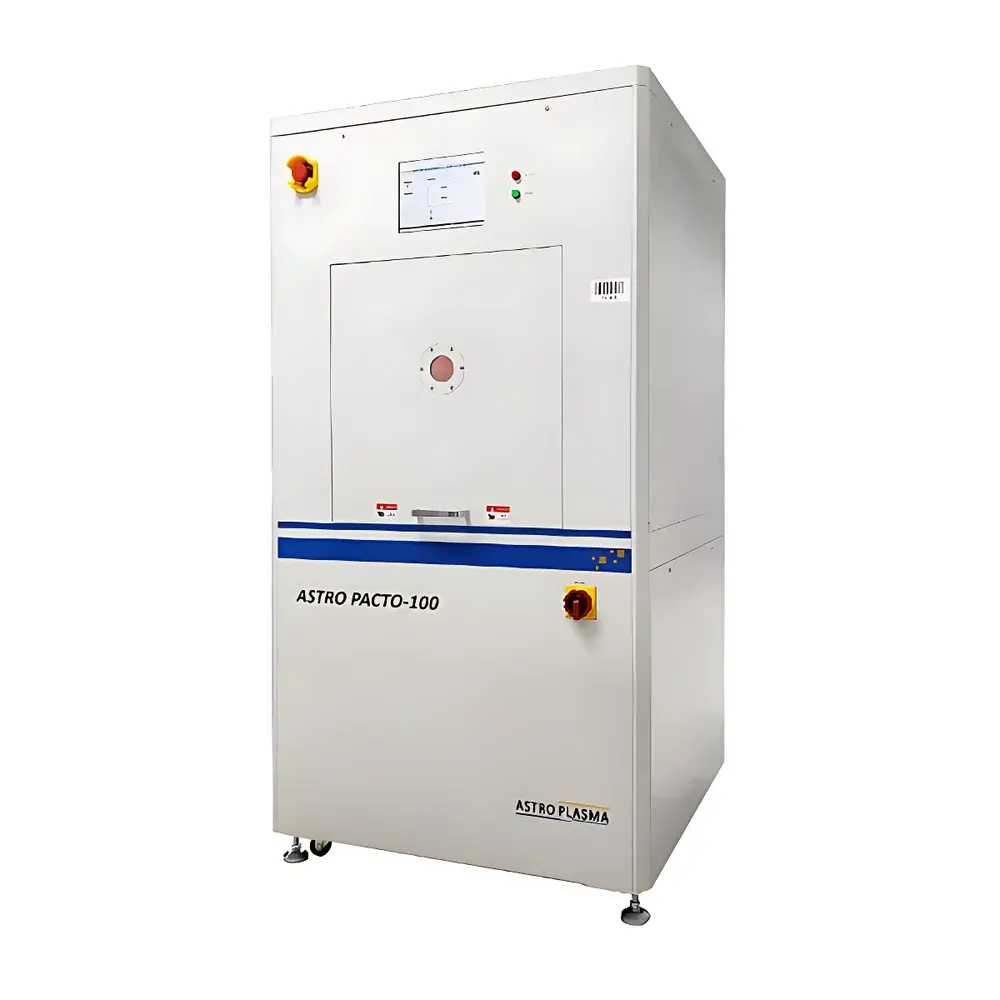
ASTRO PACTO-100 Microwave Plasma Wafer Cleaning System
| Brand | ASTRO PLASMA |
|---|---|
| Origin | Singapore |
| Model | ASTRO PACTO-100 |
| Etching Principle | 2.45 GHz Microwave Plasma |
| Maximum Substrate Size | 300 × 400 mm |
| Application Scope | Pre-bonding cleaning, surface activation, organic/oxide removal, wafer-level packaging (WLP), PDMS bonding, leadframe and PCB cleaning |
Overview
The ASTRO PACTO-100 is a floor-standing, industrial-grade microwave plasma cleaning system engineered for high-reliability dry processing in semiconductor packaging, advanced interconnect, and microfabrication environments. It utilizes a 2.45 GHz microwave-excited plasma source to generate a high-density, low-damage, non-thermal plasma without internal electrodes—eliminating metal contamination and arcing risks common in RF-based systems. Unlike capacitive or inductive plasma sources, the microwave cavity design delivers uniform power coupling across large-area substrates, enabling consistent surface modification and contaminant removal at sub-monolayer resolution. The system operates under controlled vacuum conditions (typically 10–100 Pa) with process gases including O₂, Ar, N₂, or forming gas (N₂/H₂), supporting both oxidative ashing of organics and gentle surface activation via radical-dominated chemistry. Its architecture is purpose-built for integration into front-end-of-line (FEOL) and back-end-of-line (BEOL) cleanrooms, satisfying ISO Class 5 (Class 100) compatibility requirements when installed with appropriate exhaust and abatement.
Key Features
- 2.45 GHz magnetron-driven microwave plasma source with automatic frequency tuning for stable impedance matching across varying load conditions
- Large-area processing chamber accommodating substrates up to 300 × 400 mm — compatible with full-size wafers (up to 300 mm), panel-level substrates, leadframes, SiP modules, and PCB assemblies
- Electrodeless plasma generation ensures zero sputtering, no metallic particle generation, and extended consumable lifetime — critical for high-yield packaging lines
- Programmable multi-step recipes with independent control of microwave power (0–1200 W), process pressure (5–200 Pa), gas flow rates (0–500 sccm per line), and exposure time (0.1–9999 s)
- Integrated vacuum system with dual-stage pumping (mechanical + roots blower) achieving base pressure <5 Pa in <60 s
- CE-marked, UL-listed enclosure with interlocked access doors, emergency stop circuitry, and real-time plasma emission monitoring (via optional optical emission spectroscopy port)
Sample Compatibility & Compliance
The ASTRO PACTO-100 supports diverse substrate geometries and materials commonly encountered in advanced packaging workflows: silicon wafers (bare, oxide-coated, or metallized), ceramic and organic substrates (ABF, BT, FR4), copper leadframes, molded packages (QFN, BGA), MEMS devices, and polymer-based microfluidic chips (e.g., PDMS, COC, PMMA). Surface treatments are fully compatible with wire bonding (Au/Al/Cu), solder reflow, underfill dispensing, and die attach processes. All process parameters adhere to JEDEC J-STD-033 moisture sensitivity level (MSL) pre-conditioning guidelines and support GLP-compliant documentation when paired with optional audit-trail software. The system meets SEMI S2/S8 safety standards and is designed for seamless alignment with ISO 9001:2015 quality management systems and FDA 21 CFR Part 11 data integrity requirements (when configured with electronic signature and change-control modules).
Software & Data Management
The embedded control interface runs on a real-time Linux OS with a 10.1″ touchscreen HMI, offering intuitive recipe management, live parameter trending, and event logging with timestamped entries. All process data—including power, pressure, gas flows, chamber temperature, and plasma ignition status—are logged at 1 Hz resolution and exportable in CSV or XML format. Optional Ethernet/IP and SECS/GEM protocol support enables integration into factory automation systems (MES/SCADA). Audit trail functionality records operator login/logout events, recipe modifications, and alarm acknowledgments, fulfilling traceability mandates under IATF 16949 and ISO/IEC 17025 accreditation frameworks. Remote diagnostics and firmware updates are available via secure TLS-encrypted connection.
Applications
- Pre-wire bonding surface activation to enhance Au/Al adhesion and reduce bond pull strength variation
- Removal of trace organics (e.g., mold release agents, fingerprint residues, photoresist residuals) prior to molding or underfill dispensing
- Oxide reduction and hydrophilicity enhancement on SiO₂ or SiN surfaces for improved epoxy wetting in flip-chip assembly
- PDMS-to-glass or PDMS-to-PDMS bonding via oxygen plasma-induced silanol group formation
- Surface functionalization of GaN, SiC, and compound semiconductor wafers for subsequent ALD or electroplating steps
- Cleaning of MEMS inertial sensors and RF front-end modules without mechanical stress or thermal degradation
FAQ
What vacuum level is required for stable microwave plasma ignition?
Stable plasma initiation is achieved at 10–30 Pa with O₂ or Ar; optimal cleaning uniformity is maintained between 20–80 Pa depending on substrate geometry and gas mixture.
Can the system handle batch processing of multiple leadframes simultaneously?
Yes — the chamber accommodates standard JEDEC trays (TR-88, TR-13) or custom carriers; throughput scales linearly with carrier design and loading density.
Is ozone generation a concern during O₂ plasma operation?
Ozone is produced as a byproduct but remains contained within the closed abatement loop; integrated catalytic destruct units reduce outlet O₃ concentration to <0.1 ppm per OSHA PEL limits.
Does the PACTO-100 support automated load/unload integration?
Standard configuration includes manual loading; SMIF/FOUP-compatible robotic interfaces and atmospheric load-lock modules are available as factory-installed options.
What maintenance intervals are recommended for the microwave generator and vacuum system?
Magnetron service life exceeds 10,000 hours; routine maintenance includes quarterly O-ring inspection, biannual turbopump oil replacement, and annual calibration of mass flow controllers and pressure transducers.