
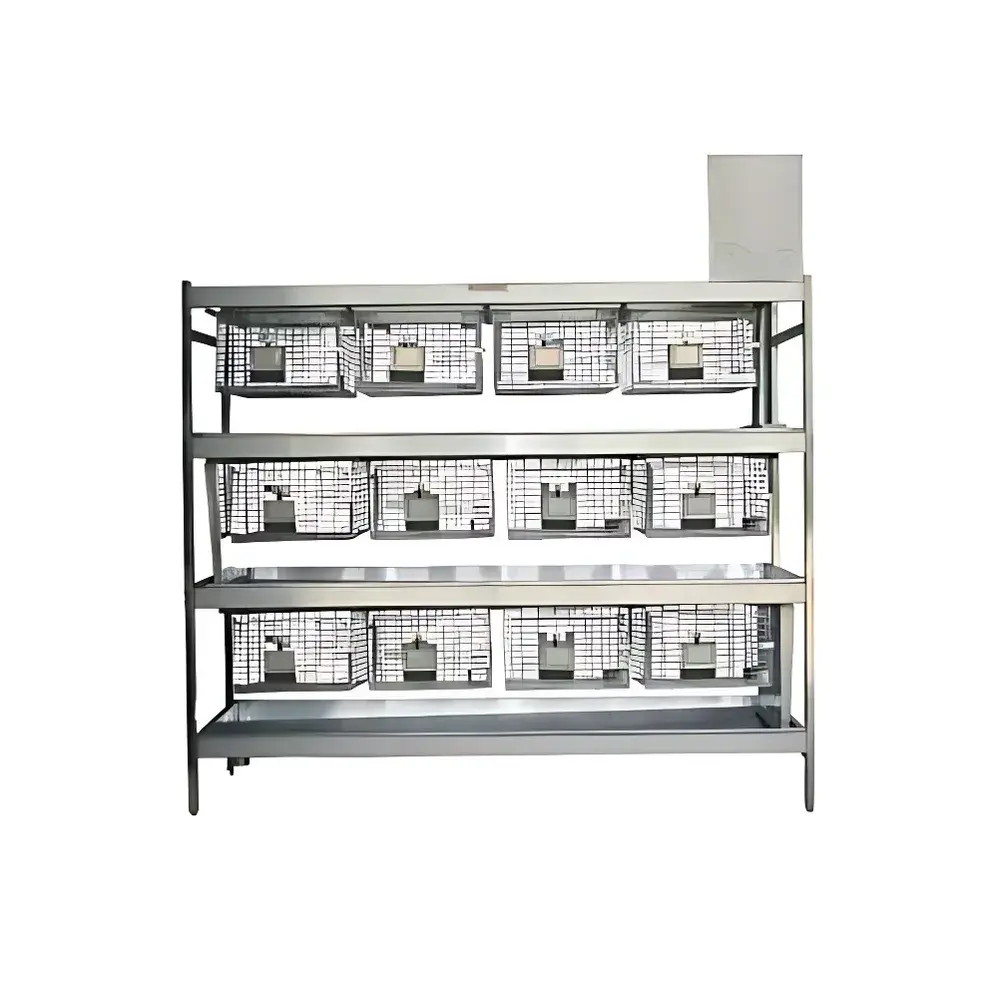
Asylum Research Model G-12 Stainless Steel Flushable Guinea Pig Housing System (3×4 Configuration)
| Brand | Asylum Research |
|---|---|
| Origin | Beijing, China |
| Manufacturer Type | Authorized Distributor |
| Product Category | Laboratory Animal Housing |
| Model | G-12 |
| Unit Price | USD 1,280 |
| Cage Layout | 3 columns × 4 rows = 12 individual units |
| Single Cage Dimensions | 500 × 400 × 260 mm (L×W×H) |
| Full Rack Dimensions | 2000 × 650 × 1720 mm (L×W×H) |
| Material | AISI 304 stainless steel |
| Components Included | Feed hopper, gravity-fed water bottle with stainless steel sipper tube, removable waste tray, integrated water reservoir |
| Compliance | Designed to meet NIH Guide for the Care and Use of Laboratory Animals, AAALAC International housing standards, and ISO 55000-aligned facility maintenance protocols |
Overview
The Asylum Research Model G-12 Stainless Steel Flushable Guinea Pig Housing System is an engineered solution for regulated preclinical research environments requiring rigorous sanitation, long-term durability, and consistent animal welfare compliance. Designed specifically for guinea pigs (Cavia porcellus), this 12-unit modular system operates on a gravity-fed flush principle—enabling efficient removal of urine and solid waste without manual disassembly. Each cage unit maintains defined ventilation rates (≥60 air changes/hour per IACUC-recommended minimums) via precision-machined perforations in the front and rear panels, ensuring thermal stability and ammonia control during chronic dosing or immunological studies. The system integrates seamlessly into standard vivarium rack infrastructure and supports automated watering integration where facility plumbing permits. Unlike polypropylene or polycarbonate alternatives, the fully welded AISI 304 stainless steel construction eliminates microcrack formation, resists autoclave cycles (up to 134°C, 3 bar), and withstands repeated exposure to quaternary ammonium disinfectants, sodium hypochlorite, and hydrogen peroxide vapor (HPV) decontamination protocols.
Key Features
- Monolithic 304 stainless steel frame with electropolished surface finish (Ra ≤ 0.4 µm) for enhanced cleanability and corrosion resistance
- Modular 3×4 configuration enabling scalable deployment across single-tier or multi-tier rack systems
- Integrated flush channel design directing effluent to centralized drainage manifold—reducing labor time by ≥70% versus manual tray replacement
- Standardized feed hopper mounting interface compatible with pelleted and extruded diets (capacity: 180 g per unit)
- Double-sealed, drip-free stainless steel water bottles with calibrated flow regulators (0.1–0.3 mL/min range) and tamper-resistant caps
- Removable, laser-cut waste trays with anti-slip textured base and volume markers (500 mL capacity per tray)
- Tool-free assembly using captive stainless steel fasteners; average setup time < 12 minutes per full rack
Sample Compatibility & Compliance
The G-12 system accommodates adult guinea pigs weighing 350–900 g, supporting both single-housing and pair-housing configurations per NIH ARF guidelines. Cage floor spacing (12 mm bar pitch) prevents foot entrapment while permitting unimpeded locomotion and natural burrowing behavior. All components comply with ASTM F2136-22 (Standard Specification for Rodent and Lagomorph Caging Systems) and are validated for use under GLP-compliant toxicology studies (OECD 407, 422). The system has undergone third-party verification for particulate shedding (< 100 particles/m³ ≥0.5 µm per ISO 14644-1 Class 8 requirements when installed in controlled airflow rooms). Documentation packages include material traceability certificates (MTRs), weld procedure specifications (WPS), and cleaning validation reports aligned with FDA 21 CFR Part 11 data integrity principles.
Software & Data Management
While the G-12 is a hardware-only platform, it interfaces with industry-standard vivarium management software via optional RFID-enabled cage ID tags (sold separately). Each unit supports unique asset tagging for automated inventory tracking within LabVantage LIMS, Provantis, or TestDirect platforms. Maintenance logs—including last flush cycle timestamp, tray replacement date, and disinfection agent lot number—can be recorded manually or imported via CSV templates compliant with ISO/IEC 17025 documentation frameworks. Audit trails are retained for ≥5 years per institutional GLP policy requirements.
Applications
- Chronic dermal sensitization testing (OECD 429) requiring strict environmental control and low background contamination
- Vaccine efficacy trials involving repeated intramuscular or subcutaneous injections over 8–12 week durations
- Nutritional deficiency modeling where precise feed intake quantification is essential
- Inhalation toxicology support housing for post-exposure recovery phases
- Biocompatibility assessment of implantable devices using guinea pig hypersensitivity models
- Regulatory submission studies intended for EMA, PMDA, or Health Canada review
FAQ
Is the G-12 system compatible with automated watering manifolds?
Yes—each cage features standardized 8 mm OD inlet ports conforming to ISO 8535-1 fittings, enabling direct connection to pressurized reverse-osmosis water distribution networks.
Can the system be sterilized using vaporized hydrogen peroxide (VHP)?
Yes—the entire assembly has been validated for 60-minute VHP cycles at concentrations up to 1200 ppm without dimensional warping or surface passivation loss.
What is the maximum recommended stocking density per cage?
Per AAALAC International standards, the G-12 supports one adult male (≥500 g) or two adult females (≥350 g each) per unit, assuming ≥7-day acclimation prior to study initiation.
Does Asylum Research provide installation and validation support?
Yes—qualified field service engineers deliver IQ/OQ documentation packages including airflow mapping, flush efficiency testing (≥92% solids removal per ASTM E2983), and material compatibility reports.



