
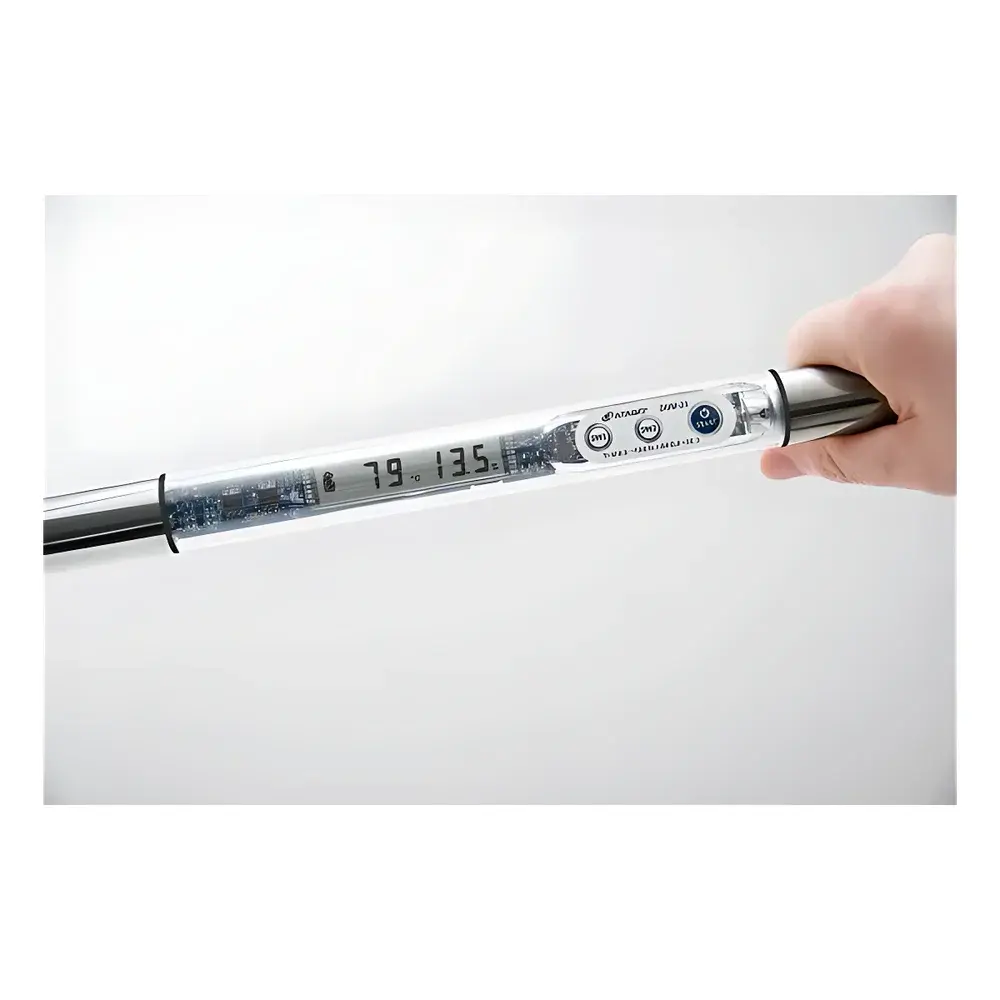
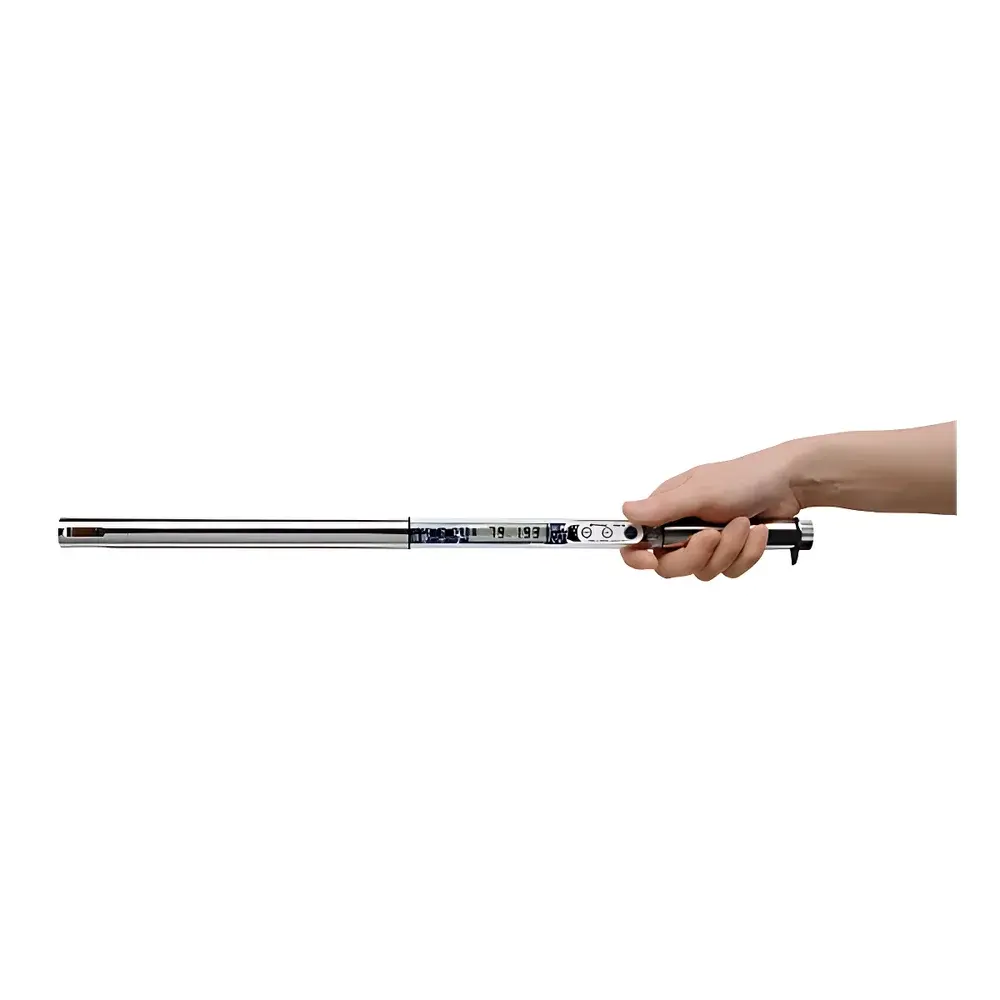
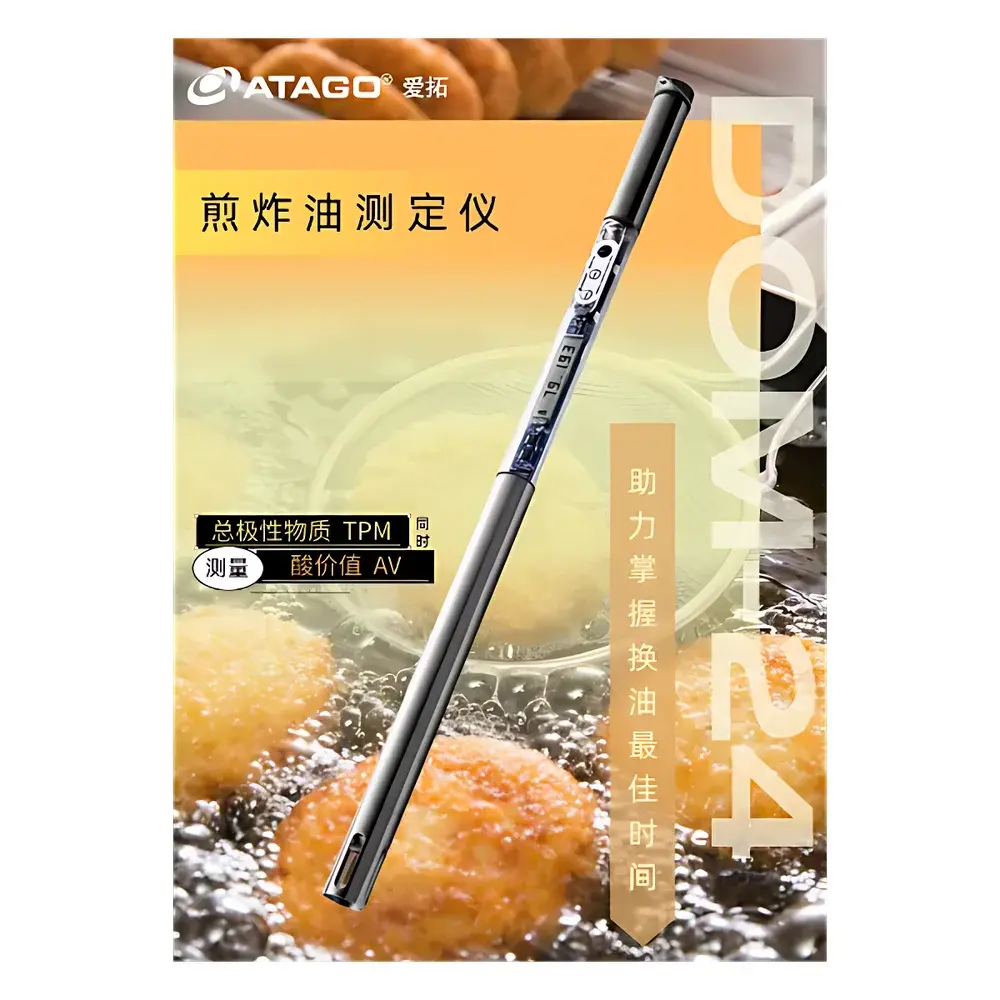
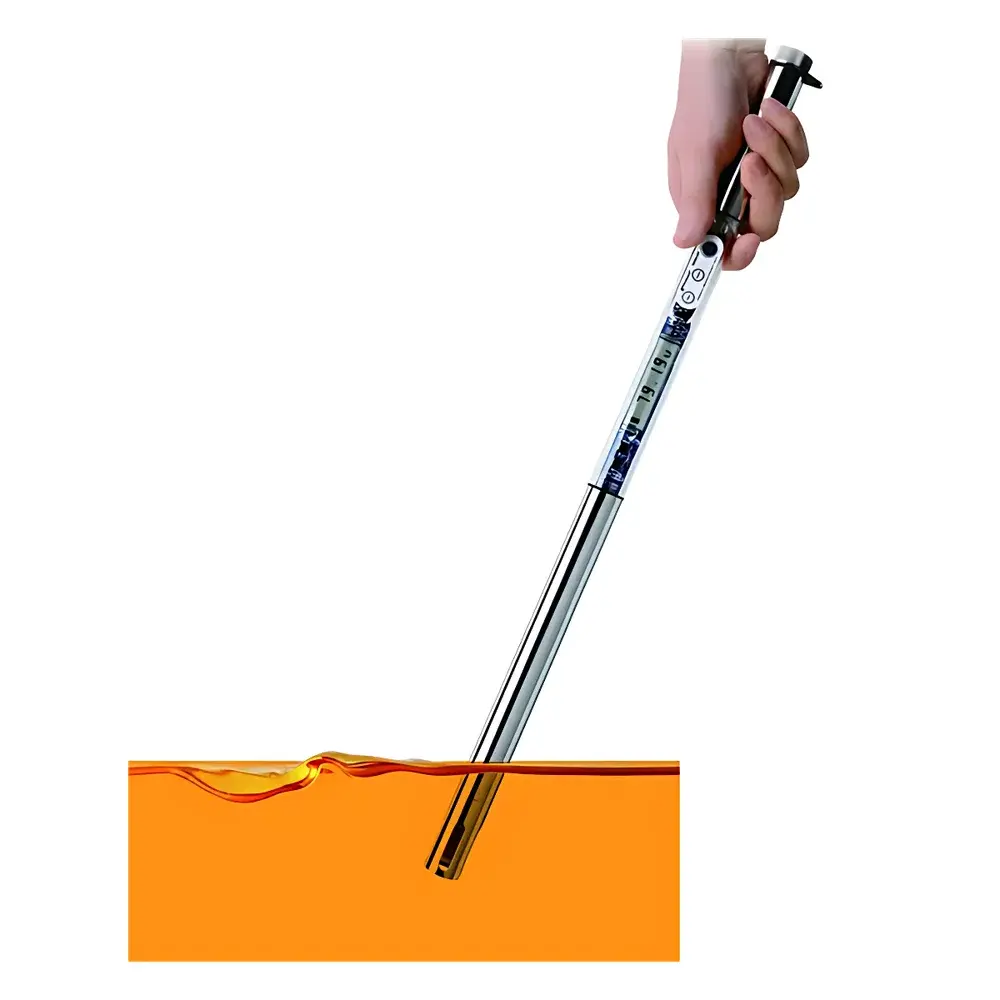
ATAGO DOM-24 Frying Oil Analyzer
| Brand | ATAGO |
|---|---|
| Origin | Japan |
| Model | DOM-24 Frying Oil Analyzer |
| Measurement Parameters | Total Polar Materials (TPM) % and Acid Value (AV) |
| Principle | Dielectric Constant-Based Non-Destructive Detection |
| Sample Contact | Immersion Probe (30 cm Handle for Operator Safety) |
| Compliance | Designed for ISO 8534, AOCS Cd 19a-99, and EU Regulation (EU) No 1881/2006 Monitoring Guidance |
Overview
The ATAGO DOM-24 Frying Oil Analyzer is a handheld, immersion-type instrument engineered for rapid, on-site assessment of thermal degradation in cooking oils used in commercial deep-frying operations. It operates on the principle of dielectric constant measurement—a well-established physical property correlation with oil polarity—enabling simultaneous quantification of Total Polar Materials (TPM) and Acid Value (AV) without chemical reagents or sample extraction. TPM reflects cumulative oxidative and hydrolytic breakdown products (e.g., mono- and diglycerides, free fatty acids, polymers), while AV indicates early-stage hydrolysis driven by moisture and heat. The DOM-24 delivers results in under 5 seconds per measurement, supporting real-time decision-making for oil replacement scheduling in accordance with regulatory thresholds (e.g., EU’s 24–27% TPM limit, US FDA guidance on AV > 2.5 mg KOH/g). Its ergonomic 30 cm probe handle ensures operator safety by maintaining consistent distance from hot oil surfaces—critical in high-temperature foodservice environments.
Key Features
- Dual-parameter output: Simultaneous TPM (%) and AV (mg KOH/g) readings displayed side-by-side on a backlit LCD screen
- Reagent-free, non-destructive analysis: No solvent consumption, no calibration curves requiring reference standards, no waste generation
- Immersion probe design with integrated temperature compensation (range: 60–200 °C), ensuring accuracy across operational frying temperatures
- IP65-rated housing for resistance to oil splashes, steam, and cleaning agents in kitchen and inspection environments
- Battery-powered operation (up to 10,000 measurements per charge) enabling portability across multiple fry stations or field audits
- Factory-calibrated traceable to ATAGO’s internal reference oils; optional annual verification service available via accredited calibration labs
Sample Compatibility & Compliance
The DOM-24 is validated for use with common vegetable-based frying media including soybean, palm, canola, sunflower, and peanut oils, as well as blended formulations. It is not intended for highly saturated fats (e.g., lard, tallow) or silicone-based heat-transfer fluids. Regulatory alignment includes methodology compatibility with ISO 8534 (determination of polar compounds in frying oils), AOCS Cd 19a-99 (dielectric constant method), and European Commission monitoring guidelines for TPM in fried foods. While the instrument itself does not carry CE marking for medical devices, it meets EN 61010-1 safety requirements for electrical equipment used in laboratory and industrial settings. Data outputs support GLP-compliant recordkeeping when paired with ATAGO’s optional data logging software.
Software & Data Management
The DOM-24 supports optional USB connectivity to ATAGO’s proprietary PC software (DOM-Link v3.2), enabling batch export of timestamped measurements—including TPM, AV, oil temperature, and operator ID—to CSV or PDF formats. Audit trails include automatic firmware version logging and user-defined session tags. For integration into centralized quality management systems (QMS), raw ASCII data streams are compatible with third-party platforms supporting RS-232 or virtual COM port protocols. All stored data retains full traceability for internal audits or regulatory review under FDA 21 CFR Part 11 when configured with electronic signature controls.
Applications
- Restaurant and quick-service food chains: Daily oil health checks at fryer stations to extend usable oil life while preventing off-flavors and acrylamide formation
- Food manufacturing facilities: In-process verification during batter-coated product frying (e.g., frozen nuggets, tempura) to ensure consistency and shelf-life stability
- Public health laboratories: Field deployment by food safety inspectors verifying compliance with national frying oil disposal regulations
- Catering education institutions: Teaching tool for food technology curricula covering lipid oxidation kinetics and HACCP critical control point monitoring
- Contract food service providers: Cross-site benchmarking of oil turnover rates and maintenance practices across multi-unit operations
FAQ
Does the DOM-24 require daily recalibration?
No—factory calibration remains stable for 12 months under normal use; ATAGO recommends annual verification using certified reference oils.
Can it measure oils containing food particles or debris?
The probe must be immersed in clear, particle-free oil; suspended solids interfere with dielectric sensing and may damage the sensor surface.
Is the device suitable for cold oil testing prior to first use?
Yes—the instrument functions from ambient temperature up to 200 °C; however, TPM baseline values are only meaningful after thermal cycling has initiated oxidation.
How does it differ from laboratory-based FTIR or GC methods?
The DOM-24 provides rapid screening-level data optimized for operational decisions—not molecular speciation—making it complementary to, not substitutive of, confirmatory lab analysis.
What maintenance is required?
Wipe the stainless-steel probe tip with lint-free cloth after each use; avoid abrasive cleaners or ultrasonic baths to preserve sensor integrity.





