
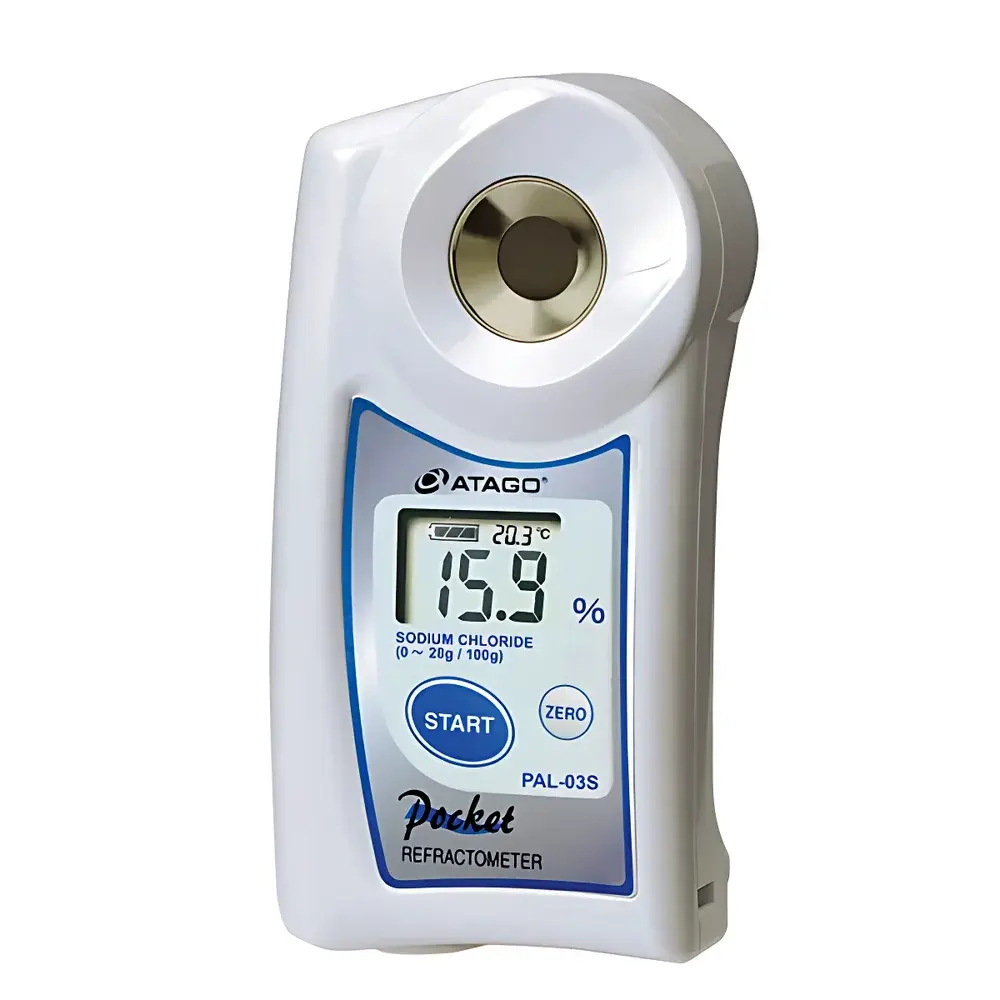

ATAGO PAL-2 Digital Portable Refractometer for Horticultural Applications
| Brand | ATAGO |
|---|---|
| Origin | Japan |
| Product Type | Handheld Refractometer |
| Measurement Range | 0.0–45.0% Brix |
| Accuracy | ±0.4% Brix |
| Display | Digital LCD |
| Temperature Compensation | Automatic (ATC, 10–40°C) |
| Dimensions | 16.3 × 4.8 × 3.8 cm |
| Weight | 120 g |
| Calibration Standard | Distilled Water (0.0% Brix) |
| Compliance | ISO 2173, AOAC 932.12, ASTM D1074 |
Overview
The ATAGO PAL-2 Digital Portable Refractometer is a precision optical instrument engineered for rapid, field-deployable measurement of soluble solids concentration—expressed as % Brix—in fresh horticultural produce, juices, syrups, and processed food matrices. Based on the principle of critical angle refractometry, the device measures the refractive index of a liquid or semi-liquid sample in direct contact with a sapphire prism; this optical property correlates linearly with dissolved sugar content under controlled temperature conditions. Integrated automatic temperature compensation (ATC) ensures measurement stability across ambient operating temperatures from 10 °C to 40 °C, eliminating manual correction and minimizing operator-induced variability. Designed specifically for agronomic and post-harvest quality assessment, the PAL-2 delivers traceable, repeatable results without requiring laboratory infrastructure—making it indispensable for orchard scouting, harvest timing decisions, grading protocols, and supply chain quality verification.
Key Features
- High-contrast digital LCD display with backlight for readability under variable field lighting conditions
- Sapphire-coated prism surface offering exceptional scratch resistance and long-term optical stability
- IP65-rated enclosure ensuring reliable operation in humid greenhouses, open-field environments, and wet processing areas
- Single-button operation with auto-zero function and immediate measurement output (<1.5 seconds per reading)
- Battery-powered (2 × AAA alkaline cells) with >10,000 measurements per set; low-battery indicator and auto-power-off after 3 minutes of inactivity
- Factory-calibrated against NIST-traceable sucrose standards; user calibration supported via distilled water (0.0% Brix)
- Ergonomic, pocket-sized form factor (16.3 × 4.8 × 3.8 cm) optimized for one-handed use during rapid sampling
Sample Compatibility & Compliance
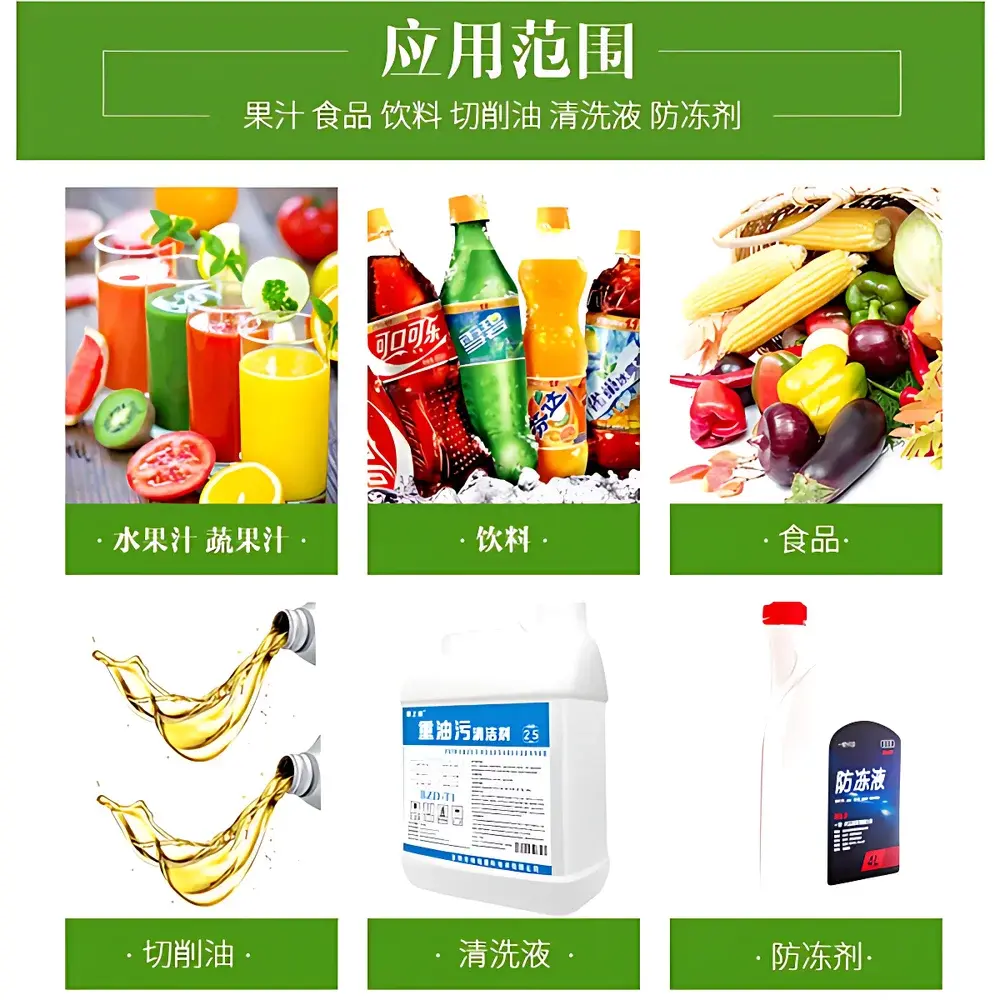
The PAL-2 accommodates a broad range of aqueous-based samples including raw fruit pulp extracts (e.g., apple, grape, tomato), vegetable sap (e.g., cucumber, pepper), fruit juices, nectars, jams, honey dilutions, and beverage concentrates. Its 0.0–45.0% Brix range covers typical values for unripe to fully mature fruits (e.g., 6–12% for green tomatoes, 18–24% for ripe mangoes, up to 40% for concentrated citrus syrups). The instrument complies with internationally recognized methodology standards including ISO 2173 (fruit and vegetable products), AOAC Official Method 932.12 (refractometric determination of soluble solids), and ASTM D1074 (standard test method for refractive index of asphaltic materials—adapted for sucrose equivalence). While not designed for viscous or particulate-laden samples without filtration, it supports GLP-aligned documentation when paired with external logging software and audit-trail-enabled data capture systems.
Software & Data Management
The PAL-2 operates as a standalone instrument with no onboard memory or Bluetooth connectivity. However, its consistent analog output protocol enables integration into broader QA/QC workflows: readings can be manually logged into LIMS or Excel-based tracking templates aligned with HACCP plans or GAP (Good Agricultural Practices) certification requirements. For laboratories requiring electronic records, ATAGO’s optional PAL-Link software (used with compatible models such as PAL-1 or PR-101α) provides a reference framework for structured data export, trend analysis, and report generation—though the PAL-2 itself does not support direct USB or wireless transfer. All measurements adhere to principles outlined in FDA 21 CFR Part 11 for attributable, legible, and contemporaneous recordkeeping when documented externally with time/date stamps and operator IDs.
Applications
- Determining optimal harvest maturity indices in commercial orchards and vineyards
- Monitoring sugar accumulation kinetics during fruit ripening trials and breeding programs
- Verifying consistency of juice blends and concentrate dilution ratios in packinghouse operations
- Supporting IFS Food, BRCGS, and GlobalG.A.P. compliance through objective, instrument-based quality checkpoints
- Field validation of irrigation scheduling models where osmotic potential correlates with Brix
- Training extension agents and farm technicians in standardized, low-barrier quality assessment techniques
FAQ
Does the PAL-2 require periodic recalibration?
Yes—while factory-calibrated, ATAGO recommends verifying zero-point calibration daily using distilled water before first use and after extended storage or temperature shifts.
Can the PAL-2 measure samples below 0.0% Brix or above 45.0% Brix?
No—the optical design and firmware are validated only within the specified 0.0–45.0% Brix range; extrapolation or dilution outside this window invalidates accuracy claims.
Is the ATC function adjustable or configurable?
No—the automatic temperature compensation is fixed and non-user-adjustable; it applies a polynomial correction curve optimized for sucrose-water solutions between 10 °C and 40 °C.
What maintenance is required for long-term reliability?
Wipe the prism surface with lens tissue and distilled water after each use; avoid abrasive cleaners or organic solvents. Store in the supplied protective case with desiccant to prevent condensation-related drift.
Does the PAL-2 meet ISO/IEC 17025 requirements for accredited testing?
As a field-grade instrument, it is intended for screening and process control—not definitive accreditation-level testing—though its performance characteristics align with ISO 2173 validation criteria when operated per ATAGO’s instruction manual.




