
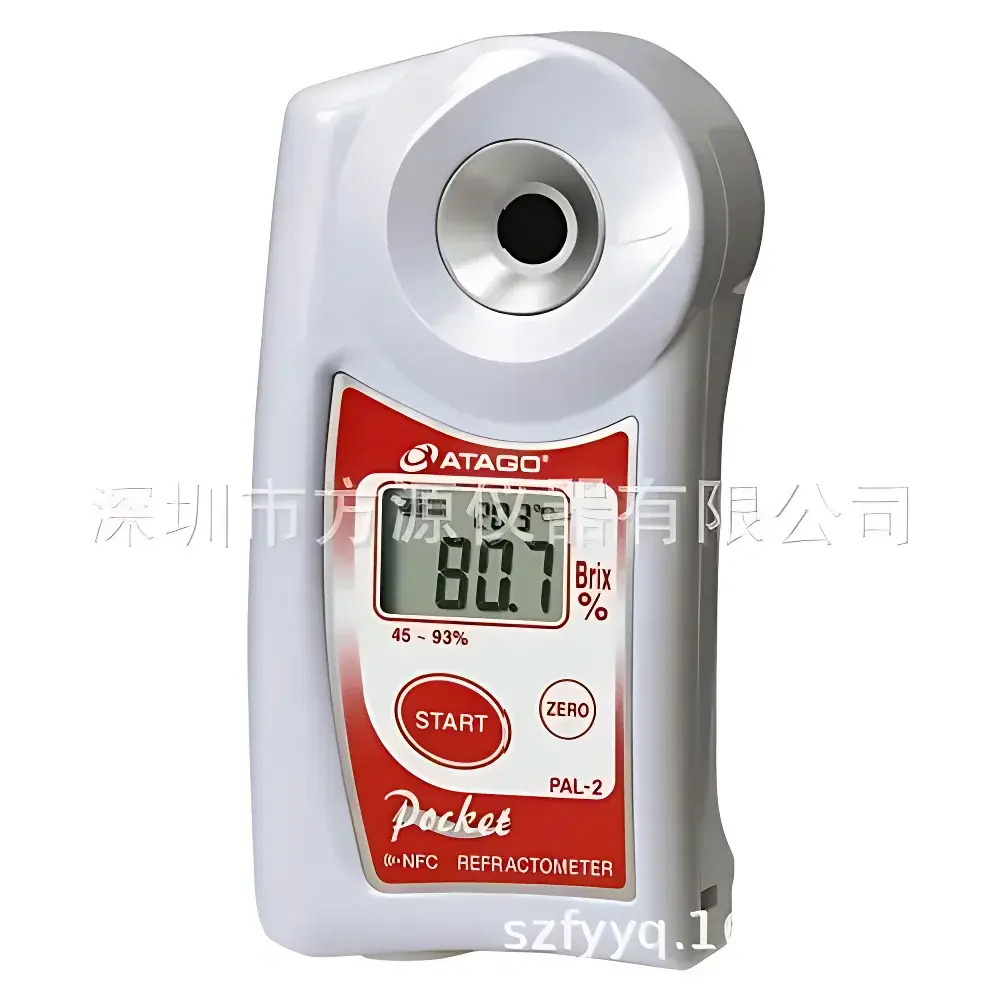
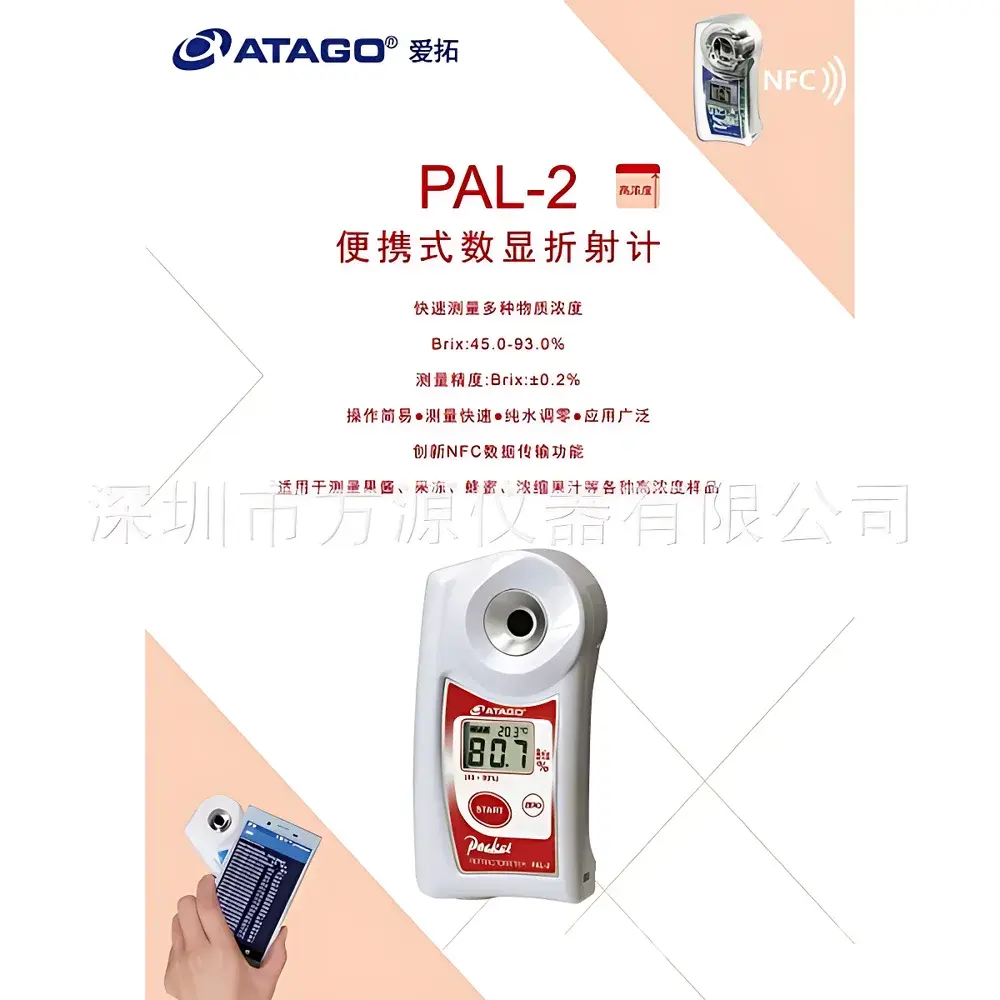
ATAGO PAL-2 High-Concentration Handheld Refractometer
| Brand | ATAGO |
|---|---|
| Origin | Japan |
| Model | PAL-2 High-Concentration |
| Type | Handheld Refractometer |
| Display | Digital |
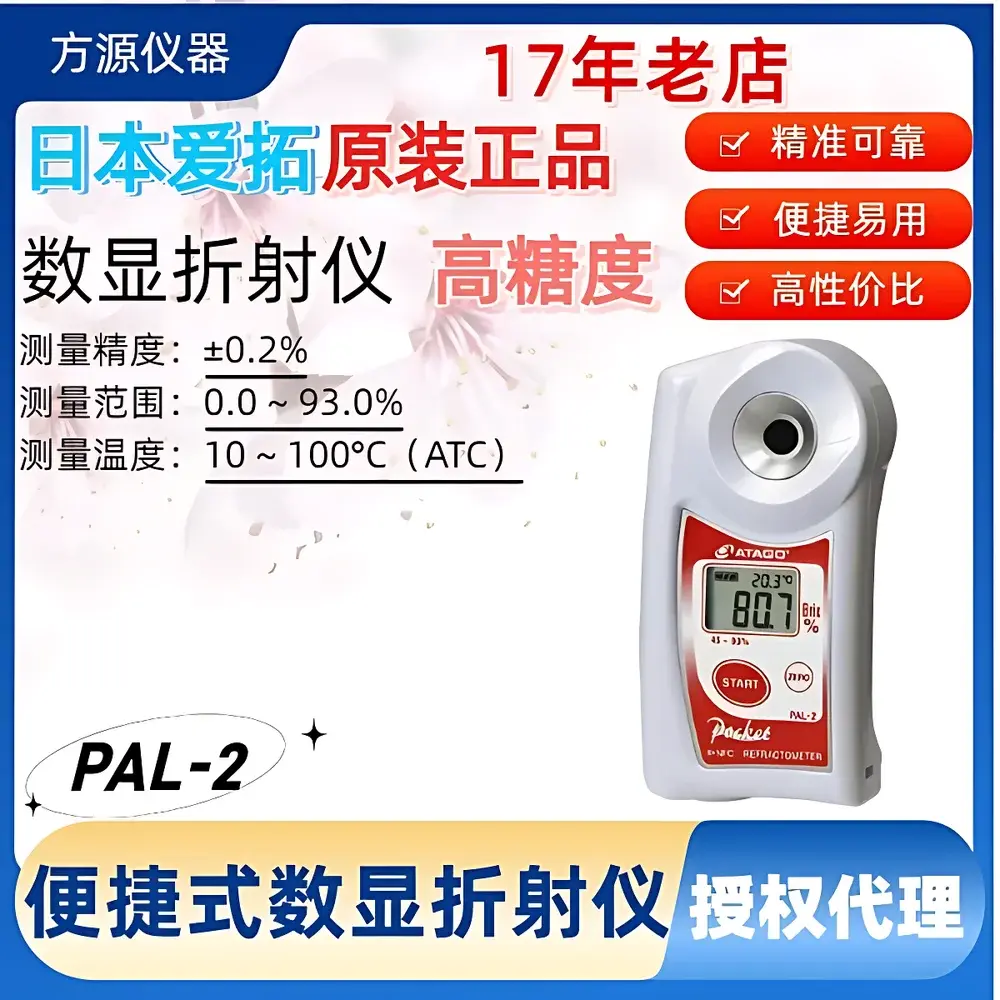
| Temperature Compensation | Automatic (ATC, 10–30°C) |
| Measurement Range | Brix 45.0–93.0% |
| Accuracy | ±0.2% Brix |
| Units | % (w/w) |
| Compliance | ISO 2173, AOAC 932.12, ASTM D1078 |
Overview
The ATAGO PAL-2 High-Concentration Handheld Refractometer is a precision optical instrument engineered for rapid, on-site determination of soluble solids concentration—expressed as Brix (% w/w)—in highly concentrated sugar-based liquids such as jams, jellies, honey, and fruit concentrates. It operates on the fundamental principle of critical angle refractometry: light passing through a sample-prism interface undergoes refraction proportional to the sample’s refractive index, which correlates directly with solute concentration under controlled temperature conditions. The PAL-2 integrates ATAGO’s proprietary Automatic Temperature Compensation (ATC) system, calibrated to the standard 20°C reference temperature per ISO 2173, ensuring measurement stability across ambient operating conditions from 10°C to 30°C without external thermostating. Unlike benchtop or Abbe-type refractometers, the PAL-2 employs a compact sapphire prism and LED-based optical path optimized for field use, delivering laboratory-grade reproducibility in a single-hand operation.
Key Features
- High-range Brix measurement capability (45.0–93.0%) specifically validated for supersaturated sucrose, glucose-fructose syrups, and viscous honey matrices
- Digital LCD display with 0.1% resolution and real-time ATC compensation compliant with ISO 2173 and AOAC Official Method 932.12
- Robust magnesium-alloy housing rated IP65 for dust and water resistance—suitable for production floor, warehouse, and QC lab environments
- No battery compartment screws required; uses standard CR2032 lithium coin cell with ~10,000 measurements per charge
- Zero adjustment via distilled water calibration—no user-serviceable optics or alignment mechanisms
- Conforms to CE marking requirements and meets electromagnetic compatibility (EMC) standards per EN 61326-1
Sample Compatibility & Compliance
The PAL-2 is designed for direct measurement of clear to moderately turbid aqueous sugar solutions. Its high-concentration scale minimizes saturation errors common in conventional 0–32% Brix instruments when analyzing boiled-down preserves or ultra-filtered honeys. While not intended for strongly acidic, alkaline, or volatile organic solvents (e.g., ethanol >5%, IPA), it remains compatible with food-grade glycerol blends and pectin-rich gels when surface moisture is minimized prior to sampling. All measurements comply with internationally recognized food analysis protocols: ISO 2173 (fruit products), AOAC 932.12 (sugar content in honey), and ASTM D1078 (volatility-corrected Brix). For regulatory traceability, users may record serial-numbered calibration logs aligned with GLP documentation practices.
Software & Data Management
The PAL-2 operates as a standalone analog-digital hybrid instrument with no Bluetooth, USB, or data logging functionality. This design prioritizes operational simplicity, measurement integrity, and long-term reliability in regulated environments where firmware updates or connectivity introduce validation complexity. Calibration verification is performed manually using NIST-traceable Brix standard solutions (e.g., 50.0%, 70.0%, and 90.0% sucrose w/w at 20°C), documented per internal QA procedures. For laboratories requiring electronic records, manual transcription into LIMS or Excel-based audit trails satisfies FDA 21 CFR Part 11 requirements when paired with controlled access and versioned SOPs.
Applications
- Quality control of jam, marmalade, and jelly production—verifying minimum soluble solids for gel formation per Codex Alimentarius Standard 202-1995
- Honey authenticity screening: detecting adulteration with invert sugar or corn syrup by deviation from expected Brix-density correlation
- Concentrate evaporation endpoint monitoring in juice processing lines
- R&D formulation development for high-Brix functional foods (e.g., energy gels, sports chews)
- Supplier qualification audits for raw material sugar content certification
- Teaching laboratories demonstrating colligative property relationships in food chemistry curricula
FAQ
What is the recommended calibration frequency?
Calibrate before each measurement session using distilled water (0.0% Brix) and a mid-range standard (e.g., 70.0% sucrose solution). More frequent verification is advised when ambient temperature fluctuates >5°C or after exposure to thermal shock.
Can the PAL-2 measure non-sugar solutes like salt or acids?
No. The Brix scale assumes sucrose-equivalent refractive contribution. Salts, organic acids, or alcohols yield non-linear deviations; dedicated scales (e.g., PAL-33S for ethanol) are required for accurate quantification.
Is cleaning the prism with acetone acceptable?
No. Acetone and other chlorinated or aromatic solvents may degrade the prism’s anti-reflective coating. Use only lens tissue moistened with distilled water or isopropyl alcohol (<50% v/v), followed by dry wiping.
Does ATC compensate for sample temperature or ambient temperature?
The ATC sensor measures the prism block temperature, which equilibrates rapidly with the applied sample drop—ensuring compensation reflects actual sample thermal state, not ambient air temperature.
How does the PAL-2 differ from the PAL-1 model?
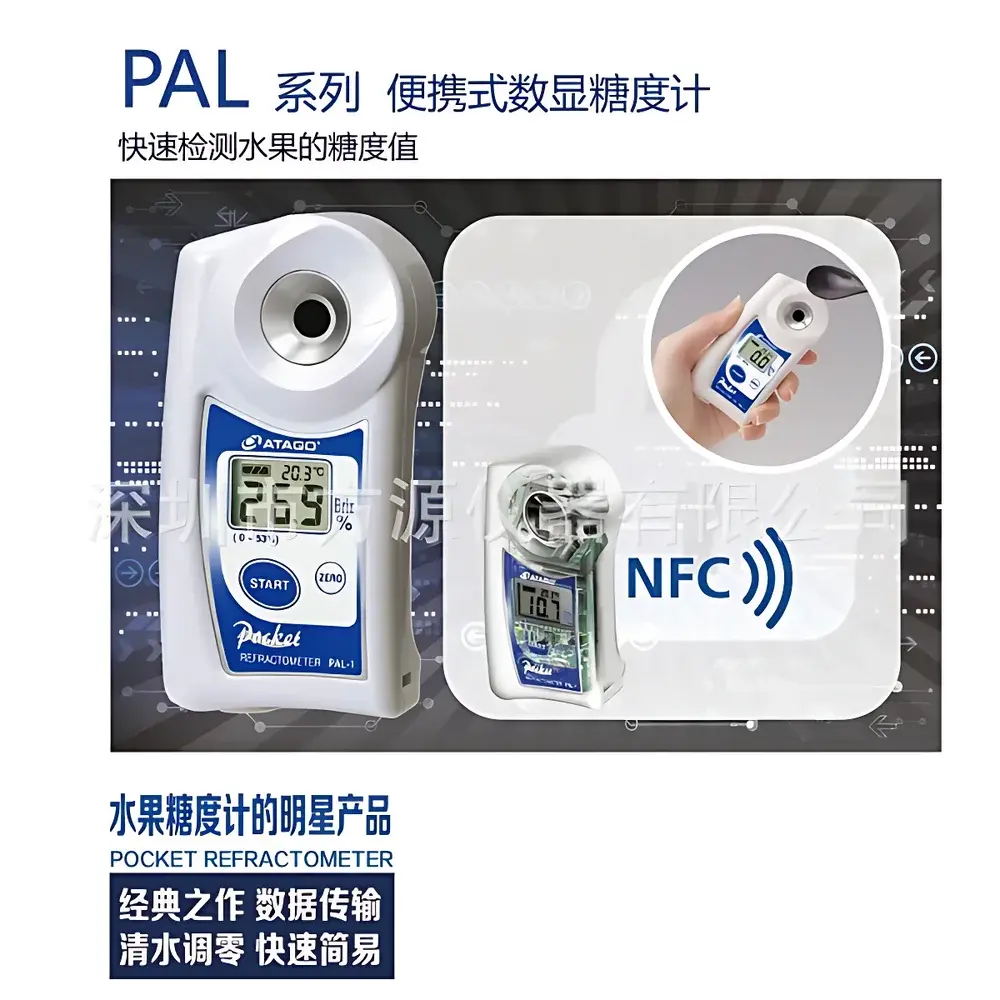
The PAL-2 extends the upper measurement limit from 32% to 93% Brix via modified optical path geometry and recalibrated photodiode response curve—optimized exclusively for high-solids applications where PAL-1 would saturate or drift.




