
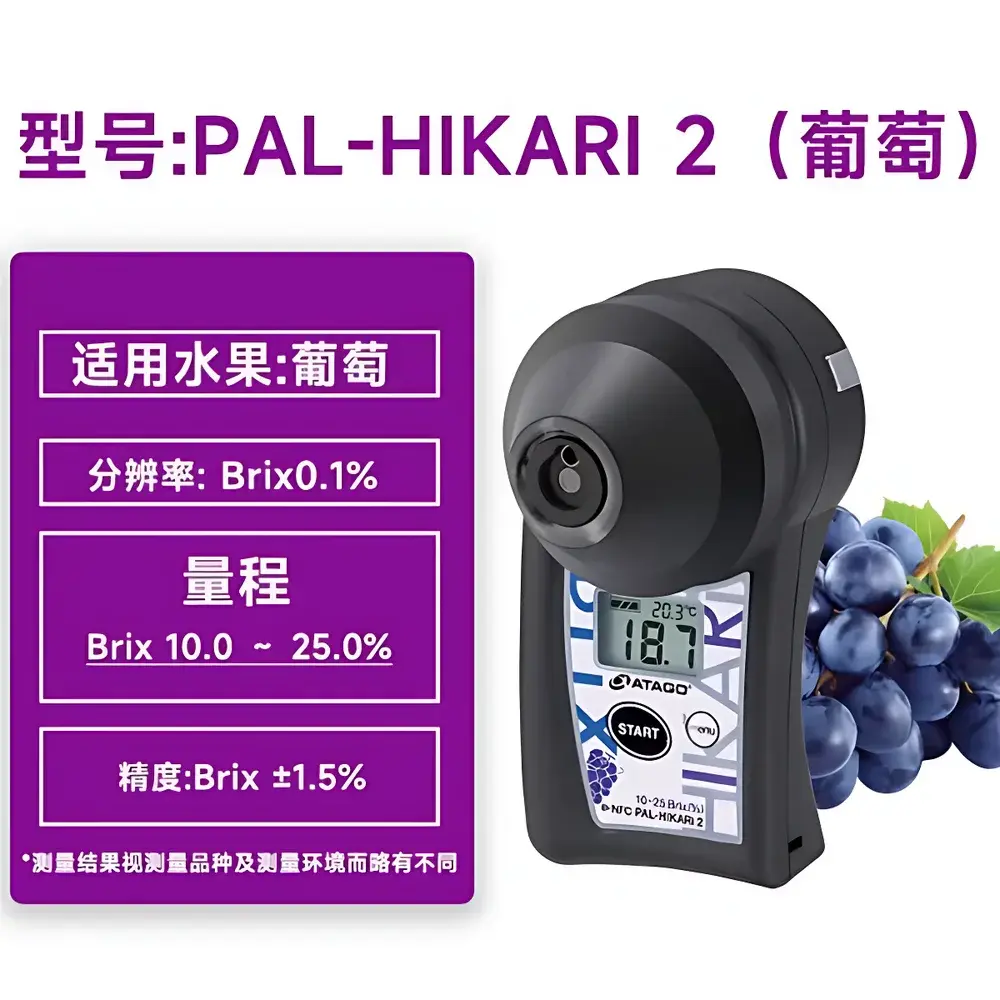
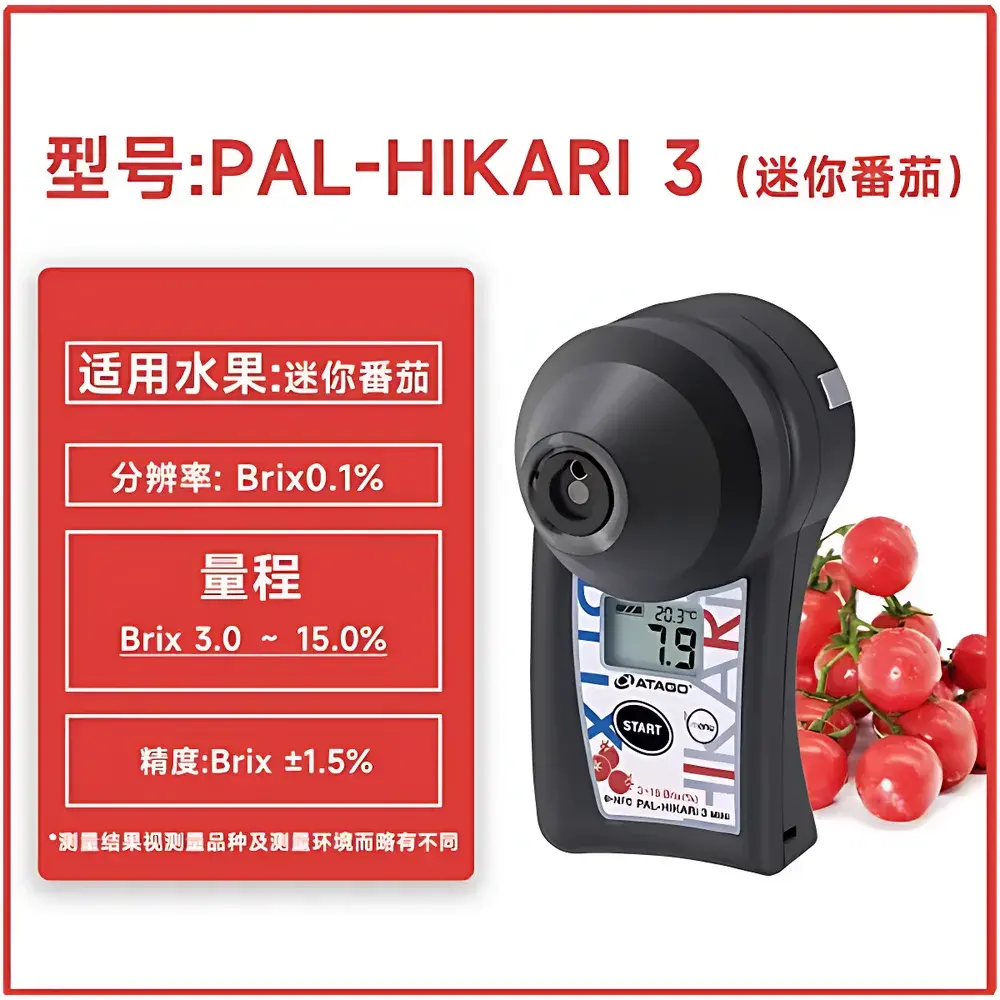
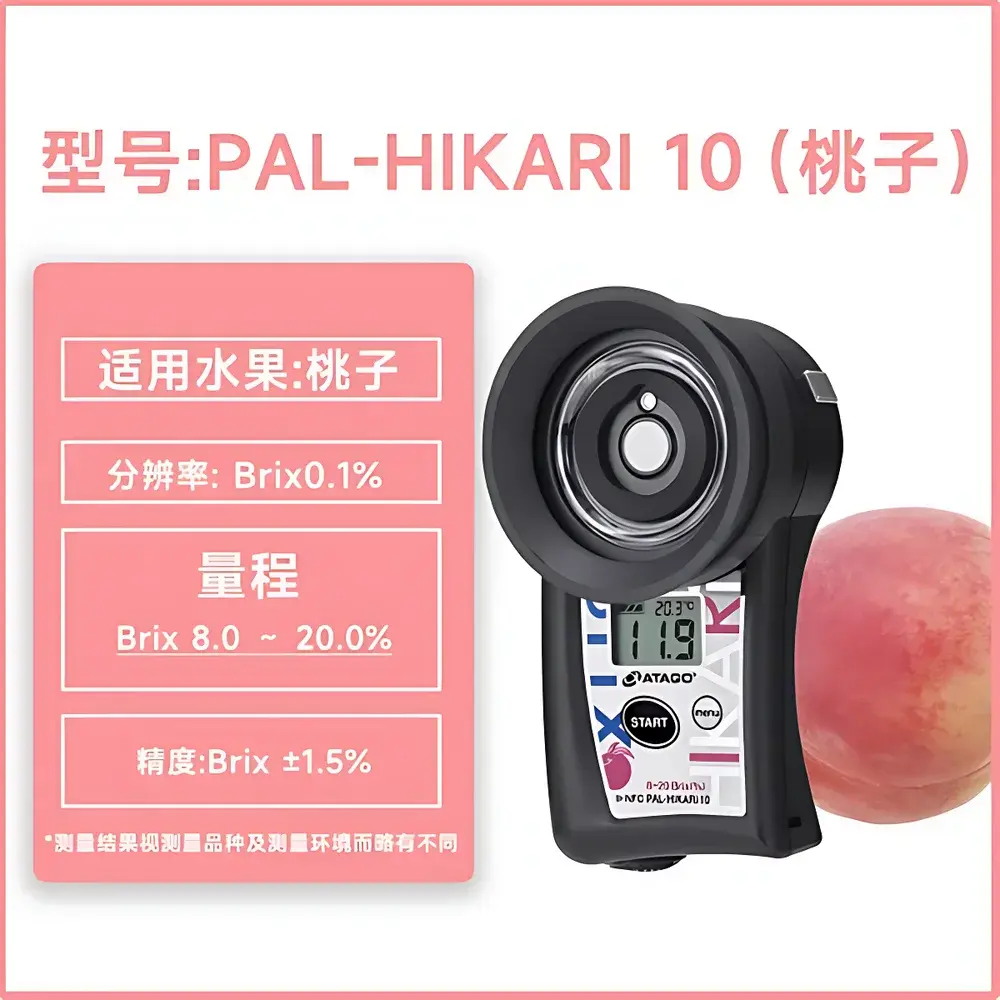
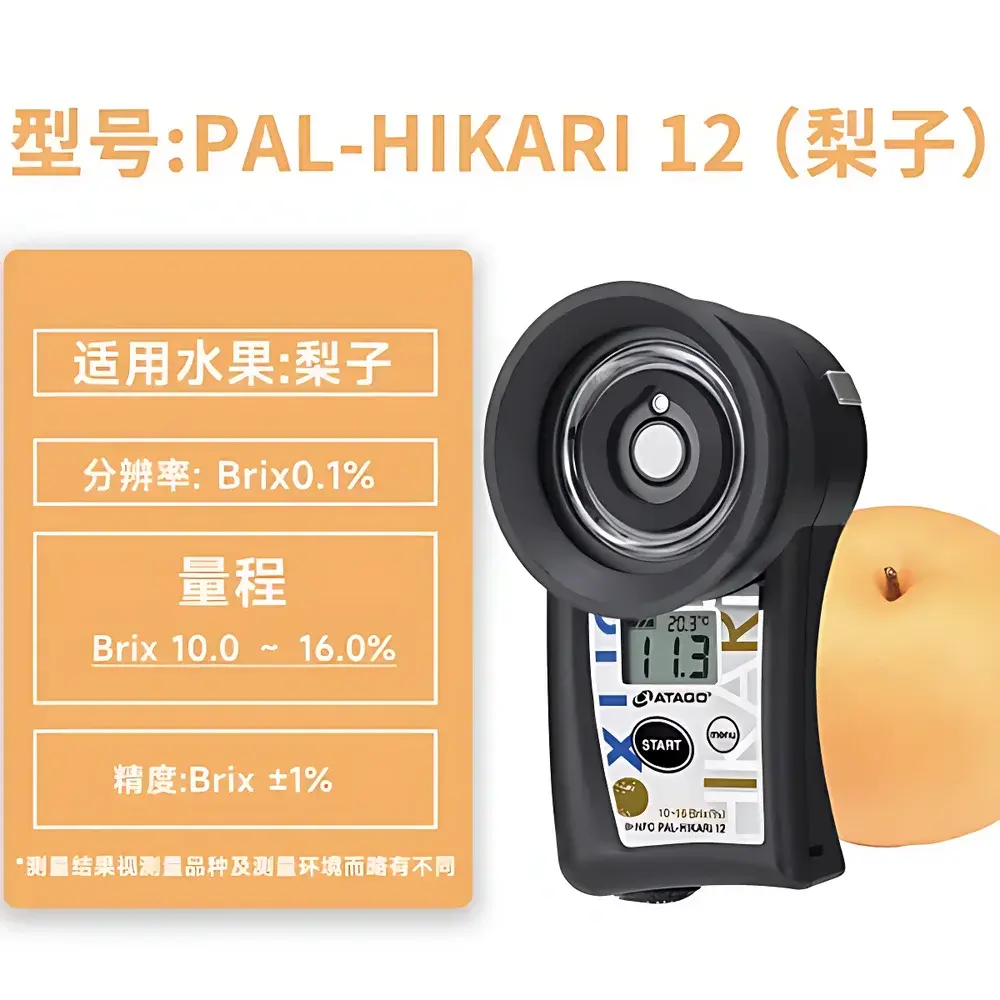
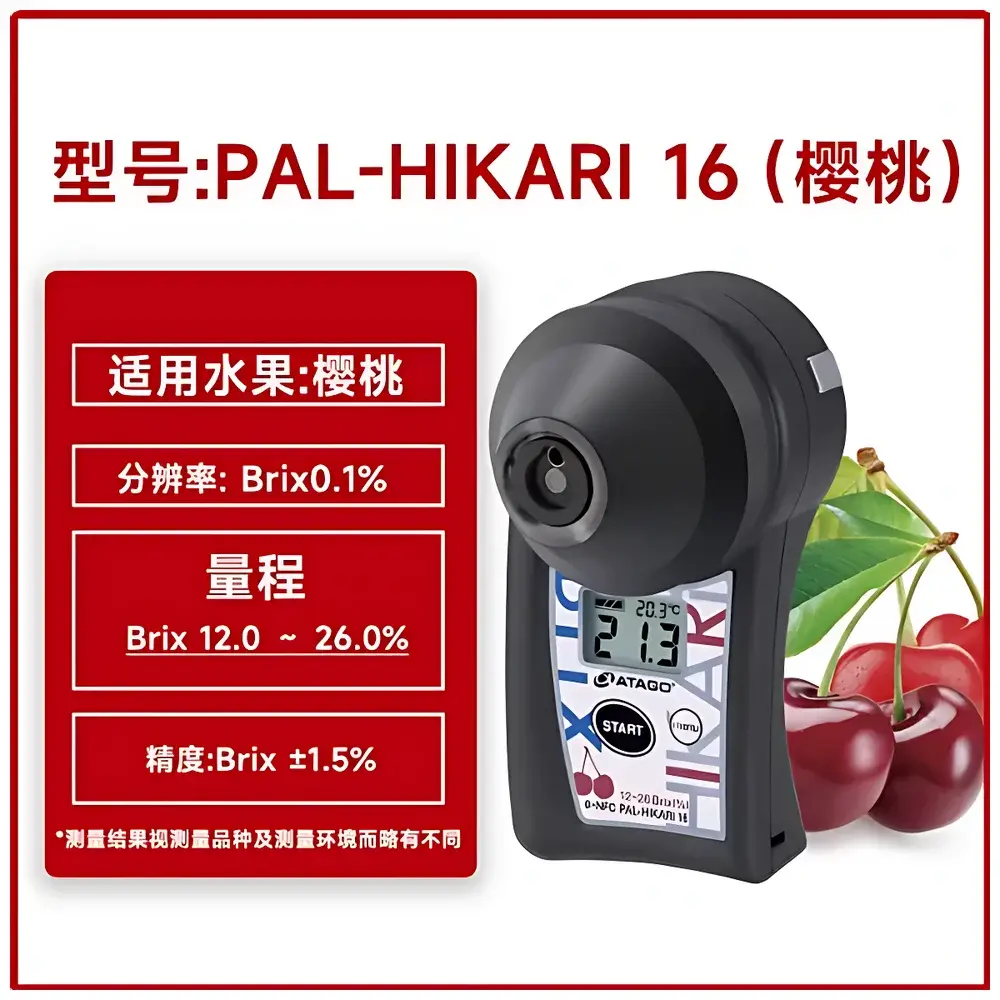
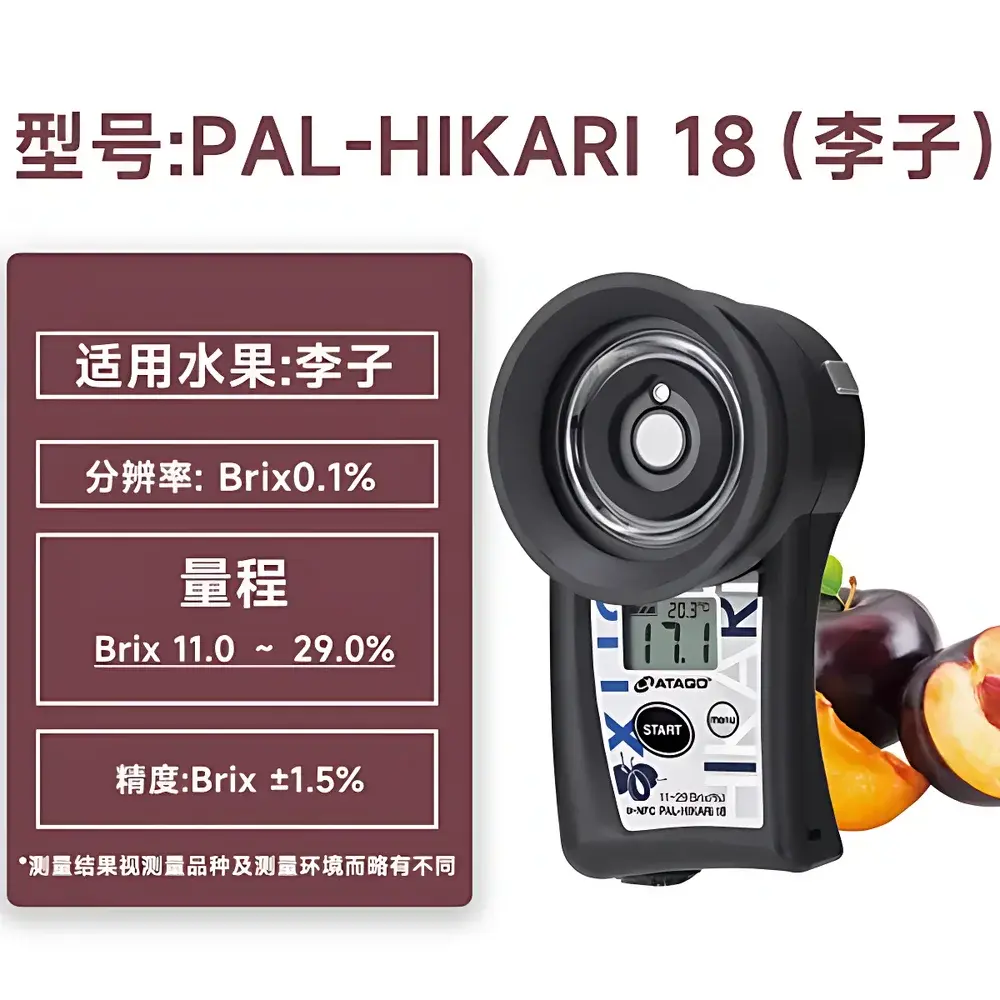
ATAGO PAL-HIKARI Non-Destructive Fruit Ripeness and Brix Meter
| Brand | ATAGO |
|---|---|
| Origin | Japan |
| Model | PAL-HIKARI |
| Instrument Type | Portable |
| Parameter Type | Single-Parameter (Brix) |
| Measurement Range | 0–100% Brix |
| Resolution | 0.1% Brix |
| Accuracy | ±5% Brix |
| Data Storage | Up to 100 measurements with NFC-enabled transfer |
| Compliance | Designed for agricultural QC, post-harvest assessment, and horticultural R&D workflows |
Overview
The ATAGO PAL-HIKARI is a handheld, non-destructive optical refractometer engineered for rapid, in-situ assessment of fruit ripeness and soluble solids content (SSC), expressed as degrees Brix (% w/w sucrose equivalent). Unlike traditional destructive sampling methods requiring juice extraction, the PAL-HIKARI employs high-precision prism-based refractometry coupled with temperature-compensated optics to deliver repeatable Brix readings directly on intact fruit surfaces—enabling real-time harvest decision support, quality grading, and longitudinal maturity tracking without compromising sample integrity. Its core measurement principle relies on the correlation between refractive index and dissolved sugar concentration in plant tissues, calibrated per ISO 2173:2003 (fruit and vegetable products — determination of soluble solids content — refractometric method) and aligned with industry-standard protocols used in pomology, viticulture, and tropical fruit production.
Key Features
- Non-invasive measurement: Contact-based optical sensing eliminates fruit damage, preserving samples for downstream processing or shelf-life evaluation.
- Integrated temperature compensation: Automatic correction across 10–40 °C ensures metrological consistency under field or greenhouse conditions.
- NFC-enabled data logging: Stores up to 100 sequential measurements—including Brix value, ambient temperature, and timestamp—with one-touch wireless transfer to NFC-capable smartphones or PCs for traceable recordkeeping.
- Rugged ergonomic design: IP65-rated enclosure, rubberized grip, and shock-absorbing housing meet EN 60529 requirements for dust and water resistance in agricultural environments.
- Intuitive interface: Backlit LCD display with dedicated Ripeness mode (0–100% scale) and direct Brix readout; no calibration required beyond factory-set reference.
- Battery efficiency: Powered by two AAA batteries supporting >10,000 measurements per set, minimizing downtime during high-throughput orchard surveys.
Sample Compatibility & Compliance
The PAL-HIKARI is validated for use on intact, non-waxy, non-hairy fruits including apples, pears, grapes, mangoes, kiwifruit, and citrus varieties. Surface moisture must be gently blotted prior to measurement to avoid optical interference. While not intended for viscous or opaque matrices (e.g., purees or pulps), its performance adheres to ASTM D1000-20 (Standard Specification for Refractometers) for portable optical instruments. Data export via NFC supports basic audit trails required under Good Agricultural Practice (GAP) frameworks and internal quality management systems. Though not FDA 21 CFR Part 11-compliant out-of-the-box, raw .csv exports facilitate integration into validated LIMS environments when paired with documented procedural controls.
Software & Data Management
No proprietary software installation is required. NFC transmission delivers plain-text timestamped records in ISO 8601 format (YYYY-MM-DD HH:MM:SS), with fields for Brix (%), ambient temperature (°C), and device ID. Exported logs are compatible with Excel, Python pandas, or statistical platforms such as JMP and Minitab for trend analysis, harvest window modeling, or correlation studies against ethylene evolution or firmness data. For regulated environments, users may implement supplemental metadata tagging (e.g., lot ID, operator ID) via manual annotation or third-party mobile apps that accept NFC-initiated CSV ingestion.
Applications
- Harvest timing optimization: Quantify SSC accumulation curves to define optimal picking windows for flavor, shelf life, and transport resilience.
- Post-harvest quality assurance: Screen incoming lots at receiving docks to enforce contractual Brix specifications (e.g., ≥12.5% for export-grade table grapes).
- Varietal comparison trials: Monitor ripening kinetics across rootstocks or growing regions without introducing sampling bias from destructive protocols.
- Educational and extension use: Demonstrate sugar metabolism principles in horticulture curricula or farmer field schools with immediate visual feedback.
- Supply chain transparency: Generate time-stamped, location-tagged Brix logs for blockchain-integrated traceability systems in premium fruit programs.
FAQ
Is the PAL-HIKARI suitable for measuring Brix in fruit juices or extracted sap?
No—this instrument is designed exclusively for non-destructive surface measurement on intact fruit. Juice or sap analysis requires a laboratory-grade digital refractometer with adjustable cell pathlength and temperature control.
Does the ±5% Brix accuracy specification apply across the full 0–100% range?
Accuracy is specified per ATAGO’s internal validation protocol under controlled conditions (20–25 °C, uniform surface hydration); deviation may increase near extremes (e.g., 90% Brix) due to optical saturation effects in highly concentrated tissues.
Can NFC data be encrypted or password-protected?
NFC transmission uses standard NDEF formatting without encryption; users requiring data security should apply endpoint-level protection (e.g., device-level biometric locks or encrypted cloud sync) after transfer.
What maintenance is required to sustain long-term accuracy?
Daily cleaning of the prism surface with lens tissue and isopropyl alcohol is recommended; annual verification against NIST-traceable sucrose standards is advised for QA-critical applications.
Is firmware upgrade capability supported?
Firmware is factory-programmed and non-upgradable; all functional enhancements are delivered via next-generation hardware revisions (e.g., PAL-HIKARI v2).



