
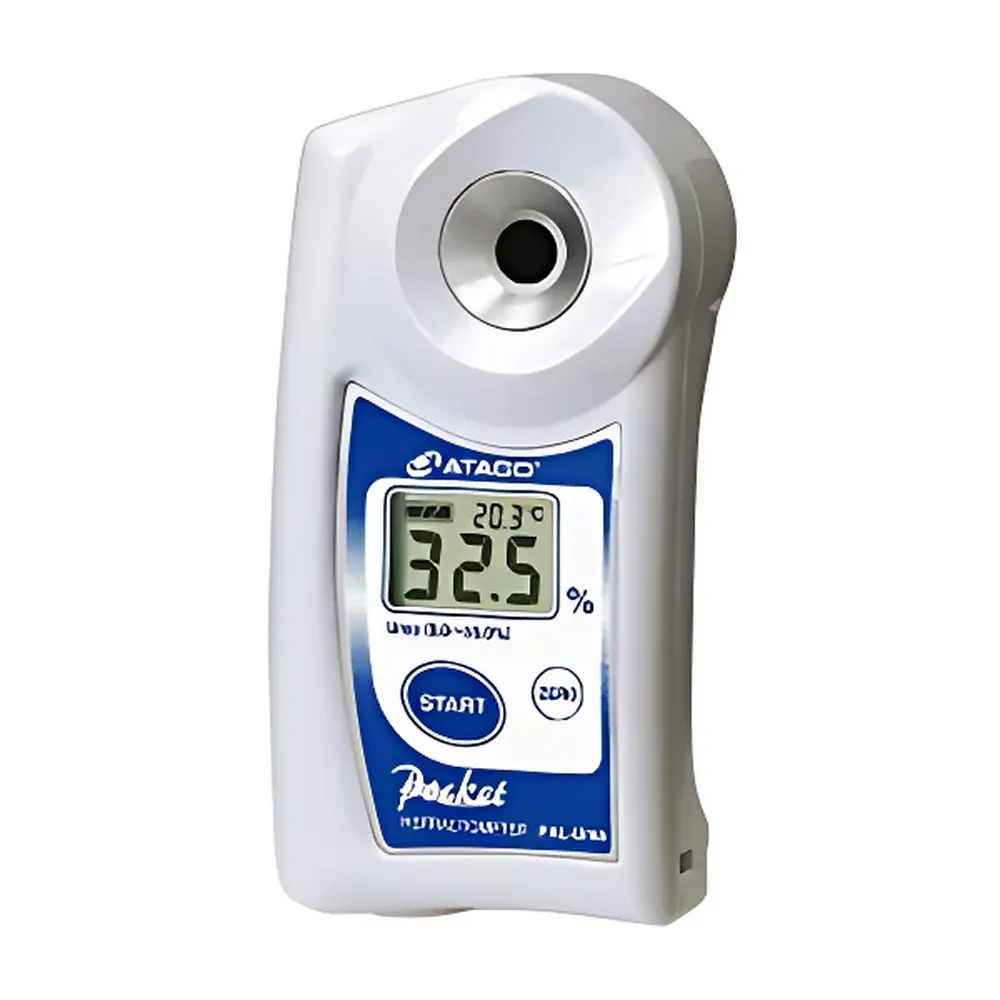
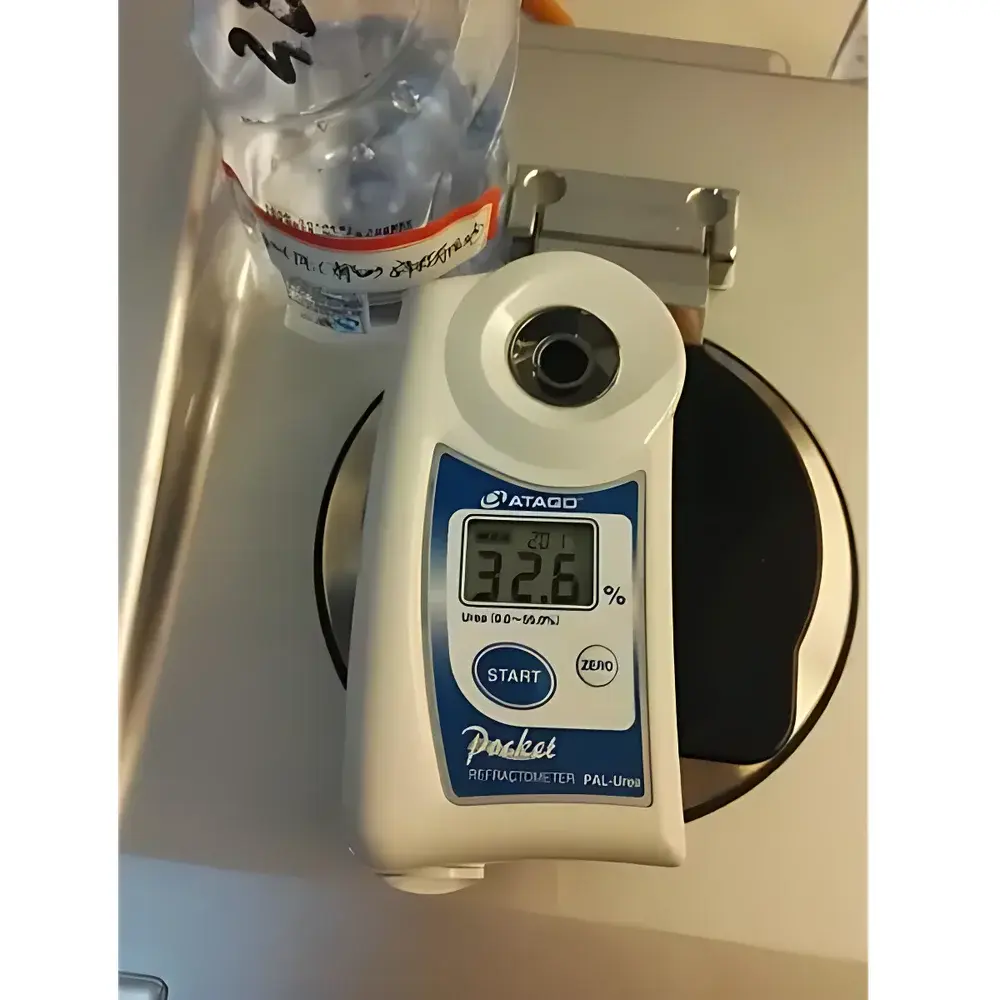
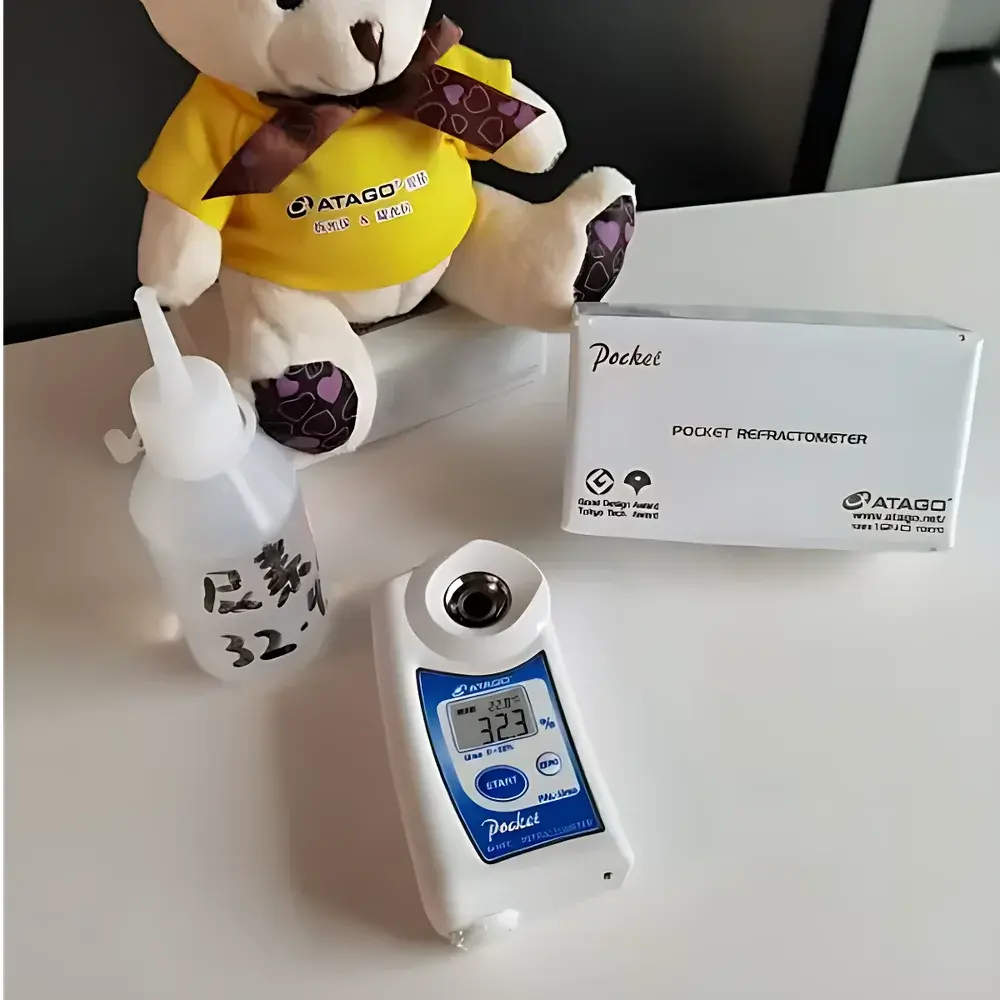
ATAGO PAL-Urea Portable Diesel Exhaust Fluid (DEF) Refractometer
| Brand | ATAGO |
|---|---|
| Origin | Japan |
| Product Type | Handheld Refractometer |
| Model | PAL-Urea |
| Measurement Range | 0.0–55.0% w/w urea |
| Accuracy | ±0.2% w/w |
| Digital Display | Yes |
| Temperature Control | None |
| Compliance | Designed for ISO 22241-1 / ISO 22241-2 / DIN 70070 / ASTM D7669 conformity verification |
Overview
The ATAGO PAL-Urea is a precision handheld refractometer engineered specifically for the rapid, on-site measurement of urea concentration in Diesel Exhaust Fluid (DEF), also known as AUS 32 (Aqueous Urea Solution, 32.5% w/w). Based on the principle of critical-angle refractometry, the instrument determines DEF concentration by measuring the refractive index of the sample at ambient temperature and converting it to mass percentage using a pre-calibrated, traceable polynomial curve aligned with ISO 22241-1 specifications. Unlike generic Brix refractometers, the PAL-Urea applies a proprietary optical algorithm optimized for the linear refractive index–concentration relationship of urea–water systems within the 0–55% range, ensuring metrological validity for compliance-critical applications in fleet maintenance, fuel distribution, and vehicle service centers.
Key Features
- Direct readout in % w/w urea concentration (0.0–55.0%), eliminating manual conversion or lookup tables
- Digital LCD display with automatic temperature compensation (ATC) for ambient conditions between 10–40°C, referenced to 20°C per ISO 22241-2
- High-precision optical prism assembly manufactured from sapphire-grade optical glass, resistant to chemical erosion from DEF exposure
- Compact, ergonomic design (130 × 65 × 45 mm; ~180 g) with IP65-rated enclosure for dust and water resistance during field use
- No external power supply required — operates on two AAA alkaline batteries (typical life: >10,000 measurements)
- Calibration verified using NIST-traceable 32.5% w/w urea standard solution; user calibration lock prevents accidental parameter modification
Sample Compatibility & Compliance
The PAL-Urea is validated exclusively for aqueous urea solutions meeting ISO 22241-1 purity requirements (e.g., absence of aldehydes, metals, and biocides above threshold limits). It is not intended for use with contaminated, degraded, or non-aqueous DEF substitutes. The device supports regulatory verification workflows under ISO 22241-2 (testing methods), DIN 70070 (German automotive standard), and ASTM D7669 (standard test method for urea concentration in diesel exhaust fluid). Its measurement uncertainty (±0.2% w/w) satisfies the ±0.7% tolerance limit specified in ISO 22241-1 Annex A for field-grade instrumentation. For GLP/GMP environments, measurement records can be manually logged with operator ID, time stamp, and batch number to support audit trails.
Software & Data Management
While the PAL-Urea operates as a standalone instrument without embedded data logging or Bluetooth connectivity, its output is fully compatible with external documentation systems used in fleet management and quality assurance departments. Each reading corresponds to a single-point concentration value traceable to the instrument’s factory calibration certificate (included). For laboratories requiring digital integration, ATAGO’s complementary RX-5000i benchtop refractometer offers USB export of raw refractive index (nD), Brix, and % w/w data in CSV format, along with customizable calibration curves and 21 CFR Part 11-compliant user access control and electronic signature functionality.
Applications
- On-vehicle DEF tank sampling during routine maintenance checks to confirm 32.5% ± 0.7% operational concentration
- Verification of DEF batches prior to dispensing at fuel depots or truck stops
- Field diagnostics of SCR system anomalies linked to low-concentration or adulterated DEF
- Training and certification programs for diesel technicians on ISO 22241 compliance protocols
- Third-party inspection agencies conducting roadside DEF quality audits per national emissions regulations (e.g., EPA Clean Air Act enforcement, EU Euro VI monitoring)
FAQ
Why must DEF concentration be precisely 32.5% w/w?
Because the selective catalytic reduction (SCR) catalyst is chemically optimized for stoichiometric reaction with NOx at this concentration. Deviations reduce NOx conversion efficiency and may trigger engine derating or fault codes.
Can the PAL-Urea measure other urea-based solutions?
No — its calibration curve is mathematically constrained to the ISO 22241-defined urea–water binary system. Use outside this scope violates metrological validity.
Does ambient temperature affect accuracy?
Yes — though ATC compensates within 10–40°C, measurements below 10°C or above 40°C require thermal equilibration of the sample to ambient before testing.
How often should the instrument be recalibrated?
Annually, or after 5,000 measurements — whichever occurs first — using certified 32.5% w/w reference standard (ATAGO P/N: 2315-001).
Is cleaning required between samples?
Yes — wipe the prism surface with lint-free tissue moistened with deionized water after each measurement to prevent crystallization-induced drift.





