
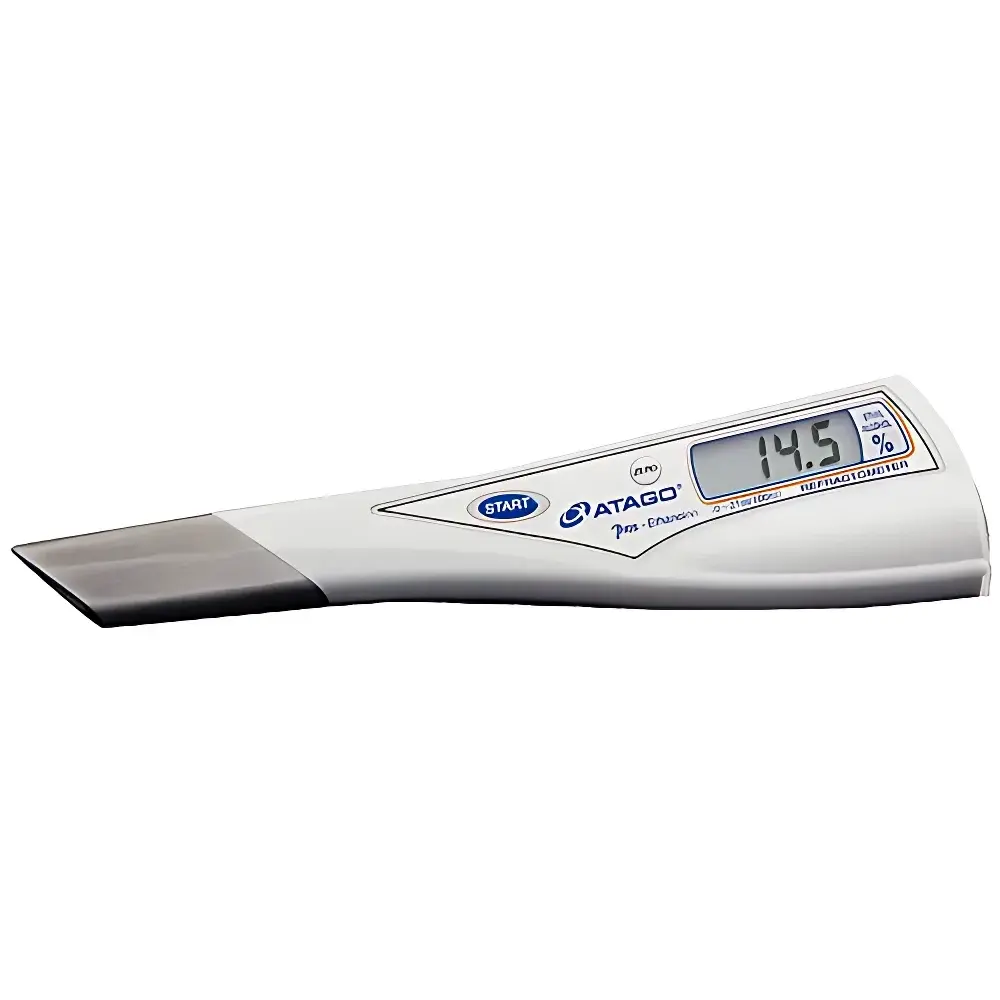
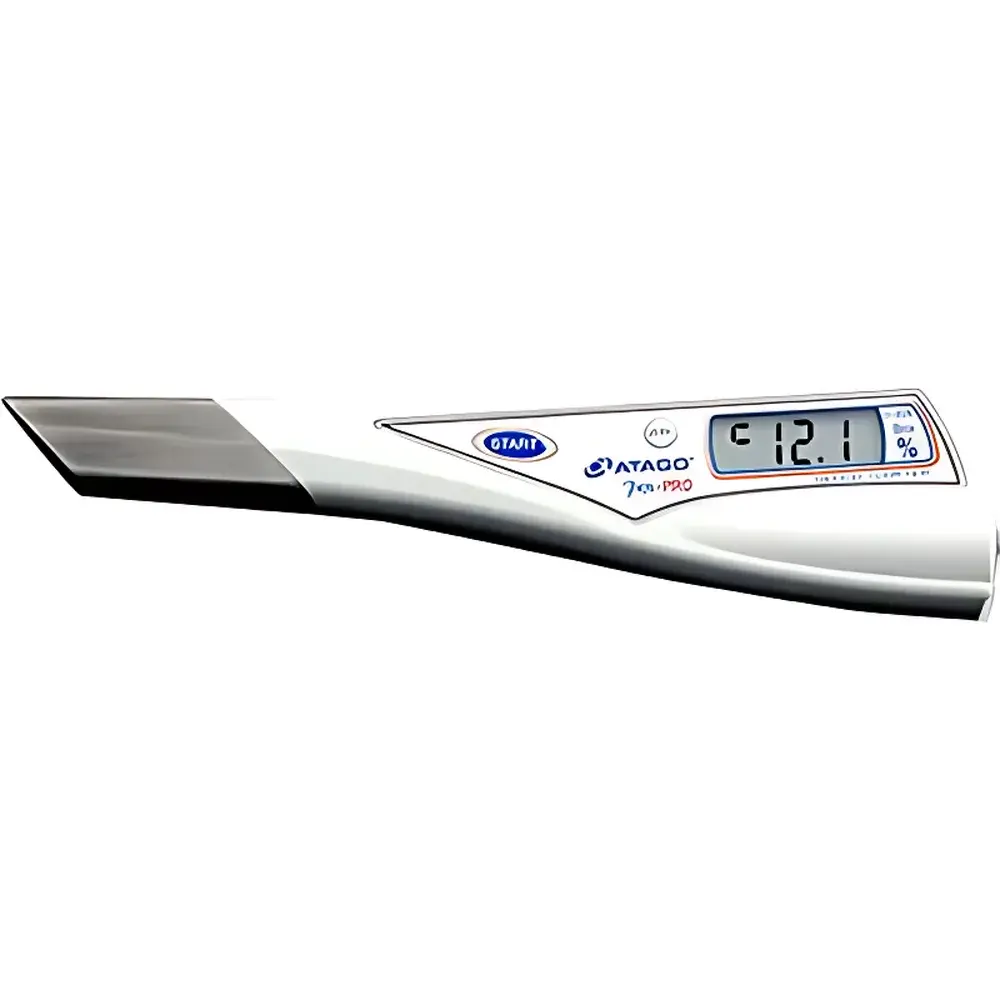
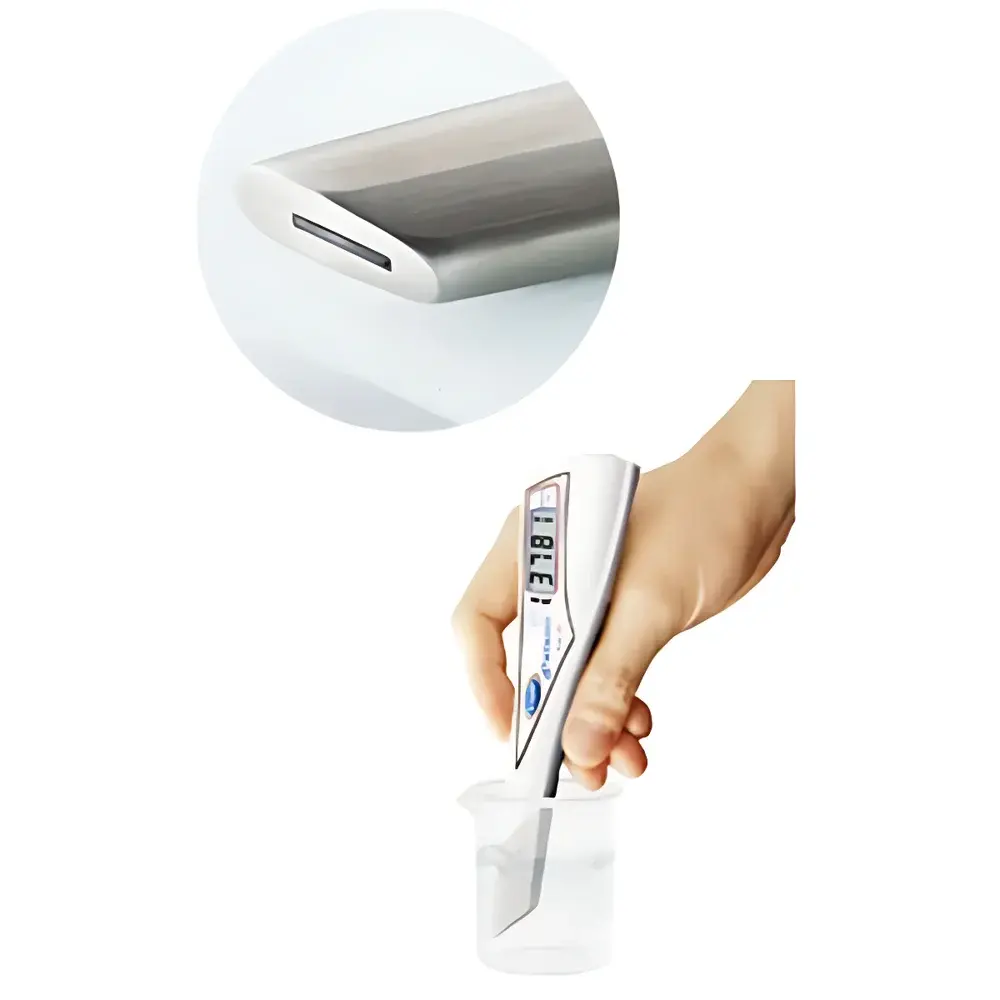
ATAGO PEN Series Digital Pocket Refractometer
| Brand | ATAGO |
|---|---|
| Origin | Japan |
| Model | PEN Series |
| Price | USD 950 (FOB Japan) |
| Type | Handheld Digital Refractometer for Direct Sample Immersion |
Overview
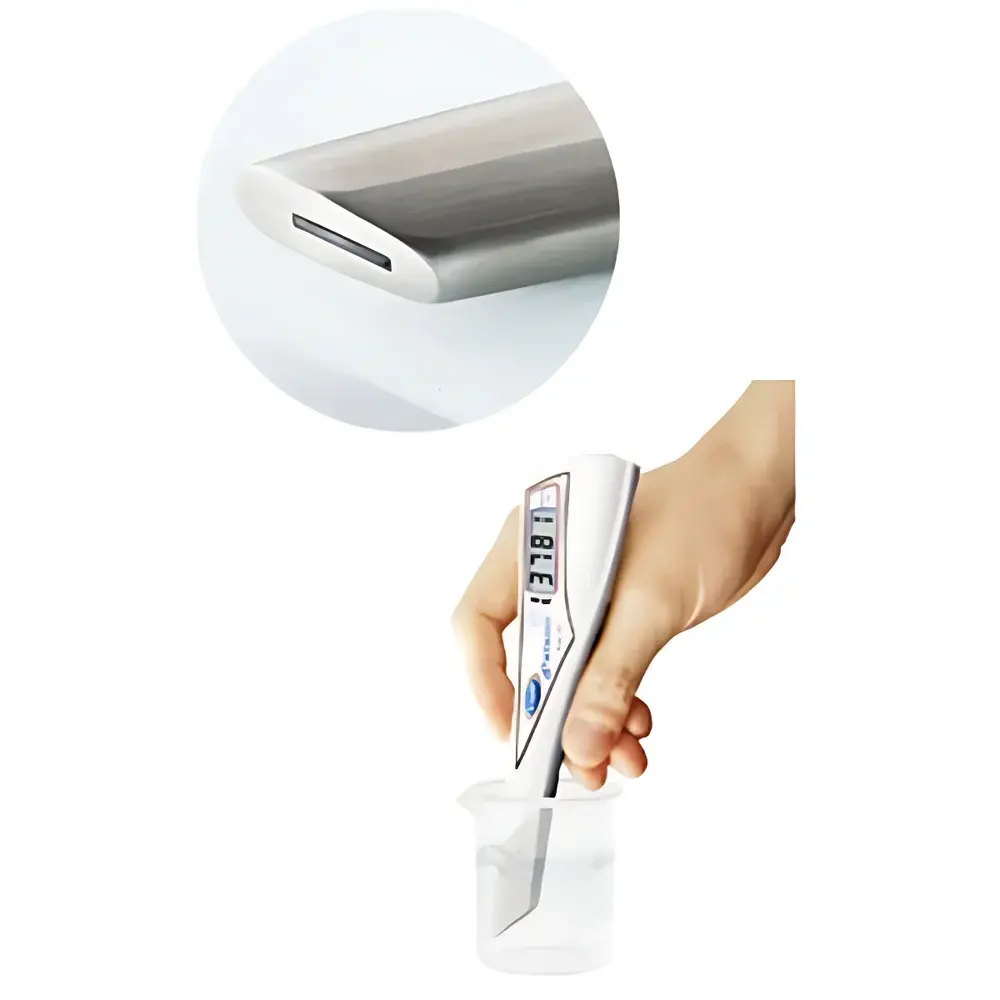
The ATAGO PEN Series Digital Pocket Refractometer is a compact, battery-powered optical instrument engineered for rapid, field-ready measurement of refractive index (nD) and derived concentration units—including Brix (% w/w), sodium chloride (% NaCl), glycol concentration (g/100 mL or %), and other user-defined scales. Based on the principle of total internal reflection at the prism–sample interface, the device employs a high-stability LED light source and a precision-ground sapphire-coated glass prism to deliver repeatable optical measurements with minimal sample volume (0.3 mL). Designed for direct immersion into liquids, gels, or semi-solid samples—without requiring pipetting, cuvettes, or temperature equilibration—the PEN Series eliminates procedural bottlenecks common in benchtop refractometry. Its ergonomic pen-shaped form factor, intuitive one-button operation, and auto-ranging digital display make it ideal for quality control technicians, food & beverage inspectors, HVAC maintenance personnel, and laboratory support staff conducting routine on-site or inline checks.
Key Features
- Direct immersion sampling: No sample transfer or droplet placement required—prism tip immersed directly into bulk liquid or viscous medium.
- Sapphire-coated measuring prism: Provides exceptional scratch resistance and long-term optical stability under repeated field use.
- Temperature compensation (ATC): Built-in thermistor automatically corrects readings to 20 °C across 10–40 °C ambient range per ISO 21748 and ASTM D1218 standards.
- IP65-rated enclosure: Dust- and water-resistant housing ensures reliable operation in humid, washdown, or outdoor environments.
- Auto-power-off after 3 minutes of inactivity: Extends battery life (CR2032 × 2, typical 10,000 measurements per set).
- Zero calibration via distilled water: Simple two-point verification (zero and standard solution) supports traceable calibration per ISO/IEC 17025 requirements.
Sample Compatibility & Compliance
The PEN Series accommodates aqueous solutions, syrups, coolants, antifreeze mixtures, brines, fruit juices, dairy-based emulsions, and industrial cleaning agents. It is not suitable for strongly acidic, alkaline, or organic solvent-based samples that may degrade the prism coating. All models comply with JIS K 0061 (Japanese Industrial Standard for refractometers) and meet CE marking requirements for electromagnetic compatibility (2014/30/EU) and low-voltage safety (2014/35/EU). Calibration documentation and traceable certificate of conformity are available upon request for GLP/GMP-regulated environments.
Software & Data Management
While the PEN Series operates as a standalone instrument without onboard data logging, its analog output (0–1 V DC) enables integration with external dataloggers or PLC systems for process monitoring. For audit-ready workflows, users may manually record readings alongside batch ID, operator ID, and timestamp in paper-based or LIMS-integrated electronic notebooks. The device supports full traceability when used in conjunction with documented calibration procedures aligned with ISO/IEC 17025 Clause 6.4 and FDA 21 CFR Part 11 principles (via external secure recording systems).
Applications
- Food & Beverage: Quick Brix verification of fruit juices, jams, soft drinks, and honey during production and receiving inspection.
- Automotive & Industrial Fluids: Glycol concentration monitoring in engine coolants and heat-transfer fluids to prevent freezing or overheating.
- Aquaculture & Hydroponics: Salinity assessment in seawater tanks and nutrient solutions using NaCl scale mode.
- Pharmaceutical Manufacturing: Excipient solution concentration checks (e.g., sucrose or dextrose syrups) prior to formulation.
- HVAC Maintenance: Ethylene glycol/water mixture verification in chilled water systems to ensure corrosion inhibition and thermal efficiency.
FAQ
What is the minimum sample volume required for measurement?
0.3 mL — sufficient to fully cover the prism surface during immersion.
Does the PEN Series require temperature stabilization before use?
No — built-in ATC compensates for sample temperature drift between 10 °C and 40 °C.
Can the device measure non-aqueous solvents like ethanol or acetone?
Not recommended — aggressive solvents may damage the sapphire coating and compromise optical accuracy.
Is calibration traceable to national standards?
Yes — when performed using NIST-traceable reference standards (e.g., certified sucrose solutions), calibration meets ISO/IEC 17025 metrological requirements.
How often should zero calibration be performed?
Before each measurement session and after exposure to extreme ambient temperatures or humidity shifts.





