
ATAGO VISCO B(L) Temperature-Controlled Rotational Viscometer
| Brand | ATAGO |
|---|---|
| Origin | Japan |
| Model | VISCO B(L) Temperature-Controlled Stand-Mounted Viscometer |
| Instrument Type | Portable Rotational Viscometer |
| Viscosity Range | 12 to 60,000,000 mPa·s |
| Temperature Range | 5.0 to 90.0 °C |
| Temperature Accuracy | ±0.2 °C |
| Sample Environment | Ambient Operation with Active Thermal Control |
| Compliance | Designed for GLP-aligned laboratory workflows |
Overview
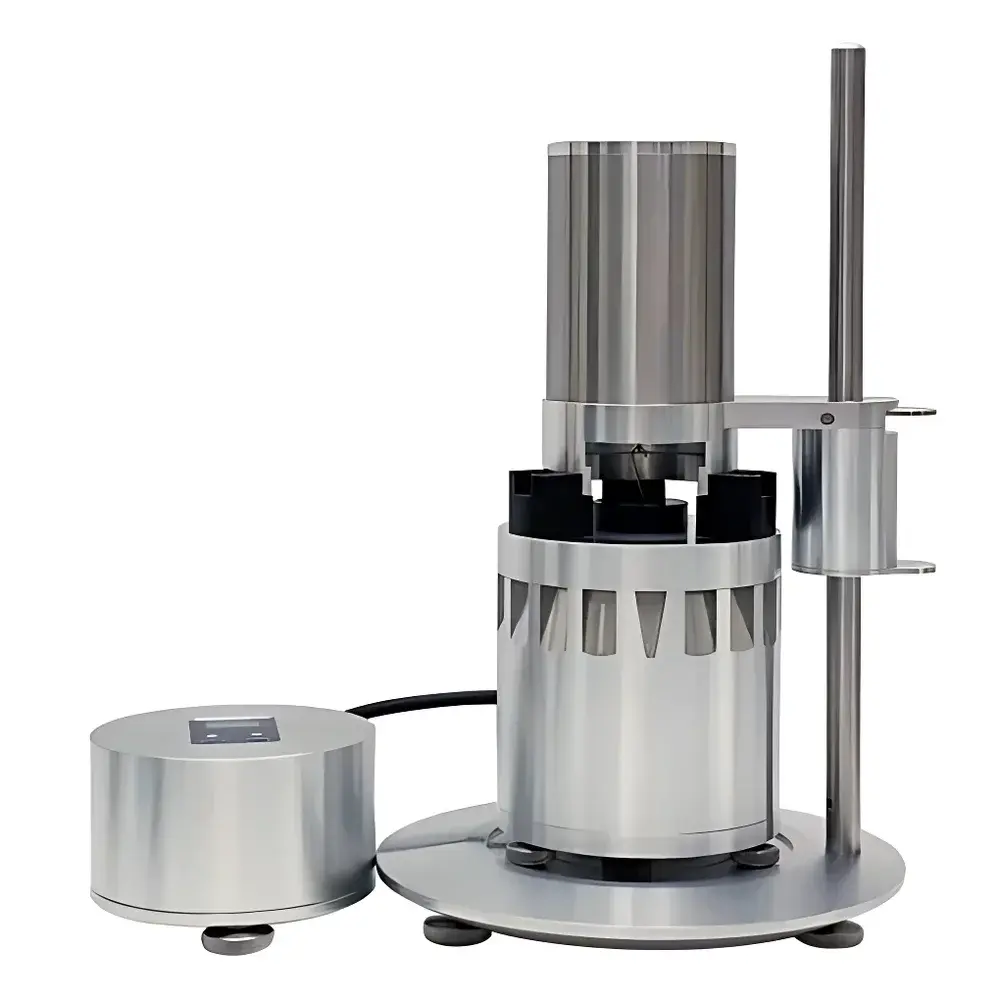
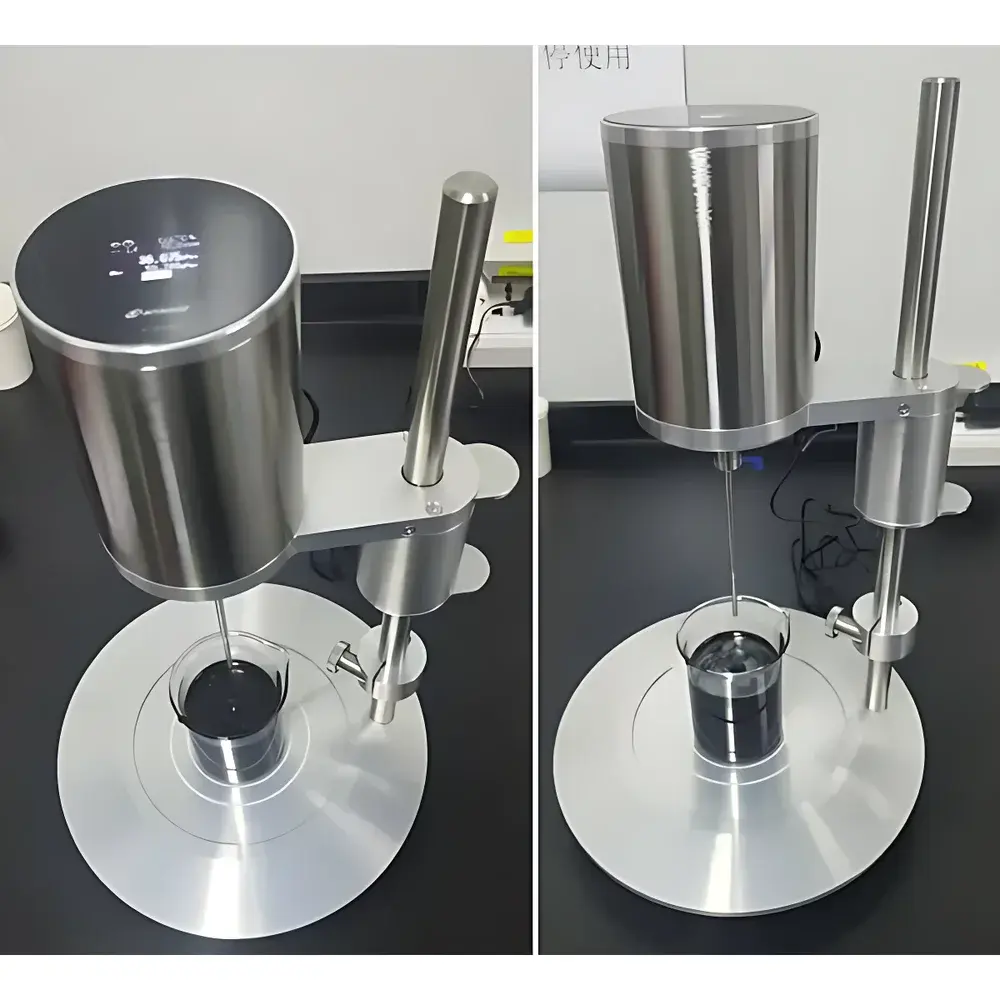
The ATAGO VISCO B(L) Temperature-Controlled Rotational Viscometer is an engineered solution for precise, repeatable viscosity measurement of Newtonian and non-Newtonian fluids under thermally stabilized conditions. Based on the principle of rotational viscometry—where torque required to rotate a spindle at a defined angular velocity within a sample is proportional to its dynamic viscosity—the instrument delivers high reproducibility across a broad shear rate spectrum. Unlike ambient-only handheld units, the VISCO B(L) integrates a dedicated temperature-controlled stand that actively regulates sample temperature from 5.0 °C to 90.0 °C with ±0.2 °C accuracy, eliminating thermal drift as a source of measurement uncertainty. This capability is essential for evaluating temperature-dependent rheological behavior—such as viscosity index, pour point correlation, or thermal degradation onset—in lubricants, pharmaceutical suspensions, polymer melts, and food emulsions. Its portable architecture does not compromise metrological integrity; rather, it enables controlled benchtop measurements in QC labs, pilot production lines, and R&D environments where space and flexibility are constrained.
Key Features
- Integrated Peltier-based temperature control stand with real-time PID regulation and digital display
- Viscosity measurement range spanning six orders of magnitude: 12–60,000,000 mPa·s (cP), supporting low-shear characterization of gels and high-shear evaluation of thin oils
- Spindle-driven rotational mechanism compliant with ASTM D2196 and ISO 2555 standards for single-point and multi-speed viscosity profiling
- Compact, lightweight design (< 3 kg total system mass) with ergonomic stand-mounting interface for stable operation without external fixtures
- Calibration traceable to NIST-traceable reference oils; factory calibration certificate included with each unit
- No internal battery dependency—operates via universal AC adapter (100–240 V, 50/60 Hz)
Sample Compatibility & Compliance
The VISCO B(L) accommodates samples in standard cylindrical containers (e.g., 50–500 mL beakers or sample cups), with optional spindle immersion depth guides ensuring consistent geometry per ISO 3219. It supports aqueous, organic, and semi-solid matrices—including viscous polymer solutions, protein-rich biologics, surfactant-laden personal care formulations, and mineral- and synthetic-based lubricants. All wetted parts are constructed from corrosion-resistant stainless steel (AISI 316) and chemically inert PTFE-coated components. The system meets general requirements for Good Laboratory Practice (GLP) documentation: timestamped measurement logs, user ID input, and configurable pass/fail thresholds for routine QC checks. While not inherently 21 CFR Part 11-compliant, audit trails can be exported in CSV format for integration into validated LIMS or ELN platforms supporting electronic record retention.
Software & Data Management
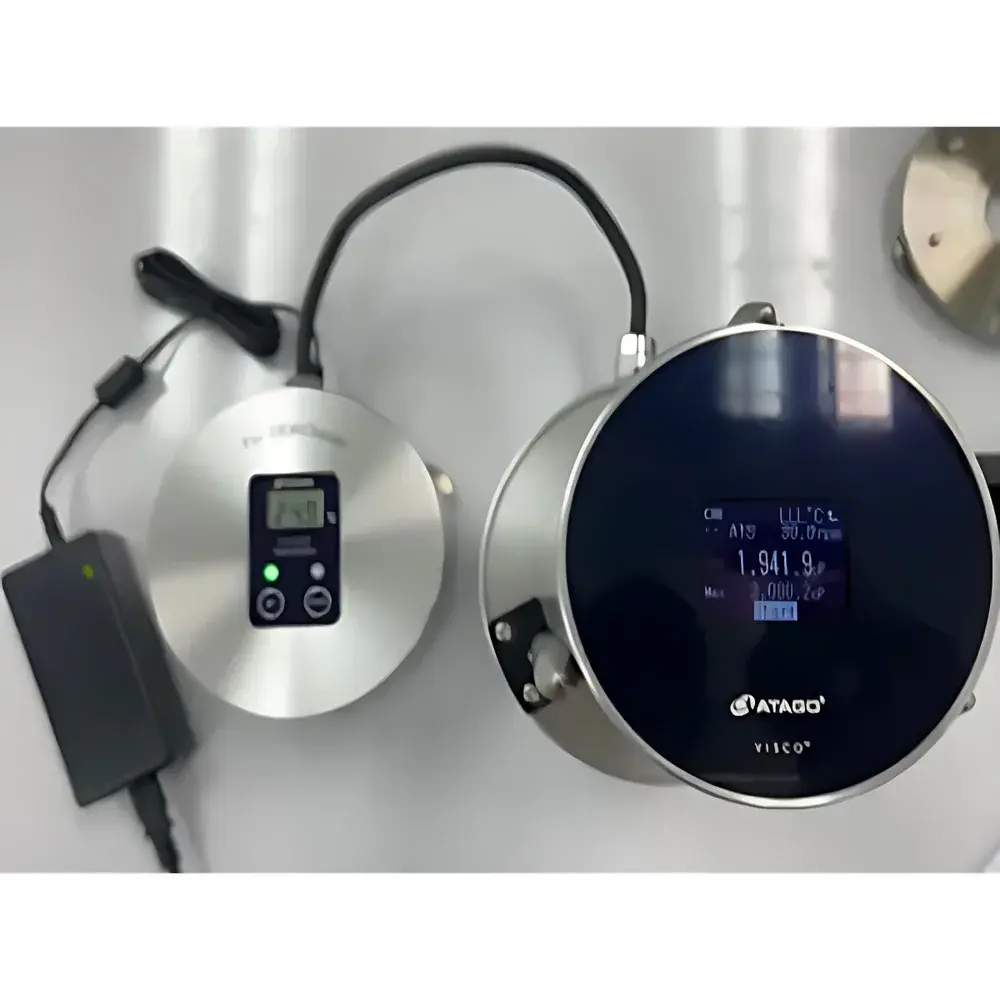
The VISCO B(L) operates in standalone mode with an intuitive LCD interface displaying real-time viscosity, temperature, spindle speed (rpm), and shear stress. Optional PC connectivity via USB enables data export to ATAGO’s proprietary VISCO Data Manager software (Windows-compatible), which supports batch reporting, statistical process control (SPC) charting, and comparative analysis across multiple lots or formulations. Exported datasets include metadata such as operator ID, ambient lab temperature, calibration date, and environmental humidity—critical for regulatory submissions under ICH Q5C or USP . No cloud synchronization or remote access functionality is embedded; all processing occurs locally to maintain data sovereignty and cybersecurity compliance.
Applications
- Lubricant Development & Monitoring: Quantifying viscosity-temperature profiles of base oils and formulated greases to assess oxidative stability, shear thinning behavior, and cold-start performance per ASTM D445 and D7042
- Pharmaceutical Manufacturing: Verifying consistency of parenteral suspensions, ophthalmic solutions, and topical gels during formulation optimization and batch release testing
- Food Process Engineering: Monitoring structural integrity of heat-sensitive sauces, dairy concentrates, and hydrocolloid systems (e.g., xanthan, carrageenan) during thermal processing cycles
- Chemical R&D: Characterizing crosslinking kinetics in UV-curable resins and solvent evaporation effects in adhesive formulations
- Academic Research: Teaching core rheological concepts—including Newtonian/non-Newtonian classification, yield stress estimation, and thixotropic recovery—in undergraduate materials science and chemical engineering laboratories
FAQ
What spindle configurations are supported by the VISCO B(L)?
The instrument ships with standardized L-type spindles (L1–L4) optimized for high-viscosity applications; additional spindles (e.g., ultra-low-volume U-type) are available as accessories.
Is external circulation required for temperature stabilization?
No—integrated Peltier elements provide closed-loop heating and cooling without external chillers or water baths.
Can the VISCO B(L) perform yield stress estimation?
It supports ramped-speed protocols to approximate flow curves; however, dedicated yield stress determination requires complementary vane or cone-plate geometry not included in this configuration.
How often should calibration be verified?
ATAGO recommends verification with certified reference oils before each daily use in regulated environments, and full recalibration annually or after 500 operational hours.
Does the system comply with ISO/IEC 17025 requirements?
While the hardware meets metrological criteria outlined in ISO 17025:2017 Clause 6.4 (equipment), formal accreditation requires laboratory-specific validation protocols and documented uncertainty budgets.
Related Products



