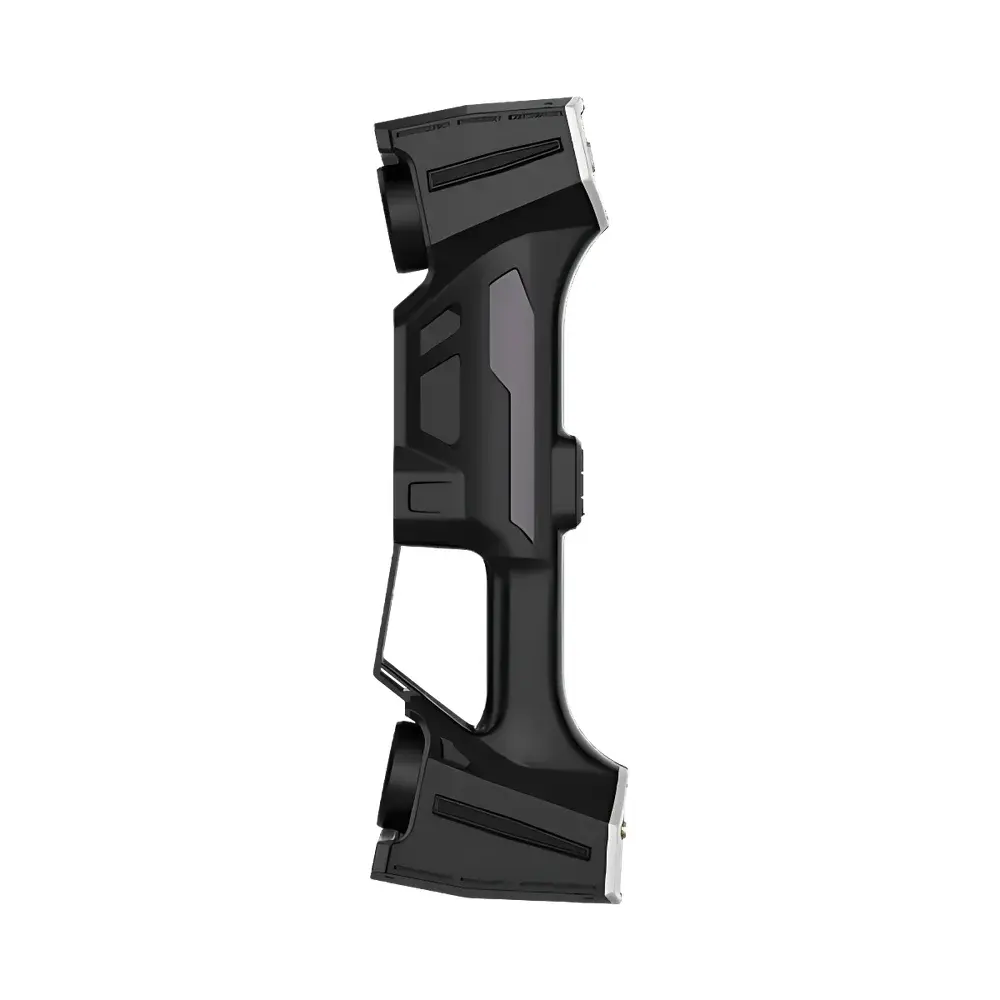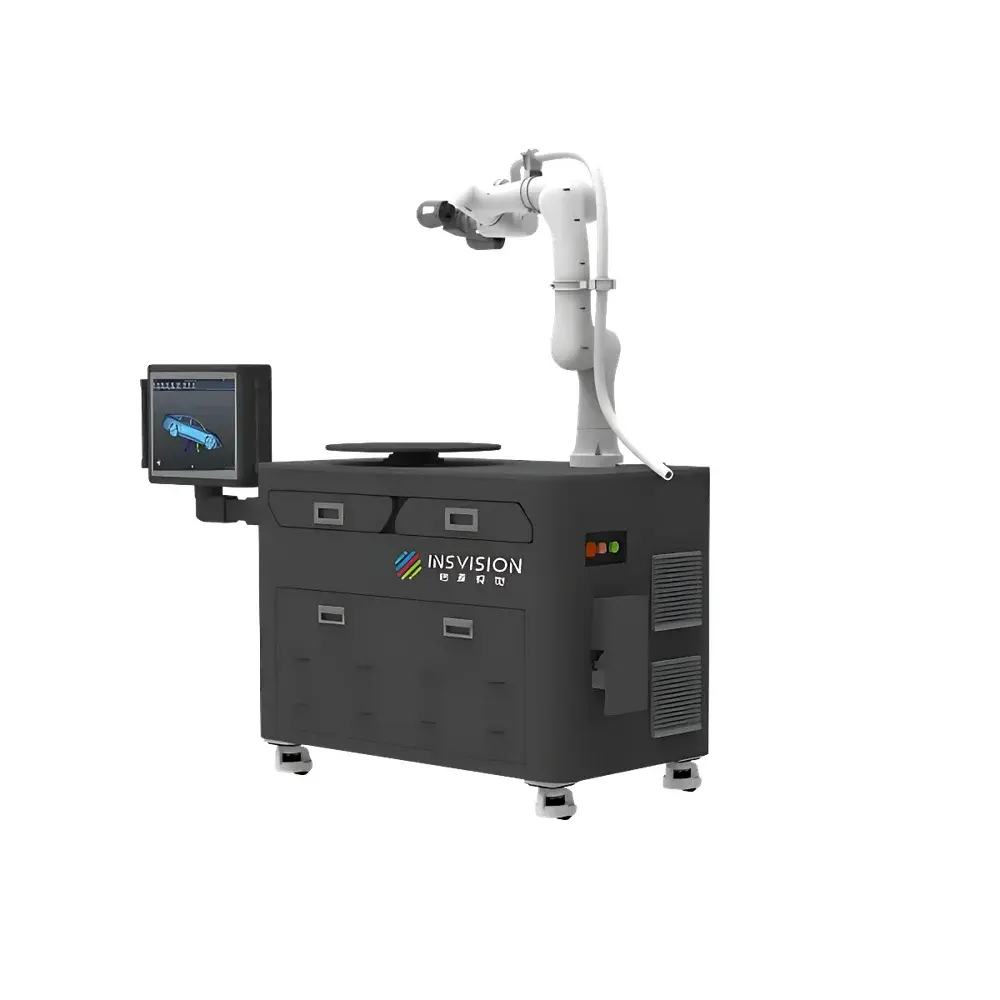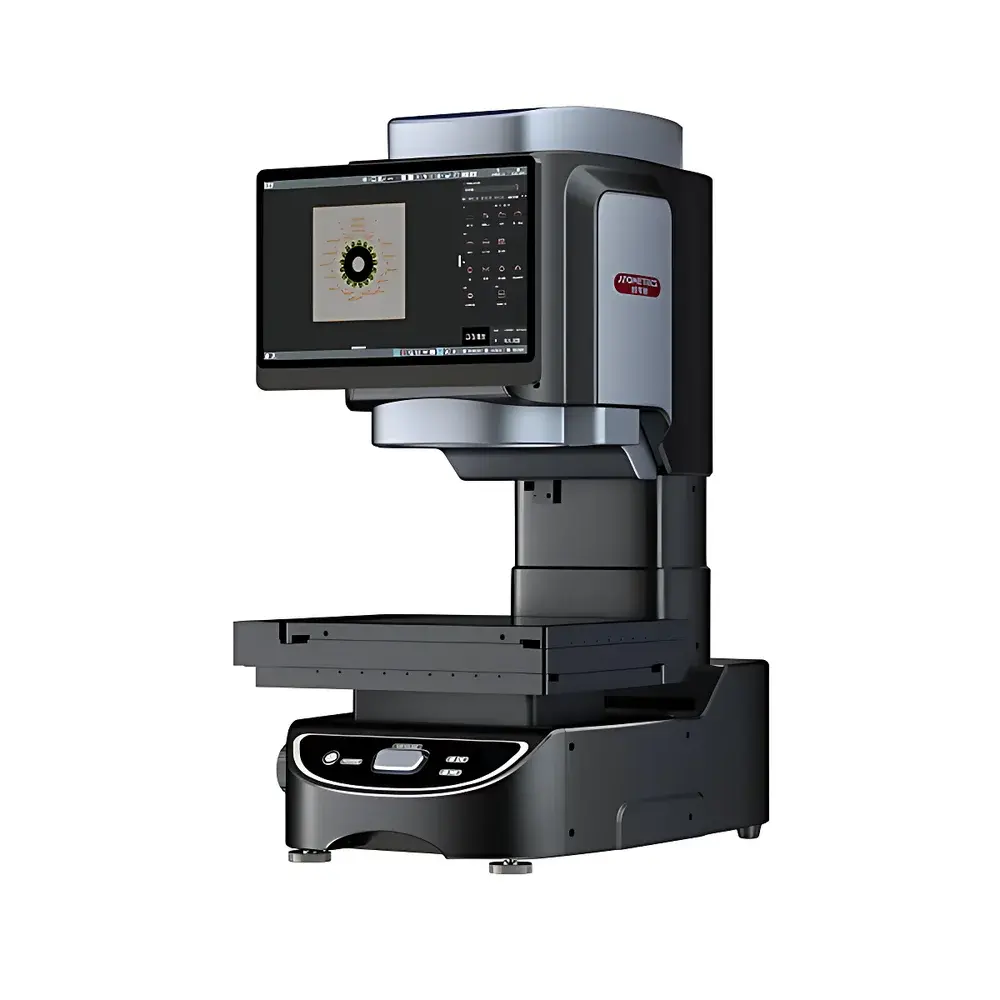
Atometrics FMX Series One-Touch Vision Measuring System
| Brand | Atometrics |
|---|---|
| Origin | Guangdong, China |
| Manufacturer Type | Manufacturer |
| Product Origin | Domestic |
| Model | FMX Series |
| Operation Mode | Fully Automatic |
| Measurement Accuracy | ±1.5 µm |
| Encoder Resolution | 50 nm |
| Camera | 20 MP Monochrome CMOS |
| Illumination | Transmission Light, Ring Light, Movable Profile Light, Slit Ring Light |
Overview
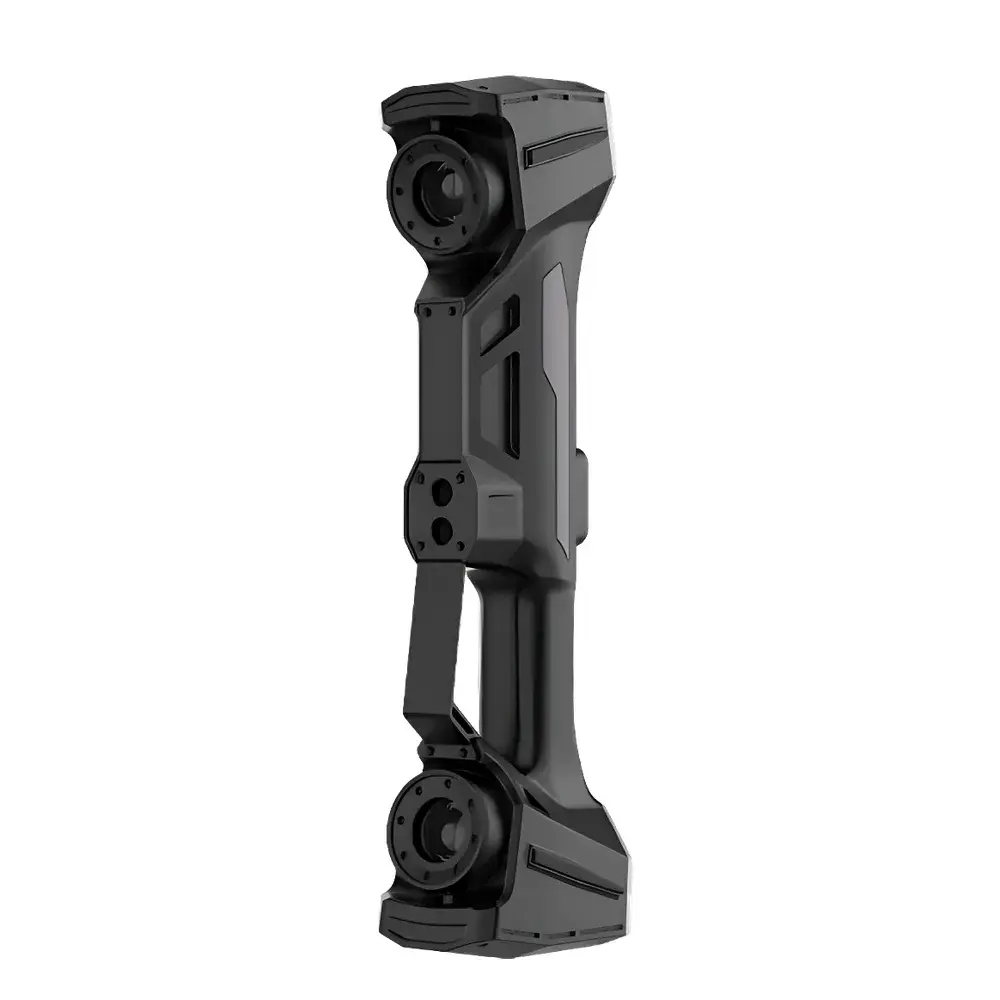
The Atometrics FMX Series One-Touch Vision Measuring System is an advanced, fully automated optical metrology platform engineered for high-throughput, high-reproducibility geometric measurement of precision-machined and stamped components. Unlike conventional coordinate measuring machines (CMMs), projection systems, or manual stereo microscopes—whose results depend heavily on operator skill, focus stability, lighting consistency, and manual point selection—the FMX Series eliminates human variability through deterministic, algorithm-driven measurement workflows. It operates on the principle of telecentric imaging combined with sub-pixel edge detection, enabling direct dimensional evaluation from calibrated 2D image data without physical probe contact. The system integrates a high-numerical-aperture (NA), low-distortion dual-telecentric lens, ensuring minimal perspective error across the entire field of view (FOV), thereby supporting traceable, ISO/IEC 17025-aligned measurements in production environments where speed, repeatability, and audit readiness are critical.
Key Features
- Fully automated operation: One-button initiation triggers synchronized auto-focus, adaptive illumination control (transmission + ring + profile + slit ring), and real-time edge acquisition—no user intervention required.
- Dual-telecentric optical architecture: Delivers <0.01% distortion across full FOV; increases usable measurement area by 36% compared to standard macro lenses while maintaining micron-level spatial fidelity.
- Sub-pixel edge detection engine: Proprietary algorithm subdivides each camera pixel into up to 200 discrete intensity interpolation points (0.005-pixel resolution), significantly exceeding native sensor resolution limits.
- Robust edge fitting & noise suppression: Integrated outlier rejection filters automatically identify and exclude burrs, surface debris, or machining artifacts prior to geometric fitting, improving measurement validity.
- Nanometer-resolution motion control: Precision motorized stage with 50 nm encoder resolution and 80 mm/s maximum travel velocity supports multi-field stitching, cross-lens alignment, and large-part coverage without repositioning.
- Dual-FOV simultaneous imaging: Optical path design enables concurrent capture of wide-area overview and high-magnification detail regions—enabling rapid part localization followed by targeted high-accuracy measurement.
Sample Compatibility & Compliance
The FMX Series accommodates a broad range of industrial parts—including stamped metal弹片 (spring contacts), CNC-turned shafts, powder metallurgy sintered components, injection-molded plastic housings, die-cut gaskets, connectors, gears, screws, and structural brackets—without requiring mechanical fixturing or datum alignment. Parts may be placed arbitrarily on the stage; the system autonomously detects quantity, orientation, and region-of-interest via global preview algorithms. All measurement routines comply with foundational metrological standards including ISO 1101 (Geometrical Product Specifications), ISO 14253-1 (Acceptance and verification of coordinate measuring machines), and ASTM E29 (Standard Practice for Using Significant Digits in Test Data). Data integrity is maintained per GLP/GMP principles, with optional audit trail logging aligned with FDA 21 CFR Part 11 requirements when integrated with validated software modules.
Software & Data Management
The embedded measurement software provides scriptable inspection programming, batch report generation (PDF/Excel), SPC-ready statistical output (Cp/Cpk, X-bar R charts), and direct export to MES/ERP systems via OPC UA or CSV APIs. Calibration certificates are digitally signed and stored with metadata (lens ID, light source settings, stage position logs) to support traceability. All measurement sequences are version-controlled, and software updates follow IEC 62304-compliant development lifecycle documentation. Raw image archives, edge maps, and fitted geometry files are retained with timestamped provenance for root-cause analysis and regulatory review.
Applications
This system is deployed extensively in Tier-1 automotive supply chains for incoming inspection of connector terminals and stamped spring contacts; in medical device manufacturing for verifying tolerances on machined orthopedic implant components; in consumer electronics for rapid validation of injection-molded housing features (e.g., snap-fit dimensions, aperture clearances); and in precision gear production for pitch diameter, tooth thickness, and runout assessment. Its ability to measure >50 features across multiple identical parts in under 8 seconds makes it especially suited for high-volume SMT component verification, battery tab inspection, and semiconductor packaging lead frame QA.
FAQ
Does the FMX Series require trained metrology personnel to operate?
No—operation requires no formal metrology training. The interface is designed for line operators; all calibration, focus, lighting, and edge detection steps execute autonomously.
Can measurement programs be exported and reused across different FMX units?
Yes—programs include embedded optical calibration parameters and are portable between identically configured FMX systems with version-matched firmware.
Is thermal drift compensated during extended measurement sessions?
The stage and optics are thermally stabilized; long-duration runs (≥4 hrs) include periodic auto-recalibration triggered by internal temperature sensors.
What file formats does the system support for CAD-based feature comparison?
DXF, STEP (AP203/AP214), and IGES import is supported for nominal geometry overlay and GD&T deviation mapping.
How is measurement uncertainty quantified and reported?
Expanded uncertainty (k=2) is calculated per GUM (JCGM 100:2008) using contributions from lens distortion, pixel interpolation error, stage positioning repeatability, and illumination-induced edge shift—reported in every PDF certificate.