
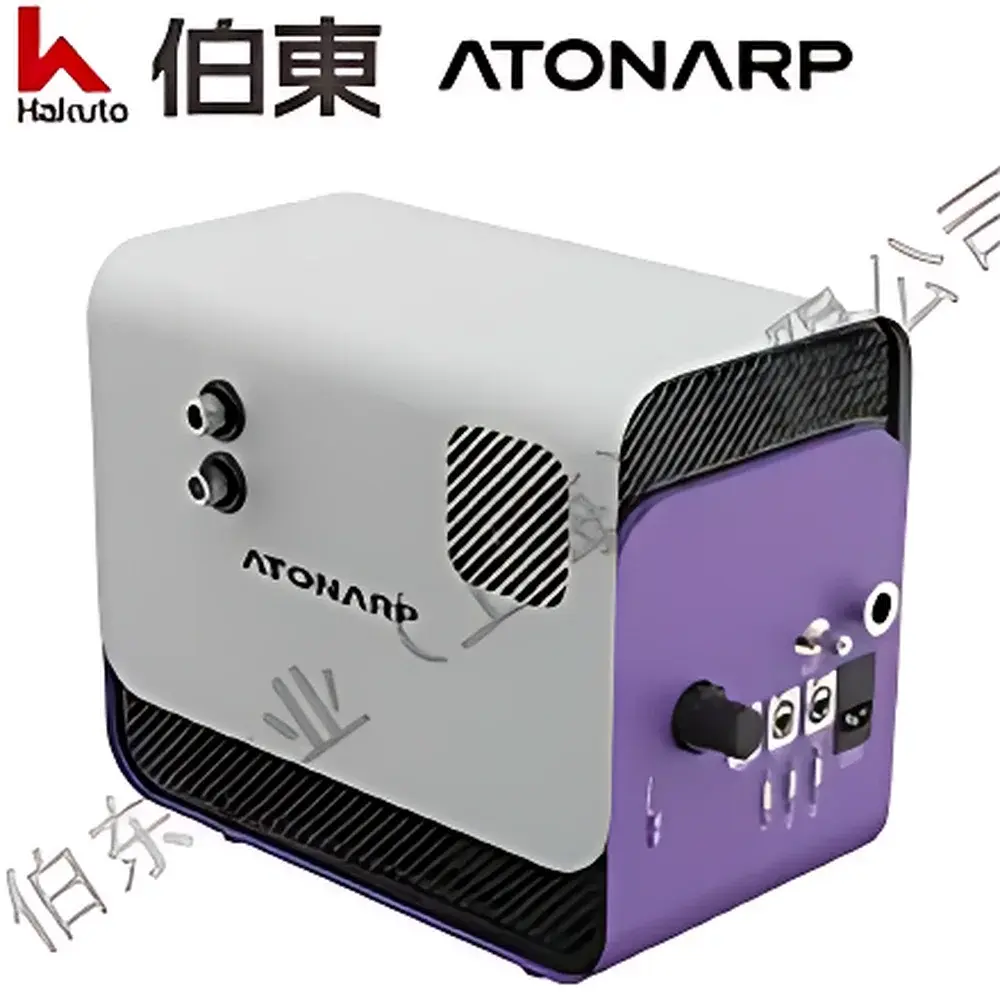
Atonarp Aston™ In-Situ Real-Time Process Mass Spectrometer
| Brand | Atonarp |
|---|---|
| Origin | Japan |
| Manufacturer Type | Authorized Distributor |
| Origin Category | Imported |
| Model | Aston™ Process Mass Spectrometer |
| Pricing | Available Upon Request |
Overview
The Atonarp Aston™ In-Situ Real-Time Process Mass Spectrometer is an engineered solution for molecular-level process monitoring in high-precision semiconductor manufacturing environments. Based on quadrupole mass spectrometry (QMS) with differential pumping architecture, the Aston™ system enables continuous, quantitative analysis of reactive and inert gas species—including precursors, byproducts, and trace contaminants—directly within vacuum process chambers or exhaust lines. Unlike conventional endpoint detection tools relying on optical emission spectroscopy (OES) or residual gas analyzers (RGAs) with limited sensitivity and calibration stability, the Aston™ platform delivers calibrated partial pressure measurements across a mass range of 1–100 amu with sub-second temporal resolution, supporting dynamic feedback control loops essential for Equipment-Process Co-Optimization (EPCO). Its design addresses the growing complexity of sub-7 nm node fabrication, where nanoscale variations in chamber wall conditioning, local virtual leaks, transient gas-phase stoichiometry shifts, and surface reaction kinetics critically impact yield and device uniformity.
Key Features
- In-situ, real-time molecular diagnostics with ≤500 ms measurement cycle time and calibrated partial pressure output (mbar or Torr)
- Differential pumping system optimized for high-throughput semiconductor tools, maintaining stable ion source operation under variable conductance conditions
- Corrosion-resistant internal surfaces (electropolished stainless steel + optional Hastelloy C-276 components) compatible with aggressive chemistries including Cl₂, NF₃, HBr, BCl₃, and O₂-based plasmas
- Condensation-resistant inlet and transfer line design, enabling stable operation during rapid thermal transients and cryogenic pump-down cycles
- Plasma-free operation: no external ionization source required; utilizes electron impact (EI) ionization at controlled filament current and electron energy (70 eV standard)
- Cloud-connectivity ready via secure TLS 1.2/HTTPS API interface, supporting integration with factory automation systems (SECS/GEM), MES, and AI/ML model training pipelines
- Long-term sensor stability: 12,000 hours
Sample Compatibility & Compliance
The Aston™ spectrometer is validated for use in Class 10 cleanroom environments and meets SEMI S2-0215 safety guidelines for semiconductor manufacturing equipment. It supports direct coupling to etch, CVD, ALD, and chamber clean modules operating under pressures ranging from 1×10⁻⁶ to 1×10⁻¹ mbar. The system complies with ISO/IEC 17025 requirements for analytical instrument qualification when deployed in GLP/GMP-regulated fabs. Data integrity protocols align with FDA 21 CFR Part 11 for audit-trail-enabled electronic records, including user authentication, timestamped raw spectra storage, and immutable metadata tagging (wafer lot ID, chamber ID, recipe version, operator ID). All firmware and software updates follow IEC 62443-3-3 security hardening standards.
Software & Data Management
The Aston™ Control Suite provides a modular, web-based interface for configuration, calibration, and real-time visualization. It includes embedded spectral deconvolution algorithms for multi-component gas mixture quantification using pre-loaded NIST-referenced cross-section libraries. Raw data streams are exported in HDF5 format with embedded metadata conforming to the Semiconductor Equipment Communications Standard (SEMI E5). For AI/ML deployment, the system supports streaming telemetry to cloud platforms (AWS IoT Core, Azure IoT Hub) with configurable sampling rates (1 Hz to 100 Hz) and edge preprocessing options (baseline correction, noise filtering, peak integration). Audit logs record all parameter changes, calibration events, and user actions in accordance with ISO 9001:2015 quality management requirements.
Applications
- Dielectric etch endpoint detection and stoichiometric ratio monitoring (e.g., SiO₂/SiNₓ etch with CHF₃/O₂/Ar mixtures)
- Metal etch plasma diagnostics (TiN, W, Cu) including halogen scavenging byproduct tracking (e.g., TiCl₄, WCl₆)
- CVD precursor decomposition pathway analysis and film stress correlation (e.g., SiH₄/NH₃ → SiNₓ)
- Chamber clean endpoint verification via CF₄/NF₃ consumption and HF/HCl generation kinetics
- Chamber fingerprinting and matching through comparative spectral signature clustering (PCA-based)
- High-aspect-ratio trench etch uniformity assessment using sidewall polymer fragment detection (e.g., CₓFᵧ⁺ ions)
- Atomic layer etching (ALE) cycle-by-cycle ligand removal confirmation (e.g., Cl₂ pulse → AlCl₃ desorption)
- ALD purge efficiency validation and precursor saturation monitoring (e.g., TMA/H₂O, TEMAH/ZnEt₂)
FAQ
What mass range and resolution does the Aston™ spectrometer support?
The standard configuration covers 1–100 amu with unit mass resolution (M/ΔM ≥ 300) at 10% peak height, optimized for process gases used in advanced logic and memory fabrication.
Is the system compatible with existing fab automation infrastructure?
Yes—it supports SECS/GEM communication via TCP/IP, provides OPC UA server functionality, and integrates natively with major MES platforms including Applied Materials EnduraConnect and Lam Research SmartFactory.
How is calibration maintained under continuous operation?
The system employs dual-reference gas injection (Ar + N₂) for daily automated gain calibration and includes built-in leak-check routines compliant with ASTM E493-18.
Can the Aston™ detect ppb-level contaminants in ultra-high-purity gas lines?
With optional high-sensitivity mode and extended dwell time, detection limits reach 10–50 ppb for key species (e.g., H₂O, CO, O₂) in inert carrier streams, verified per ISO 8573-8 purity testing methodology.
Does the platform support predictive maintenance analytics?
Yes—integrated sensor health monitoring tracks filament emission current decay, ion gauge stability, and vacuum integrity trends, feeding into failure mode prediction models trained on field-deployed fleet data.





