
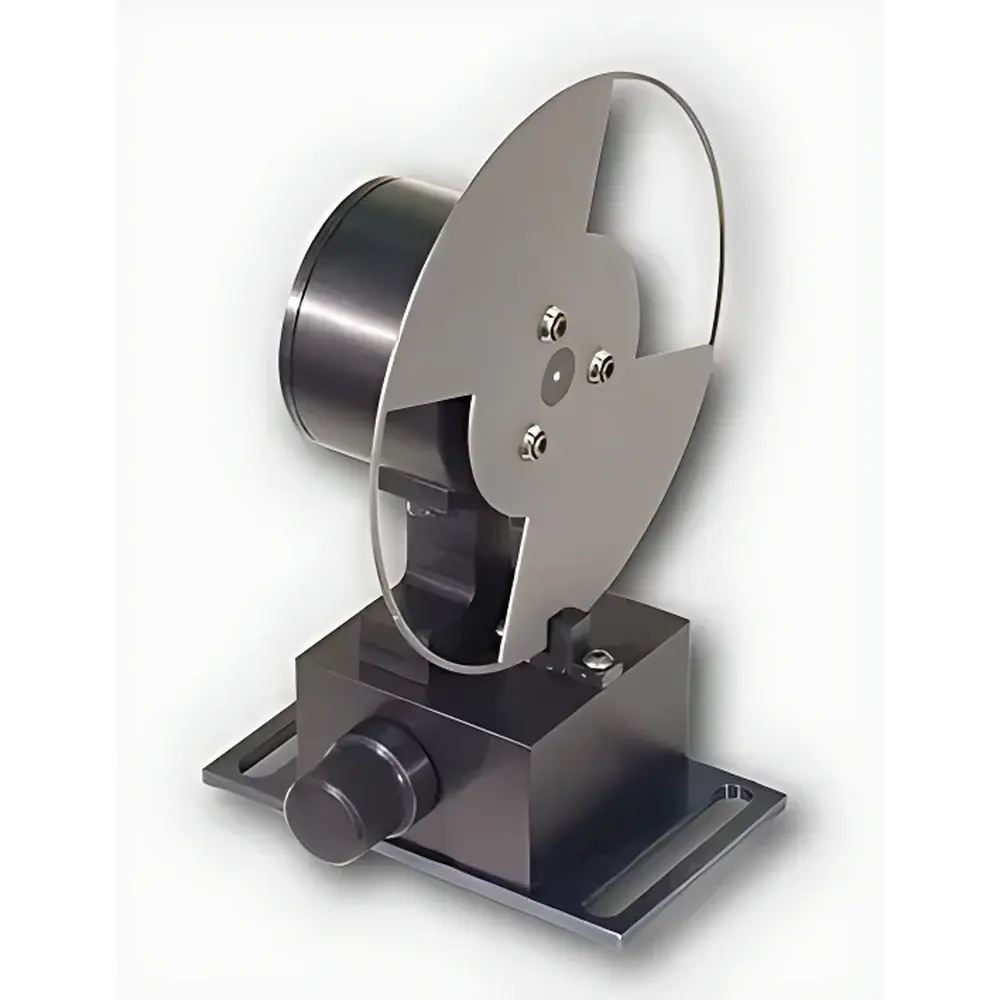
ATSEVA OCV-6300F Optical Chopper
| Brand | ATSEVA |
|---|---|
| Model | OCV-6300F |
| Type | Optical Mechanical Chopper |
| Frequency Range | 7–6300 Hz (dependent on chopper blade configuration) |
| Blade Options | 2-, 10-, 30-, 60-, and 100-slot |
| Sync Output | +5 V, 50 Ω TTL-compatible |
| Frequency Accuracy | ±1 Hz |
| Power Supply | AC 100–230 V, 50/60 Hz → DC 12 V, 0.35 A adapter |
| Power Consumption | 4 W |
| Dimensions (OCV-6300F) | 87 × 104 × 148 mm (W × L × H) |
| Integrated Frequency Counter | Yes |
| Compliance | CE-marked, RoHS-compliant |
| Operating Environment | 15–35 °C, <80% RH non-condensing |
Overview
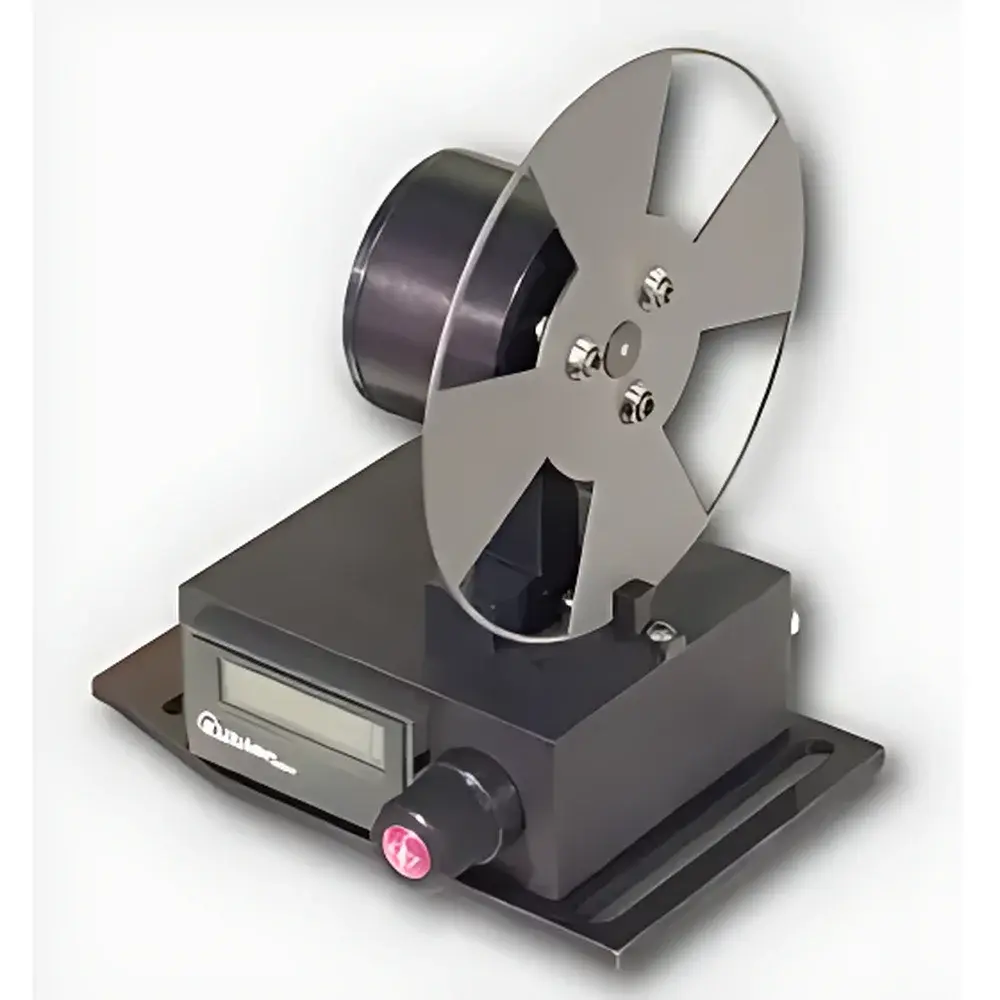
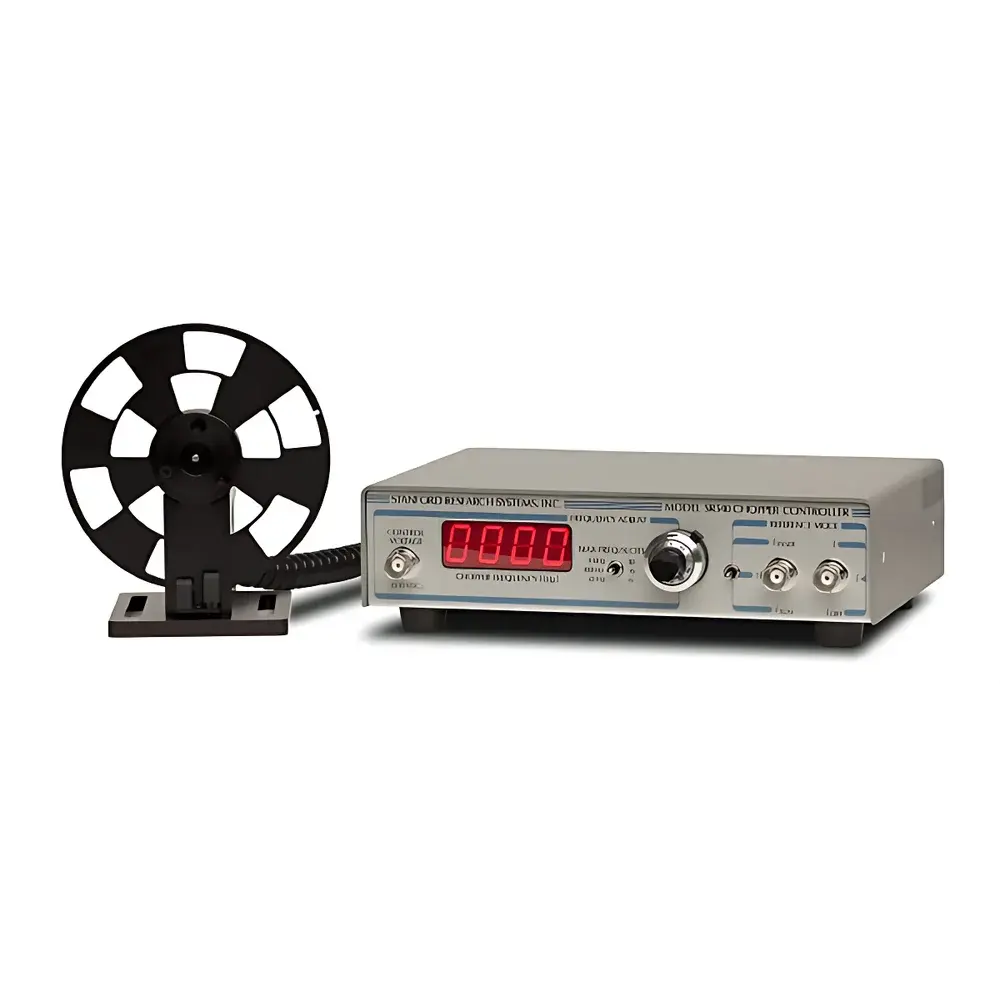
The ATSEVA OCV-6300F Optical Chopper is a precision-engineered mechanical chopper system designed for stable, repeatable amplitude modulation of continuous-wave (CW) light sources in demanding optical measurement environments. Based on synchronous motor-driven rotating slotted disks, the device operates on the principle of periodic beam interruption—generating a square-wave optical signal whose fundamental frequency is determined by rotational speed and slot count. This modulation enables phase-sensitive detection techniques, most notably when paired with lock-in amplifiers to extract weak signals buried beneath high ambient noise floors (e.g., thermal drift, amplifier noise, or stray ambient light). Unlike open-loop choppers, the OCV-6300F integrates a calibrated internal frequency counter, eliminating dependency on external function generators or tachometer feedback loops while maintaining traceable frequency selection across its full 7–6300 Hz operating range.
Key Features
- Integrated digital frequency counter with front-panel LED display—enables direct, self-contained frequency selection without external drivers or oscilloscopes.
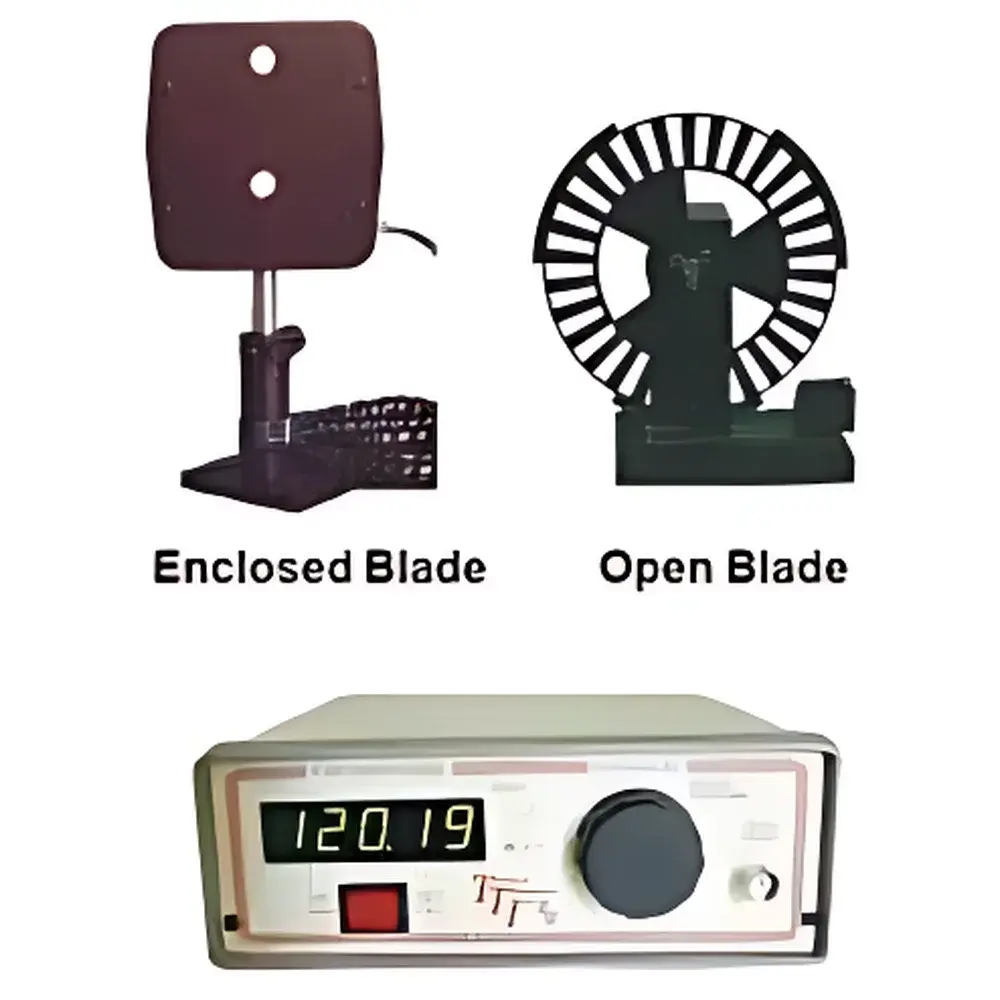
- Modular blade architecture supporting five interchangeable chopper wheels: 2-slot (7–120 Hz), 10-slot (40–600 Hz), 30-slot (120–1900 Hz), 60-slot (150–3700 Hz), and 100-slot (260–6300 Hz)—optimized for signal-to-noise ratio and harmonic content per application.
- TTL-compatible +5 V, 50 Ω sync output for precise timing synchronization with data acquisition systems, lock-in amplifiers, or pulsed laser triggers.
- High-stability brushless DC motor with low-vibration mounting and precision-balanced rotor assembly—ensuring long-term rotational stability and minimal amplitude jitter (<0.5% RMS over 8 hours).
- Compact, shielded enclosure with EMI-reduced internal wiring—designed to minimize electromagnetic interference with adjacent sensitive detectors or low-noise preamplifiers.
- Universal AC input (100–230 V, 50/60 Hz) with regulated 12 V DC output—eliminates need for localized power conditioning in multi-instrument lab setups.
Sample Compatibility & Compliance
The OCV-6300F is compatible with all collimated or focused CW optical beams up to Ø15 mm diameter and intensities typical of HeNe, diode, DPSS, and fiber-coupled lasers (up to 5 W average power, assuming appropriate beam attenuation). It imposes no spectral limitations—functioning identically from UV (200 nm) through NIR (1100 nm). All mechanical components are anodized aluminum and stainless steel; optical path contains no coatings or transmissive elements, ensuring zero wavelength-dependent insertion loss or polarization distortion. The instrument conforms to IEC 61000-6-3 (EMI emission) and IEC 61000-6-2 (immunity) standards. It is CE-marked and RoHS 2015/863 compliant. While not certified for medical or industrial safety-critical use, its design supports GLP-aligned laboratory documentation protocols—including audit-ready calibration logs when used with traceable frequency reference instruments.
Software & Data Management
The OCV-6300F operates as a standalone hardware module with no proprietary software dependency. Frequency settings are configured manually via front-panel push-button interface with real-time LED readout. For integration into automated test benches, the TTL sync output provides deterministic edge timing (rise/fall time <15 ns) suitable for triggering digitizers (e.g., National Instruments PXIe-5171R), camera exposure gates, or pulse delay generators. Optional LabVIEW VI templates (provided upon request) support SCPI-like serial control via USB-to-TTL adapter (not included), enabling script-based sweep sequences and timestamped metadata logging. All operational parameters—including selected blade type, set frequency, and runtime hours—are retained in non-volatile memory across power cycles. No FDA 21 CFR Part 11 compliance features are implemented, as the device performs no data acquisition or storage.
Applications
- Lock-in detection of photothermal, photoacoustic, or photorefractive signals in spectroscopy and materials characterization.
- Background-suppressed fluorescence lifetime measurements using time-gated detection.
- Calibration of photodetector linearity and dynamic response (e.g., rise time, bandwidth verification).
- Reference modulation source for dual-beam interferometry and ellipsometry systems.
- Stimulus generation in optogenetics and neural stimulation experiments requiring precisely timed light pulses.
- Modulation transfer function (MTF) testing of imaging optics and sensor arrays.
FAQ
Does the OCV-6300F require an external driver or function generator?
No—the integrated frequency counter and motor controller enable fully autonomous operation. Only the included 12 V DC power adapter is required.
Can I change chopper blades without tools?
Yes—blades are secured via a knurled thumb screw; replacement takes <30 seconds and requires no alignment procedure.
Is the sync output isolated from the motor ground?
Yes—the TTL output is opto-isolated to prevent ground loops in mixed-signal measurement configurations.
What is the maximum beam diameter supported?
The clear aperture accommodates beams up to 15 mm in diameter; larger beams require external beam reduction or custom aperture inserts.
How often does the internal frequency counter require recalibration?
The quartz-crystal-referenced counter maintains ±1 Hz accuracy over its specified operating temperature range (15–35 °C) with no scheduled recalibration needed under normal lab conditions.



