
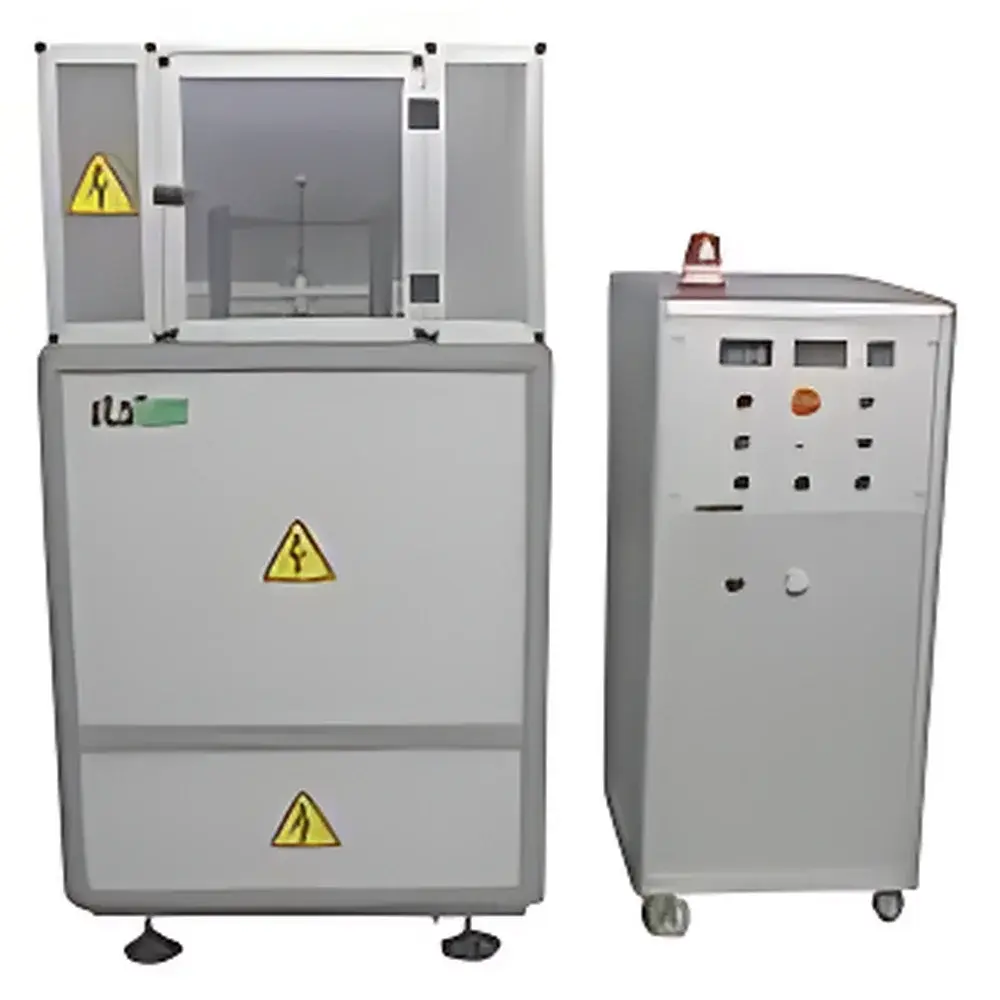
ATSFAAR 60kV Dielectric Breakdown Voltage Tester for Rubber and Plastic Insulating Materials
| Brand | ATSFAAR |
|---|---|
| Origin | Italy |
| Distribution Status | Authorized Distributor |
| Origin Category | Imported |
| Model | 60kV |
| Pricing | Upon Request |
Overview
The ATSFAAR 60kV Dielectric Breakdown Voltage Tester is a precision-engineered instrument designed to determine the dielectric strength of solid insulating materials—particularly elastomers, thermoplastics, thermosets, and composite polymer systems—under controlled high-voltage stress. Operating on the principle of controlled voltage ramping until electrical breakdown occurs, the system complies with internationally recognized test methodologies including ASTM D149 (Standard Test Method for Dielectric Breakdown Voltage of Solid Electrical Insulating Materials at Commercial Power Frequencies), DIN 53481 (Testing of Plastics – Determination of Dielectric Strength), and IEC/EN 60243-1 (Electrical Strength of Insulating Materials – Part 1: Tests at Power Frequencies). The instrument employs a high-voltage oil-immersed transformer housed in a dedicated lower test unit, electrically isolated from the upper insulated test chamber to minimize stray capacitance and electromagnetic interference. Measurement is defined as the peak voltage at which sustained disruptive discharge (i.e., current exceeding preset threshold) propagates through the specimen, normalized to specimen thickness to yield dielectric strength in kV/mm.
Key Features
- Maximum output voltage: 60 kV AC (50/60 Hz), continuously adjustable via motor-driven voltage regulator
- Four selectable voltage ramp rates: 0.5, 1.0, 2.0, and 5.0 kV/s—programmable per test sequence to match material response characteristics
- Dual-channel digital metering: High-accuracy digital voltmeter (±1% full scale) and microprocessor-controlled ammeter (0.5–30 mA range, resolution ≤0.1 mA)
- Automatic test termination upon detection of breakdown current exceeding user-defined threshold; real-time arc detection logic prevents specimen carbonization or electrode damage
- Physically segregated architecture: Lower high-voltage transformer unit (oil-insulated, grounded enclosure) and upper test chamber (electrostatically shielded, transparent polycarbonate viewing window)
- Interlocked safety system: Mechanical and electronic door interlock cuts HV supply and discharges electrodes within <100 ms when chamber access door is opened
- Test duration programmable from 0.5 s to 100 s, supporting both short-time and step-by-step voltage application protocols
Sample Compatibility & Compliance
The tester accommodates standardized flat-sheet specimens (per ASTM D149: 50 × 50 mm minimum, thickness 1–6 mm) as well as custom geometries via interchangeable electrode configurations—including brass disk electrodes (25 mm diameter), spherical electrodes (for curvature-sensitive evaluation), and needle-plane assemblies for localized stress analysis. Optional electrode kits support testing in ambient air or transformer oil immersion (ASTM D877/D1816 compliance), enabling differentiation between surface tracking and bulk breakdown mechanisms. All mechanical components conform to CE marking requirements under the Low Voltage Directive (2014/35/EU) and EMC Directive (2014/30/EU). The system supports traceable calibration against NIST-traceable high-voltage standards and is routinely validated for GLP-compliant laboratories performing QC/QA per ISO/IEC 17025.
Software & Data Management
While the base configuration operates via front-panel controls and analog/digital instrumentation, optional PC-based software (ATSFAAR TestSuite v3.x) enables automated test sequencing, real-time voltage/current waveform logging (10 kHz sampling), statistical reporting (mean, SD, Weibull distribution fitting), and export to CSV/PDF formats. Audit trail functionality records operator ID, timestamp, parameter settings, and pass/fail status for each test—fully compliant with FDA 21 CFR Part 11 requirements when configured with electronic signatures and role-based access control. Raw data files retain metadata including environmental conditions (optional external hygrothermograph integration), electrode type, and immersion medium.
Applications
This instrument is routinely deployed in R&D and quality assurance laboratories across the rubber and plastics value chain: evaluating vulcanized EPDM and silicone elastomers for high-voltage cable jacketing; assessing dielectric integrity of polyethylene (PE), polypropylene (PP), and polyimide films used in flexible printed circuits; validating insulation performance of thermoset composites in EV battery enclosures; and supporting formulation development of conductive polymer blends where controlled resistivity gradients are critical. It also serves as a reference tool for third-party certification bodies conducting UL 746C, IEC 60674-2, and GB/T 1408.1 evaluations.
FAQ
What standards does this tester fully support out-of-the-box?
ASTM D149, IEC/EN 60243-1, DIN 53481, and GB/T 1408.1—hardware configuration, electrode geometry, and ramp rate options are pre-aligned with these methods.
Can the system be calibrated internally by the user?
No—calibration requires traceable high-voltage reference dividers and certified metrology labs; however, daily verification using standard test blocks is supported via built-in self-check routines.
Is oil immersion mandatory for all tests?
No—air-gap testing is standard per ASTM D149; oil immersion is optional and selected based on material hydrophobicity, surface contamination sensitivity, and required test severity.
Does the instrument meet electrical safety requirements for laboratory use?
Yes—it incorporates double insulation, earth leakage protection (<0.5 mA), and meets IEC 61010-1 for measurement category CAT II 600 V environments.
What maintenance is required for long-term stability?
Annual inspection of transformer oil dielectric strength (≥30 kV/2.5 mm), electrode surface polishing, and verification of interlock timing response are recommended per manufacturer’s service schedule.






