
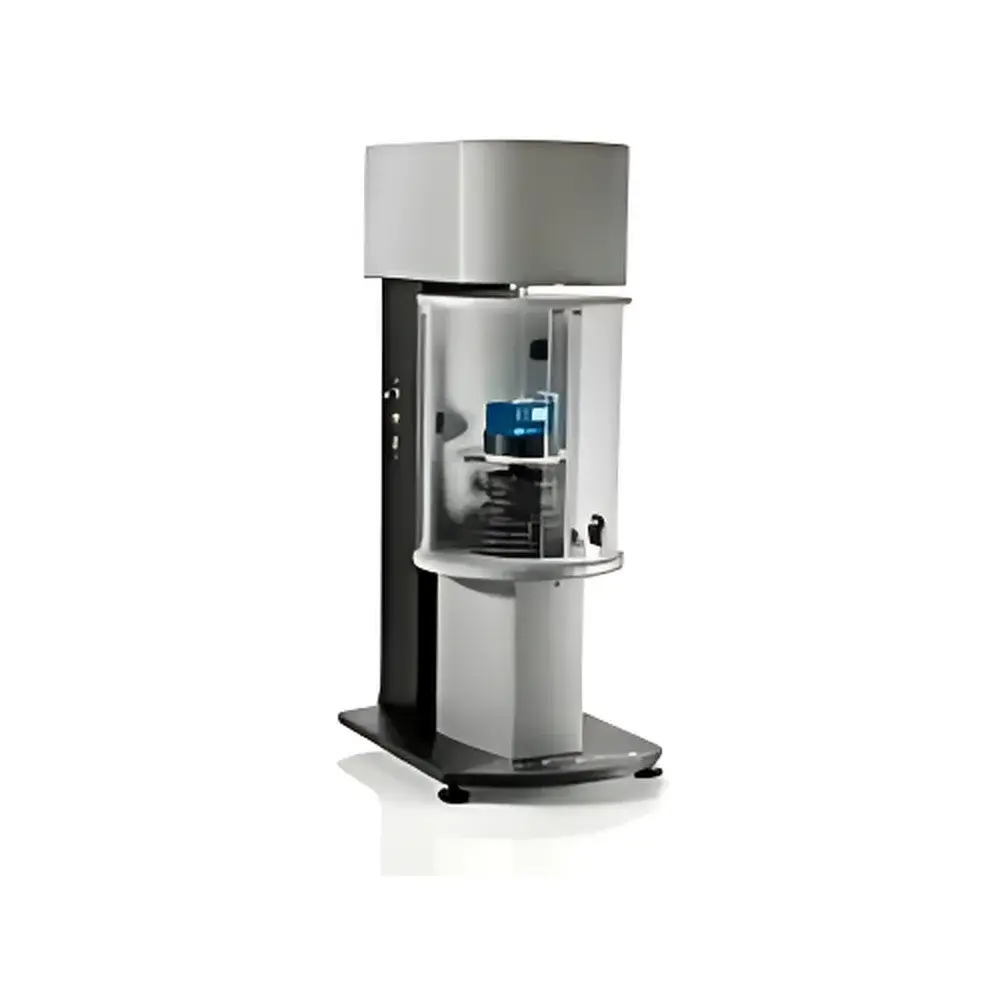
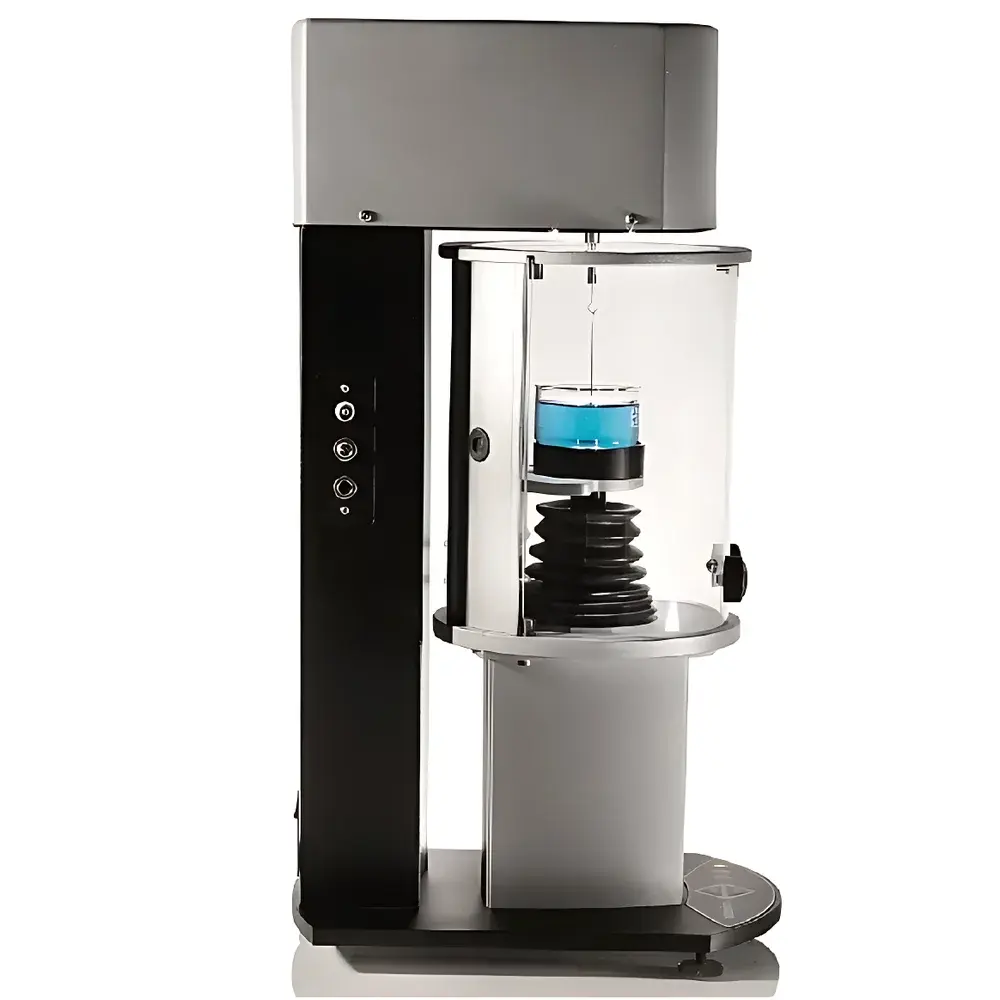
Attension Sigma 700 Advanced Extended-Range Surface Tensiometer
| Brand | Attension |
|---|---|
| Origin | Finland |
| Model | Sigma 700 |
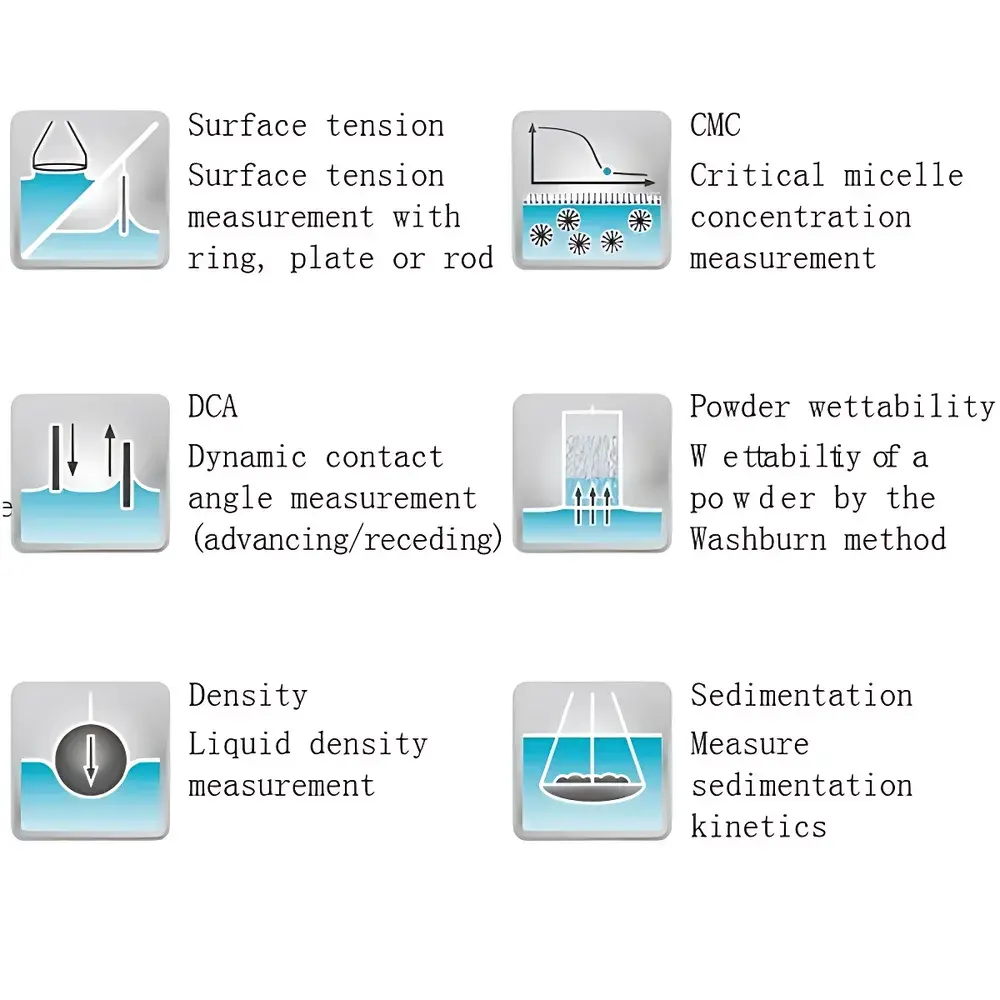
| Measurement Range | Surface/Interfacial Tension (0.01–2000 mN/m), Dynamic Contact Angle (0°–180°), CMC Detection, Solid Surface Free Energy, Powder Wettability, Sedimentation Rate, Liquid Density |
| Resolution | 0.001 mN/m (tension), 0.01° (contact angle) |
| Balance Capacity | 210 g |
| Temperature Control | –20 °C to +200 °C (with jacketed cell or air bath) |
| Compliance | ASTM D971, ISO 1409, ISO 6295, USP <1046>, GLP/GMP-ready data audit trail |
Overview
The Attension Sigma 700 Advanced Extended-Range Surface Tensiometer is a high-precision, modular force-based instrument engineered for quantitative characterization of interfacial phenomena at gas–liquid, liquid–liquid, and solid–liquid boundaries. It operates on the fundamental principle of Wilhelmy plate, Du Noüy ring, and Washburn capillary penetration methods—each implemented via a microgravimetric balance with sub-microgram resolution and active vibration damping. The system measures force changes induced by interfacial tension, wetting forces, or buoyancy effects, converting them into thermodynamically rigorous parameters including surface tension (γLV), interfacial tension (γLL), critical micelle concentration (CMC), advancing/receding contact angles (θa/θr), solid surface free energy (via Owens–Wendt or Fowkes models), powder wettability kinetics, sedimentation dynamics, and liquid density. Designed for reproducible operation under controlled thermal environments (–20 °C to +200 °C), the Sigma 700 serves as a core analytical platform in R&D laboratories, quality control units, and academic research facilities engaged in colloid science, formulation development, surface engineering, and materials interface physics.
Key Features
- High-stability electromagnetic balance with 0.001 mN/m resolution and 210 g maximum load capacity—optimized for heavy substrates such as coated panels, fibers, and powder-filled crucibles.
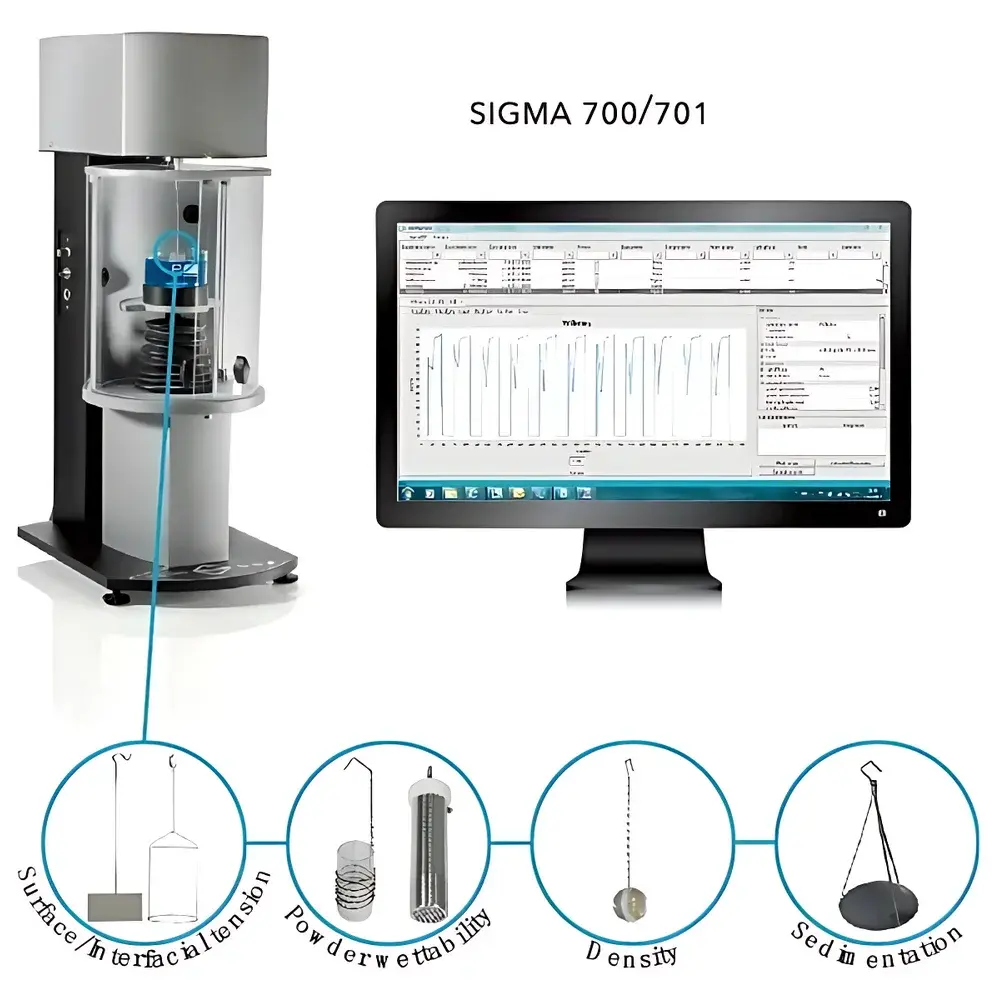
- Modular probe architecture supporting platinum plates, rings, rods, density spheres, and sedimentation probes—all traceably calibrated per ISO 17025-accredited procedures.
- Integrated temperature control via Peltier-cooled liquid jacket or programmable air-bath heater, enabling kinetic studies across physiologically and industrially relevant thermal ranges.
- Automated immersion–withdrawal sequencing with user-defined speed profiles (0.01–5 mm/s), dwell times, and cycle repetitions—eliminating operator-induced variability in dynamic contact angle and CMC measurements.
- Active anti-vibration platform and transparent dust enclosure ensure measurement integrity in non-dedicated lab environments.
- Full compliance with ASTM D971 (insulating oil interfacial tension), ISO 1409 (plastics—determination of surface tension of plastics), and ISO 6295 (determination of interfacial tension between oil and water).
Sample Compatibility & Compliance
The Sigma 700 accommodates heterogeneous sample geometries: rigid flat substrates (e.g., polymer films, metal sheets), cylindrical fibers (natural or synthetic), granular powders (pigments, pharmaceutical excipients), colloidal suspensions, and low-viscosity to highly viscous liquids (including molten polymers and ionic liquids). Its mechanical design permits direct mounting of custom fixtures—including fiber holders, powder wettability cells, and density calibration vials—without hardware modification. All measurement protocols support 21 CFR Part 11-compliant electronic records when used with OneAttension software’s audit trail, user role management, and digital signature modules. Data integrity aligns with GLP and GMP requirements for regulated industries including pharmaceuticals, agrochemicals, and transformer oil manufacturing.
Software & Data Management
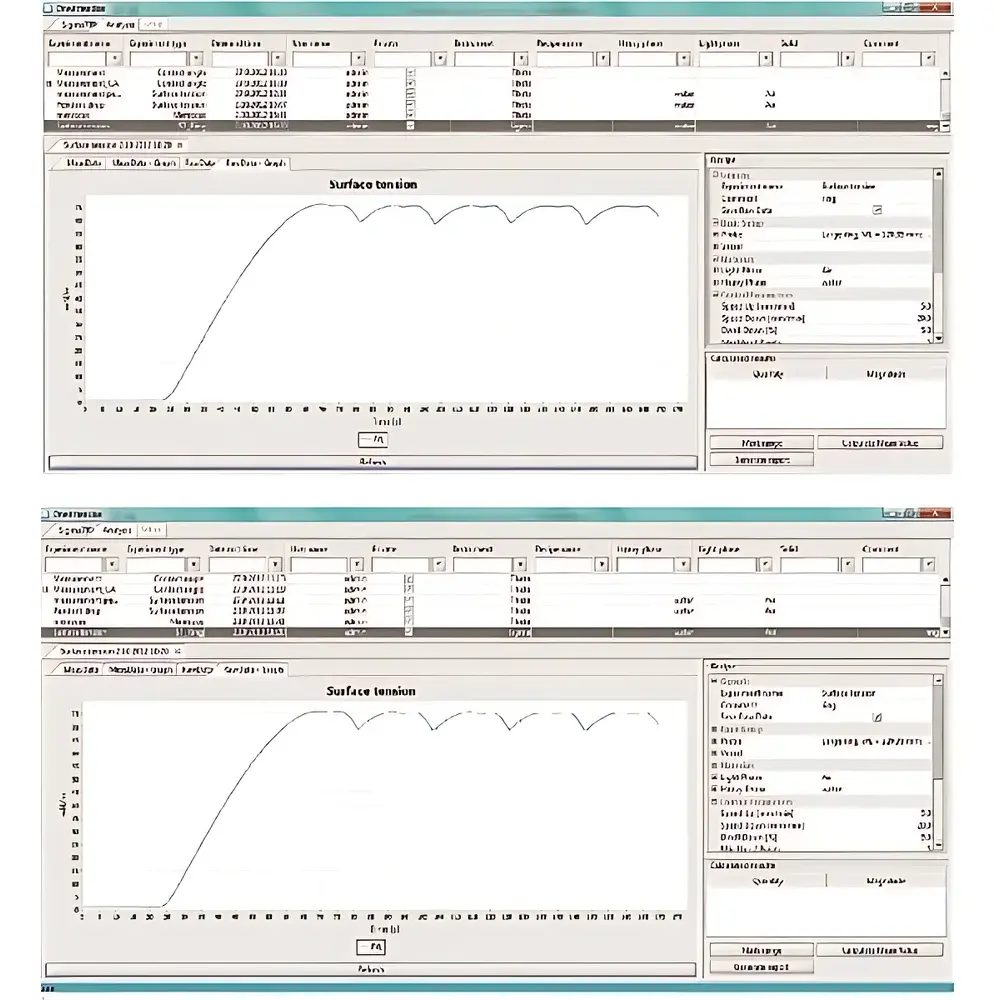
OneAttension software provides a unified, scriptable interface for instrument control, real-time visualization, and post-acquisition analysis. Preconfigured method templates conform to ASTM, ISO, and USP standards (e.g., USP for contact angle in solid dosage form evaluation). Raw force–time traces are logged synchronously with environmental metadata (temperature, humidity, timestamp), enabling full experimental traceability. Contact angle hysteresis, CMC inflection point detection, Washburn slope derivation, and surface energy component deconvolution are performed using embedded algorithms validated against NIST-traceable reference materials. Export options include CSV, Excel (.xlsx), and HDF5 formats; data can be reprocessed offline without instrument connection. Software updates maintain backward compatibility with legacy Sigma systems (Sigma 70, Sigma 701, Theta series).
Applications
- Surfactant Development: Quantitative CMC mapping across homologous series; structure–activity correlation of alkyl chain length and headgroup charge on interfacial packing efficiency.
- Coating & Adhesion Science: Dynamic contact angle profiling of primer–substrate systems to predict wetting envelope and interfacial adhesion energy.
- Pharmaceutical Formulation: Powder wettability assessment of API-excipient blends under simulated gastric fluid conditions; sedimentation rate analysis of nano-suspensions.
- Energy Sector QA/QC: Interfacial tension monitoring of insulating oils per ASTM D971 to detect oxidation byproducts and hydrolytic degradation.
- Food & Cosmetics R&D: Emulsion stability prediction via interfacial rheology proxies; surface free energy determination of starch-based edible films.
- Academic Interface Physics: Temperature-dependent surface tension isotherms; solid surface heterogeneity analysis via multi-liquid contact angle arrays.
FAQ
What measurement methods does the Sigma 700 support?
Wilhelmy plate, Du Noüy ring, Washburn capillary rise, sinkage force (for density), and sedimentation weight gain—each selectable via software-defined measurement mode.
Can the Sigma 700 measure contact angles on irregular or porous solids?
It requires geometrically defined, homogeneous surfaces (e.g., polished wafers, monofilament fibers); porous or rough samples necessitate complementary optical goniometry.
Is temperature control mandatory for CMC determination?
Not mandatory, but strongly recommended—CMC values exhibit significant thermal dependence; uncontrolled ambient drift compromises reproducibility.
How is calibration traceability maintained?
Via certified reference standards: distilled water (72.75 mN/m at 20 °C), ethanol (22.39 mN/m), and diiodomethane (50.80 mN/m), all traceable to NIST SRM 849a.
Does the system support automated multi-concentration CMC workflows?
Yes—integrated liquid dispenser enables sequential dosing, mixing, equilibration, and measurement without manual intervention.
Related Products



