
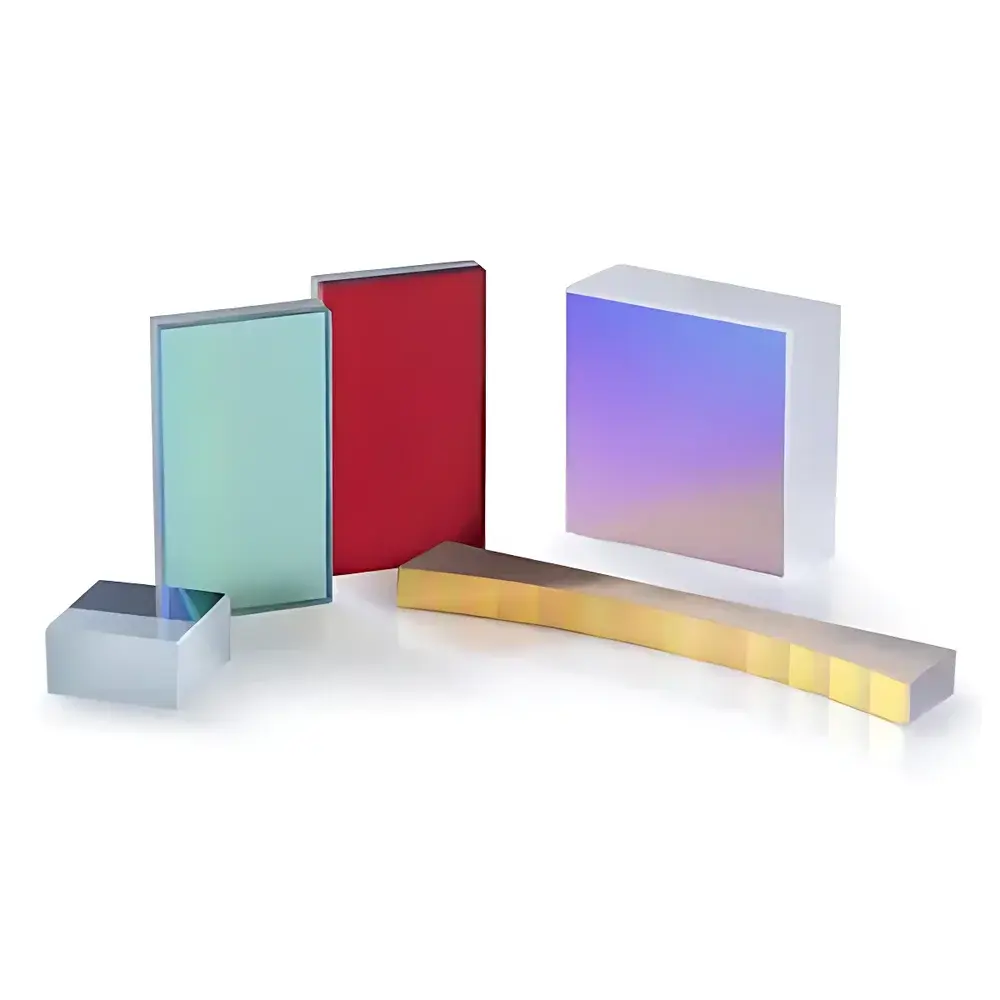
Auniontech DUV Deep Ultraviolet (190–1100 nm) Transmission VPH Grating
| Brand | Auniontech |
|---|---|
| Origin | Shanghai, China |
| Model | Volume Phase Holographic (VPH) Transmission Grating |
| Wavelength Range | 190–1100 nm |
| Peak Efficiency Band | 190–400 nm |
| Transmission | >20% @ 190–200 nm, >50% @ 200–400 nm |
| Groove Density | 300–1200 lines/mm |
| Substrate Options | Fused silica (UV-grade), CaF₂ (optional for VUV extension) |
| Standard Sizes | 4×4 mm to 30×30 mm (custom dimensions available) |
| Grating Type | Blazed (ruling) or holographic VPH configuration |
| Environmental Stability | ISO 9001-compliant manufacturing |
Overview
The Auniontech DUV Deep Ultraviolet Transmission VPH Grating is a precision optical dispersion component engineered for high-efficiency spectral separation across an exceptionally broad spectral range—from vacuum-ultraviolet (VUV)-adjacent 190 nm through near-infrared (NIR) at 1100 nm. Unlike conventional ruled gratings with metallic coatings susceptible to oxidation and degradation in deep-UV environments, this grating employs a volume phase holographic (VPH) architecture: a photosensitive gelatin or photopolymer layer is uniformly recorded with interference fringes and permanently laminated between two optically polished, UV-grade fused silica substrates. This monolithic, epoxy-free construction ensures exceptional environmental stability—including resistance to thermal cycling (−40 °C to +80 °C), humidity exposure (>95% RH), and prolonged UV irradiation—making it suitable for long-term deployment in demanding spectroscopic platforms where repeatability and calibration integrity are critical. Its transmission-based design eliminates the need for reflective folding optics, reducing alignment complexity and polarization-dependent losses commonly encountered in Czerny–Turner or Littrow configurations.
Key Features
- Extended spectral coverage from 190 nm to 1100 nm, with optimized diffraction efficiency in the deep-UV band (190–400 nm)
- VPH structure enables high peak transmission (>50% typical between 200–400 nm) and low stray light (<0.1% integrated scatter in visible-NIR)
- Blazed or holographic groove profiles available—blazed variants deliver enhanced first-order efficiency at designated wavelengths; holographic versions offer superior wavefront fidelity and reduced ghosting
- UV-grade fused silica substrates certified to MIL-O-13830 scratch-dig standards; optional CaF₂ substrates support extended operation down to 120 nm
- Customizable line density (300–1200 l/mm), substrate thickness (1–10 mm), and clear aperture (4×4 mm up to 30×30 mm and larger upon request)
- Manufactured under ISO 9001-certified cleanroom conditions; each unit undergoes spectral mapping via NIST-traceable UV-VIS-NIR spectrophotometry and interferometric surface flatness verification (λ/10 @ 633 nm)
Sample Compatibility & Compliance
This grating is compatible with standard spectrograph mounts (e.g., SMA905, kinematic lens tubes, and OEM spectrometer modules) and integrates seamlessly into benchtop and portable UV-Vis-NIR systems. It complies with RoHS 2011/65/EU directives and meets material outgassing requirements per ECSS-Q-ST-70-02C for space-qualified instrumentation. For regulated analytical applications—including pharmaceutical QC, environmental monitoring, and clinical diagnostics—the grating supports method validation under USP , ASTM E275, and ISO/IEC 17025 frameworks when incorporated into validated optical assemblies. No proprietary adhesives or organic coatings are used in the active optical path, ensuring compatibility with Class 100 cleanroom handling and UHV-compatible bake-out protocols (up to 120 °C).
Software & Data Management
While the grating itself is a passive optical element, its performance parameters—including diffraction efficiency vs. wavelength, polarization sensitivity (s/p ratio), and angular dispersion—are fully characterized and delivered as machine-readable CSV and HDF5 datasets. These files are compatible with common optical design suites (Zemax OpticStudio, CODE V, FRED) and spectral modeling tools (Python SciPy, MATLAB Optical Toolbox). Upon request, Auniontech provides calibration certificates traceable to PTB (Physikalisch-Technische Bundesanstalt) reference standards, including full uncertainty budgets per GUM (Guide to the Expression of Uncertainty in Measurement). Audit trails for production batch records are retained for 15 years to support GLP/GMP compliance documentation.
Applications
- High-throughput UV-Vis absorption and fluorescence spectrometers for life science and pharmaceutical analysis
- Compact handheld and drone-mounted environmental sensors for NO₂, SO₂, and ozone detection in the Hartley–Huggins bands
- Beam combiners and pulse compressors in ultrafast laser systems operating at harmonics of Ti:sapphire (e.g., 266 nm, 200 nm)
- Monochromator stages in synchrotron beamlines requiring stable, low-degradation optics in air or nitrogen-purged enclosures
- Educational laboratory setups for teaching physical optics, quantum spectroscopy, and Fourier-transform principles
- OEM integration into medical endomicroscopy probes and Raman-on-chip platforms requiring broadband dispersion with minimal insertion loss
FAQ
What distinguishes a VPH grating from a ruled blazed grating in the DUV?
VPH gratings use interference-patterned bulk modulation rather than surface-relief grooves, eliminating groove-edge scattering and enabling higher damage thresholds and better polarization uniformity—especially critical below 250 nm where metal coatings degrade rapidly.
Can this grating be used in vacuum or purged environments?
Yes. The all-fused-silica monolithic construction and absence of outgassing epoxies or adhesives make it suitable for UHV (10⁻⁹ mbar) and nitrogen-purged optical paths without efficiency drift.
Is angular dispersion data provided for custom line densities?
Yes. Upon order placement, customers receive calculated Littrow angles, free spectral range (FSR), and resolving power (R = mN) tables derived from rigorous scalar diffraction theory and verified experimentally.
Do you offer anti-reflection coatings optimized for the DUV band?
Standard AR coatings are applied to both entrance and exit surfaces using ion-beam sputtered MgF₂/TiO₂ multilayers, achieving <1.5% average reflectance from 190–400 nm; custom V-coatings for specific center wavelengths are available.
How is long-term UV stability validated?
Accelerated lifetime testing follows ASTM G155 Cycle 7 (Xenon arc, 0.35 W/m² @ 340 nm) for 1,500 hours; spectral transmission remains within ±1.2% of initial values across the 190–400 nm band.



