
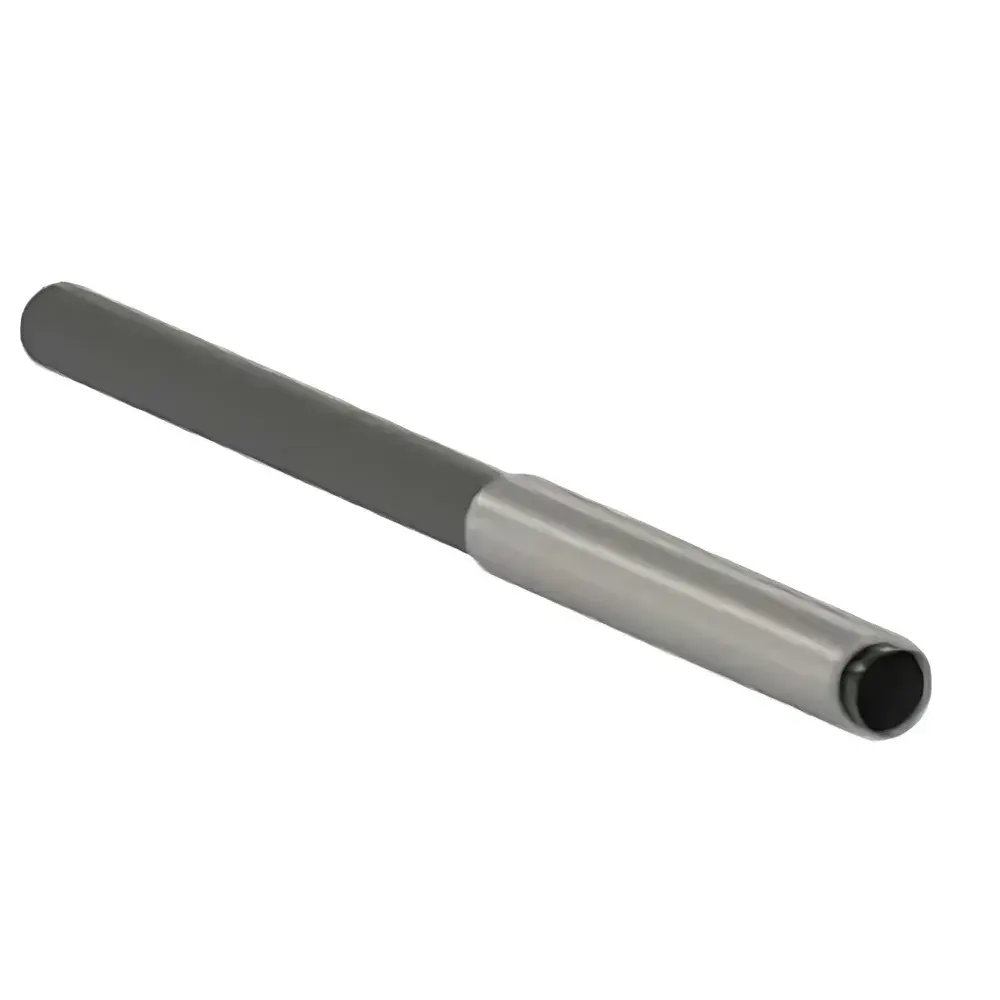
Auniontech GRIN-Lens-Based OCT Endoscopic Probe
| Brand | Auniontech |
|---|---|
| Origin | Shanghai, China |
| Type | Fiber-Optic Endoscopic Probe for Optical Coherence Tomography |
| Design | GRIN-lens-integrated, distal or proximal scanning, forward-viewing or side-viewing configuration |
| Numerical Aperture | Up to 0.8 |
| Core Compatibility | Standard single-mode fiber (SMF-28), compatible with swept-source and spectral-domain OCT systems |
| Mechanical Outer Diameter | 0.25–2.0 mm (customizable) |
| Biocompatible Housing | Medical-grade stainless steel or polymer sheath options |
| Operating Wavelength Range | 800–1350 nm (system-dependent) |
| Compliance | ISO 13485 design principles applied |
Overview
The Auniontech GRIN-Lens-Based OCT Endoscopic Probe is a precision-engineered fiber-optic imaging tool designed for minimally invasive, high-resolution optical coherence tomography (OCT) in confined anatomical spaces. Leveraging gradient-index (GRIN) lens technology, this probe enables diffraction-limited focusing of near-infrared OCT light directly at the distal tip—without bulky free-space optics—thereby preserving miniaturization, mechanical stability, and compatibility with standard endoscopic access channels. The probe operates on the principle of low-coherence interferometry, where backscattered light from tissue microstructures is coherently detected to generate cross-sectional, micrometer-scale (axial resolution: 5–15 µm, system-dependent) volumetric images in real time. Unlike conventional histopathology, OCT endoscopy provides label-free, non-ionizing, in vivo “optical biopsy” capability—enabling immediate structural assessment of epithelial layers, basement membranes, and subsurface vasculature without tissue excision or staining.
Key Features
- GRIN lens integration: Enables compact, robust distal focusing with minimal chromatic aberration across 800–1350 nm OCT bands
- Sub-millimeter outer diameter options (250 µm to 2.0 mm): Designed for compatibility with bronchoscopes, colonoscopes, cystoscopes, and intravascular catheters
- Dual viewing configurations: Forward-viewing probes for direct lumen assessment; side-viewing variants for wall-perpendicular imaging in tubular organs
- Scanning architecture flexibility: Supports both proximal scanning (external galvo/mirror-based beam steering) and distal scanning (integrated MEMS or piezoelectric actuation, optional)
- High numerical aperture (NA ≈ 0.8): Optimized for enhanced lateral resolution and light collection efficiency in low-reflectivity tissues
- Fiber-coupled design: Compatible with industry-standard SMF-28 or polarization-maintaining fibers; supports seamless integration into commercial and custom-built SD-OCT and SS-OCT platforms
- Biocompatible materials: Stainless steel or medical-grade polymer sheaths compliant with ISO 10993-5 cytotoxicity requirements (upon request)
Sample Compatibility & Compliance
This probe is validated for use in ex vivo and in vivo preclinical models, as well as clinical research settings under IRB-approved protocols. It supports imaging of epithelial, stromal, and vascular structures in respiratory, gastrointestinal, urological, and cardiovascular lumens. While the probe itself is not an FDA-cleared or CE-marked medical device, its design adheres to ISO 13485-aligned quality management practices. When integrated into a full OCT system meeting IEC 62304 software lifecycle requirements and IEC 60601-1 electrical safety standards, it may support regulatory submissions under FDA 510(k) or EU MDR Annex II pathways. All probes undergo 100% optical throughput verification and mechanical bending endurance testing (≥5,000 cycles at minimum bend radius of 15 mm).
Software & Data Management
The probe does not include embedded firmware or proprietary software. Instead, it functions as a passive optical interface—fully interoperable with third-party OCT acquisition and reconstruction platforms including Thorlabs OCTVista, Axsun SDK, Wasatch Photonics B-scan engines, and open-source frameworks such as MATLAB-based OCTToolbox or Python-based PyOCT. Raw interferogram data is preserved in standard formats (e.g., .dat, .bin, or HDF5), enabling traceable processing pipelines compliant with GLP/GMP documentation requirements. When deployed in regulated environments, metadata tagging—including probe serial number, calibration timestamp, and system wavelength—can be embedded via external DAQ synchronization signals, supporting 21 CFR Part 11 audit-trail readiness when paired with validated host software.
Applications
- Respiratory tract: Real-time assessment of bronchial epithelium integrity, early squamous dysplasia, and submucosal gland morphology during bronchoscopy
- Gastrointestinal endoscopy: In vivo differentiation of Barrett’s esophagus, intestinal metaplasia, and early adenocarcinoma margins without biopsy
- Urological imaging: High-resolution mapping of bladder wall lamina propria invasion depth in suspected transitional cell carcinoma
- Intravascular imaging: Co-registration of OCT-derived plaque morphology (fibrous cap thickness, lipid pool volume) with IVUS or angiography
- Multimodal extension: Shared optical path supports concurrent fluorescence, two-photon, or Raman microendoscopy when coupled with appropriate laser sources and detection modules
FAQ
Is this probe compatible with my existing OCT system?
Yes—provided your system uses standard single-mode fiber coupling and operates within the 800–1350 nm wavelength range. Mechanical and optical interface specifications (FC/APC or SMA905 connector, working distance, and collimation requirements) will be supplied prior to integration.
Can the probe be sterilized for clinical use?
The probe is intended for single-use or reprocessed use per validated protocols. Ethylene oxide (EtO) sterilization and low-temperature hydrogen peroxide plasma are supported; autoclaving is not recommended due to GRIN lens thermal sensitivity.
Do you offer custom GRIN lens focal lengths or housing geometries?
Yes—custom designs including angled distal tips (e.g., 30°, 45°, 90°), reinforced torque-transmitting shafts, and hybrid OCT/fluorescence dual-channel configurations are available under NDA.
What is the typical lead time for delivery?
Standard configurations ship within 4–6 weeks after order confirmation; custom designs require 10–14 weeks for prototyping and optical validation.
Is technical support available for system integration?
Yes—Auniontech provides application engineering support, including beam alignment guides, interference fringe optimization checklists, and OCT signal-to-noise ratio (SNR) benchmarking reports.





